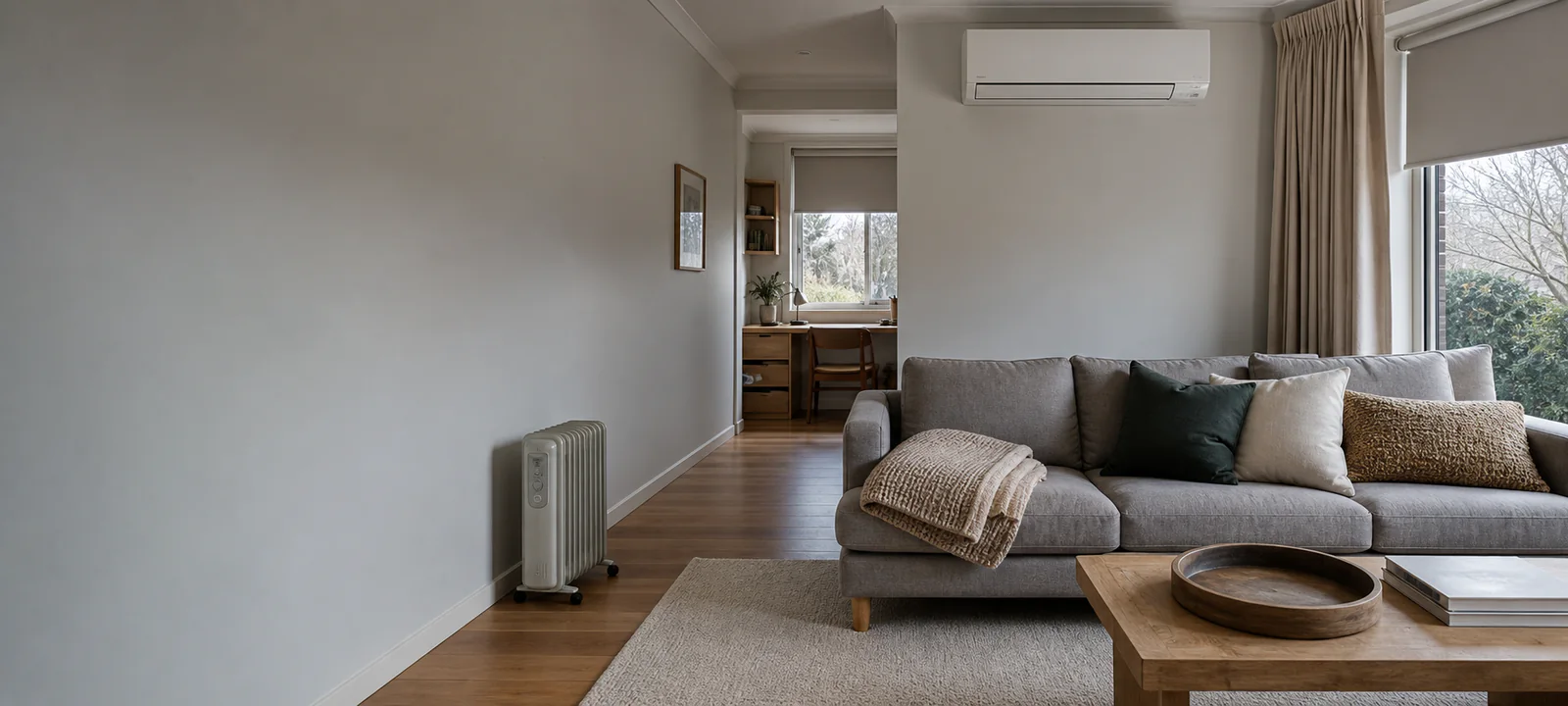
Home Heating Options in Australia: What to Check Before You Choose
Compare portable, fixed and personal heating options around the room, climate and length of use.

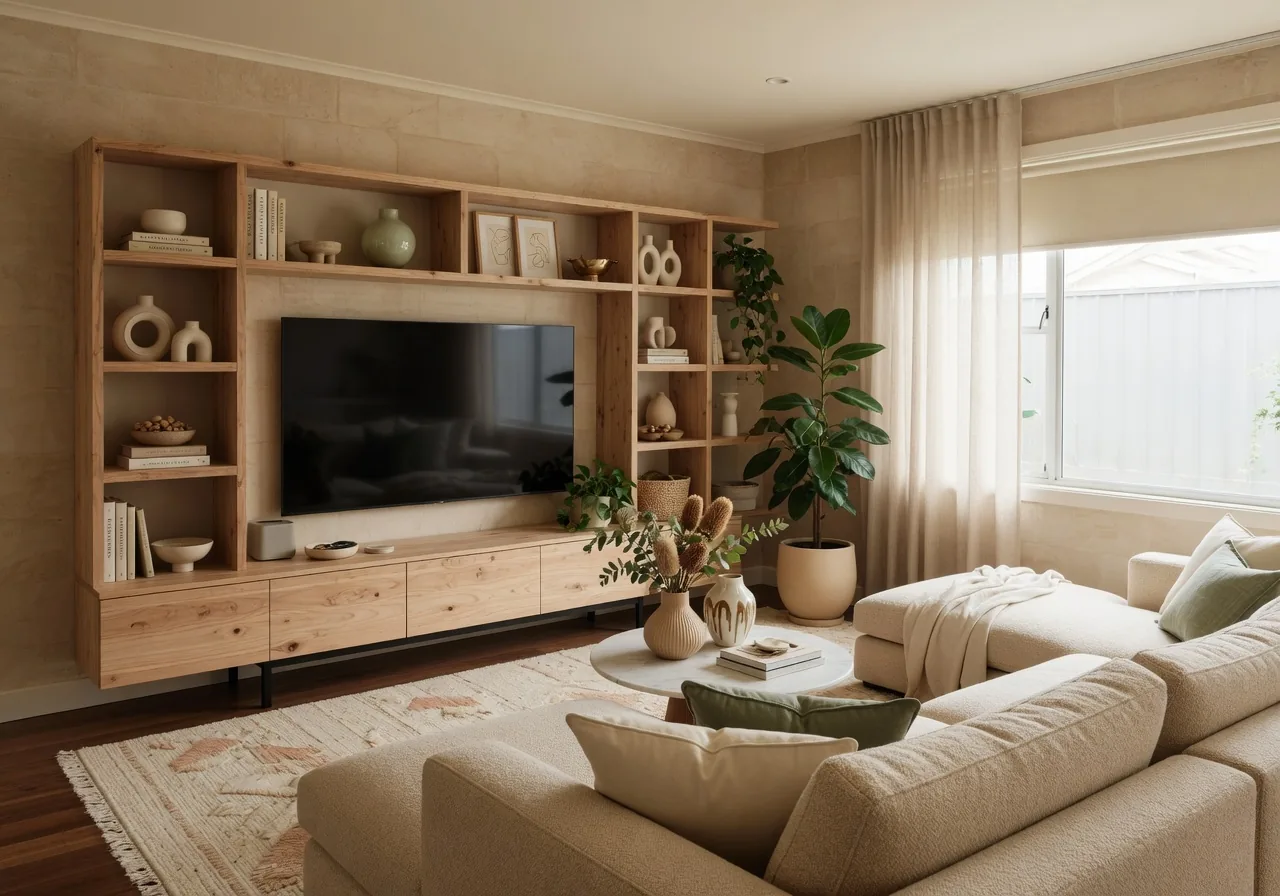
Category Guide
Living rooms have to handle quiet nights, visitors, pets, children, screens, books and the clutter left behind after a normal day.
Start here
Choose the part of the room that is not working, from seating and rugs to lighting, cables or the clutter that never finds its way back.
Compare portable, fixed and personal heating options around the room, climate and length of use.
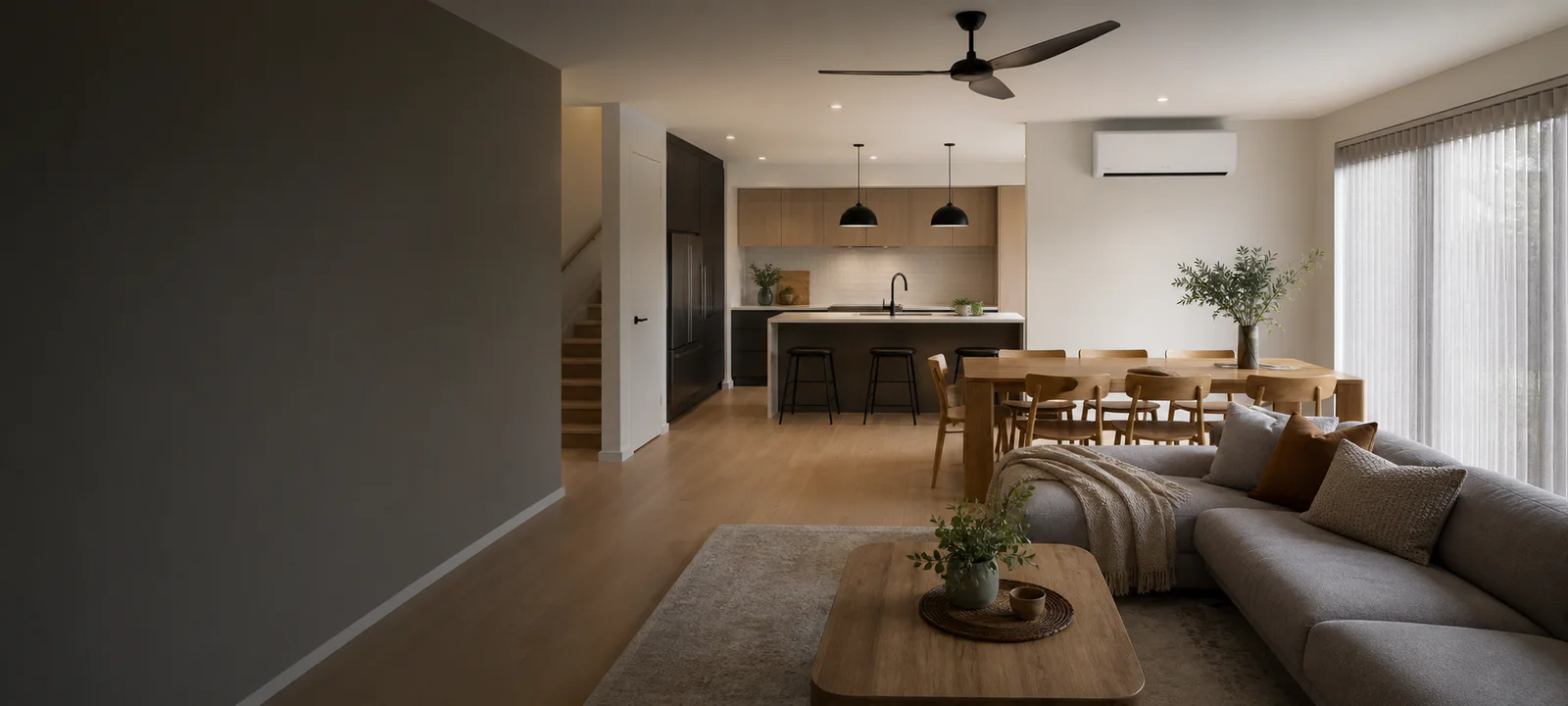
Measure connected volume, ceiling height, glazing, airflow and zoning before choosing heating for an open-plan room.
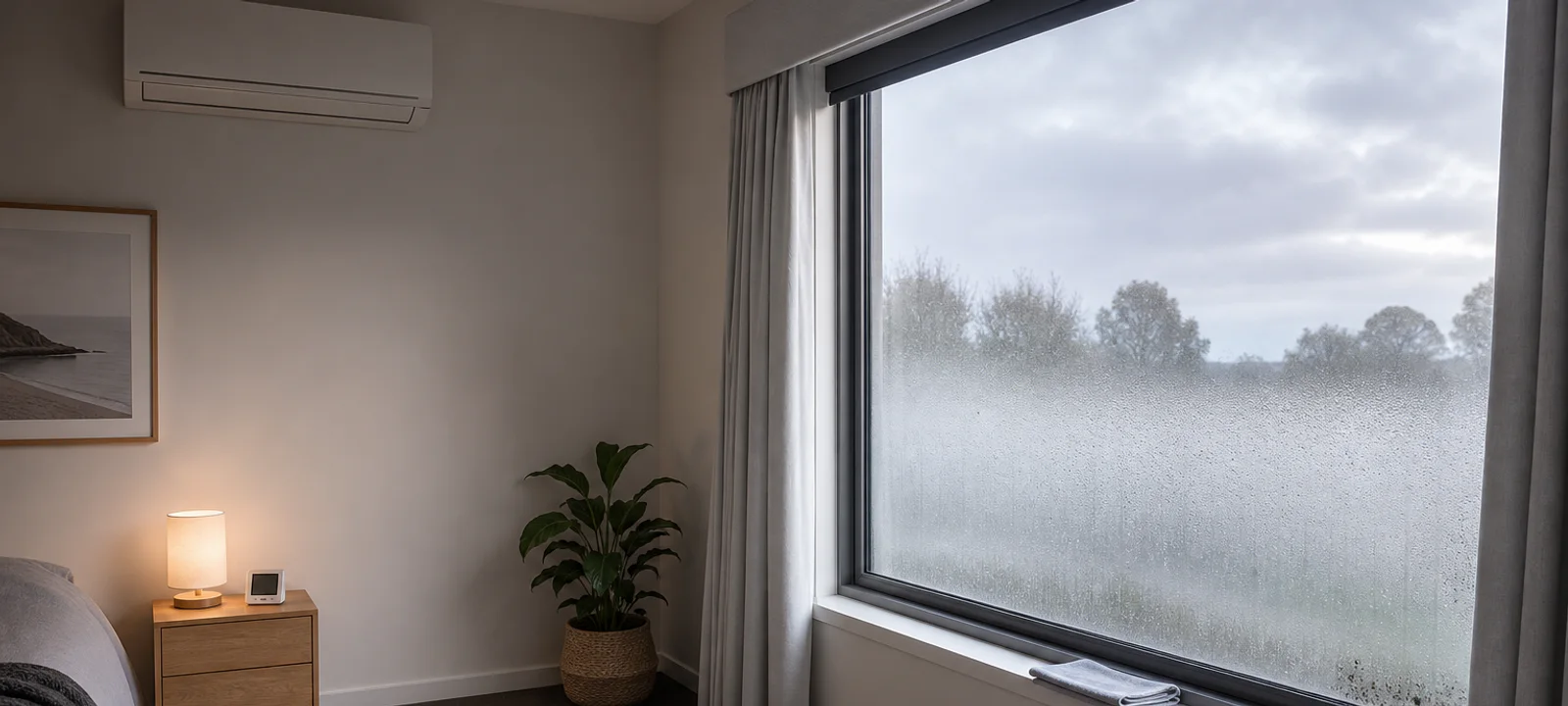
Identify moisture sources, cold surfaces, ventilation problems and leaks before recurring winter condensation becomes a larger mould problem.
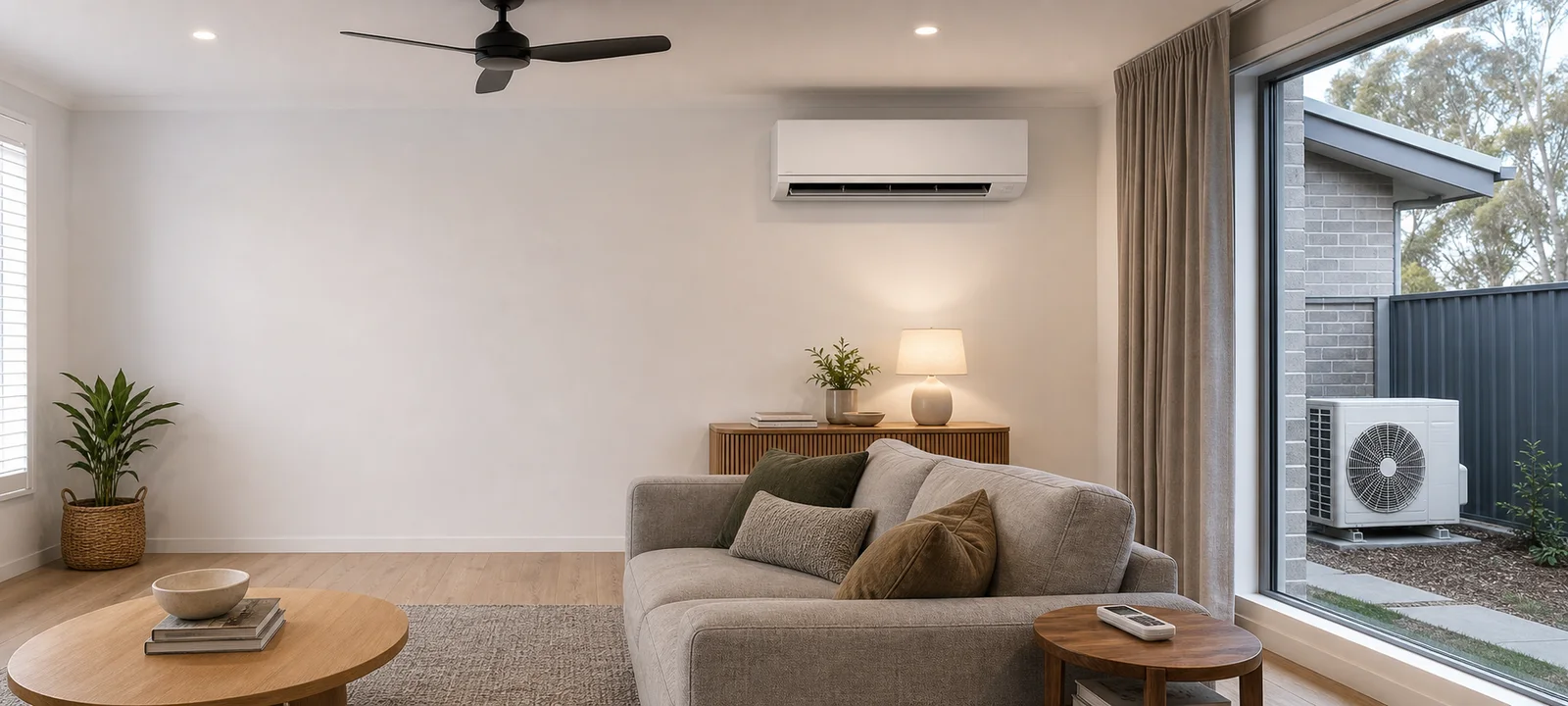
Check heating operation, climate performance, defrost cycles, sizing, installation and winter controls.
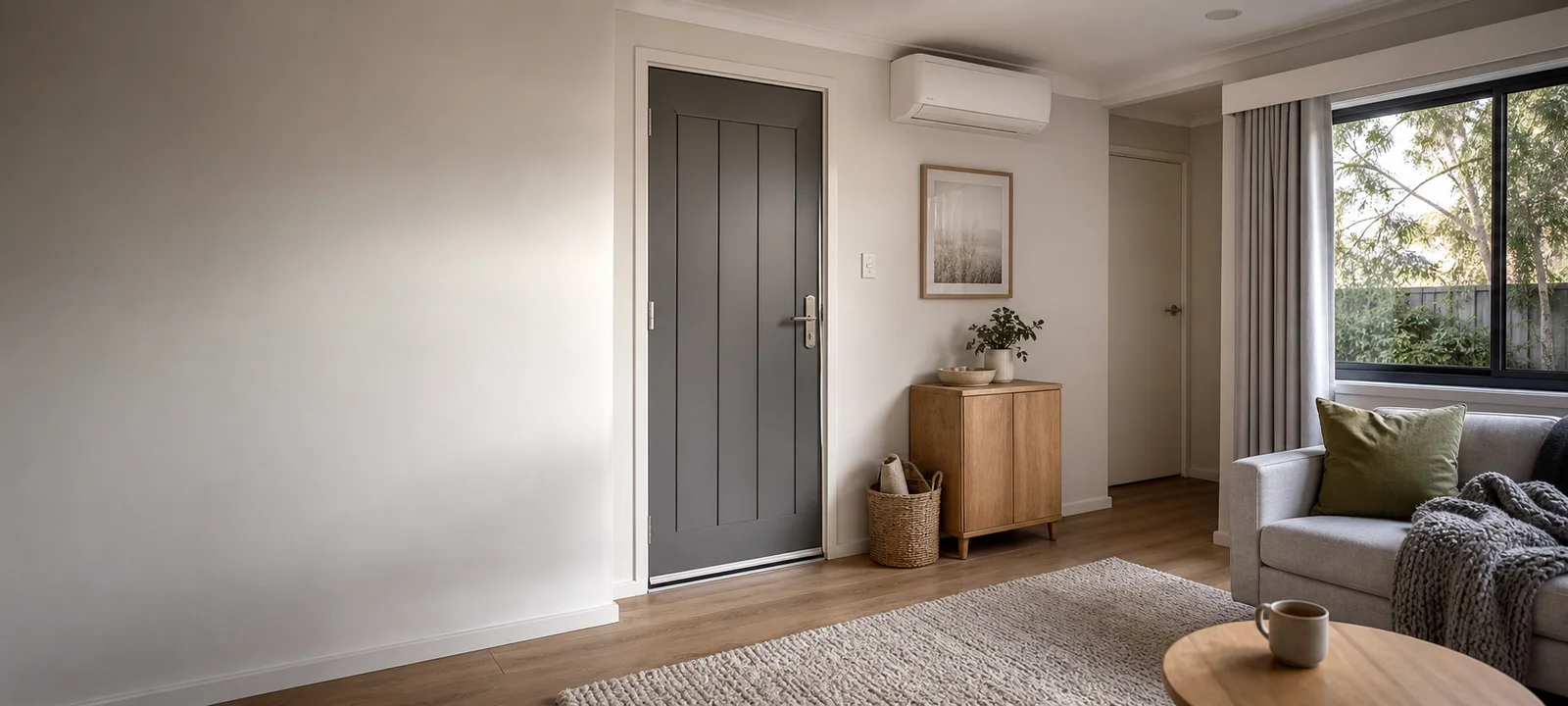
Find avoidable air leaks around doors, windows, exhaust fans and other gaps without blocking required ventilation.
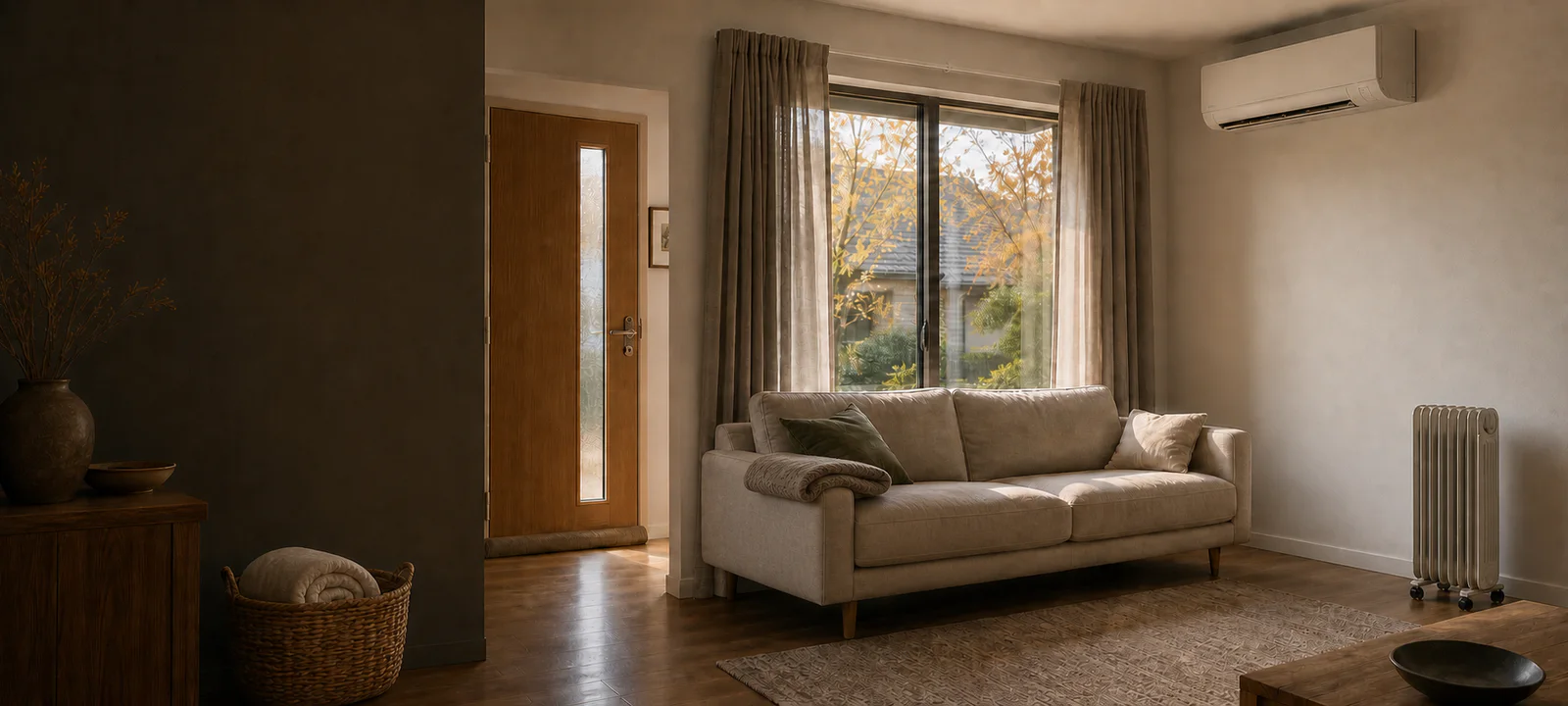
Check heating, electric bedding, draughts, window coverings, insulation and maintenance before cooler weather.
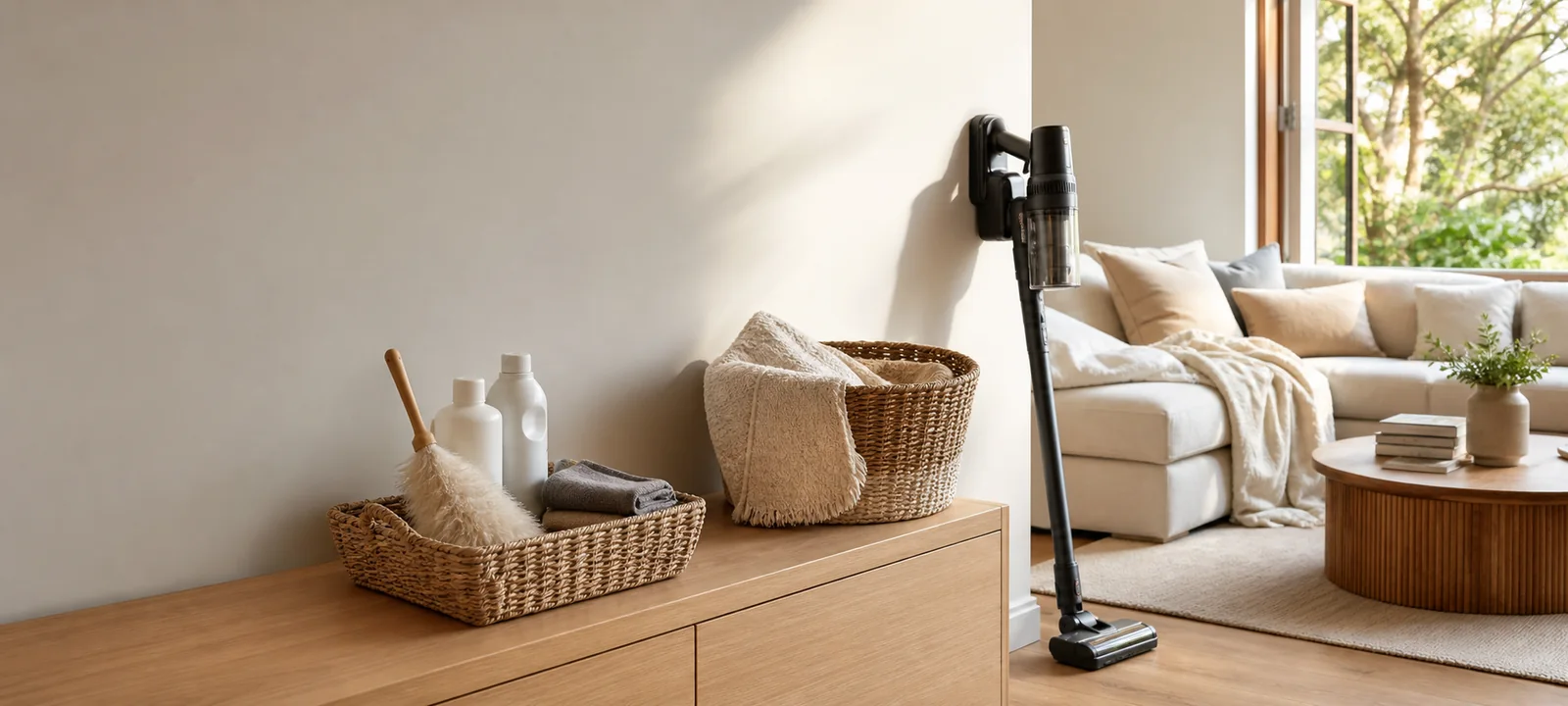
Reset each room, handle household chemicals safely, improve ventilation and avoid unnecessary products.
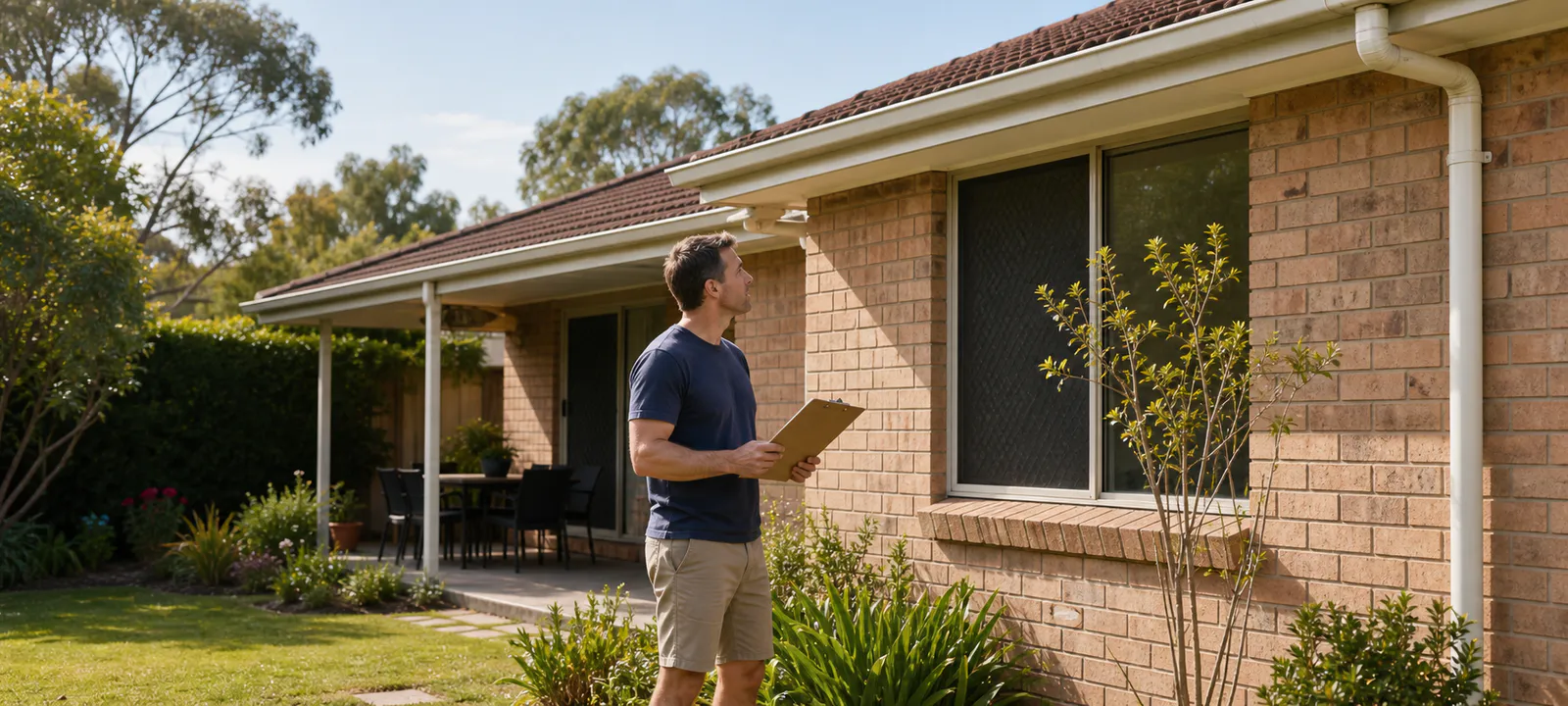
Check gutters, windows, cooling, moisture, smoke alarms and outdoor areas before warmer weather arrives.
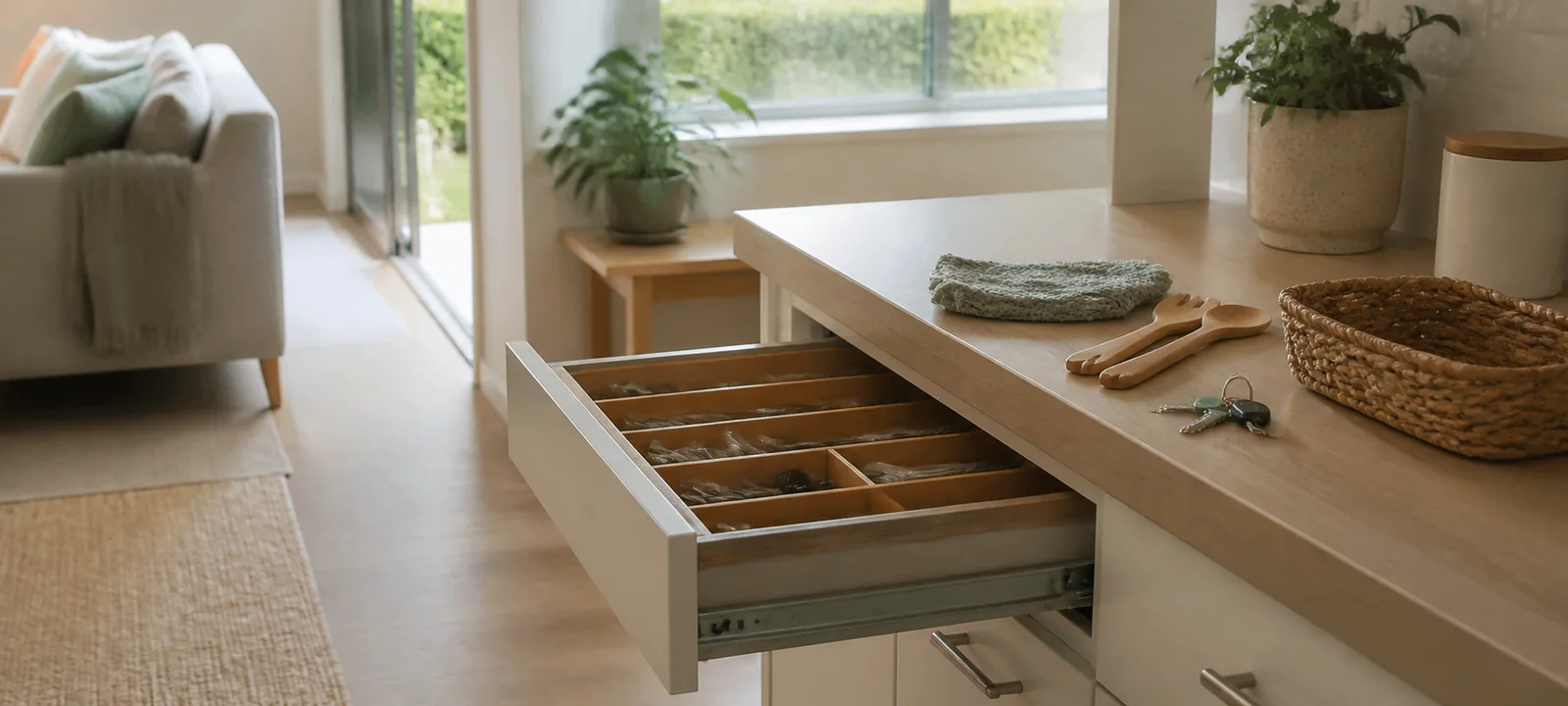
Choose one small spring job to make a drawer, shelf, surface or everyday area feel easier to use.
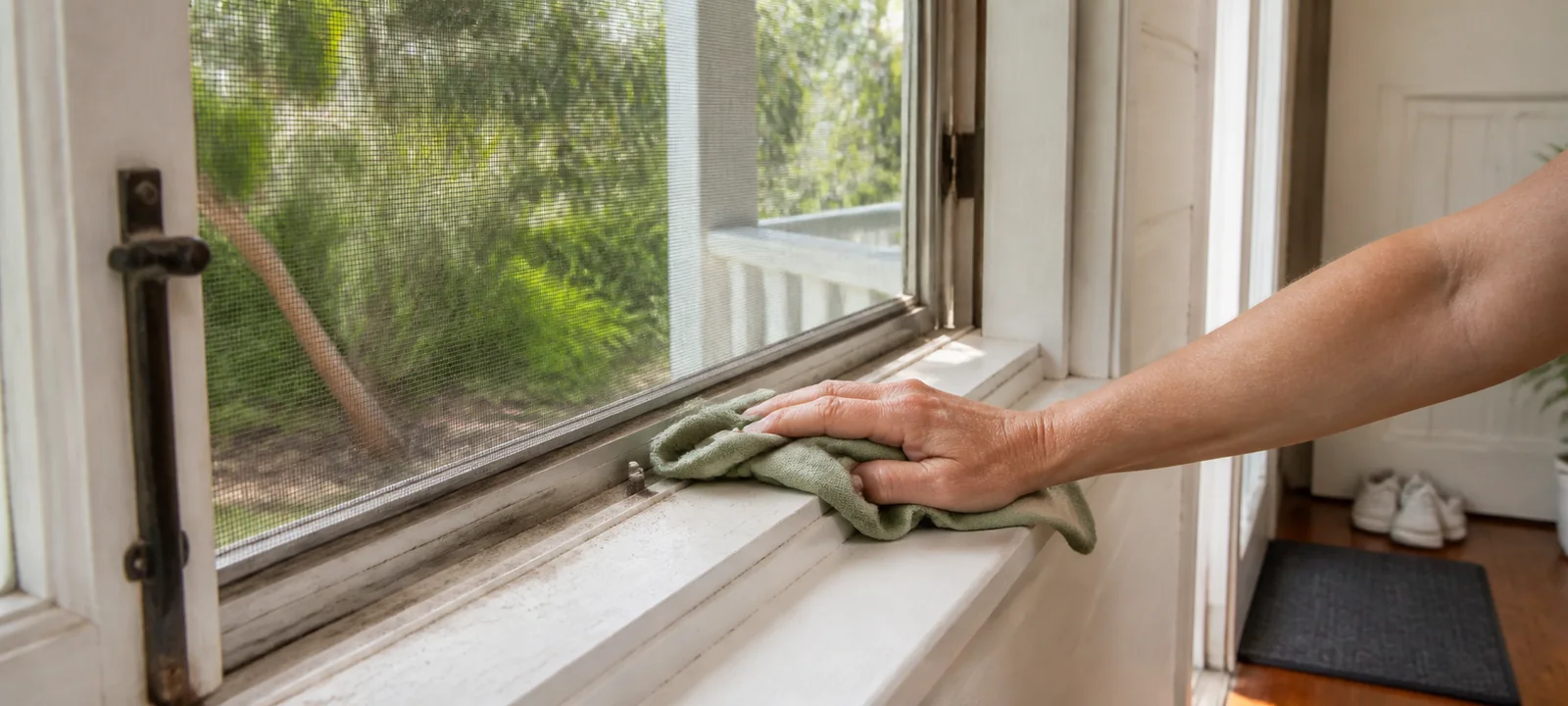
Trace entry routes, manage outdoor clothes and pet traffic, remove settled material and understand filtration limits.
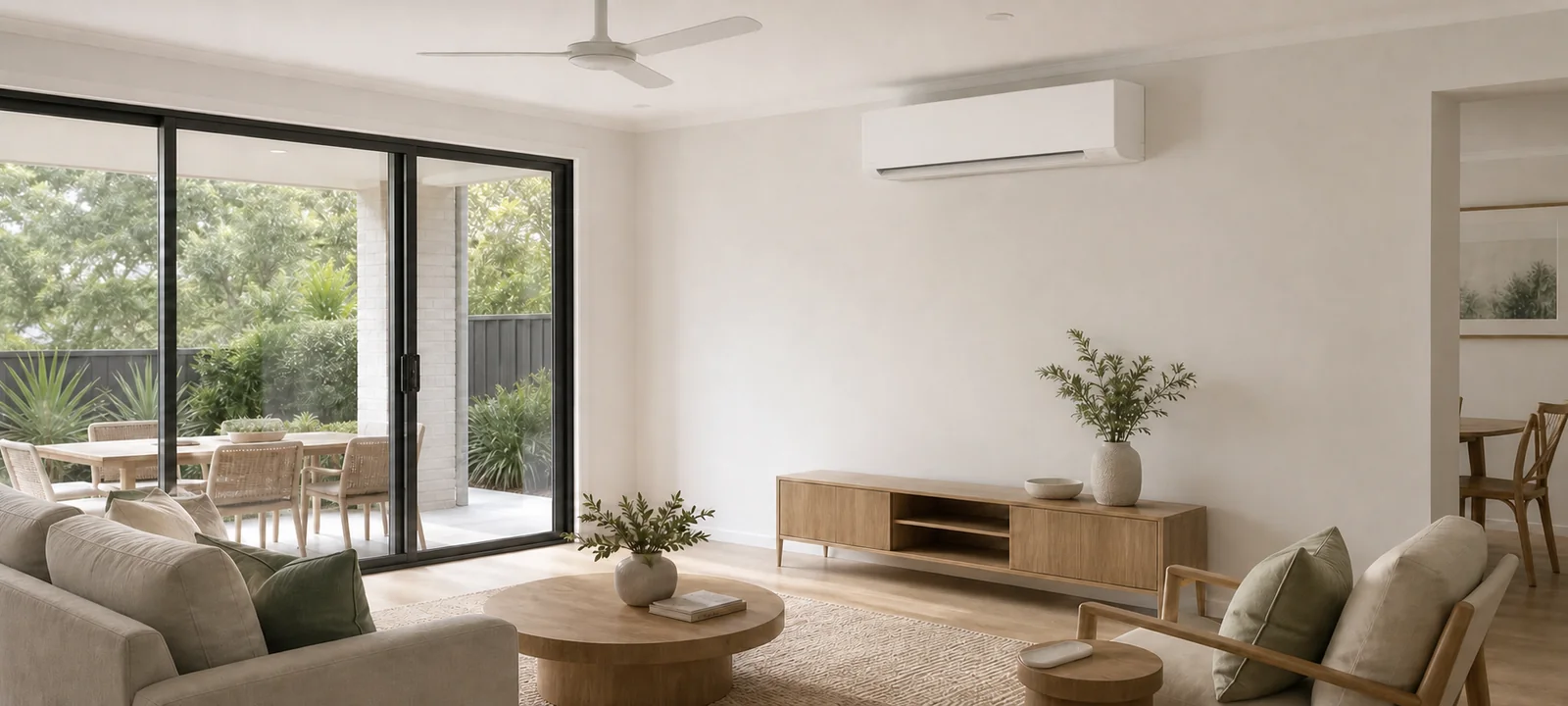
Compare system types, sizing, efficiency, installation, noise and climate suitability before buying.
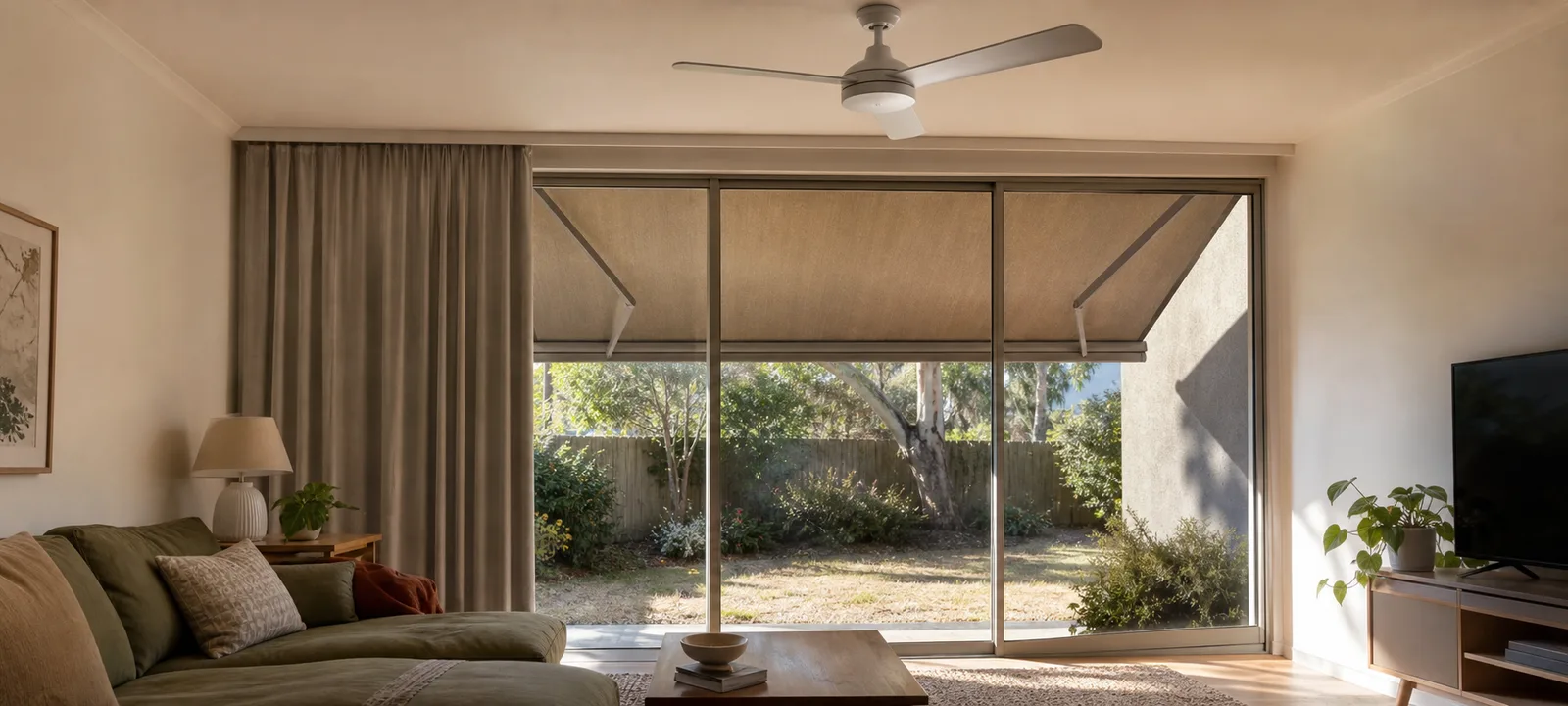
Reduce summer heat gain with practical checks for shading, insulation, ventilation, fans, draughts and air-conditioner use.
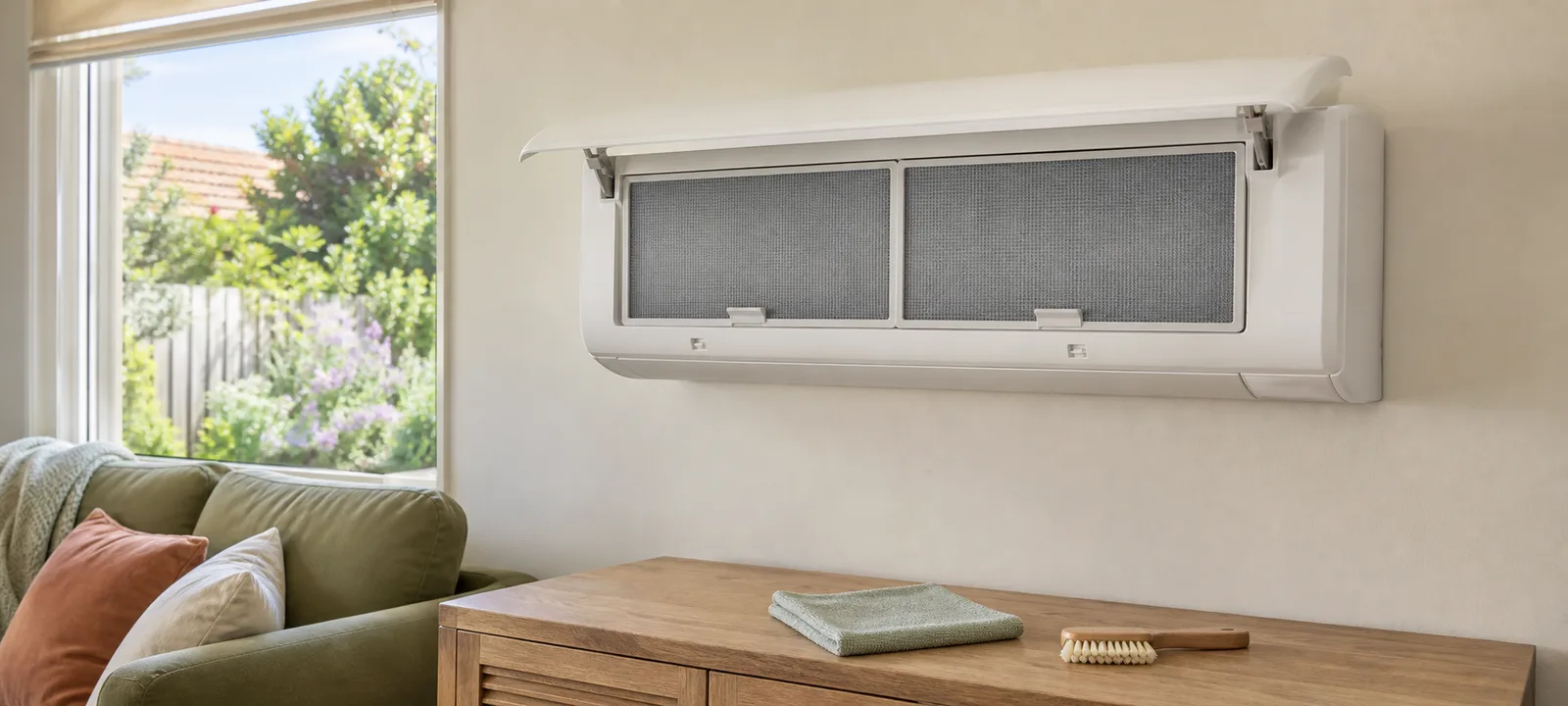
Check filters, airflow, drainage, controls and outdoor clearances, and know when licensed technical servicing is required.
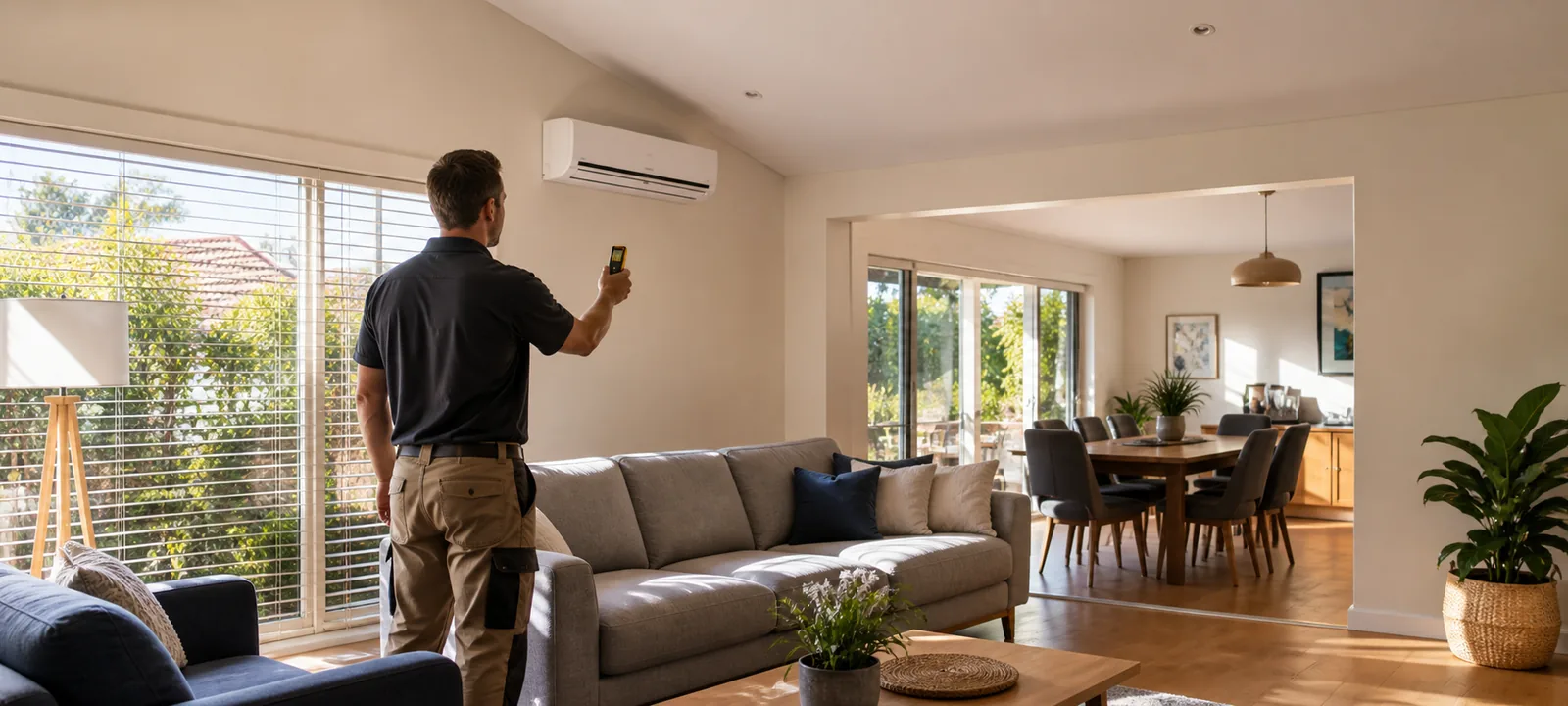
Measure the room, then account for ceilings, glazing, sun, insulation, climate and connected spaces before choosing capacity.
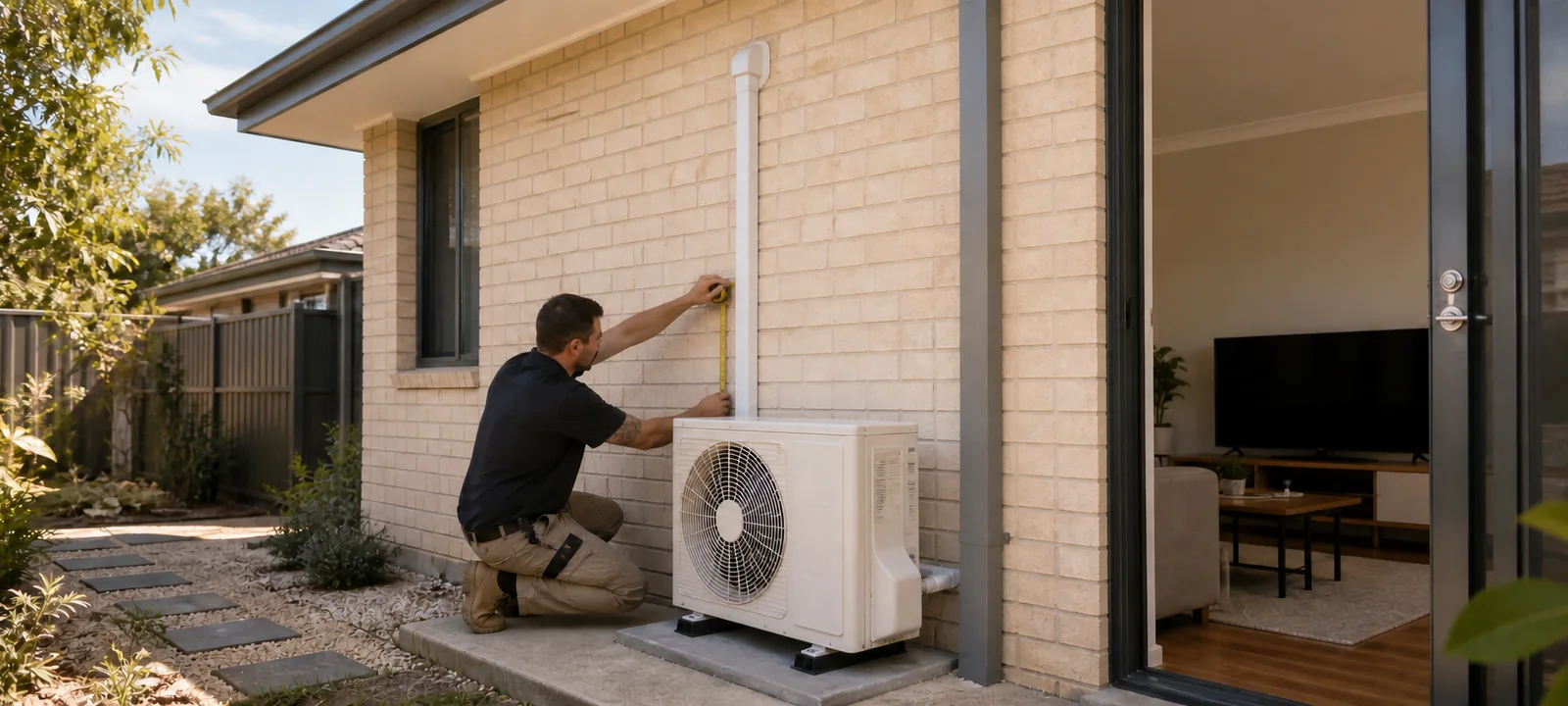
Compare back-to-back placement, pipe length, electrical work, drainage, mounting and access before accepting an installation quote.
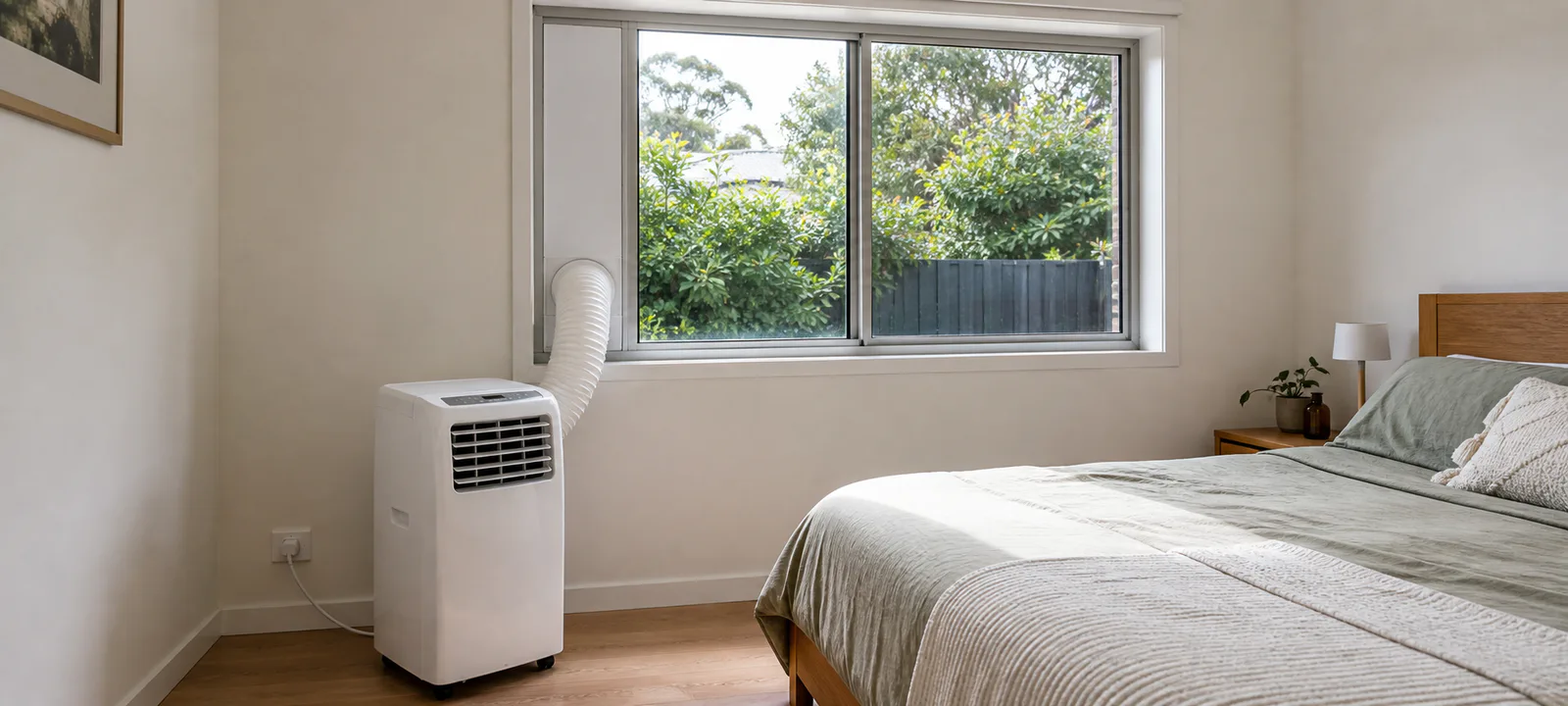
Check the room, window kit, exhaust hose, noise, condensate and climate suitability before buying a portable refrigerated unit.
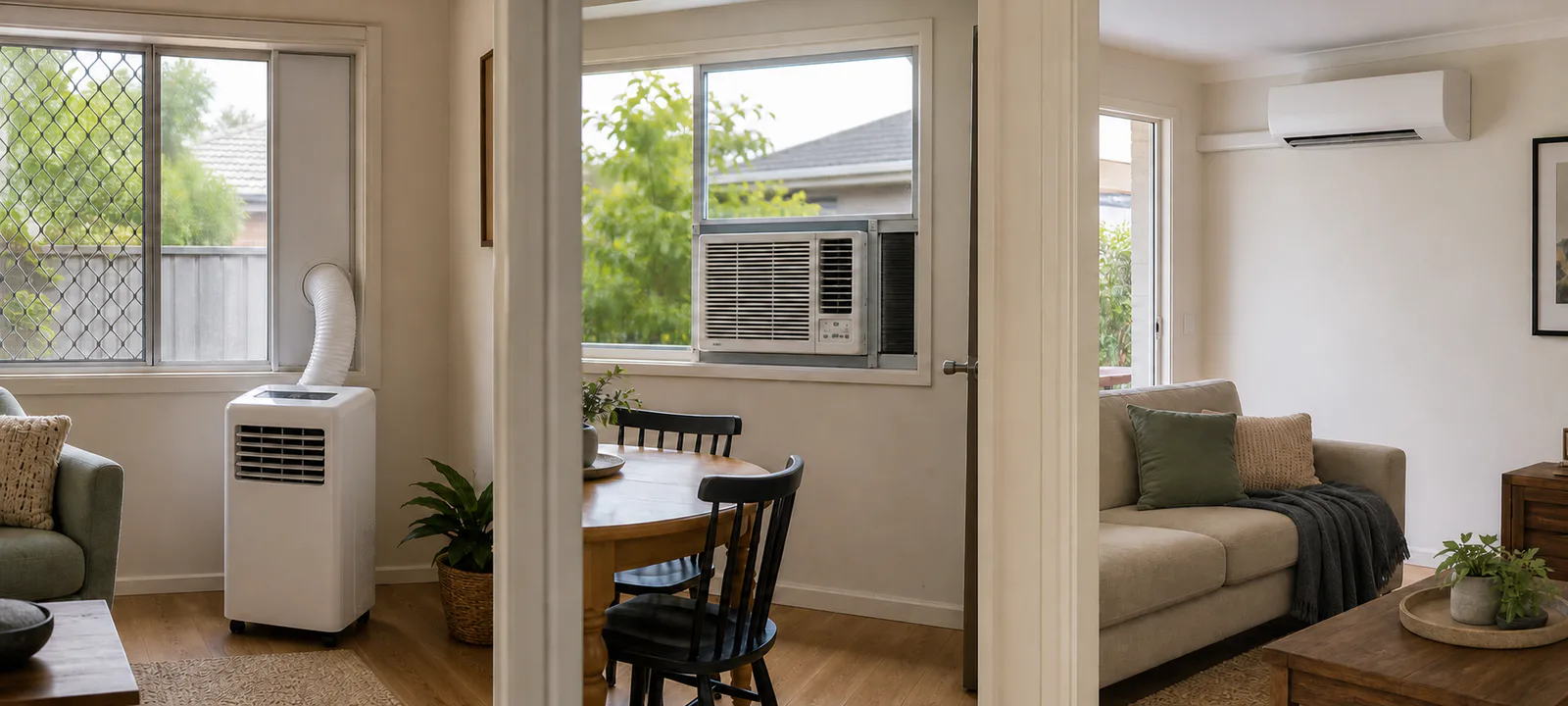
Compare installation, noise, efficiency, room suitability and long-term use across three common single-room formats.
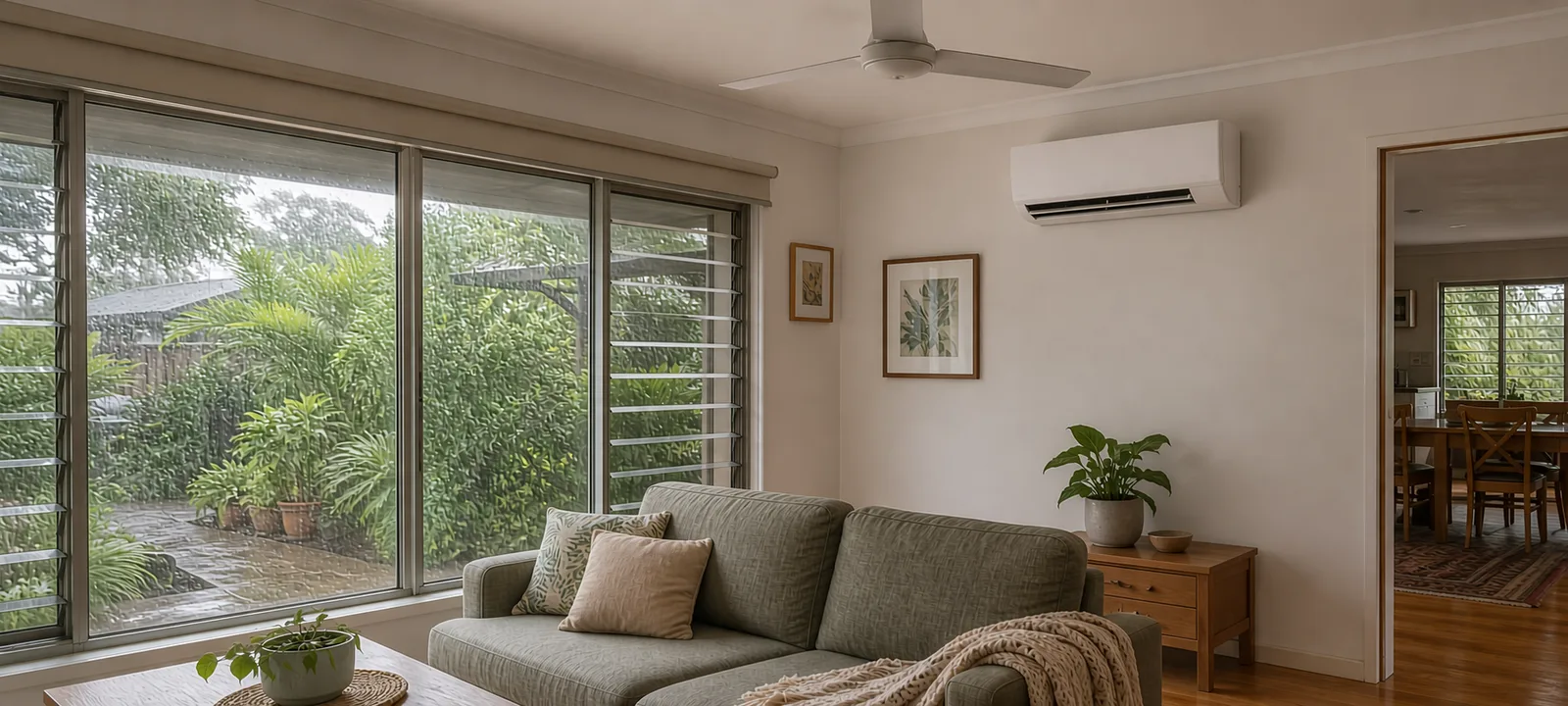
Understand when dry mode suits muggy weather, how it differs from cooling and when persistent moisture needs another response.
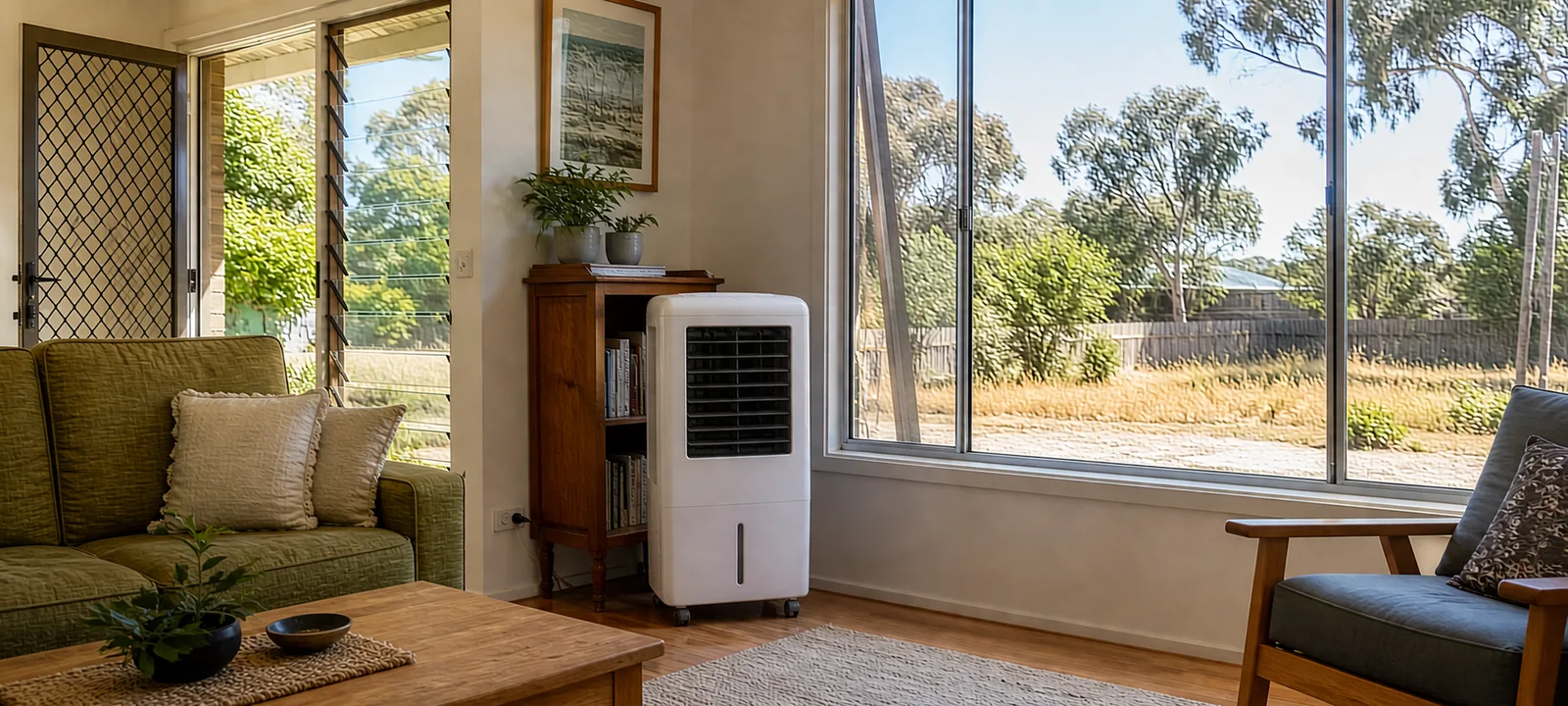
Compare climate suitability, humidity, ventilation, moisture, water use and cooling expectations before choosing a system.
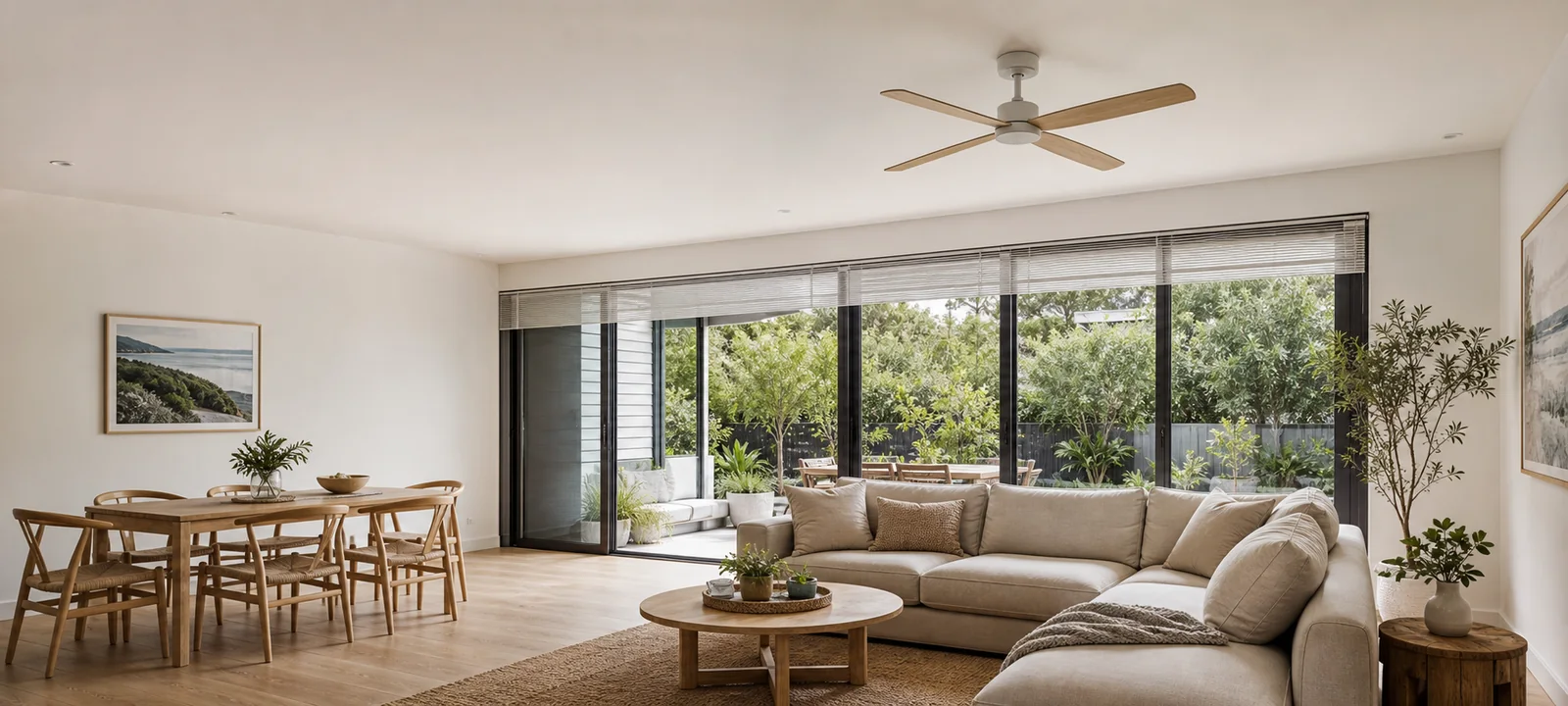
Measure blade span, ceiling height, clearances, controls, noise and installation requirements before choosing a ceiling fan.
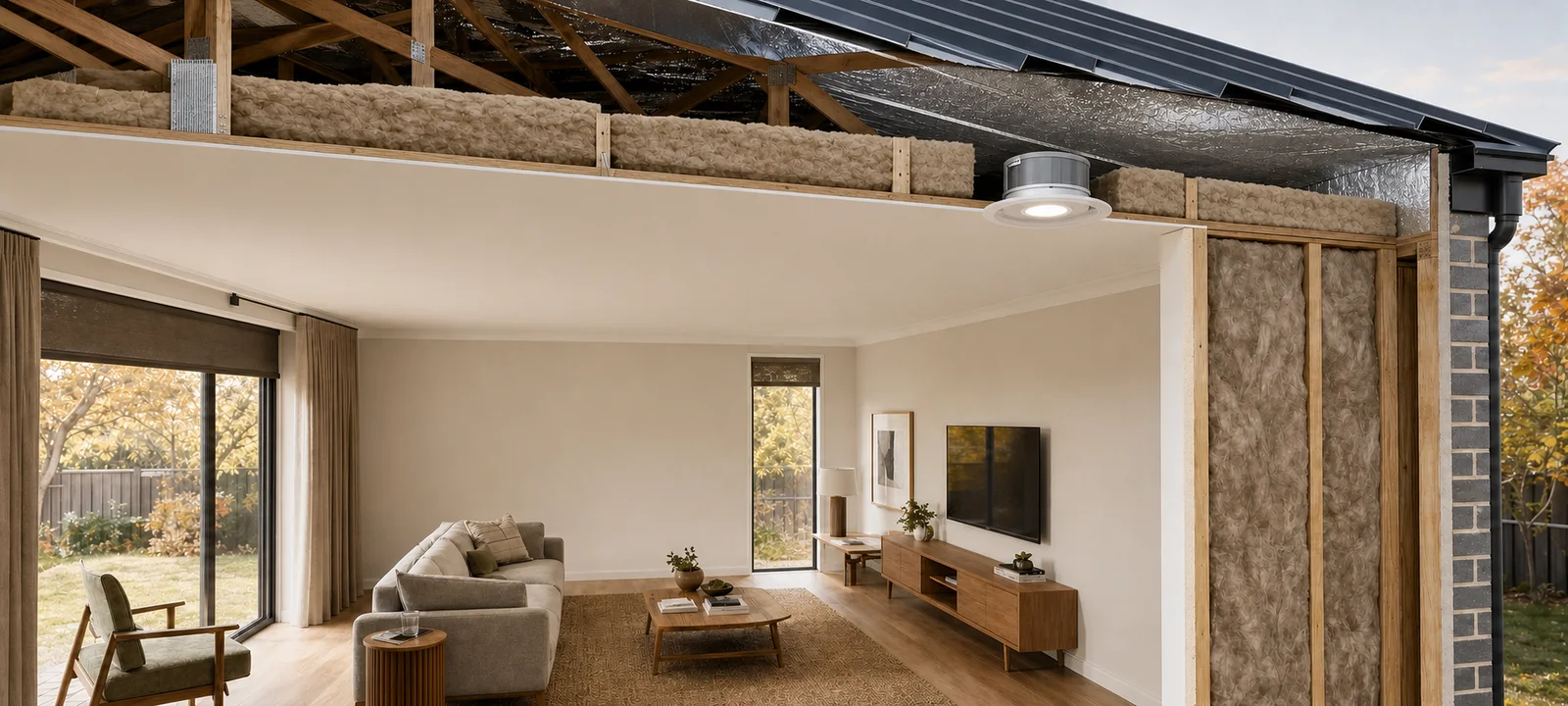
Understand insulation types, R-values, climate suitability, installation quality, electrical clearances and condensation.
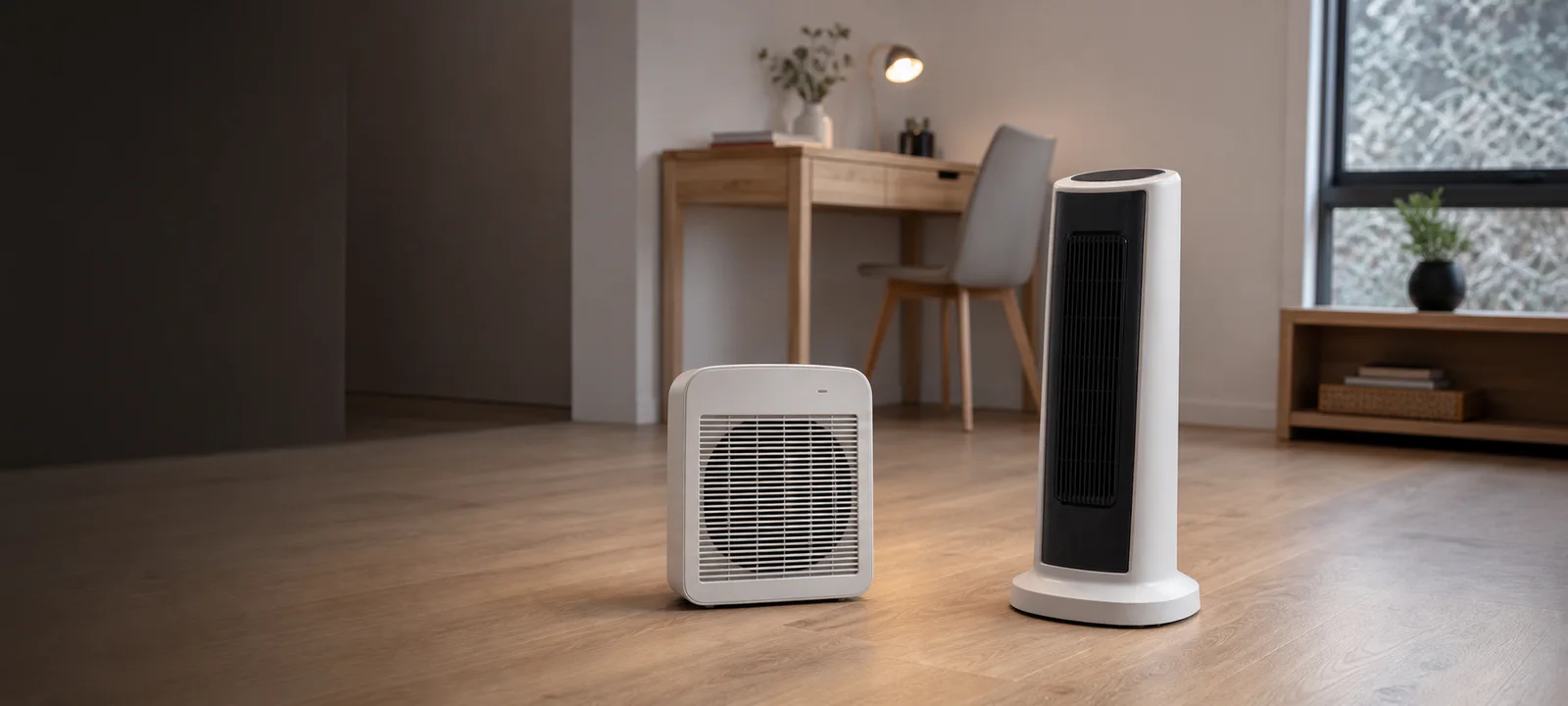
Compare heat delivery, warm-up speed, noise, controls, room suitability and safety before you choose.
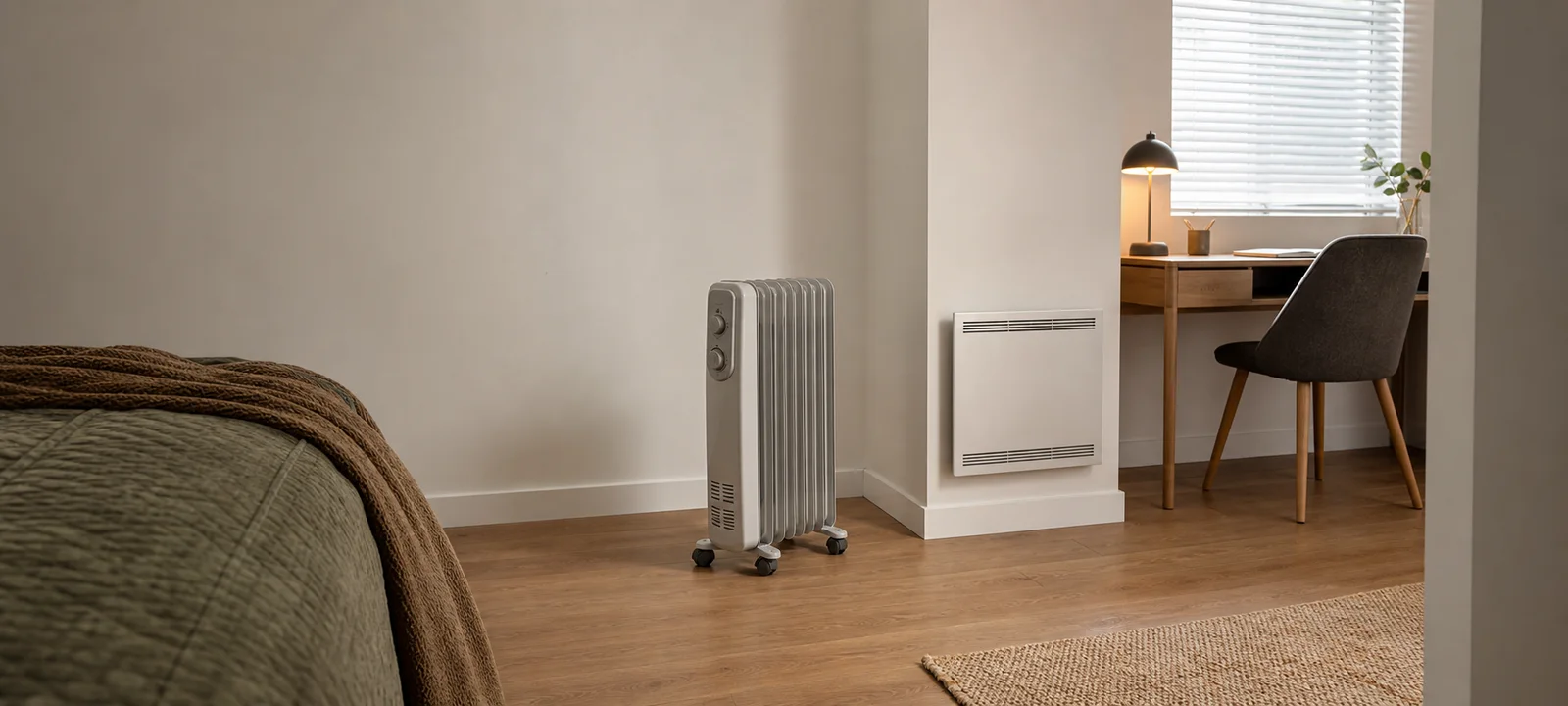
Compare quiet background heating around warm-up time, controls, placement, portability, electricity use and room suitability.
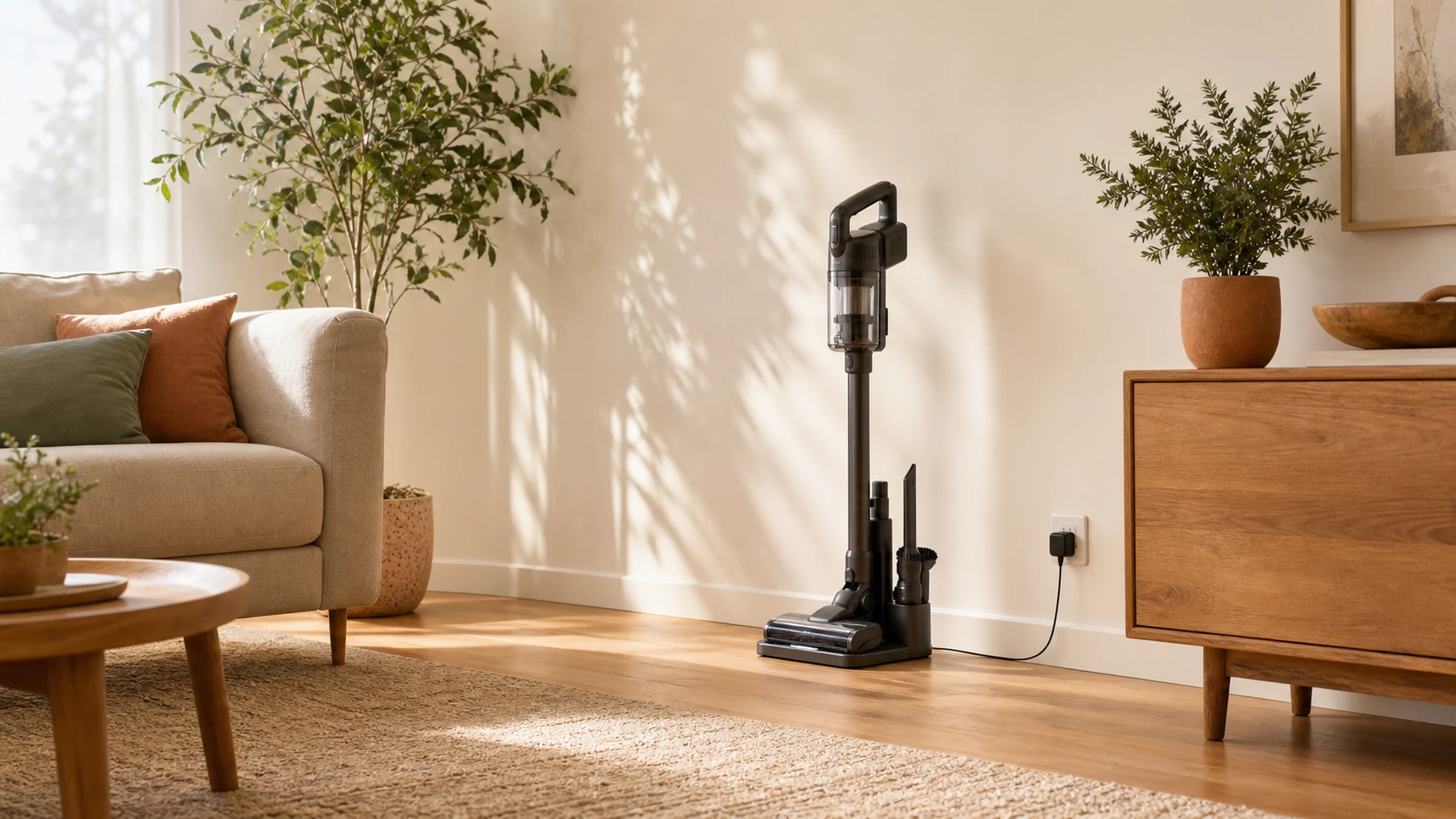
Compare usable run time, handle weight, floor heads, charging arrangements and consumables.
Compare navigation, mopping, dock size, obstacle handling, consumables and floor layout.
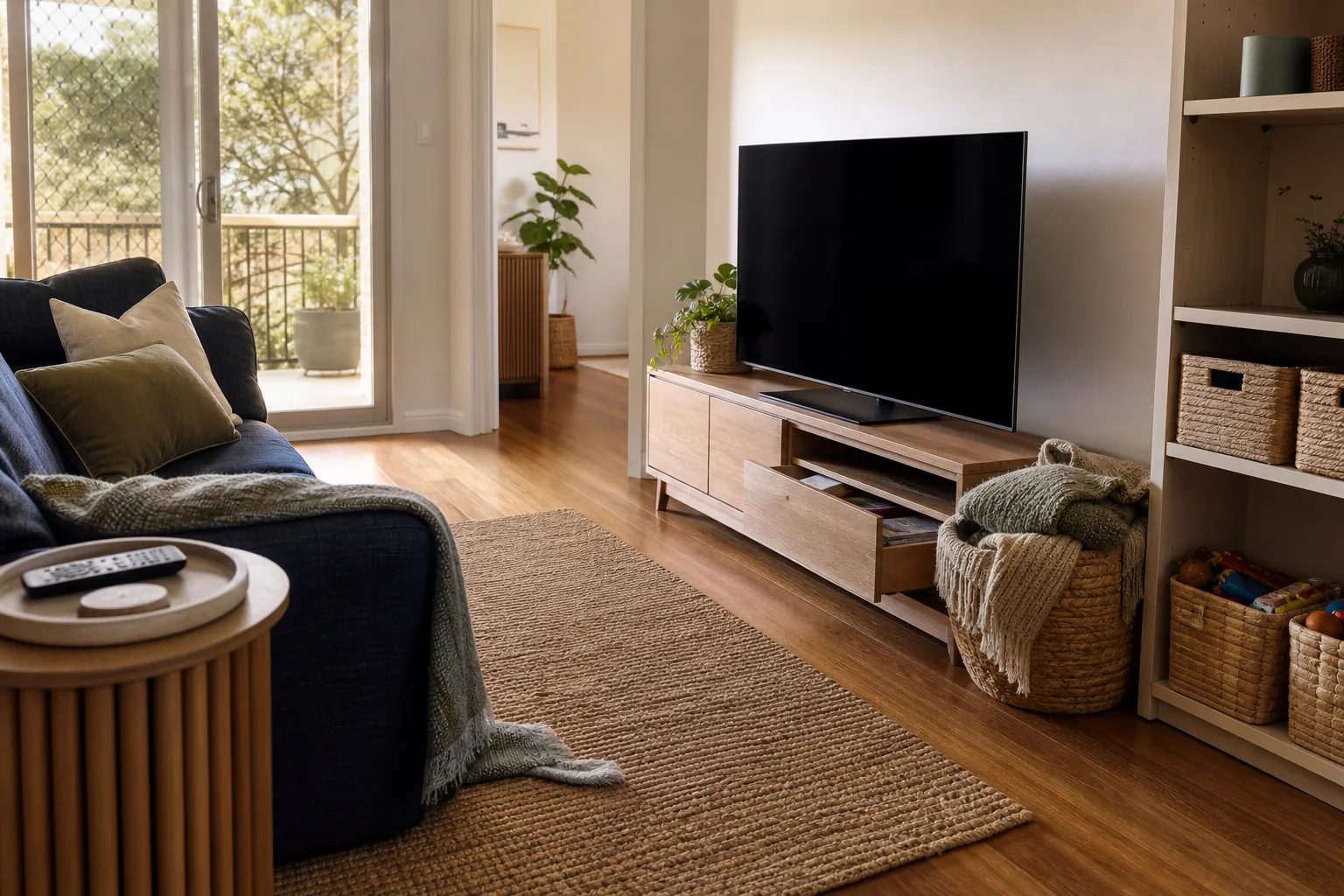
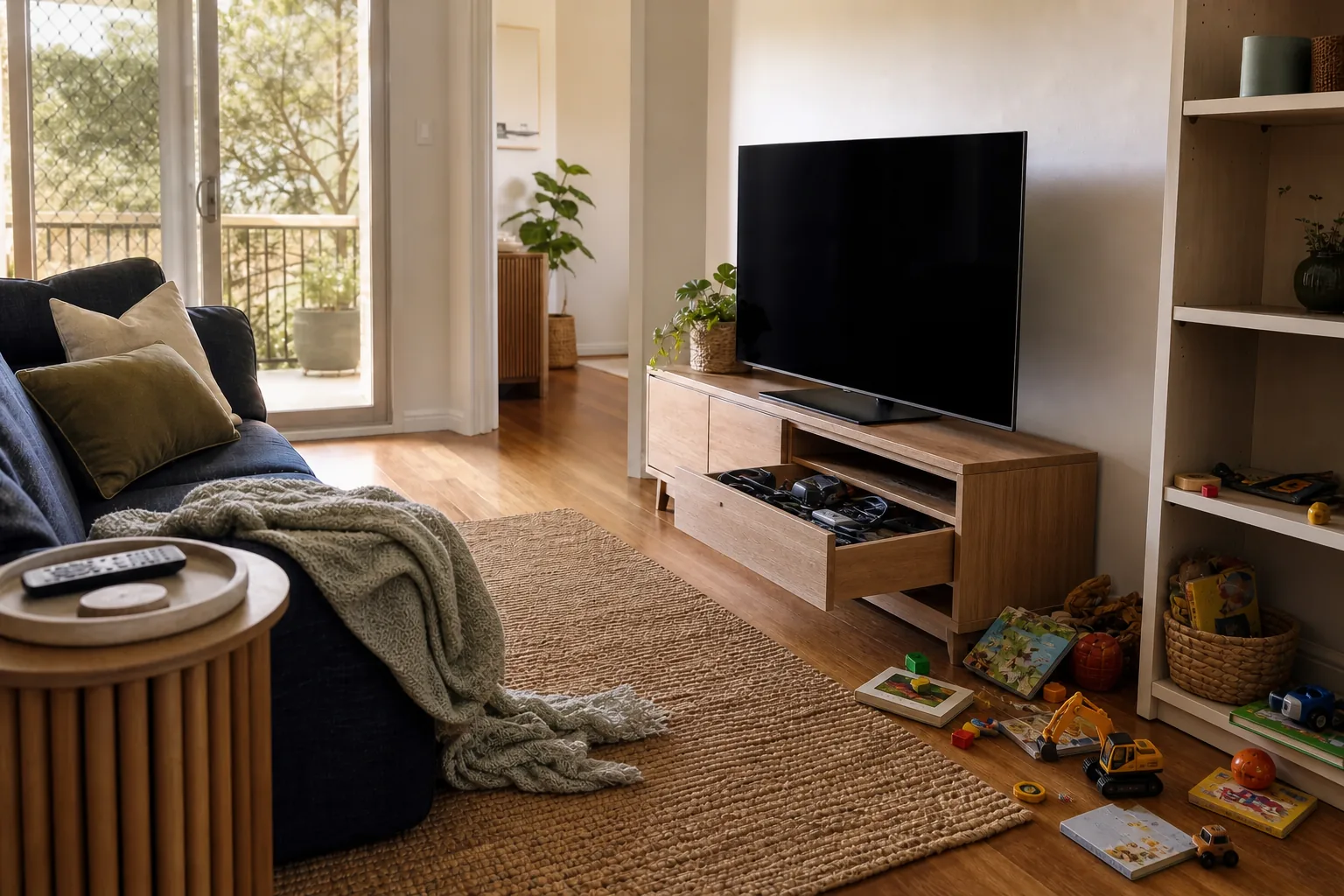
Ideas for baskets, media units, toys, blankets and books without making the room feel over-managed.
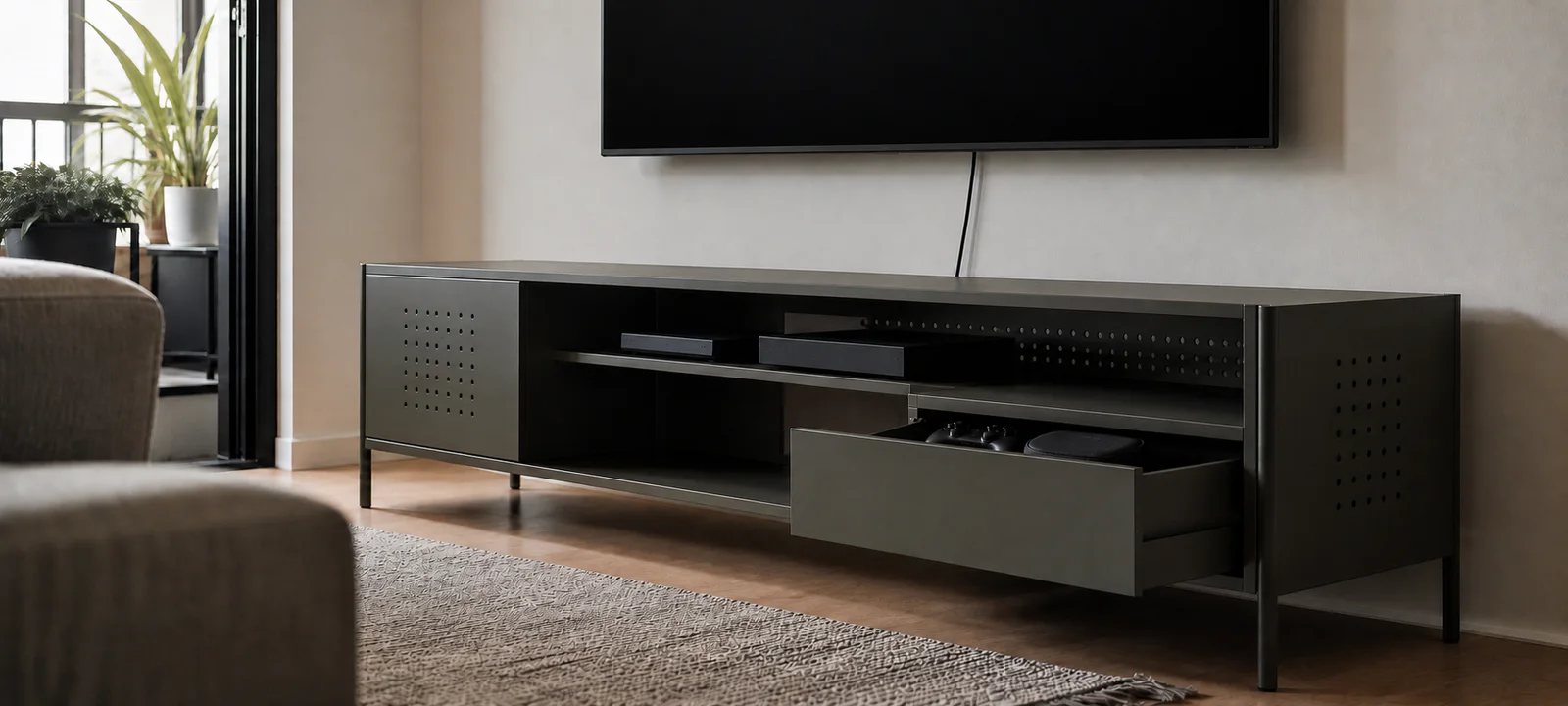
Measure your TV, wall space, devices, cables and living room clearance before buying a media unit.
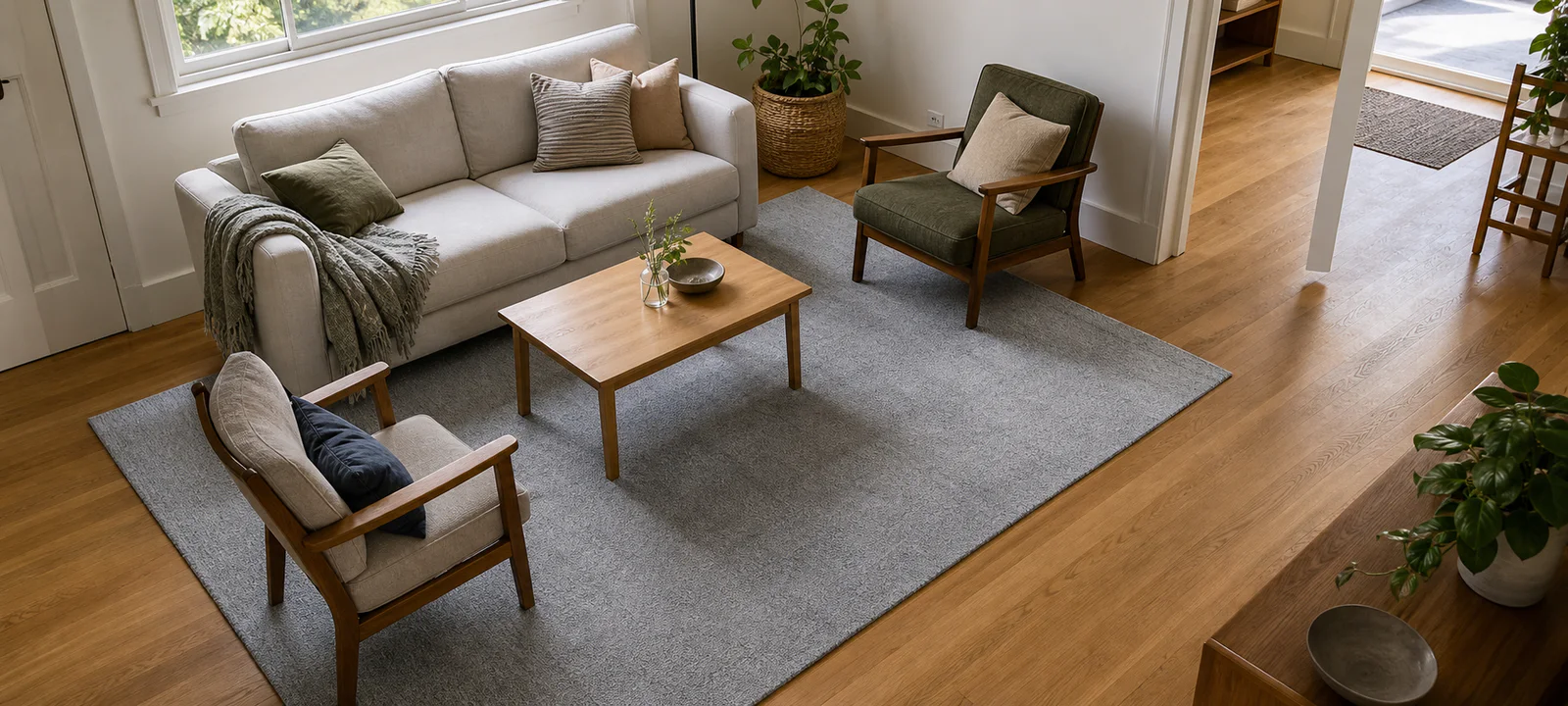
Measure your seating area, walkways, furniture and floor surface before choosing a living room rug.
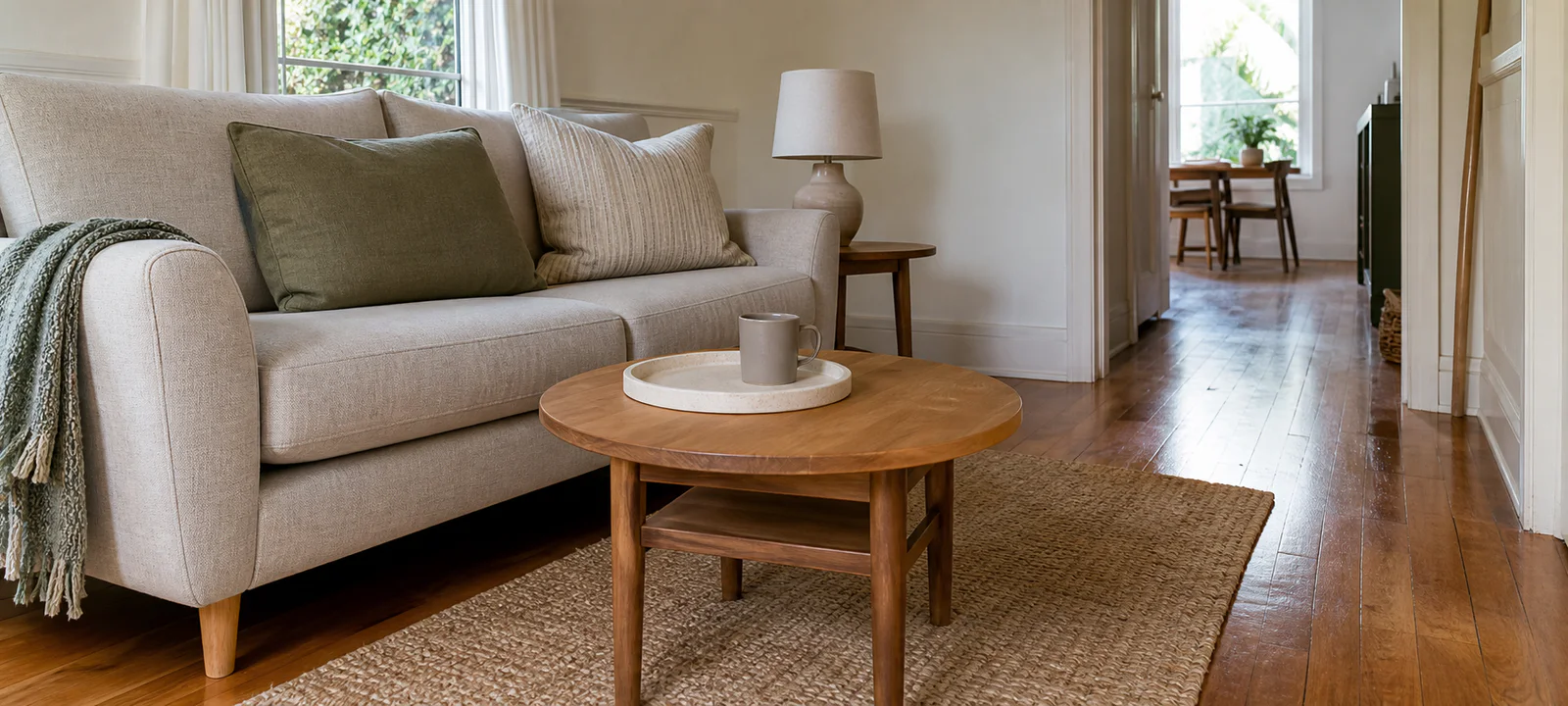
Compare living room tables by measuring sofa height, walkways, rug placement and everyday use.
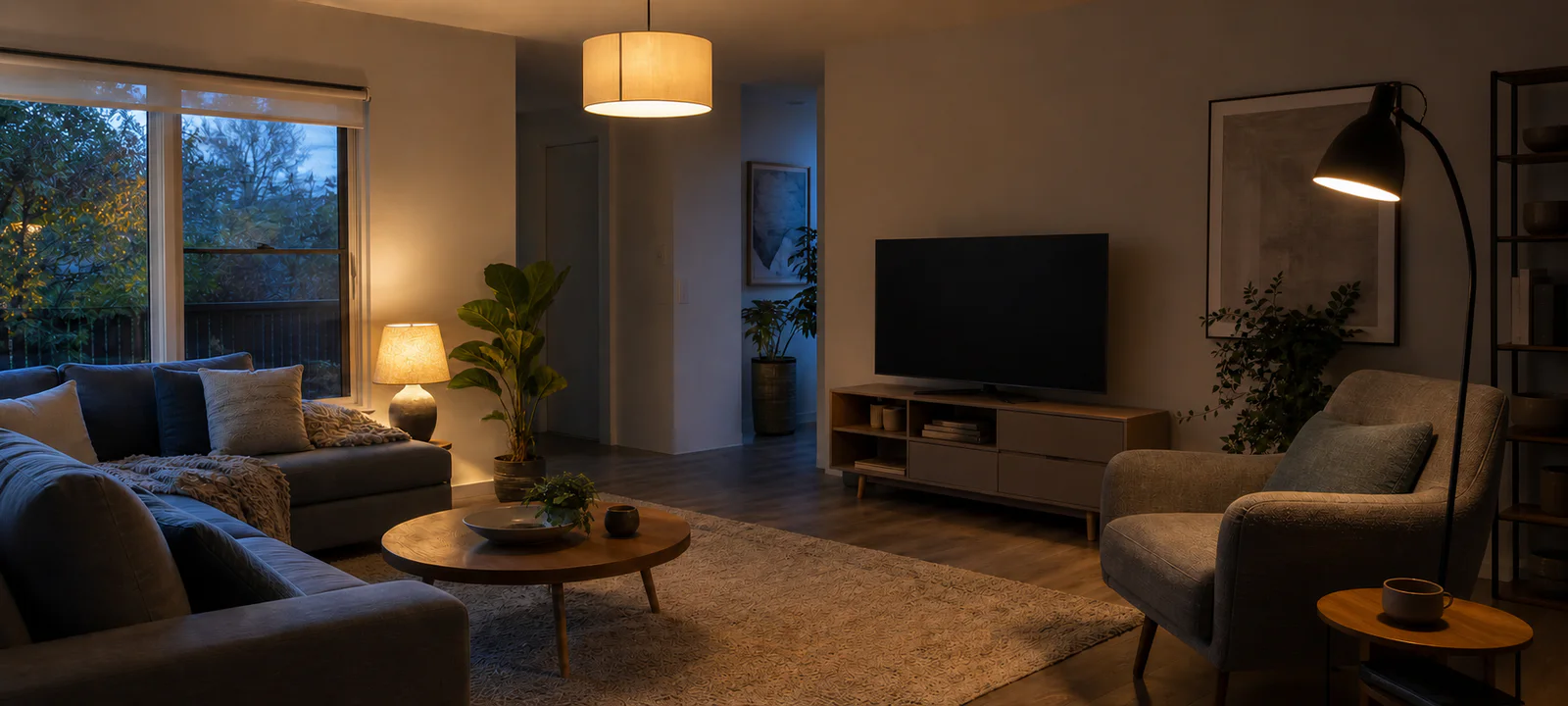
Plan living room lighting around seating, TV glare, power points, lamps and everyday household use.
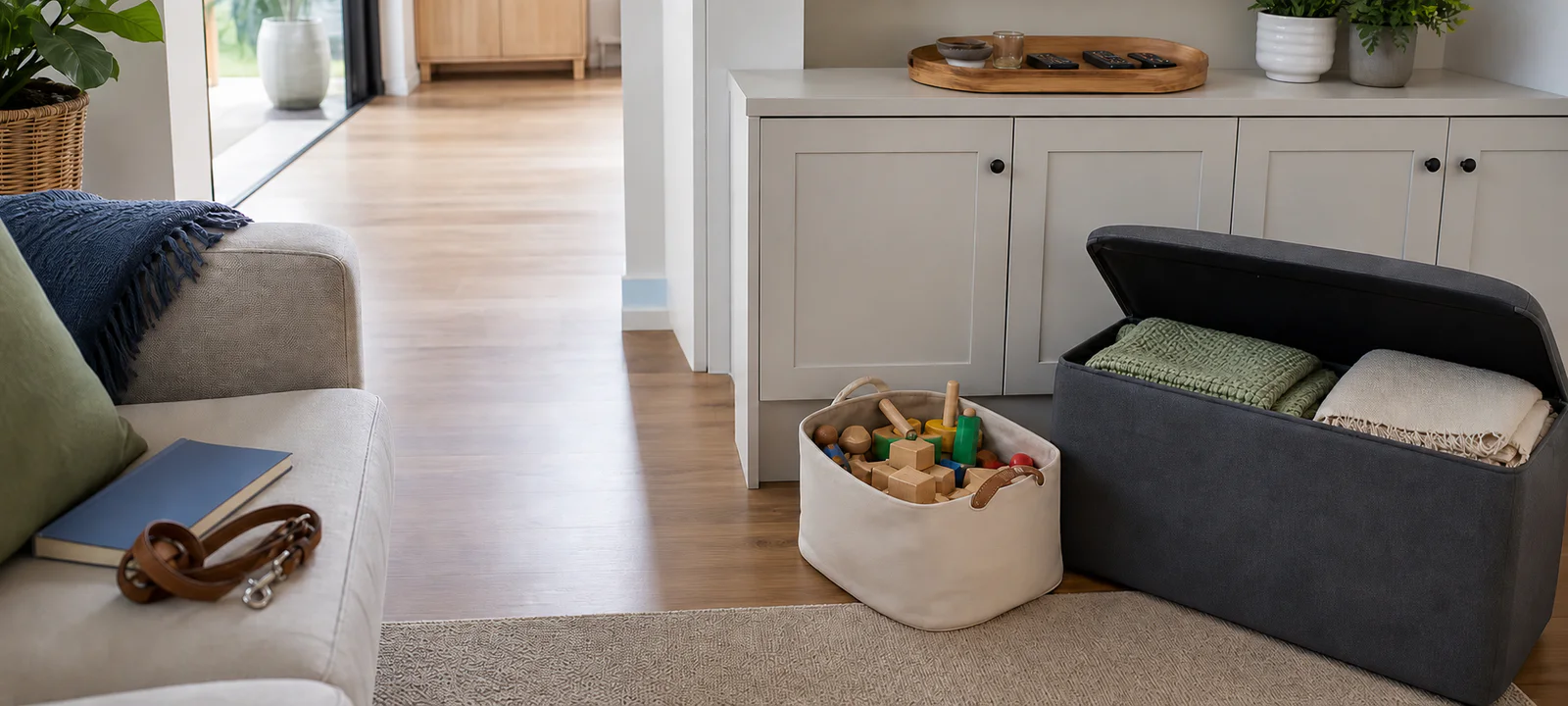
Plan practical living room clutter control for toys, blankets, remotes, pet gear and everyday items.
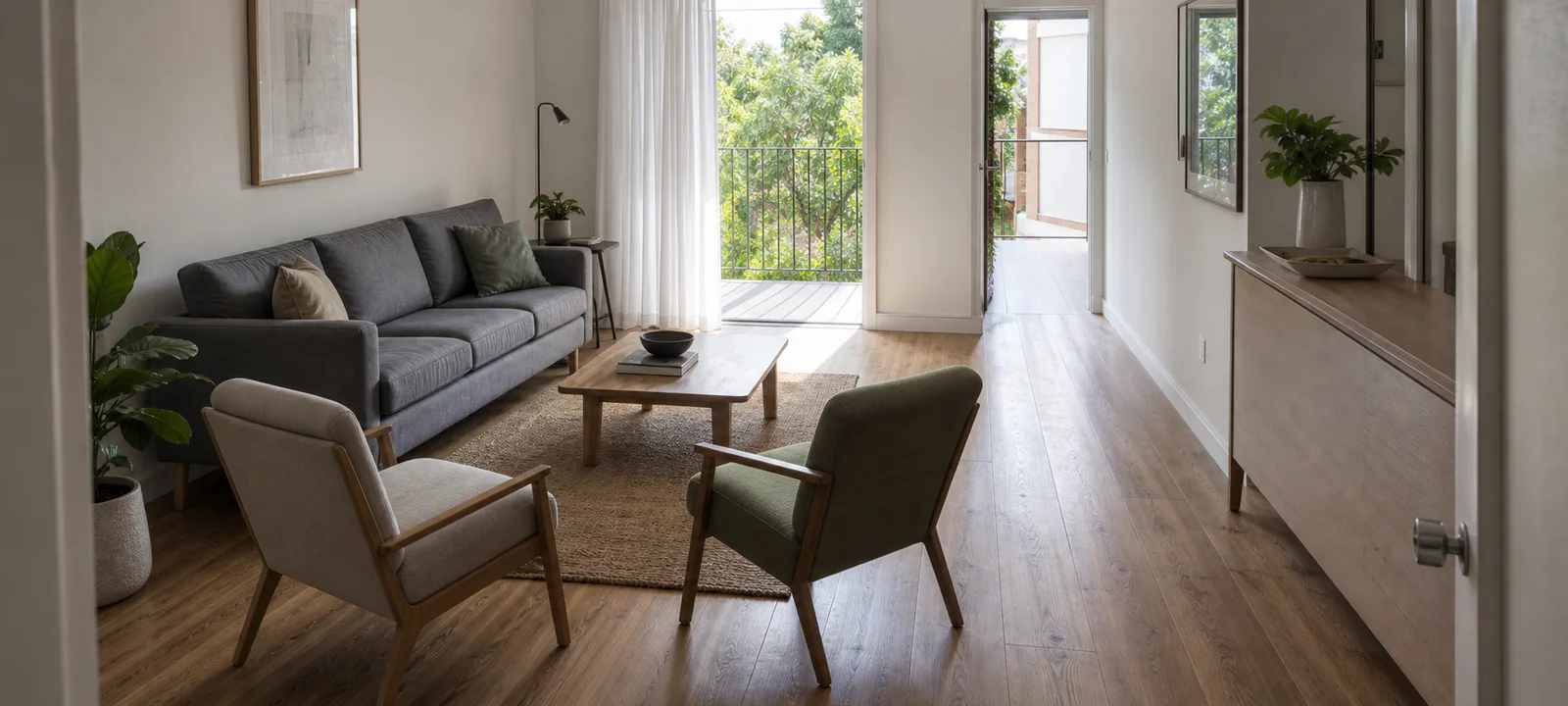
Measure your living room, walkways, rug zone, TV area and access path before buying seating.
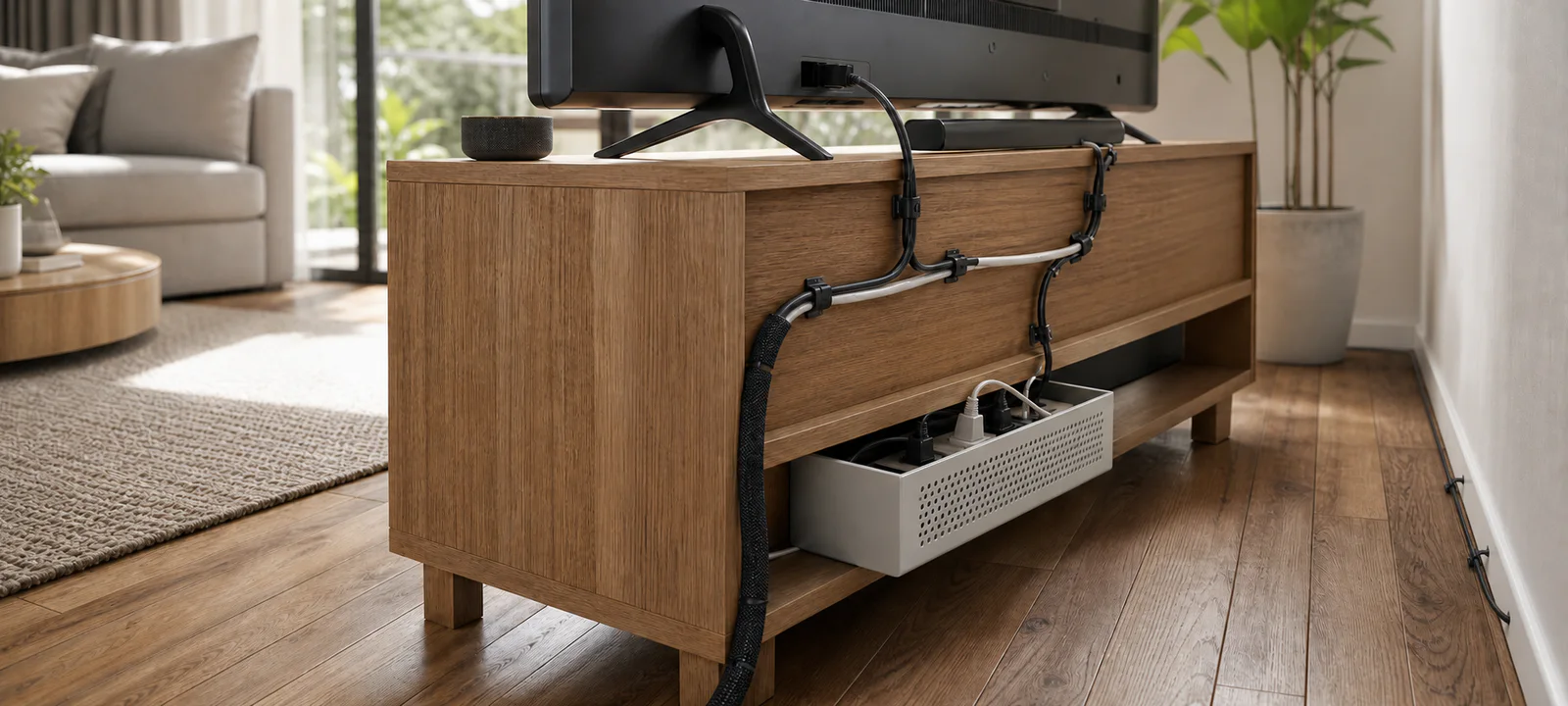
Plan cable management around your TV unit, power points, devices, lamps, walkways and cleaning access.
Category focus
Watch how people sit, move, read and watch television before deciding that another piece of furniture will fix the room.
Useful for blankets, toys and quick resets when they still suit the seating layout.
Add landing spots for drinks, remotes and lamps without taking over the room.
Compare cable access, ventilation, drawer space and the width of your screen.
Useful for toys, blankets and pet items when they are easy to carry and clean.
Choose rugs that suit pets, kids, cleaning routines and the size of the seating area.
Layered lighting can make a living room more useful than one bright ceiling light.
Washable covers can help with pets, children and everyday spills.
Keep chargers, TV cables and power boards neater and easier to clean around.
Plan first
Common mistakes
Related areas
Rooms rarely work in isolation. These nearby categories may help with another part of the same job.
Use a few closed storage points, keep daily-use items grouped and give toys, blankets, remotes and pet items a clear home.
A mix of baskets, closed media storage, side tables and one larger storage piece usually works better than open shelving alone.
Choose washable fabrics, rounded or stable pieces where needed, easy toy storage and lighting that works for both play and evenings.