
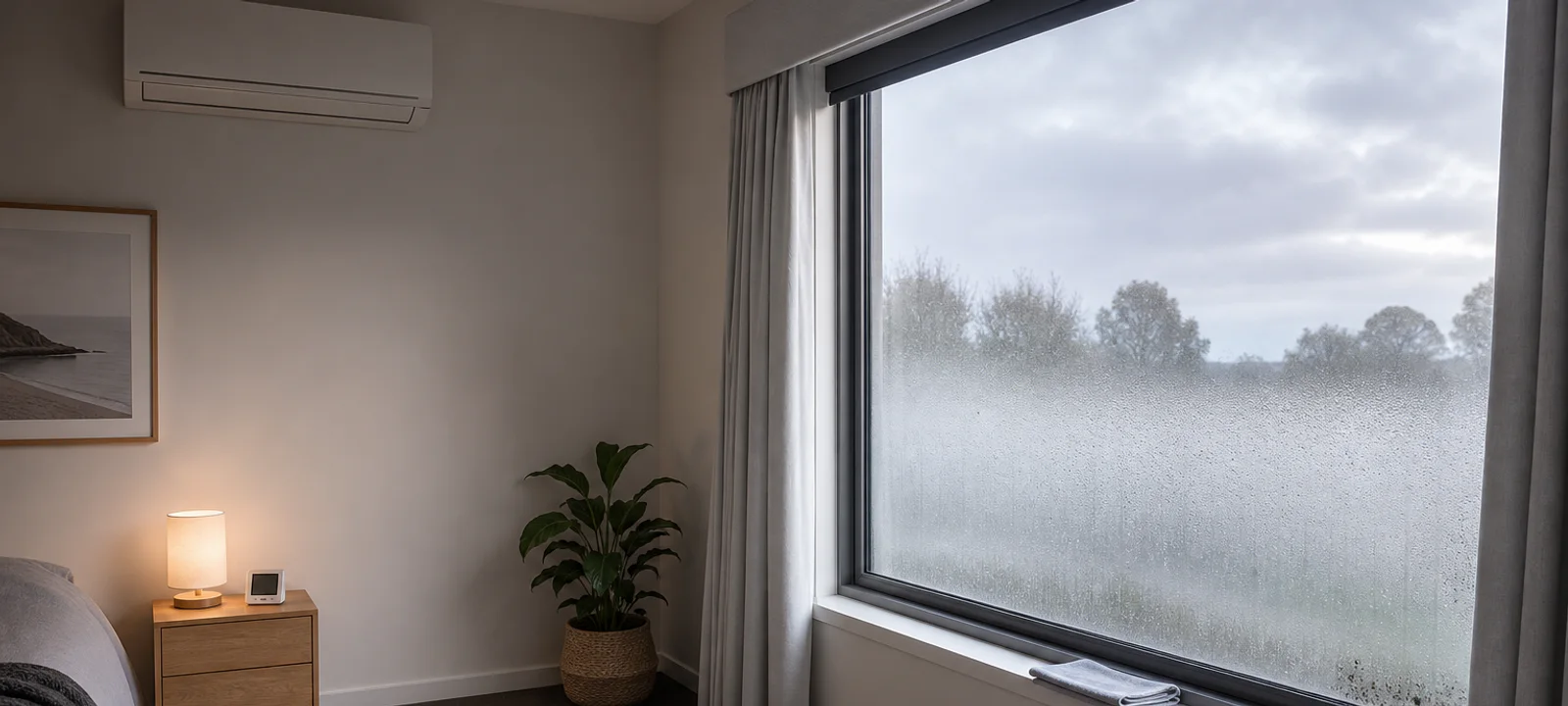
Condensation is easy to dismiss when it appears as a little water on a bedroom window.
The concern is what happens repeatedly.
Moisture can collect on glass, frames, walls and behind furniture each cold morning. Paint may discolour, wardrobes can smell musty and mould may return soon after it has been wiped away.
Cleaning visible growth may be appropriate in limited circumstances, but it does not explain why the surface remains damp.
Winter condensation usually involves three conditions:
- moisture inside the home
- a surface cold enough for that moisture to condense
- insufficient ventilation or drying for the surface to recover
A leak can create similar signs and may occur at the same time, but condensation and water entry are separate causes that require different responses.
Our Take
Find the water before treating the stain.
A wet window every morning, mould behind a wardrobe or recurring ceiling discolouration is evidence of a moisture problem, not simply a cleaning problem.
Ask:
- Where is the moisture coming from?
- Why is this surface becoming cold or staying wet?
- Can the room ventilate and dry?
- Does the pattern suggest water entering through a defect?
- Is the affected material still sound and suitable for household cleaning?
Reduce the moisture source, improve controlled ventilation and address unusually cold surfaces. Escalate extensive, recurring or concealed mould rather than repeatedly applying stronger products.
How winter condensation forms
Indoor air contains water vapour. When moisture-laden air reaches a sufficiently cold surface, some vapour becomes liquid water.
Common winter surfaces include:
- window glass and aluminium frames
- external walls and room corners
- ceilings beneath cold roof spaces
- the backs of wardrobes
- walls behind beds and sofas
- skylights and cold water pipes
Cold nights lower surface temperatures. Closed windows reduce uncontrolled heat loss but can also reduce drying. People continue to breathe, shower, cook and wash clothes, so indoor moisture can build while the surfaces around it become colder.
The temperature at which condensation begins changes with air temperature and moisture content. A humidity reading can provide useful context, but no single number or appliance setting explains every room.
Visible droplets are surface condensation. Moisture may also occur within a wall, roof, ceiling or floor assembly. Concealed moisture can eventually appear as staining, softened plasterboard, damaged insulation, corrosion, timber decay or a musty smell. Do not open a wall or ceiling simply to investigate it; concealed problems require building-specific assessment.
Condensation or a leak?
Do not automatically label every damp patch as condensation, and do not assume every wet window is leaking.
Swipe sideways to compare the full table.
| Pattern | Possible explanation | What to check |
|---|---|---|
| Water on several windows after a cold night | Indoor moisture meeting cold glass | Room humidity, overnight occupancy, heating, ventilation and window temperature |
| One ceiling patch that worsens after rain | Roof or flashing leak | Weather pattern, roof drainage and professional inspection |
| Dampness below a bathroom or beside plumbing | Plumbing, seal or waterproofing problem | Fixture use, pipework and signs of damaged material |
| Water around a window during wind-driven rain | External water entry, failed seals or drainage problem | Frame perimeter, drainage openings and the direction of rain |
| Mould behind furniture on a cold external wall | Condensation, restricted airflow, leak or a combination | Surface temperature, clearance, humidity and weather history |
Record when the area becomes wet, which rooms are affected, whether it follows rain and what activities occurred beforehand. A pattern is more useful than a single photograph.
Check gutters and downpipes from ground level and arrange suitable inspection where roof access, plumbing, electrical services, damaged material or concealed cavities are involved.
Major indoor moisture sources
Everyday household activities release moisture. The aim is not to eliminate normal living, but to capture water vapour near its source and let wet rooms and materials dry.
Bathrooms
Showers and baths can release a large amount of moisture quickly. Use an effective exhaust fan during moisture-producing use and continue as needed afterwards. Keep the bathroom door positioned so steam is not unnecessarily sent through the rest of the home.
A fan that is noisy but moves little air, discharges into a roof space or has a failed duct will not control moisture effectively. Clean accessible grilles as directed and arrange qualified assessment of ducts, wiring or inaccessible equipment.
Kitchens
Boiling, simmering and dishwashing add water vapour to an open-plan room. Use pot lids and operate the rangehood when cooking requires extraction.
A recirculating rangehood can filter some grease and odour but does not remove cooking moisture outdoors. Maintain filters and ducts according to the appliance instructions. Do not block the rangehood duct to retain heat.
Laundries
Wet washing, indoor drying and some dryer types can raise humidity. A vented dryer must discharge as intended rather than releasing moist air into the room or roof space. Condenser and heat-pump dryers collect moisture but still require correct installation, maintenance and room conditions.
Where clothes must dry indoors, use a suitable drying area with controlled ventilation or dehumidification. Do not place washing on heaters or allow damp clothes to remain in closed wardrobes.
Bedrooms
People release moisture through breathing overnight while bedroom doors and windows are often closed. Condensation may therefore be strongest on cold morning glass or behind a bed against an external wall.
Air the room appropriately when conditions allow, dry recurring window water and remove wet cloths from the room. Heating can improve comfort and surface temperatures, but an overheated room with no moisture removal can still remain damp.
Windows, furniture and cold surfaces
Single glazing and conductive metal frames can become some of the coldest surfaces in the room. Wipe substantial recurring water so it does not remain on sills, frames, plaster or flooring.
Keep window drainage channels and weep holes clear. Water below a window may come from condensation, damaged seals, blocked drainage or external entry; sealing every opening can make drainage worse.
Curtains and blinds may improve comfort, but closed coverings can trap moist air against cold glass. Open them during the day, keep fabric clear of wet panes and allow the window area to dry.
Large furniture can restrict air movement along an external wall. Where practical, leave a modest gap behind wardrobes, beds and sofas, and avoid storing cardboard, bedding or clothing against a damp surface.
Moving furniture can reveal a problem; it does not prove the cause has been solved. Recurring dampness, damaged materials or a musty cavity still needs investigation.
Heating, insulation and controlled ventilation
Heating can reduce condensation risk by raising indoor air and surface temperatures. Steadier heating may keep walls and windows warmer than short bursts, but heating does not remove the moisture produced by showers, cooking, laundry and occupants.
Reverse-cycle heating can provide efficient room heat when correctly sized and operated. Portable resistance heaters may warm a small area but do not remove water vapour. Never use an oven, cooktop, barbecue or outdoor gas heater to heat an indoor room.
Insulation can raise internal surface temperatures and reduce cold spots. Missing, compressed, wet or poorly installed insulation can leave local areas cold. Upgrades must suit the building, climate and existing moisture pathways; wet insulation and concealed damage require assessment before more material is added.
Controlled ventilation removes moisture where and when it is produced. This may include bathroom exhaust, a ducted rangehood, correct dryer exhaust and purposeful window opening when outdoor conditions are suitable.
Draught reduction addresses uncontrolled leakage. It is not permission to seal every gap. Do not block:
- intentional ventilation openings
- combustion-air requirements
- window and wall weep holes
- drains or overflow paths
- subfloor vents
- bathroom, rangehood or dryer exhaust ducts
Where combustion appliances share the space, ventilation and pressure interactions require qualified advice.
Dehumidifiers and humidity meters
A dehumidifier can help when ventilation alone is impractical or outdoor air is also damp. It can remove water from room air, but it does not repair a leak, failed exhaust duct, damaged waterproofing or cold building defect.
Before choosing one, check:
- the operating-temperature range and extraction rating
- the size and connection of the treated area
- noise and overnight suitability
- tank capacity, drainage and spill risk
- filter access, cleaning and power requirements
Place and operate the appliance according to its instructions. Empty collected water hygienically and keep electrical equipment away from wet areas unless it is designed for that location.
A humidity meter can reveal patterns before and after sleeping, showering, cooking or drying clothes. Position it away from direct sun, heaters, windows and steam. Use readings as trends alongside visible conditions; a low-cost meter is not a diagnosis of a building defect or health problem.
When household mould cleaning is inappropriate
Household cleaning is not the right starting point when mould is:
- extensive, spreading or returning quickly
- inside a wall, ceiling, floor, ventilation system or appliance
- associated with sewage, contaminated water or major flooding
- on softened plasterboard, damaged insulation or decayed timber
- near electrical equipment or unsafe access
- in a property where asbestos or another hazardous material may be disturbed
- affecting someone whose health makes exposure or cleaning unsafe
Do not disturb concealed growth to find out how far it extends. Extensive, recurring or concealed mould calls for the moisture source and affected materials to be assessed, not simply treated with a stronger spray.
Safe household cleaning boundaries
For a small, superficial area on a sound, accessible surface, follow current health guidance and the surface or product manufacturer’s instructions.
Before cleaning:
- identify and control the likely moisture source
- keep children, pets and vulnerable people away
- use the recommended protective equipment and ventilation
- check that the material can be cleaned without damage
- plan how cloths, waste and the surface will be dried
Do not dry-brush mould. Do not use an ordinary vacuum cleaner on mould, because it can spread particles. Do not mix cleaning chemicals, including bleach with ammonia, acids or other products.
Use products only for their labelled purpose and never assume that a stronger concentration is safer or more effective. Stop if the task exceeds the guidance, the material is unsound or the growth extends beyond the visible area.
Porous materials can be difficult to clean completely when growth extends below the surface. Do not paint over active dampness or mould. Repainting before the moisture source is controlled can conceal the sign without resolving the problem.
When professional or medical advice is appropriate
Arrange suitable building, plumbing, ventilation or remediation advice when:
- the source remains unclear
- water entry, failed waterproofing or concealed damage is suspected
- mould is extensive, recurring or concealed
- materials are wet, soft, decayed or structurally damaged
- roof access, services, cavities or hazardous materials are involved
Mould and damp environments can be associated with irritation or respiratory symptoms, but this guide cannot diagnose a medical condition or determine its cause.
Seek medical advice where symptoms are persistent, severe or concerning, where asthma or another condition is worsening, or where a clinician’s advice is needed before exposure or cleaning. Urgent symptoms require appropriate urgent medical care.
Renters: document and report the pattern
Renters should record the issue in writing rather than relying only on a cleaned surface.
Useful records include:
- dated photographs and affected rooms
- whether dampness follows rain or household activities
- window condensation, leaks, smells and damaged materials
- how supplied heating and ventilation are operating
- when the problem was reported and the response received
Report suspected leaks, failed exhaust systems, recurring dampness and mould to the landlord or property manager through the required tenancy process. Do not make permanent alterations, open building cavities or undertake unsafe remediation without the necessary authority.
Tenancy responsibilities and urgent-repair processes vary by state and territory. Use the relevant local guidance where the response is delayed or the property may be unsafe.
Winter Condensation and Mould Checklist
Check the home systematically:
- Is the moisture likely to be condensation, a leak or both?
- Has the timing, weather and room pattern been recorded?
- Are substantial window droplets and wet sills being dried?
- Do window drainage channels and weep holes remain clear?
- Does the bathroom fan exhaust effectively?
- Is the rangehood used for moisture-producing cooking?
- Is dryer moisture discharged or collected as designed?
- Can indoor washing dry with ventilation or dehumidification?
- Are bedrooms aired appropriately after overnight occupancy?
- Are curtains opened so windows can dry?
- Is there airflow behind furniture on cold external walls?
- Are cardboard, bedding and clothes clear of damp surfaces?
- Is heating improving surface warmth without replacing ventilation?
- Is insulation missing, wet, compressed or damaged?
- Have intentional vents, drains and subfloor openings remained clear?
- Would a dehumidifier address room moisture rather than conceal a leak?
- Are humidity readings being used as trends rather than a diagnosis?
- Is the mould small, superficial and on a sound cleanable surface?
- Will cleaning avoid dry brushing and an ordinary vacuum?
- Can cleaning proceed without mixing any chemicals?
- Is mould extensive, recurring, concealed or linked to damaged material?
- Is professional or medical advice appropriate?
- Has a rental problem been documented and reported in writing?
Control the moisture, warm the surface and let the room dry
Winter mould is not simply a cleaning failure.
Condensation forms when moisture-laden air reaches a cold surface. Mould can then grow where that moisture remains and materials do not dry.
Reduce moisture at its source. Use bathroom, kitchen and laundry ventilation effectively. Dry recurring window water, allow air to circulate behind furniture and address cold surfaces through appropriate heating and insulation.
Remain alert for leaks and concealed damage. Clean only where the area, material and household circumstances make that appropriate under current health guidance.
The useful result is not a temporarily clean wall. It is a home in which the moisture source has been controlled and the affected area can remain dry.
Official guidance
Health, tenancy and building requirements vary. Check the guidance and requirements that apply in your own Australian state or territory.
- Australian Government Your Home guidance on condensation
- Australian Government Your Home guidance on ventilation and airtightness
- Australian Government Your Home guidance on indoor air quality
- Australian Government Your Home guidance on insulation
- Australian Government Your Home guidance on glazing
- Australian Government guidance on household appliances and clothes dryers
- Australian Government guidance on tropical and subtropical living
- NSW Health guidance on mould
- Better Health Channel Victoria guidance on mould and health
- Better Health Channel Victoria guidance on household mould removal
- Queensland Government mould and damp guidance for public-housing tenants as a regional tenancy example