
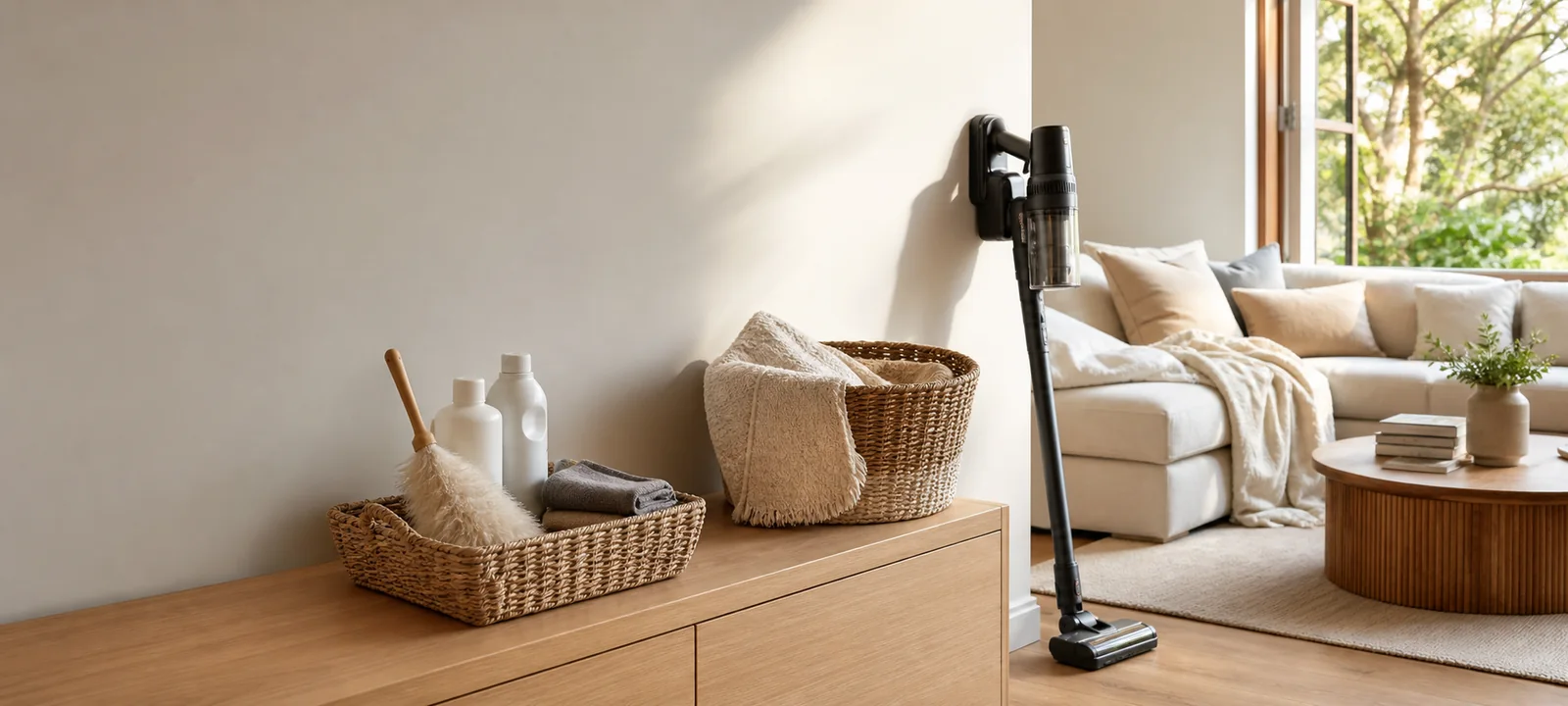
Spring cleaning can easily turn into a long shopping list before any cleaning begins.
Special sprays, organisers and single-purpose tools may promise a faster reset, but most homes need something simpler: a clear plan, basic equipment and enough time to finish one area before moving to the next.
The aim is not to make every cupboard look untouched or disinfect every surface. It is to remove accumulated dust and grime, deal with items that no longer belong, check areas neglected during routine cleaning and identify repairs that cleaning alone cannot solve.
Spring also means different things across Australia. In cooler regions it may follow months of closed windows, damp weather and indoor heating. In tropical and subtropical areas, the more useful seasonal trigger may be the transition between wet and dry conditions.
Use this guide as a room-by-room reset and adjust the timing to suit your climate and home.
If a full reset feels too large today, start with one contained task from the 20-Minute Spring Reset.
For exterior checks, household maintenance and pre-summer preparation rather than cleaning, use the Spring Home Maintenance Checklist.
Our Take
Start with the problem, not the cleaning aisle.
Before buying anything, check what is already in the laundry cupboard, garage or cleaning caddy. A general-purpose cleaner suitable for the surface, basic cloths, a vacuum and ordinary household tools may cover most of the work.
The most useful result is not a home filled with new organisers. It is a home that is easier to use, safer to move through and simpler to maintain after the seasonal clean is finished.
Decide what “spring cleaning” means for your home
A spring clean does not need to include every room, cupboard and exterior surface.
Begin by identifying what has actually built up:
- dust on high or rarely reached surfaces
- fingerprints and marks on doors or walls
- clutter that has accumulated in walkways
- items stored in the wrong room
- expired or damaged household products
- blocked vents or dusty filters
- neglected window tracks
- moisture or mould that keeps returning
- unused appliances occupying accessible storage
- outdoor debris brought inside
- bedding or soft furnishings that need airing or washing
Choose a realistic scope.
A two-bedroom apartment may be reset in several focused sessions. A larger home may be better divided across two weekends rather than turned into one exhausting day.
Begin with inspection, not scrubbing
Walk through the home before moving furniture or opening cleaning products.
Make three short lists:
Clean
Tasks that can be handled safely with existing equipment, such as dusting a shelf, vacuuming a rug or wiping a suitable washable surface.
Sort
Items that need to be returned, donated, recycled, disposed of appropriately or given a permanent storage location.
Repair or investigate
Problems that cleaning will not correct, such as:
- recurring mould
- water stains
- leaking taps
- damaged seals
- loose power points
- broken exhaust fans
- pest activity
- cracked tiles
- unstable shelving
- damaged cords
- failed appliance controls
Keeping these lists separate prevents a cleaning session from becoming an unplanned repair project.
Use what you already have
Before buying more supplies, gather the basics already available.
Depending on the home and surfaces, these may include:
- vacuum cleaner and appropriate attachments
- broom and dustpan
- mop suitable for the flooring
- washable cleaning cloths
- bucket
- soft brush
- long-handled duster
- rubbish and recycling bags
- gloves where specified by the product instructions
- one or two suitable household cleaners
- manufacturer-approved appliance-cleaning tools
If the existing vacuum is the bottleneck rather than the supply list, map the floors, stairs, pet hair and normal cleaning time with the cordless stick vacuum guide before deciding whether a replacement would improve the routine.
Do not assume one product is safe for every material.
Natural stone, timber, laminate, stainless steel, painted walls, glass, upholstery and sealed tiles may require different methods. Check care instructions before applying a chemical or abrasive tool to an unfamiliar surface.
Test a cleaning method in a discreet area where appropriate.
Handle household chemicals carefully
Cleaning products can cause harm when swallowed, inhaled, splashed or used in a way not permitted by their label.
Keep cleaning chemicals:
- in their original containers
- correctly labelled
- closed when not in use
- away from food
- out of reach of children
- inaccessible to pets
- stored according to label instructions
Never transfer cleaning products into drink bottles, food containers or unlabelled spray bottles.
Do not mix cleaning chemicals. Some combinations can create dangerous gases even when each product is commonly used on its own.
Read the label before use and follow instructions for:
- dilution
- ventilation
- protective equipment
- surface compatibility
- contact time
- rinsing
- storage
- disposal
Using more product than directed does not necessarily clean better and may leave residue or increase exposure.
If poisoning or chemical exposure is suspected, contact the Poisons Information Centre on 13 11 26 for Australia-wide advice. Call Triple Zero (000) in an emergency.
Ventilate while cleaning
Cleaning can disturb dust and introduce moisture, fragrances or chemical vapours into the room.
Where outdoor conditions and the home allow, provide suitable ventilation while cleaning and drying surfaces. This may include opening windows or operating correctly vented exhaust fans.
Ventilation does not mean leaving every window open regardless of:
- smoke
- extreme heat
- storms
- high outdoor humidity
- heavy pollen
- nearby construction dust
- security concerns
Choose a method appropriate to local conditions.
Do not block permanent vents or required air openings during the cleaning process.
Work from high to low
Cleaning lower surfaces first often means cleaning them again after dust falls from above.
A practical room sequence is:
- Remove rubbish and obvious clutter.
- Return misplaced items.
- Dust high ledges, fans and fittings where safely accessible.
- Clean shelves, furniture and mid-level surfaces.
- Wipe suitable doors, handles and switches carefully.
- Clean skirting boards and lower surfaces.
- Vacuum soft flooring and rugs.
- Vacuum or sweep hard flooring.
- Mop only where suitable.
- Allow surfaces to dry before replacing items.
Do not stand on chairs, beds or unstable furniture to reach high areas.
Where a task cannot be completed safely from the floor with suitable equipment, leave it for someone with the correct access equipment and capability.
Living room and entry
The entry and main living area often collect items that belong elsewhere.
Start by removing:
- unopened mail
- shoes no longer worn
- empty packaging
- charging cables without a purpose
- children’s items that have migrated from another room
- blankets no longer needed for the season
- damaged décor
- unused small appliances
Then check:
- door tracks
- doormats
- window sills
- curtain tracks
- blind mechanisms
- ceiling-fan blades where safely accessible
- air-conditioning filters according to manufacturer instructions
- return-air grilles
- areas beneath removable cushions
- television cabinets and cable openings
- dust behind accessible furniture
- traffic paths around tables and seating
Do not spray cleaner directly onto televisions, speakers, power points, switches or electronic controls.
Apply approved cleaning products to a cloth only where the manufacturer permits that method.
Bedrooms
A bedroom reset should improve comfort and access rather than turn every wardrobe into a display.
Work through:
- bedding and mattress protectors
- bedside surfaces
- lamps and accessible fittings
- window sills and tracks
- curtains or blinds
- wardrobe floors
- clothing that no longer fits or is no longer used
- storage beneath the bed
- cords behind bedside furniture
- dust around accessible vents
- items blocking doors or walkways
Follow care labels when washing bedding, curtains or removable covers.
A mattress may be vacuumed only where its care instructions permit it. Do not saturate a mattress or return bedding before cleaned surfaces are fully dry.
Recurring musty odours, damp bedding or mould require investigation of moisture and ventilation rather than stronger fragrance products.
Kitchen
The kitchen benefits from a zone-by-zone approach.
Food storage
Check:
- expired food
- open packets without secure storage
- duplicate ingredients
- spills on shelves
- damaged containers
- refrigerator door seals
- food blocking refrigerator vents
- pantry items hidden behind newer purchases
Do not keep food solely because it was expensive if it is unsafe, expired or unlikely to be used.
Benches and cupboards
Remove one manageable section at a time.
Clean surfaces using a method suitable for the material. Allow shelves to dry before food, cookware or appliances are returned.
Avoid emptying every cupboard at once unless there is enough clean space and time to complete the job.
Appliances
Follow each appliance manufacturer’s cleaning instructions.
Before cleaning:
- switch off and unplug portable appliances where instructed
- allow hot surfaces to cool
- avoid spraying liquid into vents or controls
- keep water away from electrical connections
- do not move heavy appliances without suitable assistance
- do not remove fixed panels
- do not dismantle gas or electrical components
Rangehood filters, oven components, dishwasher filters and refrigerator parts vary by model. Do not assume they are dishwasher-safe or suitable for soaking.
Bathroom
The bathroom requires cleaning, ventilation and inspection.
Check:
- exhaust-fan operation
- dust on accessible fan covers
- soap residue
- shower screens
- grout and sealant
- drain covers
- cabinet interiors
- expired toiletries
- leaking taps
- water around the toilet base
- damaged non-slip surfaces
- signs of recurring mould
Do not mix bleach, ammonia-based products, acids, toilet cleaners or other chemicals.
Use one product at a time according to its label, ventilate appropriately and rinse where directed before another product is introduced.
Discoloured sealant may need replacement rather than repeated scrubbing. Recurring mould, soft wall materials, lifting paint or persistent dampness may indicate a moisture or building issue.
Cleaning visible growth does not repair the source of water.
Laundry
Laundry cupboards often contain concentrated products, spare chemicals and items moved out of other rooms.
Check:
- detergent and stain-remover containers
- products with unreadable labels
- leaking bottles
- items stored above or beside food
- chemicals accessible to children
- lint around the dryer
- washing-machine detergent drawers
- appliance filters where user-accessible
- hoses visible without moving the appliance
- exhaust or ventilation openings
- space around appliances
- items stored on top of machines
Keep laundry and dishwasher capsules in their original packaging, closed and inaccessible to children.
Do not combine leftover products into one container.
Do not pull a heavy washing machine or dryer forward alone. Arrange assistance or professional inspection where access is unsafe.
Home office
A home office reset should focus on working space, cables and accumulated paperwork.
Review:
- documents that require secure retention
- paper that can be shredded or recycled
- duplicate stationery
- unused chargers
- damaged cables
- blocked ventilation around computers
- dust around accessible equipment
- overloaded power boards
- items stored beneath the desk
- chair and monitor position
- clear access to doors and windows
Turn equipment off according to manufacturer instructions before cleaning.
Do not spray products directly onto screens, keyboards, ports, power boards or electronic equipment.
A crowded desk may be a storage problem rather than a cleaning problem. Give frequently used items an accessible location and remove items unrelated to the work performed there.
Outdoor transition areas
Spring cleaning often spreads to patios, balconies, garages and outdoor entertaining spaces.
Keep the scope controlled.
From ground level, inspect:
- outdoor furniture
- doormats
- sliding-door tracks
- accessible screens
- storage near entry points
- leaves and debris around drains
- barbecue storage areas
- garden tools
- outdoor cushions
- exterior lighting visible from safe access
- products affected by moisture or pests
Do not use indoor vacuum cleaners or electrical equipment outdoors unless designed for that use.
Do not pressure-wash a surface without checking whether water can enter doors, wall cavities, electrical fittings or neighbouring properties.
Gas bottles, fuels, pesticides, pool chemicals and workshop products require appropriate storage and disposal. Do not treat them as ordinary household rubbish.
Declutter without buying organisers first
Storage products cannot correct an excess of unwanted items.
Before buying tubs, dividers or baskets:
- Remove rubbish and expired products.
- Return items to the correct room.
- Group items by function.
- identify what is used regularly.
- Remove duplicates that no longer serve a purpose.
- Measure the remaining items.
- Measure the available storage space.
- Buy storage only if a genuine gap remains.
A container should make items easier to find and return. It should not hide a decision that still needs to be made.
Avoid creating large “decide later” boxes unless they are labelled and given a review date.
Dispose of unwanted chemicals appropriately
Do not pour unwanted chemicals down sinks, toilets, stormwater drains or onto the ground unless the relevant authority and product instructions explicitly permit that disposal method.
Do not place hazardous household chemicals into general waste without checking local requirements.
Accepted programs differ between states, territories and councils. Contact the local council or relevant environmental authority for instructions about:
- household cleaners
- solvents
- pesticides
- pool chemicals
- paint
- oils
- fuels
- batteries
- fluorescent lamps
- gas bottles
Keep products in their original containers while awaiting disposal and do not mix them together.
Mould, moisture and recurring odours
A spring clean may reveal mould behind furniture, condensation damage or a persistent musty smell.
Small amounts of surface contamination and major recurring moisture problems are not the same issue.
Investigate:
- leaking plumbing
- roof or wall water entry
- failed exhaust fans
- blocked vents
- condensation on cold surfaces
- furniture pressed tightly against external walls
- clothes drying indoors without adequate ventilation
- damp carpets or underlay
- air-conditioning drainage problems
Do not rely on fragrance, paint or repeated surface wiping to conceal an ongoing leak.
Significant, recurring or unexplained mould may require assessment by the owner, property manager or an appropriate building, plumbing or indoor-environment professional.
Renters should document and report leaks, failed ventilation and recurring dampness through the appropriate property-management process.
Spring priorities vary by region
Cooler southern regions
Spring may be a useful time to:
- air bedding after a damp winter
- inspect rooms kept closed during cold weather
- clean heater and air-conditioning filters
- check condensation-prone windows
- prepare outdoor areas for warmer use
Subtropical and tropical regions
The useful seasonal trigger may be the transition into hotter, wetter or drier conditions.
Priorities may include:
- air-conditioning filters
- ventilation
- mould-prone areas
- insect screens
- outdoor drainage
- shaded storage
- dust accumulated during the dry season
Arid and inland regions
Dust may be a larger issue than winter dampness.
If dust returns quickly after cleaning, the guide to reducing pollen and outdoor dust indoors helps trace entry routes before the whole routine is changed.
Focus on:
- door and window tracks
- filters
- vents
- soft furnishings
- seals
- outdoor dust entering storage areas
Coastal regions
Salt, humidity and wind-driven moisture may affect window hardware, outdoor furniture and exposed metal fittings.
Follow manufacturer care instructions and investigate corrosion or damage rather than covering it with polish or paint.
When professional help may be appropriate
Consider qualified assistance where the task involves:
- electrical repairs
- gas appliances
- roof access
- high exterior windows
- unstable ladders or access equipment
- heavy appliance movement
- significant mould
- water entering the building
- pest infestation
- asbestos-containing materials
- damaged flooring or structural surfaces
- hazardous chemical disposal beyond household programs
Cleaning should not become an excuse to perform work outside the householder’s capability or legal authority.
A practical two-weekend plan
First weekend: living areas and bedrooms
- inspect the whole home
- gather existing supplies
- sort entry and living-room clutter
- dust and vacuum living areas
- reset bedrooms
- wash suitable bedding
- clean accessible windows and tracks
- list repairs and moisture issues
Second weekend: service areas and storage
- clean the kitchen in manageable zones
- reset the bathroom
- inspect the laundry
- organise cleaning products safely
- clear the home office
- review outdoor transition areas
- prepare donations and recycling
- arrange disposal or professional work
Stop before fatigue leads to rushed lifting, unsafe access or careless chemical use.
Before You Buy More Cleaning Products Checklist
Before purchasing another cleaner, tool or organiser, check:
- What specific task does it need to complete?
- Do you already own something suitable?
- Is the product safe for the intended surface?
- Have the care instructions for the surface been checked?
- Will it duplicate another product?
- Can it be stored in its original container?
- Is there secure storage away from children and pets?
- Are the label and instructions clear?
- Does it require ventilation or protective equipment?
- Is the household likely to use the remaining quantity?
- Is a reusable cloth or existing tool sufficient?
- Is the problem actually dirt, or does it require repair?
- Has recurring mould or moisture been investigated?
- Would an organiser solve a measured storage problem?
- Have unwanted products been disposed of correctly first?
Spring Cleaning Checklist
Before considering the reset complete, check:
- Rubbish and recycling have been removed.
- Misplaced items have been returned.
- Walkways and exits are clear.
- High surfaces have been dusted safely.
- Floors have been cleaned using suitable methods.
- Window tracks and sills have been checked.
- Curtains and blinds operate correctly.
- Air-conditioning filters have been cleaned as instructed.
- Kitchen storage has been reviewed.
- Appliance cleaning followed manufacturer instructions.
- Bathroom ventilation is working.
- Laundry chemicals are securely stored.
- Damaged or unlabelled chemicals have been isolated for appropriate disposal.
- Cleaning products remain in original containers.
- No cleaning chemicals were mixed.
- Home-office cables and ventilation are clear.
- Donations and unwanted items have a destination.
- Leaks, mould and repairs have been recorded.
- Tasks requiring trades or safe access have been separated from household cleaning.
- The home is easier to maintain than it was before the reset.
Reset the home, not the shopping list
A useful spring clean should reduce work rather than create another collection of products to store.
Clean the areas that have been neglected, remove what no longer serves the household and identify problems that require repair instead of stronger chemicals or more aggressive scrubbing.
Work in manageable sections, follow product and surface instructions and stop when a task requires unsafe access or specialist knowledge.
The result does not need to look untouched. It should be cleaner, easier to use and better prepared for the season ahead.
Official guidance
Disposal programs differ across Australia. The NSW EPA resources below are a state-based example; check your own state, territory and council requirements.
- ACCC Product Safety guidance on chemical and poison risks for children in the home
- ACCC Product Safety guidance on handling chemicals and poisons safely
- Healthdirect guidance on inhaled substances or objects
- Healthdirect poisoning information and Poisons Information Centre guidance
- Your Home guidance on indoor air quality
- Your Home guidance on ventilation and airtightness
- NSW EPA guidance on chemicals in the home and garden
- NSW EPA Household Chemical CleanOut program
- ACCC Product Safety consumer product recalls