
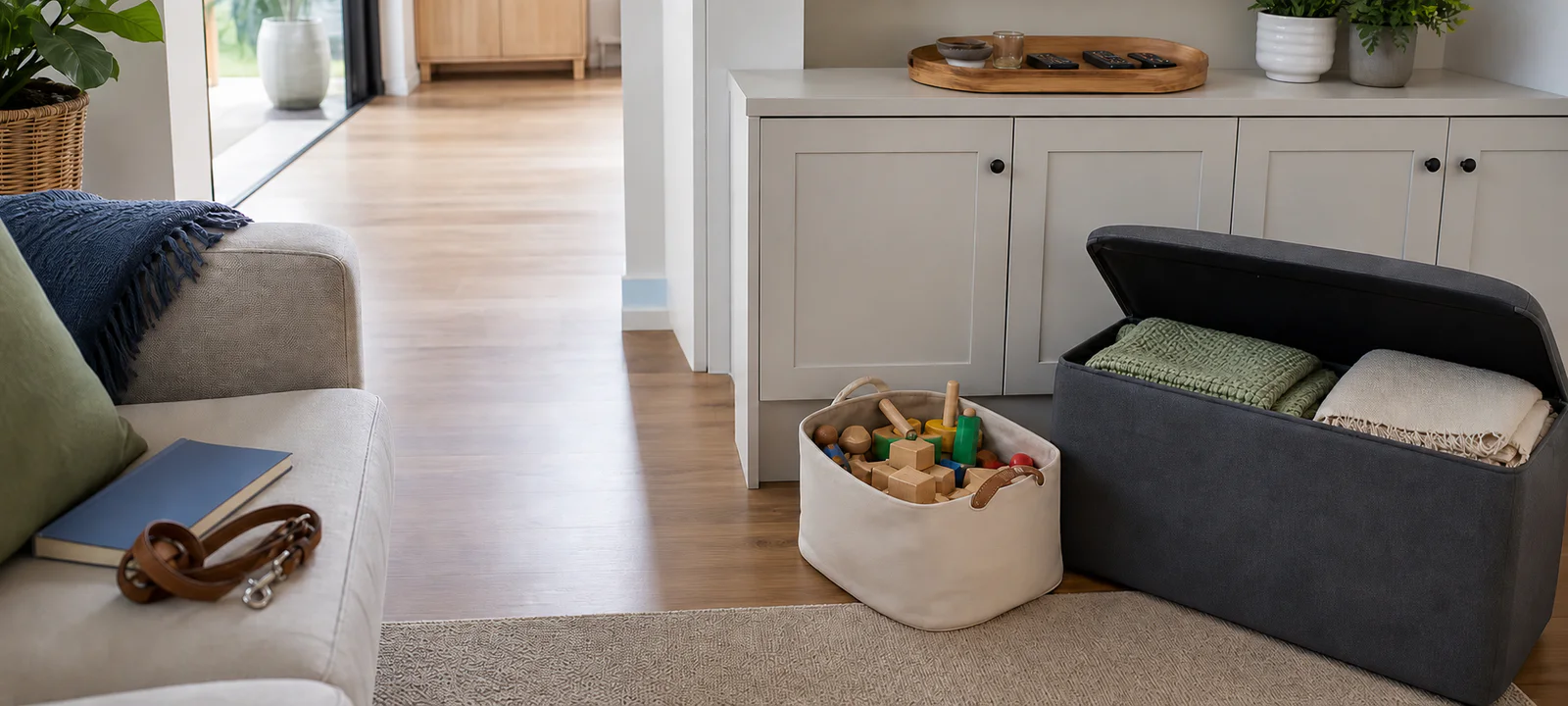
Living-room clutter is rarely mysterious. It is the same blanket, controller, toy pieces and pet gear left after the same activities each night. Their storage is often farther away or harder to use than the nearest chair or coffee table.
Decide what is allowed to remain overnight. Give those groups a small number of homes near where they are used, at a height the person responsible for returning them can reach. Move everything else back to the room it serves.
Set the Overnight Rule
Walk through the room after an ordinary evening and name what remains. One active toy group, the blankets used on the sofa and the current remotes may reasonably stay. Schoolwork, laundry, paperwork and abandoned hobbies probably belong elsewhere.
This boundary keeps the living room from becoming the default storage area. The living room storage guide can help assign permanent zones to the items that genuinely serve the room.
Store Toys by Current Activity
Keep a small, usable selection near the play area rather than bringing the entire toy collection into the living room. Large pieces need a measured floor position; small sets need a container that keeps their parts together.
Storage should be reachable by the child expected to help reset it, with adult supervision appropriate to age. Check containers for stable placement, safe construction and product warnings. Rotate excess toys back to their main play zone instead of adding more baskets.
Give Blankets and Cushions a Capacity Limit
Keep the blankets used during the current season beside the seats they serve. A low basket or an ottoman can work when each item fits without being forced and the container does not narrow a route.
Decorative cushions and throws still need somewhere to go when people sit down. If the storage is already full, remove a piece rather than balancing it on the sofa arm or expanding the zone.
Make Remotes and Chargers a Separate Group
Remotes and controllers suit a shallow tray, drawer or basket near the media area. Spare cables, batteries and manuals should not mix with items used every night. The TV and media storage guide covers device compartments.
Keep charging leads away from walkways and do not bury connected devices in a basket. Use the cable management guide to preserve power-board access and ventilation.
Choose Containers That Reveal Their Job
Open baskets are quick to use and can become mixed holding areas. Lids reduce visual clutter and add a step that may prevent routine return. Deep ottomans hold bulky pieces and make small items difficult to find.
Size each container to one category and label it where that helps. Do not buy a coffee or side table mainly to gain a miscellaneous drawer; the living room tables guide helps decide whether another surface earns its floor space.
Protect the Routes Through the Room
Baskets, toy tubs and pet gear should not sit in the path between the sofa, kitchen, hallway or balcony. Plan them with the sofa layout and rug edges.
A light or open container must still remain stable when full. Keep items away from lamps and cords, and use the living room lighting guide if storage is competing with a floor or table lamp.
Make the Reset Shared and Short
The person who uses an item should be able to return it without opening several lids or leaving the room. A nightly reset can be brief: toys together, blankets folded or contained, remotes in their tray and unrelated items carried out.
When one person has to sort every mixed basket later, the system is postponing work rather than controlling clutter. Reduce the number of categories and move each home closer to the activity.
Test the System on an Ordinary Night
- Decide what may stay in the living room overnight.
- Give each remaining category one nearby home.
- Match container height and complexity to the person using it.
- Keep charging, batteries and devices separate from soft storage.
- Protect walkways, rug edges, lamps and cleaning access.
- Remove excess when a defined container reaches capacity.
A successful system leaves the room ready for the next morning without hiding a sorting job for later. Fewer homes, placed close to the activity, will usually outperform a room filled with attractive but ambiguous baskets.
Common Questions
How do I organise toys in a living room?
Keep only current activities in the living room and give them a container a child can recognise and use. Store pieces together, avoid deep mixed tubs and protect the main walking route. Rotate or move inactive toys elsewhere so the everyday system remains small enough for the household to reset each night.
Where should blankets and cushions be stored in a lounge room?
Keep the everyday amount close to the seats where it is used, in a basket, shelf or other clearly limited home. Set the container's capacity before adding more. Bulky extras that do not fit should move to a different storage zone rather than spreading across chairs and the floor.
What is the quickest way to reset a cluttered living room?
Use an overnight rule for what may remain out, then return each category to a small, obvious home. Toys, blankets, remotes, chargers and pet items should not share one mystery basket. Test the system on a normal tired evening; if the reset is not short, simplify the contents or the return action.