
By evening, the living room records the route of the household. A blanket slips from the sofa, controllers gather near the TV, toys cross the rug and a pet lead lands beside the door. The room is untidy because it is being used, not necessarily because it lacks cabinets.
Useful storage makes that ordinary mix quick to return. Give the things that genuinely belong in the room a small number of obvious homes, then redirect school bags, paperwork and other passing clutter closer to where it enters.
Start with one five-minute reset zone
- Photograph what is left in the room at the end of a normal day.
- Group those items by routine: watching, playing, reading, pet care or charging.
- Give the busiest group one easy return point before adding more furniture.
This turns a vague search for more storage into a small test you can judge after a week.
Read the room at the end of the day
Leave the room alone for a normal day, then look at what remains. Group the items by routine: watching, reading, children's play, pet care, charging or entering the home. This avoids buying one basket for each object when several items are part of the same activity.
Also note what should leave. Mail may need a home near the front door, mugs belong in the kitchen and work equipment may need to pack back into a dedicated office zone. Storage inside the living room should be reserved for items that support the room.
Set a realistic reset time
On a tired weeknight, few people will sort toys into six labelled tubs or fold every throw into a narrow cabinet. Decide what a two- or five-minute reset looks like, then choose storage that supports it.
A practical hierarchy is often:
- Open storage for items returned several times a day.
- A drawer or lidded compartment for small visual clutter.
- Closed storage for occasional media, games or documents.
- Storage elsewhere for items that do not belong in the room.
Use baskets where dropping is the real behaviour
A basket works well for blankets, soft toys or pet gear because the return action is simple. It works poorly when it becomes a mixed holding pen that nobody empties. Assign a broad purpose, keep the contents visible enough to manage and stop before every corner has one.
Check handles, rough edges and the floor beneath. A basket that must be dragged across timber or lifted from behind a heavy chair will not be used consistently. For a fuller reset plan, see the toy, blanket and everyday clutter guide.
Make the TV unit serve the equipment
Media storage should begin with the television, devices and cable routes—not a furniture style. Measure the TV footprint, ventilation space required by each device, power point position and the reach of remotes. Allow enough access to reconnect or replace equipment without dismantling the unit.
Closed cupboards can calm the room, but doors may interfere with remotes and heat can build around equipment if the manufacturer requires ventilation. Open shelves are easier to access but expose cables and dust. The TV and media storage guide helps compare those trade-offs.
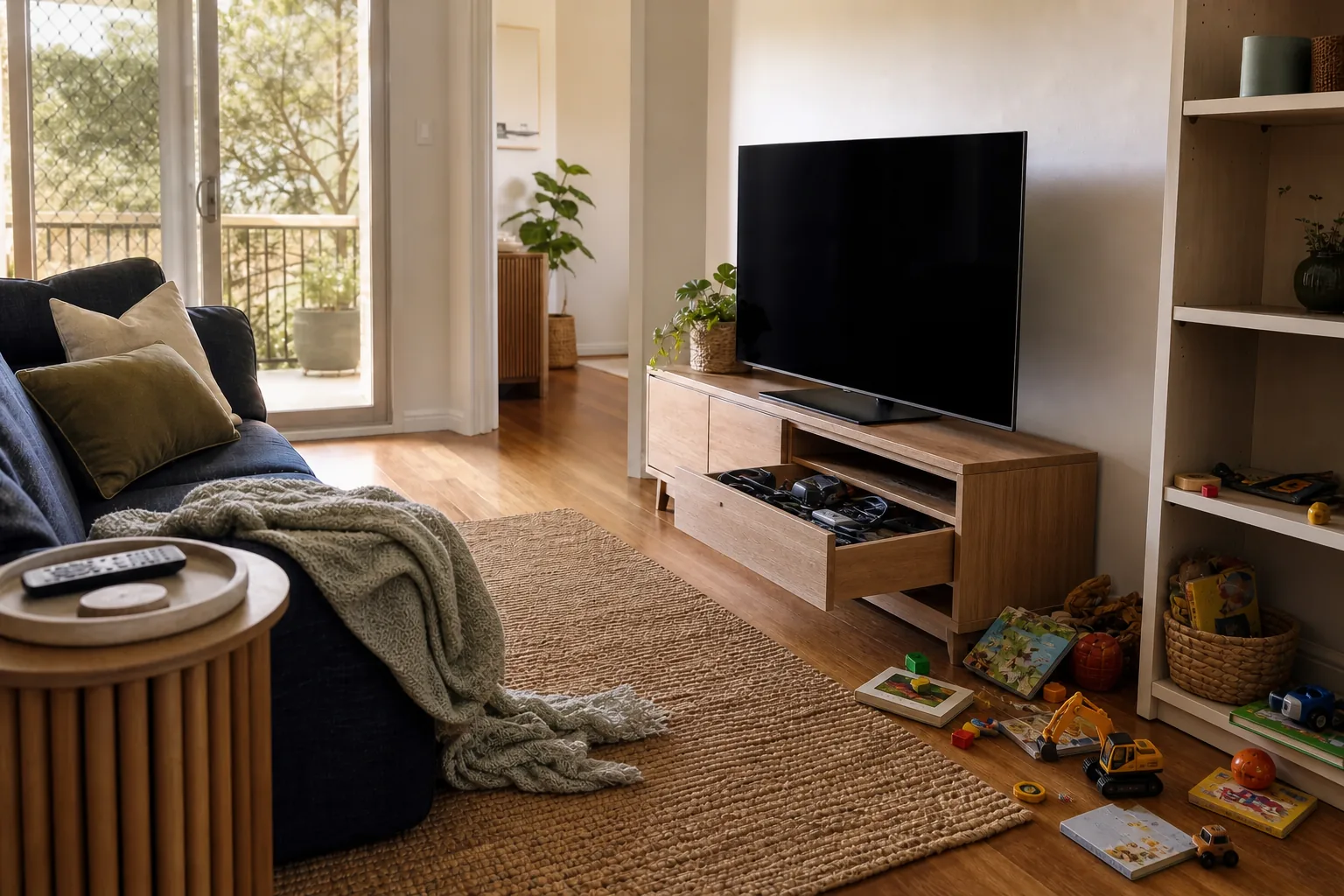
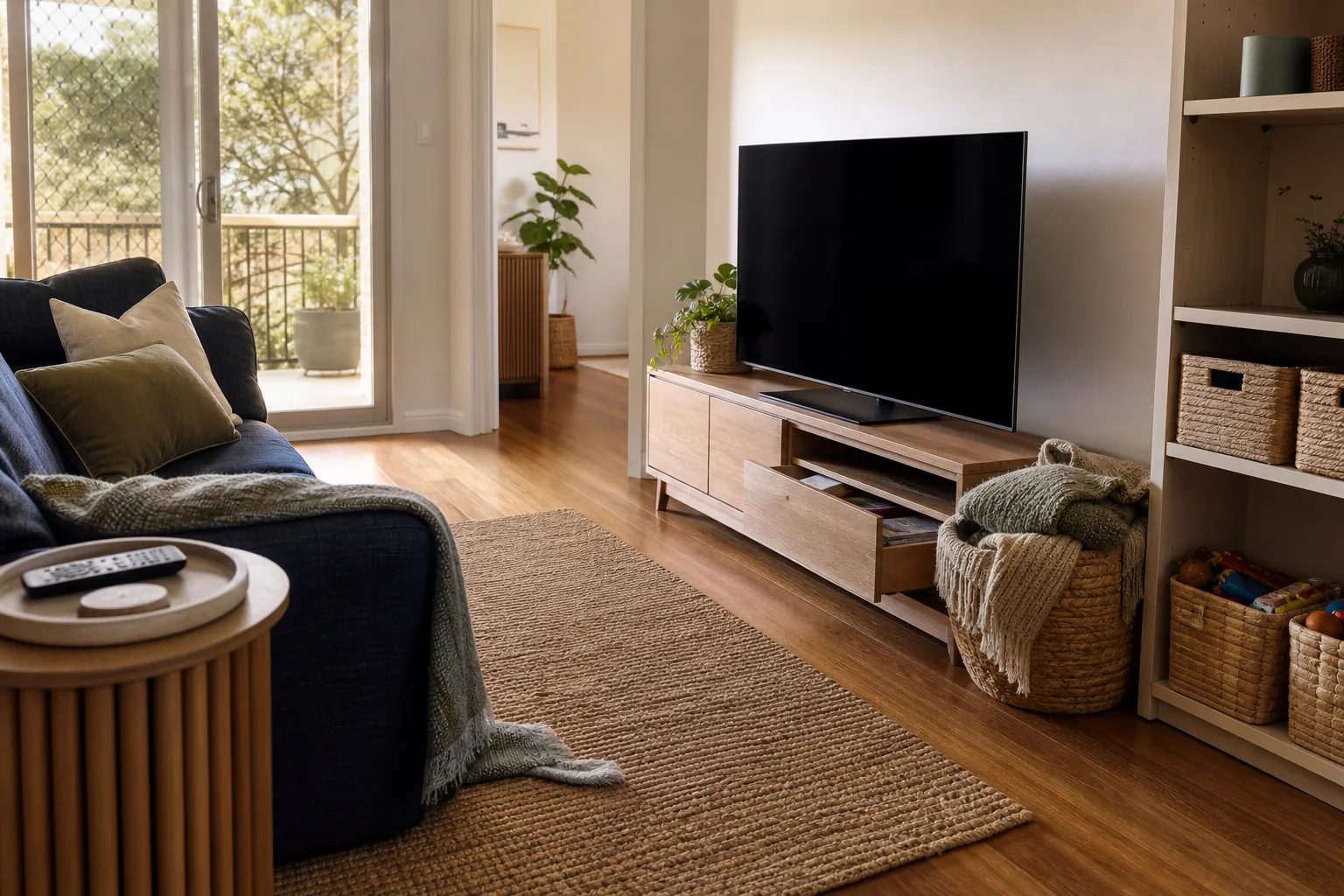
Give remotes and chargers one landing place
Small items become irritating because they move between the sofa, coffee table and TV unit. One shallow tray, drawer or box near the usual seat is normally enough for remotes, controllers and charging leads.
Keep the charging route clear of feet and soft furnishings, do not run cords beneath rugs and use electrical products according to their instructions. The living room cable management guide covers power boards, devices, lamps and cleaning access in more detail.
Ask every table to earn its floor space
A storage coffee table can hide games and chargers, but its lid or drawers need room to open. A lift top may be useful for occasional laptop work yet add weight and moving parts. An open table makes the room feel lighter but offers nowhere for daily clutter to disappear.
Side tables solve a different problem: they provide a close surface for a drink, lamp or book. Measure their height against the sofa arm and leave comfortable passage around them. Before adding either type, compare the usable surface and clearance in the living room tables guide.
Keep blankets near the seat, not in the best cupboard
Throws used most nights need an easy return point. A roomy basket beside the sofa, a storage ottoman or one shelf in the TV unit may be more successful than a linen cupboard in another room. Store only the number regularly used; extra seasonal bedding can live elsewhere.
Make sure an ottoman or bench does not narrow the route through the seating area. If the room already feels tight, revisit the sofa and seating layout guide before adding more furniture.
Make toy storage usable by the child
Low open tubs can make independent pack-up easier, provided they are stable and do not create a trip hazard. Use broad groups rather than tiny categories: building toys, books, soft toys and games may be enough.
Rotate toys if the available storage is overflowing. Large collections behind heavy lids or deep in a cabinet usually return to the floor because the pack-away step is too difficult. Secure furniture where its instructions require it and keep climbable arrangements in mind.
Give pet items a boundary
If the pet spends time in the living room, a bed, washable throw and small toy basket may legitimately belong there. Keep food, grooming supplies and the full collection of toys in their task zones rather than spreading them across the room.
Washable materials and a clear route around beds help people and pets share the floor. The pet essentials guide covers feeding, resting, entry and cleaning zones throughout the house.
Use shelves for display and a small amount of storage
Open shelving can hold books, plants and a few boxes without the visual weight of a large cabinet. It can also become a wall of unrelated objects. Leave some space, group items with intention and avoid storing heavy or frequently handled objects at awkward heights.
Check the wall, fixings, load rating and rental conditions before installing shelves. Keep cords, lamps and power points accessible; the living room lighting guide can help place lamps before shelving claims the useful wall space.
Keep the rug and walkway out of the storage plan
Storage furniture should not squeeze the passage between seats, doorways and the television. Mark its depth on the floor and test doors, drawers and lids in their open position. If a new unit forces the rug into an awkward size or makes the seating arrangement feel crowded, it is solving one problem by creating another.
The living room rug guide helps define the seating zone before furniture is added around it.
Stop entry clutter at the edge of the room
When the front door opens directly into the living room, create the smallest useful landing point near it. A key tray, a hook and a shoe basket may be enough. The goal is to intercept everyday items, not build a complete hallway where there is none.
Anything that repeatedly travels further into the room needs either a better drop zone or a new routine. Adding another living room basket will only disguise that route temporarily.
Before adding another basket or cabinet
- Name the repeated item or routine the storage will support.
- Measure the footprint with doors, drawers or lids open.
- Protect the main walking and seating routes.
- Check that children, pets and the usual cleaner can use the space safely.
- Remove or relocate what does not belong before increasing capacity.
A living room does not need to look packed away at every moment. It should feel comfortable to use and easy to recover. When the nightly reset is short enough to happen, storage becomes part of the room's rhythm rather than another collection to manage.
Common Questions
What are the most useful living room storage ideas?
Start with what is left out at the end of an ordinary day. Give remotes and chargers one landing place, keep blankets near the seats, use child-accessible storage for current toys and set a boundary for pet gear. Storage works best when it follows where each item is actually dropped and used.
How can I add lounge room storage without filling every wall with cabinets?
Use a small number of purposeful pieces: a basket where blankets are dropped, a TV unit sized for real equipment, or a table with storage for a named category. Shelves can combine display with limited storage. Every addition should earn its floor space and preserve the rug, doorway and walking routes.
How do I keep a sitting room tidy every day?
Aim for a short nightly reset rather than perfect storage. Return remotes to one place, collect blankets near the sofa, place active toys in an easy container and move entry clutter back to its proper zone. If the reset takes too long, reduce categories or make their homes easier to reach.