
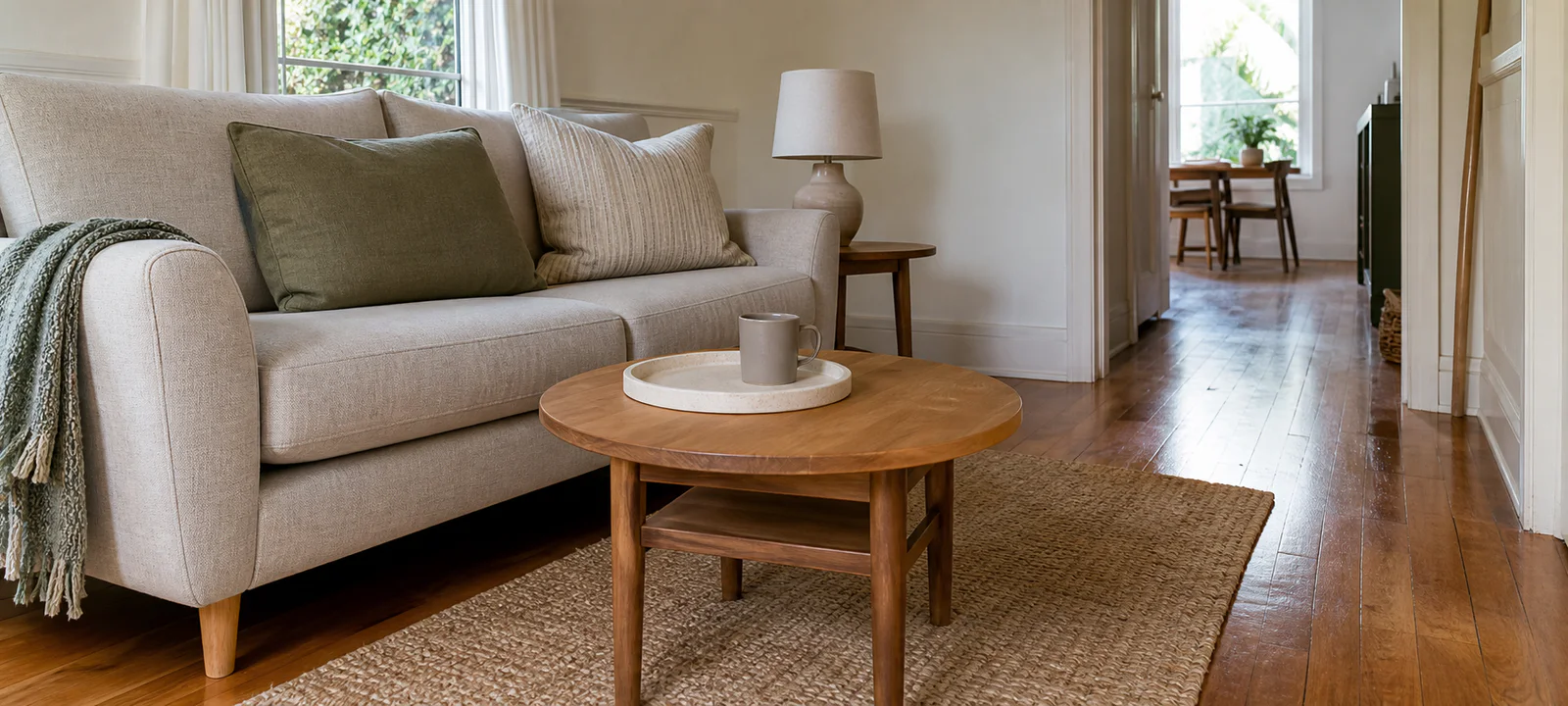
Every extra living room table offers a surface and claims a route. A coffee table holds drinks but narrows the gap to the sofa; a console provides a landing place and can quickly become the room's paperwork pile.
Give the table one job before choosing its shape. Note what it must hold, who needs to reach it and which path runs around it. Then mark the full footprint with the sofa and chairs in place.
Start With the Object or Activity
A reading seat may need a stable surface for a lamp and glasses. The centre of the seating group may need room for drinks, remotes and a board game. A hallway edge may need no table at all if a console would become an unattended drop zone.
List the few things the surface must hold. If the answer includes toys, blankets, paperwork and device accessories, divide those into proper homes first using the living room storage guide and clutter-control guide.
Measure Reach and Movement Together
Mark the table's length, width and height beside the actual seat. Test reach without leaning awkwardly, then stand, walk past and open any nearby drawer or door. Include the path used by children, pets and anyone carrying a tray or laundry basket.
A coffee table also needs space between seating and media furniture. Coordinate the outline with the sofa layout guide, rug guide and TV unit guide.
Choose the Table Type for Its Job
Coffee tables provide shared central access and occupy the busiest floor zone. Side tables keep a smaller surface within reach of one or two seats. Consoles use a wall or sofa back and need enough depth to remain stable without narrowing a route.
Nesting tables can expand for visitors and still need a defined stored position. An ottoman may combine a soft surface and storage, but trays, hinges and internal compartments change how it is used. Flexible furniture works only when the household returns it after the activity.
Buy Compartments Only for Named Contents
A shallow drawer can hold remotes; a lower shelf can hold a small book rotation. Hidden compartments reduce visual clutter and can hide a backlog. Choose storage only when each section already has a clear category and can be reached without moving everything on top.
If a lamp or charging lead is part of the job, map the power point and cord route before placing the table. Keep cords out of the walkway and see the living room lighting guide and cable management guide.
Check Stability, Edges and Toppling Warnings
Test the table on the flooring it will use. A narrow base, thick carpet or uneven rug edge can make a tall piece unstable. Follow assembly, load and anchoring instructions; keep heavy items low and do not let children climb on furniture.
Console and hall tables at least 686 mm high are among the furniture categories covered by Australia's toppling-furniture information standard. The ACCC toppling-furniture guide explains the warnings and anchoring checks consumers should use. Renters should discuss required anchoring with the landlord or agent.
Choose a Surface the Room Can Maintain
Glass shows marks and needs careful handling. Textured, slatted and woven finishes collect dust. Timber and laminate can be marked by water, heat and oils. Read the care instructions and decide whether coasters or a removable tray suit the way the table will be used.
Check whether a vacuum can reach around and beneath the base. A table that must be moved for every clean is acceptable only if it is light and stable enough to move safely.
Walk Around the Marked Table
- Name the table's job and the objects it will hold.
- Mark its footprint and test reach from the seat.
- Protect walkways, door swings and drawer clearance.
- Map lamps, charging and cords before choosing compartments.
- Check flooring, stability, load limits and anchoring warnings.
- Choose a finish and shape the household can clean.
The smallest table that comfortably performs its job usually leaves the best room around it. If the marked outline interrupts movement or merely offers another clutter surface, the living room may be better without it.
Common Questions
How high should a side table be next to a sofa?
Use comfortable reach from the actual seat rather than relying on a universal height. Mark the proposed table and test reaching for a drink, lamp or remote without twisting. Also check that the top, legs and any open drawer remain clear of the sofa, walkway and people rising from the seat.
Do I need a coffee table, side table or console table?
Choose the table that serves a named activity. A coffee table supports shared items in front of seating, a side table keeps a few things within reach, and a console can use a narrow wall zone. If no repeated task needs the surface, leaving the floor clear may be the better choice.
Is a living room table with storage worth buying?
Storage is worthwhile only when each shelf or drawer has a defined purpose and remains easy to access. Measure the table with compartments open and consider whether stored items will migrate into an unsorted pile. A simpler table often works better when the real need is just a stable, reachable surface.