
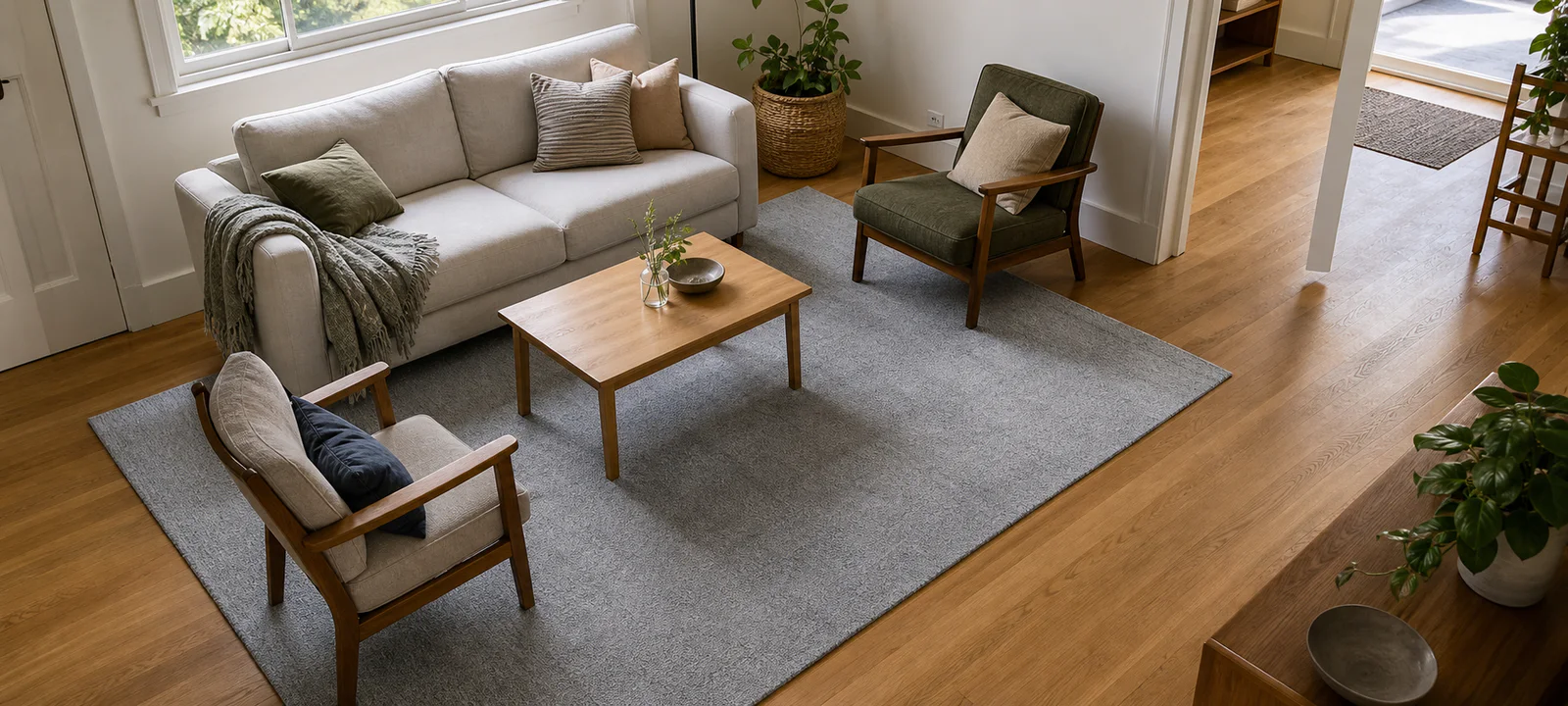
A rug can be the right colour and still make a living room feel unsettled. It stops just short of the sofa legs, drifts under the coffee table or catches the balcony door whenever it opens.
Mark the proposed edges on the floor and place the sofa, chairs and table against them. Walk every route through the room and open nearby doors. Size and placement come first; pile, pattern and material only matter after the rug works with the seating group.
Define the Seating Area
Decide whether the rug will connect a conversation area, soften a hard floor or define the living zone in an open-plan room. Measure the sofa, chaise, armchairs and coffee table rather than the largest empty rectangle of floor.
Include the TV unit, balcony door and routes to the kitchen or hallway. The TV and media storage guide can help map the screen wall, and the sofa layout guide covers the wider furniture zone.
Choose a Furniture Relationship
A large rug can carry all seating legs and clearly define a generous area. Placing the front legs of the sofa and chairs on the rug often connects an average lounge room without filling it. A rug that sits beneath only the coffee table is easier to move and may look detached from a large sofa.
There is no universal placement. The key is consistency: the main seats should relate to the rug in a deliberate way, and the edges should not land where feet repeatedly catch them.
Mark the Full Footprint
Use painter's tape, newspaper or flattened cardboard to outline the proposed size. Include any furniture legs that will sit on it and the space around the coffee table. Then live with the outline for a day.
Open sliding doors, cupboards and media drawers. Move dining chairs if the living zone adjoins them. If the coffee or side tables are still being chosen, the living room tables guide will help test their clearance. Floor baskets and toy zones should also have a home; see the living room clutter guide.
Use Shape to Support the Layout
Rectangular rugs align naturally with many sofas and chaise settings. A square rug suits a more balanced arrangement, while a round rug can soften a compact conversation area or relate to a round table. Runners belong in narrow routes where their edges can stay clear of doors and turning points.
In an open-plan home, the rug should define the living group rather than fill the whole room. Check that its border does not cut across the main path between kitchen, dining and balcony. The living room lighting guide offers another way to define the zone without extending the rug.
Match Pile to Doors and Cleaning
Low pile and flatweave designs usually interfere less with doors and furniture and can be easier to vacuum. Deep or shag-style pile feels softer and holds crumbs, dust and pet hair more readily. Layered rugs add another edge, more movement and extra cleaning.
Fibre name alone does not predict performance. Check the construction, backing, shedding, care instructions and whether professional cleaning is required. A large rug may be too heavy for the household to move or clean even when its material sounds practical.
If a robot vacuum is expected to handle routine floor cleaning, use the robot vacuum buying guide to check pile, edges, dark surfaces and the route back to its dock before settling on the rug.
Check the Rug, Pad and Floor Together
A pad can add cushioning or reduce movement only when it is suitable for both rug and floor. Some backings and pads can mark or react with particular finishes. Follow the rug, pad and flooring manufacturers' guidance rather than assuming one non-slip product suits every surface.
Hard floors can allow movement; a rug placed over carpet can ripple or creep. Keep every layer flat and dry, check edges regularly and address curling or movement rather than treating it as normal. Renters should also consider lease conditions and existing floor damage.
Choose for the Household Using the Room
Children bring crumbs, spills and floor play. Pets add hair, claws, digging and occasional accidents. A delicate pale high-pile rug may be a conscious maintenance choice, but it should not be bought on the assumption that pattern or colour will remove the work.
Keep cords away from rug edges and do not route them beneath the rug. The living room cable management guide can help find a safer accessible route. For blankets, remotes and other items that often land on the floor, see the living room storage guide.
Walk the Marked Room Before Buying
- Measure the seating group, not just the empty floor.
- Choose whether front legs or all seating legs will sit on the rug.
- Mark the complete footprint and walk every route.
- Open doors, drawers and cupboards beside the proposed edge.
- Check pile height against door and furniture clearance.
- Confirm backing and pad compatibility with the floor.
- Choose a care routine the household can realistically maintain.
A well-sized rug helps the furniture read as one area without becoming a household obstacle. Once the taped outline works with doors, walkways and cleaning, choose the colour and texture. That order prevents a beautiful rug from becoming the room's most awkward object.
Common Questions
How do I choose the right rug size for a living room?
Define the seating area first and mark the rug's full footprint on the floor. Check how it relates to the sofa and chairs, where people walk, and whether doors or furniture can still move. A rug should connect the seating arrangement rather than float independently in unused floor space.
Should a living room rug go under the sofa legs?
Choose one clear furniture relationship and apply it consistently. The rug may sit beneath the front legs of the main seating or contain more of the furniture when the room allows. Mark both options before buying and walk through the space; the best choice supports the layout without creating awkward edges.
What rug pile is easiest to live with in a busy lounge room?
Match the pile to doors, cleaning equipment and the people or pets using the room. A thick pile can affect door clearance and make crumbs or pet hair harder to remove, while a lower profile may suit a high-traffic route. Test the rug together with its pad and the existing floor.