
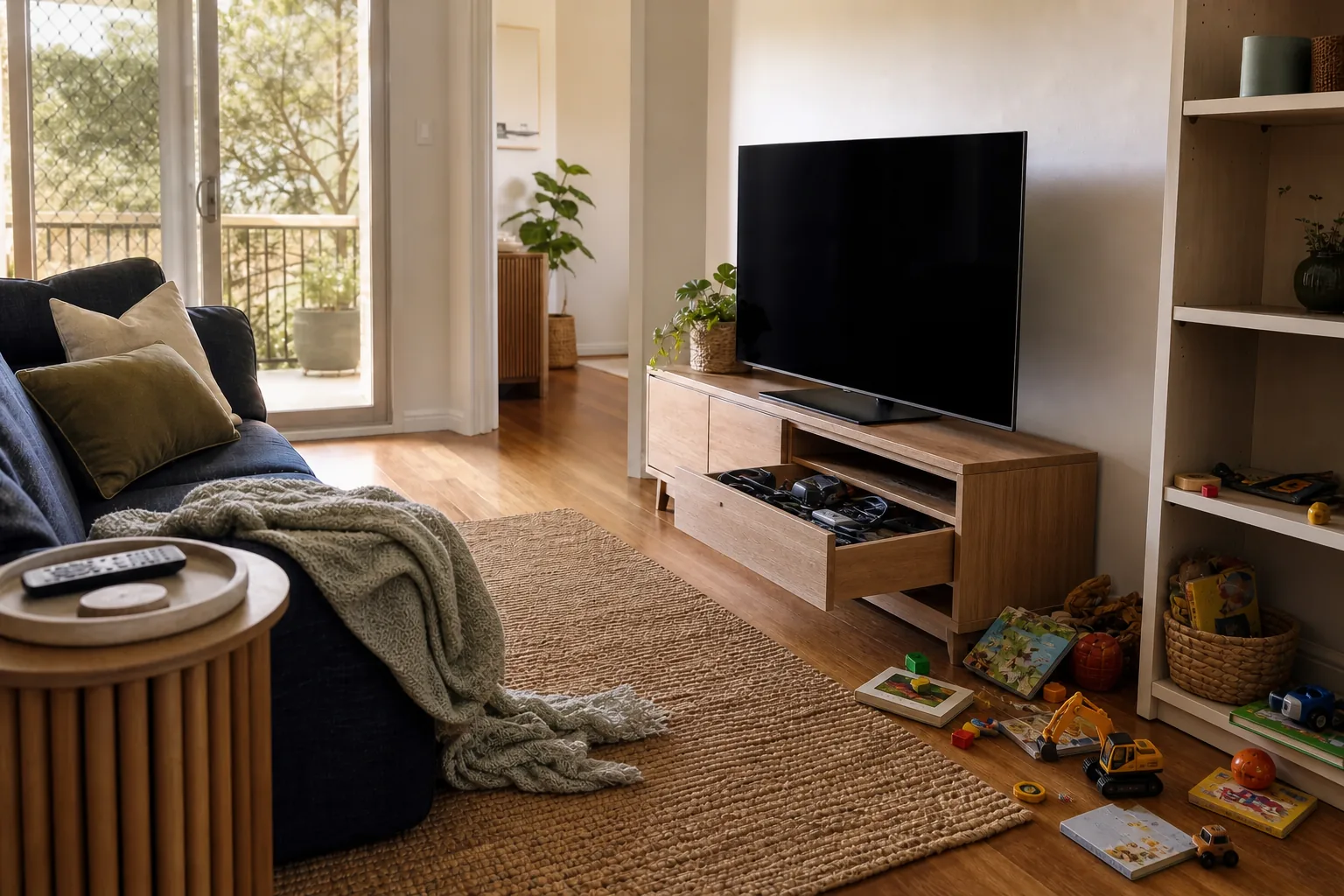
A robot vacuum can keep crumbs, dust and pet hair from building up between larger cleans. It can also become an expensive machine that repeatedly catches a cable, misses a dark rug or occupies more floor space than expected. The layout of the home matters as much as the suction claim.
Australian Home Collective has not tested robot vacuums. This guide therefore avoids a ranked shortlist and concentrates on floor layout, maintenance and the claims a buyer should verify against the exact machine before ordering.
The technical reference for dry-cleaning robot performance is IEC/ASTM 62885-7:2020 with its 2022 amendment, which defines measurement methods rather than declaring that a suction figure guarantees pickup. For connected-device security, the Australian Cyber Security Centre's IoT guidance covers update support, passwords, data collection and disabling unnecessary features. Ecovacs Australia's robot-maintenance guide is used only as a manufacturer example of brush, sensor, tank, filter and dock upkeep, not as independent comparative evidence.
Map the home before comparing robots
Walk the normal cleaning area at floor level. Measure thresholds, the gap below low furniture and the narrowest route between chair legs. Note loose cables, tasselled rugs, mirrored walls, pet bowls and objects that regularly remain on the floor.
- Measure the highest threshold the robot must cross.
- Measure under sofas, beds and cabinets at the lowest point.
- Check which rugs have fringe, deep pile or dark patterns.
- Decide which rooms should be excluded from mopping.
- Find a permanent dock position with power and a clear approach.
- List the items that would need to be moved before every run.
A larger suction number does not settle the comparison
A pressure number is not a complete pickup result. The cited IEC/ASTM standard specifies methods for measuring robot performance, including debris removal on hard floors and carpet. Compare results only when the published method, surface and setup make them genuinely comparable.
Where an independent laboratory publishes its method, compare relevant tests from the same series and inspect missed areas as well as collected debris. Separately plan how stairs, upholstery and spaces outside the robot's route will be cleaned.
Navigation should suit the clutter, not the showroom
Mapping, cameras and other sensors are implemented differently by model. Use the exact manual and support pages to check which obstacles are recognised, which still require floor preparation, and what the maker says about mirrors, dark surfaces, low objects, cables and pet items. Do not transfer one model's capability claim to a whole technology category.
For a connected model, check whether object images are processed on the device or sent to a service, how long data is retained and whether the camera can be disabled. The Australian Cyber Security Centre also recommends checking how long updates will be provided, using a strong unique password and turning off features that are not needed.
Threshold claims need context
Threshold capability is model-specific. Measure both height and profile, then check the exact manual or obtain a written manufacturer response for the transition in the home. A single maximum number does not describe a sharp strip, loose rug edge and rounded transition equally.
If a room has one troublesome strip, changing that transition may be more reliable than paying for a complex climbing system. Renters should obtain permission before altering fixed flooring.
Mopping systems range from a damp cloth to a real maintenance routine
Designs include passive pads, moving pads and rollers, but that label alone is not comparable cleaning evidence. Check a published test method and the exact model instructions for water, permitted detergent, flooring exclusions, pad or roller cleaning and edge coverage.
Check how the mop behaves on carpet. Some robots lift the pad; others leave it at the dock or depend on mapped zones. Measure rug pile and read the exact limitation. A lifted wet mop can still brush a deep rug.
The dock is a small appliance in its own right
Depending on the exact model, a service dock may empty dust, handle clean and dirty water, wash a mop or dry it. Each function adds specified tanks, bags, trays or filters. The cited Ecovacs maintenance guide tells owners to clean and fully dry removable dock components, maintain charging contacts, empty tanks and check filters and suction paths; another maker's instructions may differ.
- Measure the complete dock and the clear space needed above it.
- Check whether tanks lift up, slide out or need a cupboard door left open.
- Place it on a surface that tolerates small spills.
- Identify the specified replacement bags, rollers, filters and detergent.
- Check the sound of emptying and drying if the dock sits near a bedroom.
Robot vacuum options for a mapped home
Start by clearing loose cables and pet items, measuring thresholds and choosing a dock position; a simpler floor reset may solve more than a costlier robot. If automated cleaning still fits the home, compare these options by navigation limits, dock access, mopping upkeep and consumable costs.
Some links below are affiliate links. If you buy through one, we may earn a commission at no extra cost to you. Learn more.
Self-emptying robot vacuum and mop
Dreame L10s Ultra Gen 2 Robot Vacuum and Mop
A docked robot system with automated emptying and mop washing for a compatible floor plan, after the 45.7 x 34 x 59.1 cm base-station position has been checked.
Research-supported option
View at Amazon AustraliaMay suit: larger mostly open homes seeking automated vacuuming, mopping and dock maintenance.
May not suit: tight layouts or households wanting a simple vacuum-only robot.
Drawbacks to consider:
- The tall dock needs a permanent serviced position and creates ongoing dust-bag, tank and mop-cleaning work.
- Raised thresholds, loose cables, dark or reflective surfaces and crowded rooms can still require preparation or manual cleaning.
Evidence confidence: moderate. Last reviewed 22 August 2026. Research-based assessment; we have not tested this product firsthand.
Auto-empty robot vacuum and mop
ECOVACS DEEBOT TEO+ Robot Vacuum and Mop
A LiDAR-mapped robot vacuum and oscillating mop with an auto-empty station for households comparing mid-range docked systems.
Research-supported option
View at Amazon AustraliaMay suit: homes wanting mapping, mopping and auto-emptying in one system.
May not suit: buyers who want a long owner-feedback history for the exact model.
Drawbacks to consider:
- Only a small amount of recent owner feedback was available for this exact model at review.
- Current dimensions, variant, price, stock and seller details should be rechecked before ordering.
Evidence confidence: moderate. Last reviewed 18 August 2026. Research-based assessment; we have not tested this product firsthand.
A practical buying checklist
- Map floor types, rugs, thresholds, stairs and low furniture.
- Choose the mopping system for the floors, not the feature count.
- Measure the dock and service access before ordering.
- Check how the robot handles cables, dark rugs and pet items.
- Check camera, account and data settings.
- Check the ongoing cost of bags, filters, brushes, rollers and detergent.
- Confirm local warranty, repair and spare parts support.
- Keep a manual vacuum for stairs, upholstery and detailed cleaning.
Common Questions
Can a robot vacuum replace a normal vacuum?
There is no universal answer. Map the surfaces and areas the exact robot is permitted and able to reach, then plan separate cleaning for anything outside that route. Thresholds, cables, low items and model-specific flooring exclusions may also change the preparation required before a run.
Is a robot vacuum with a mop worth buying?
Only if the exact mopping method, permitted flooring, carpet behaviour and maintenance routine suit the home. Check the model manual for allowed liquids, pad or roller cleaning, tank care and whether the mop lifts, detaches or depends on mapped no-mop zones.
How much room does a robot vacuum dock need?
The dock needs its own footprint plus clear approach space, access to power and room to lift out tanks or replace a dust bag. Use the installation clearances for the exact model and avoid placing it where an open cupboard door or busy walkway blocks the robot's return path.