
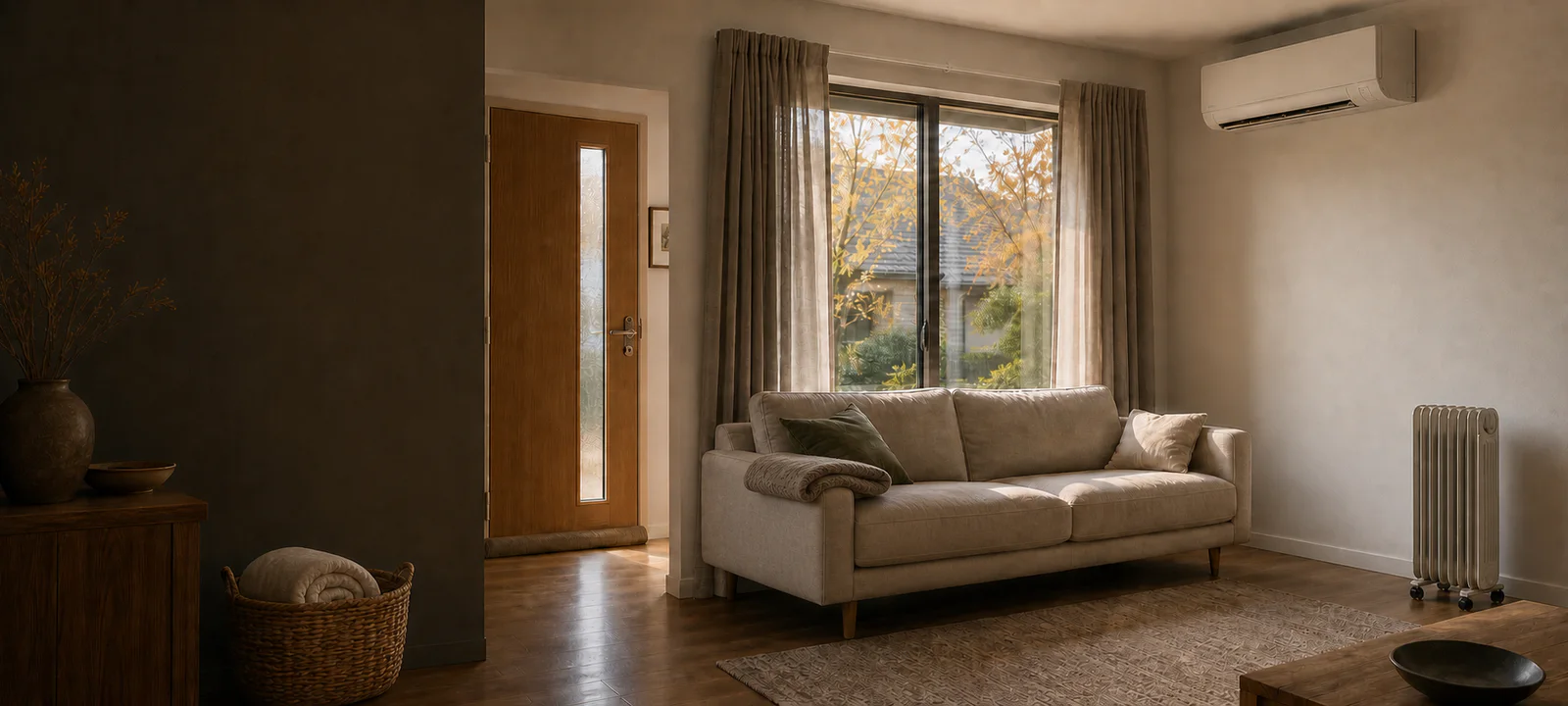
Winter preparation does not need to begin with buying a new heater.
A more useful starting point is checking what the home already has: whether heating appliances are safe to use, where warmth escapes, whether window coverings close properly and whether any installation or maintenance work needs to be arranged before colder weather arrives.
Autumn provides time to deal with these issues before the first cold morning turns them into urgent problems.
The work required will vary considerably across Australia. A home in Canberra, regional Victoria or Tasmania may need regular winter heating, while a household in Brisbane, Darwin or northern Western Australia may only need occasional warmth during cooler mornings or evenings.
This checklist is therefore a planning guide rather than a fixed national schedule. Start with the local climate and the way your own home behaves as temperatures change.
Our Take
Prepare the home before increasing the heat.
A larger heater will not resolve draughts, poorly fitted curtains, an uninsulated ceiling or open doorways that allow warm air to escape. It can simply work harder against the same underlying problem.
Inspect, clean and understand the equipment already in the home. Then decide whether maintenance, a small improvement or a different heating option is genuinely needed.
Australia does not have one winter
Australian homes are built across tropical, subtropical, arid, temperate, cool-temperate and alpine conditions.
Even within the same state, winter needs can differ because of:
- altitude
- distance from the coast
- humidity
- prevailing winds
- overnight temperatures
- building age
- orientation
- insulation
- window area
- surrounding shade
A lightweight home designed for airflow in northern Australia may behave very differently from a weatherboard house in a cool southern region.
Use the tasks in this guide according to local conditions. Not every household needs to complete every item.
Start before the first cold spell
Portable heaters, electric blankets and heating repairs often become priorities as soon as the weather changes.
Beginning earlier gives you time to:
- inspect stored appliances
- identify damage before equipment is needed
- clean filters and vents
- check smoke alarms
- locate draughts
- review window coverings
- request repairs in a rental
- obtain quotes for fixed systems
- arrange licensed trades where required
- understand product and installation lead times
This is particularly useful for reverse-cycle air conditioning. These systems provide both heating and cooling, so installation demand can rise during cold spells and again during hot summer weather.
Check the heating already in the home
Before deciding that the existing system is inadequate, inspect and prepare it according to the manufacturer’s instructions.
Reverse-cycle air conditioning
Check:
- whether filters need cleaning
- whether indoor vents are obstructed
- whether the outdoor unit has clear airflow
- whether the system starts and changes to heating mode correctly
- whether unusual noise, leaking or error codes are present
- when it was last professionally serviced
Do not open electrical panels or attempt refrigerant work.
A system that is dirty, obstructed or overdue for attention may perform poorly even when it is correctly sized.
Portable electric heaters
Inspect:
- the plug
- the full length of the cord
- the casing
- the air inlet
- the outlet grille
- controls and switches
- castors, feet or base
- tip-over protection where fitted
Do not use a heater with cracking, scorch marks, exposed wiring, a loose plug, damaged controls or an unusual burning smell.
Dust should be removed only in the manner described by the manufacturer. Do not operate the heater until it is fully dry after any permitted cleaning.
Fixed gas, wood and combustion heaters
Check the manufacturer’s maintenance requirements and arrange appropriately qualified servicing where needed.
Do not improvise repairs to:
- gas connections
- burners
- flues
- chimneys
- seals
- ventilation openings
- electrical ignition systems
Never use outdoor gas heaters, barbecues or charcoal-burning equipment indoors.
Inspect electric blankets and heated throws
Electric bedding may remain stored for most of the year, making autumn a sensible time to inspect it.
Check for:
- frayed fabric
- scorch marks
- exposed or displaced elements
- damaged cords
- cracked controllers
- loose connections
- unusual hard areas or bunching
- signs of pet damage
Do not use damaged electric bedding.
Product Safety Australia advises checking electric blankets before use each year, warming the bed and switching the blanket off before sleeping. It also advises storing electric blankets rolled rather than folded.
Confirm that:
- the blanket still fits the mattress correctly
- controllers remain accessible
- cords are not trapped by the bed frame
- the product is suitable for the mattress or adjustable bed
- cleaning and drying instructions can be followed
- the product has not been recalled
A heated throw and an electric underblanket are designed for different uses. Do not treat them as interchangeable unless the manufacturer explicitly permits it.
Test smoke alarms and review fire safety
Cooler weather usually means greater use of heaters, electric bedding, fireplaces and other heat sources.
Check smoke alarms in accordance with:
- the manufacturer’s instructions
- state or territory requirements
- local fire-service guidance
- any rental or strata obligations
Look for:
- expiry or replacement dates
- low-battery warnings
- damage or heavy dust
- alarms that have been painted over
- alarms blocked by furnishings
- missing alarms in required locations
Do not rely on pressing a button if the manufacturer specifies additional testing or maintenance.
Households should also know:
- the safest exit routes
- where keys are kept
- how children or people with limited mobility would leave
- the designated meeting point outside
- the emergency number, Triple Zero (000)
Requirements vary by state, territory, property type and occupancy arrangement. Check the rules that apply to the home rather than assuming a general checklist replaces them.
Find where warmth is escaping
Draughts are uncontrolled air leaks. They allow warm indoor air to escape and cooler outdoor air to enter.
Common locations include:
- gaps beneath external doors
- worn door seals
- window frames
- rattling windows
- floorboards
- skirting boards
- wall penetrations
- exhaust fans
- unused fireplaces
- gaps around fixed appliances
- poorly sealed access hatches
Signs include:
- moving curtains when windows are closed
- rattling or whistling in windy weather
- cold air near a door or window
- a room that cools rapidly after heating stops
Simple removable measures may include:
- a suitable door snake
- replaceable weather seals
- closing an unused fireplace damper where appropriate
- sealing products designed for the exact gap and surface
Do not block:
- intentional ventilation
- gas-appliance air supply
- required combustion openings
- weep holes
- drainage openings
- exhaust systems
- openings required by building or manufacturer instructions
Where the purpose of an opening is unclear, obtain qualified advice before sealing it.
Check curtains, blinds and pelmets
Windows can be a major source of winter heat loss.
Inspect whether existing coverings:
- fully cover the glass
- close without large side gaps
- reach the sill or floor where intended
- remain close to the wall
- are blocked by furniture
- have damaged tracks, cords or fittings
- can be opened easily for daytime sun
During cooler weather, open suitable window coverings when direct winter sun can warm the room. Close them before the sun disappears and the outside temperature falls.
A pelmet or enclosed top treatment can reduce warm room air circulating behind a curtain, but it must be compatible with the window, curtain system and surrounding fixtures.
Do not place curtains where they can contact portable heaters.
Review insulation before blaming the heater
Insulation slows heat flow through the building envelope. It can help retain warmth in winter and reduce heat entry in summer.
Ceiling insulation is often particularly important because warm indoor air rises and roof spaces can represent a substantial area of heat transfer.
Warning signs that deserve investigation may include:
- rooms becoming cold soon after heating stops
- large temperature differences between rooms
- very hot ceilings in summer and cold rooms in winter
- visible gaps or disturbed insulation in accessible areas
- older additions that perform differently from the original home
Do not enter a roof space unless it is safe and necessary. Roof spaces can contain:
- live electrical wiring
- concealed damage
- low clearances
- unstable surfaces
- dust and fibres
- heat
- vermin
- sharp materials
Electrical safety must be considered before insulation is installed, moved or upgraded. Use appropriately qualified installers and trades where required.
The presence of one particular wall material does not prove the entire home is well insulated. Windows, ceilings, floors, gaps and construction junctions still affect comfort.
Use the room more effectively
Some winter improvements cost nothing.
Consider:
- closing doors to rooms that are not being heated
- heating the occupied room rather than the entire home where practical
- moving seating away from cold glazing
- opening curtains to useful winter sun
- closing curtains before temperatures fall
- using rugs on cold hard floors
- reversing compatible ceiling fans to their winter setting
- reducing unnecessary exhaust-fan operation
- avoiding furniture that blocks heating outlets or return-air grilles
A reversible ceiling fan operated slowly can help move warm air that has collected near the ceiling. Follow the fan manufacturer’s instructions because blade direction and control methods vary.
Do not close vents or zones in a way that conflicts with a ducted system’s design or minimum-airflow requirements.
Prepare power points and heater positions
Portable heaters are high-powered appliances and need a suitable location before they are switched on.
Identify a position that provides:
- a level, stable surface
- direct access to a wall power point
- no cord across a walkway
- at least one metre from curtains, bedding, furniture, clothing and other combustible items
- clear air inlets and outlets
- protection from doors and foot traffic
- supervision around children and pets
Current Product Safety guidance recommends one appliance per power point.
Do not solve an unsuitable heater position by:
- overloading a power board
- using double adaptors
- chaining extension leads
- placing the heater on furniture
- running cords beneath rugs
- positioning it beside drying laundry
If the wall outlet is damaged, loose, discoloured or becomes unusually hot, stop using it and seek advice from a licensed electrician.
Address condensation without eliminating ventilation
Winter condensation occurs when moisture in indoor air reaches a sufficiently cold surface, commonly windows, frames or external walls.
Reducing draughts can improve thermal comfort, but a home still needs appropriate ventilation.
Practical steps may include:
- using kitchen and bathroom exhaust fans
- ensuring exhaust systems discharge as designed
- opening the home for ventilation when outdoor conditions allow
- drying clothes outdoors or in a vented area where practical
- using lids when cooking
- addressing plumbing, roof or building leaks
- avoiding unflued combustion heaters
- maintaining space around furniture on cold external walls
Do not simply paint over recurring mould or assume a dehumidifier will correct a building leak.
Persistent condensation, mould, dampness or water entry may require investigation by the property owner or an appropriate building, plumbing or indoor-environment professional.
Renters should report leaks, failed ventilation and building defects through the appropriate property-management process.
Review hot water use
Winter can increase hot-water use through longer showers, warmer washing cycles and greater use of heated water around the home.
Before adjusting the water heater itself:
- check the manufacturer’s instructions
- identify whether the system is electric, gas, solar or heat-pump based
- inspect for visible leaks around accessible pipework and valves
- review timer or tariff settings only if you understand the system
- arrange servicing if performance has changed
Do not alter tempering valves, gas controls, electrical components or safety devices yourself.
The goal is not to reduce safe water temperatures arbitrarily. Hot-water systems have hygiene, scalding and installation requirements that need appropriate professional handling.
Check exterior drainage from ground level
Autumn leaves and seasonal debris can affect gutters, downpipes and drainage, but roof access introduces fall and electrical risks.
From ground level, look for:
- overflowing gutters during rain
- sagging sections
- disconnected downpipes
- water pooling near the building
- obvious blockages at accessible outlets
- staining that suggests repeated overflow
Do not climb onto a roof or use an unsuitable ladder to complete a seasonal checklist.
Arrange appropriate maintenance where access, height, electrical lines, roof condition or drainage design makes the work unsafe or uncertain.
A dedicated gutter-maintenance guide can address this topic in more detail; this winter-preparation guide should not encourage unqualified roof work.
Plan installations before demand rises
Fixed heating projects can involve:
- room sizing
- electrical capacity
- switchboard work
- outdoor-unit placement
- drainage
- wall or ceiling access
- zoning
- strata approval
- landlord approval
- licensed installation
- product and trade lead times
Reverse-cycle air conditioners are used for heating in winter and cooling in summer. Waiting for extreme weather at either end of the year may reduce installation flexibility.
Autumn is a practical time to:
- research suitable system types
- obtain site-specific quotes
- confirm what electrical work is included
- inspect proposed indoor and outdoor locations
- ask about access and drainage
- check servicing arrangements
- understand realistic scheduling
Do not order a fixed appliance before confirming that it suits the site and installation requirements.
Winter preparation for renters
Renters can still improve comfort, but permanent changes may require written approval.
Low-impact measures may include:
- removable door snakes
- using existing curtains effectively
- rugs
- closing unused rooms
- safe personal heating
- reporting damaged seals or windows
- requesting repair of faulty heating supplied with the property
- checking that smoke-alarm obligations are being met
Do not permanently seal vents, drill into walls, alter electrical systems or install fixed appliances without the required permission and qualified work.
Keep records of reported leaks, failed heaters, damaged windows and ventilation problems.
Regional priorities
Cool-temperate and alpine regions
Prioritise:
- heating-system readiness
- ceiling and wall insulation
- window coverings
- draught control
- pipe and exterior maintenance appropriate to local conditions
- regular rather than occasional heating needs
Warm and mild-temperate regions
Focus on:
- room-by-room comfort
- reverse-cycle heating where already installed
- evening draughts
- window performance
- condensation in poorly ventilated rooms
Hot-arid regions
Days may remain warm while nights become cold.
Consider:
- rapid room heating for short periods
- thermal mass and daytime sun
- curtains closed after sunset
- avoiding a whole-home solution when only one room needs occasional heat
Tropical and subtropical regions
Winter preparation may be limited to:
- occasional cool mornings
- checking the heating mode of an existing air conditioner
- light personal heating
- maintaining ventilation
- dry-season dust and filter cleaning
Do not compromise the home’s summer cooling and ventilation performance to solve a brief period of cooler weather.
A practical two-weekend approach
First weekend: inspect and identify
- test heating equipment
- inspect electric bedding
- check smoke alarms
- find draughts
- inspect curtains and blinds
- note condensation or leaks
- identify unsafe heater positions
- list repairs or trade work
Second weekend: prepare and organise
- clean permitted filters and vents
- install suitable removable seals
- rearrange furniture that blocks airflow
- prepare rugs and bedding
- lodge rental repair requests
- obtain quotes
- book required servicing
- store unsafe or damaged appliances so they cannot be used accidentally
This separates low-risk household preparation from work that requires permission, specialist equipment or licensed trades.
Before Winter Checklist
Before cooler weather arrives, check:
- Does the household genuinely need regular heating in its local climate?
- Do existing heaters start and operate normally?
- Have portable heaters been checked for damage?
- Have reverse-cycle filters been cleaned as instructed?
- Is fixed-system servicing due?
- Have electric blankets and heated throws been inspected?
- Are damaged winter appliances removed from use?
- Have relevant product recalls been checked?
- Are smoke alarms maintained according to applicable requirements?
- Does the household have a clear fire-escape plan?
- Are there draughts around doors or windows?
- Can removable seals be used without blocking required ventilation?
- Do curtains and blinds close properly?
- Can useful winter sunlight enter during the day?
- Is ceiling insulation present and in suitable condition?
- Are roof-space or insulation inspections being left to suitable professionals where required?
- Can unused rooms be closed off?
- Are heating outlets and return-air grilles unobstructed?
- Is there a safe position for each portable heater?
- Can at least one metre of clearance be maintained?
- Is each portable heater connected directly to a suitable wall power point?
- Are condensation, leaks or mould being addressed rather than concealed?
- Are gutters and drainage visibly functioning from ground-level observation?
- Have rental repairs or permissions been requested?
- Have installation quotes been obtained before peak demand?
- Does the plan suit the home’s actual climate and construction?
Prepare the home you already have
Winter preparation is not a reason to buy a collection of seasonal products.
Begin with inspection, maintenance and the way the home retains heat. Clean equipment that is safe to reuse, remove damaged appliances, close unnecessary gaps without blocking ventilation and make better use of existing doors, curtains and sunlight.
Where a purchase or installation is justified, planning in autumn provides more time to check suitability and arrange qualified work.
The result should be a home that is safer and more comfortable for its actual climate — not one prepared for a version of winter experienced somewhere else.
Official guidance
- Australian Government winter energy savings guidance
- Australian Government insulation and draught-proofing guidance
- Australian Government window guidance
- Your Home guide to Australian climate zones
- Your Home guidance for ventilation and airtightness
- ACCC Product Safety winter home safety guidance
- Fire and Rescue NSW guidance for heaters and open fires
- Fire and Rescue NSW home fire safety checklist