
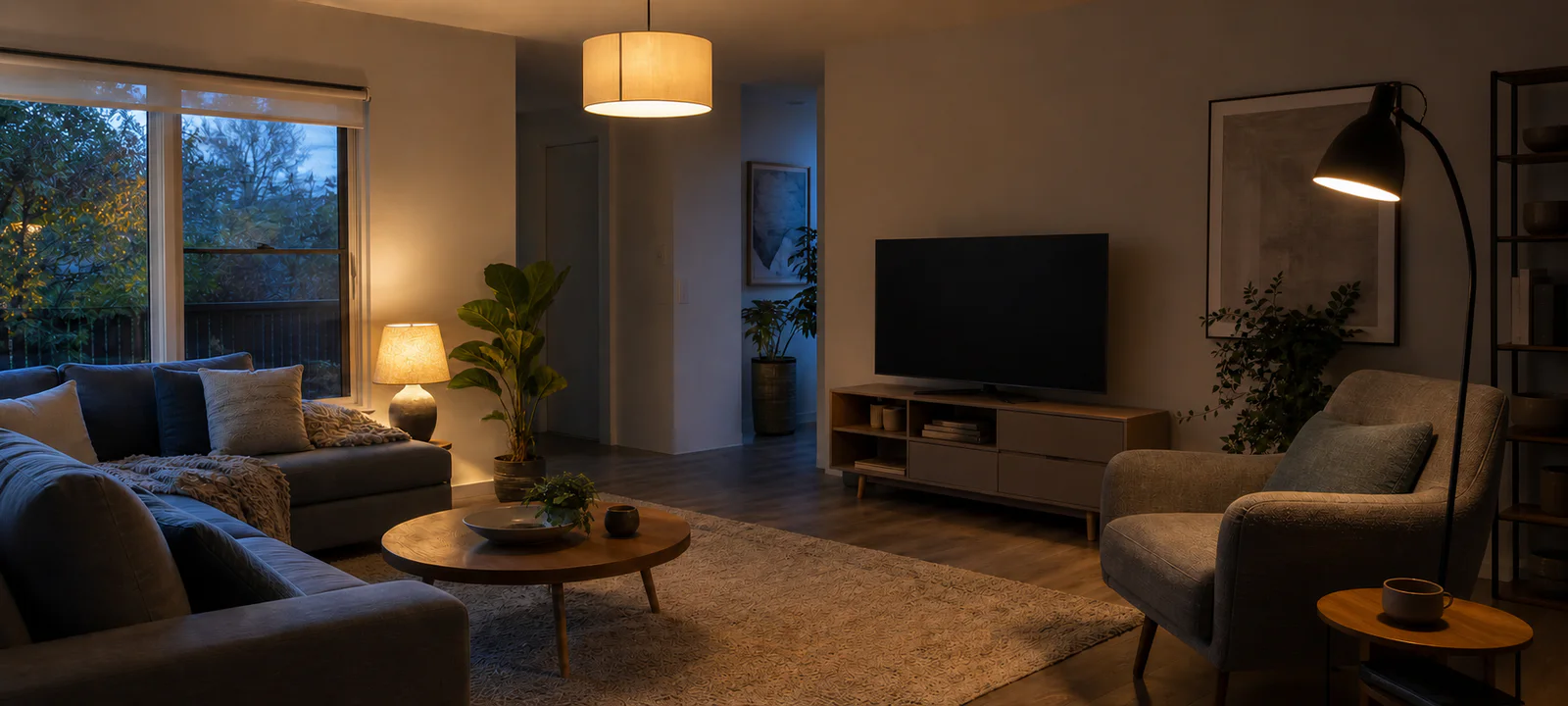
One ceiling light rarely suits every hour in a living room. It may be bright enough to tidy up and unpleasant beside the television, while the favourite reading chair remains dim.
Watch the room from late afternoon to bedtime. Note glare on the screen, where people read, the route used after other lights are off and which power points can serve lamps without cords crossing the floor.
Build the lighting plan in three layers
- Keep enough general light for movement, cleaning and shared activities.
- Add focused light only where someone reads, works or plays a game.
- Use softer evening light that avoids the television and direct eye line.
Test those three jobs with the furniture in place before buying another lamp or fitting.
Light Activities, Not Empty Corners
List the room's evening activities: conversation, television, reading, games, homework or movement between the kitchen and hallway. General light helps with cleaning and shared tasks; local light supports a chair, table or activity without brightening the whole room.
If the room also contains a regular desk or homework zone, the home office lighting guide covers task-light position, screen glare and colour rendering for that specific activity.
Storage and clutter can obscure switches and surfaces, so settle the furniture first using the living room storage guide and clutter-control guide.
Observe Glare After Dark
Reflections on a television may come from a lamp beside the sofa, a ceiling fitting or an uncovered window behind the seating. Test the screen from each usual seat with the proposed light on. Moving a lamp slightly can be more effective than buying a brighter or more complex fitting.
The TV and media storage guide can help coordinate screen position, devices and furniture. Aim for enough ambient light to move comfortably without directing an exposed bright source into people's eyes or the screen.
Give Each Lamp One Job
A floor lamp can serve a reading seat without taking table space and needs a stable base outside the walking route. A table lamp uses less floor and depends on a surface of suitable height and strength. See the living room tables guide before adding furniture merely to hold a lamp.
Check shade direction and switch reach from the actual chair. More lamps are not automatically more flexible if everyone still uses the nearest switch and the remaining fittings collect dust.
Match Bulbs and Controls to the Fitting
Read the lamp or fitting instructions for compatible bulb type and maximum rating. Choose brightness for the task and judge light appearance in the room rather than relying on a packet alone. Dimming requires compatible components.
Smart lamps and bulbs can add scheduling or remote control and also introduce apps, accounts, updates and network dependence. A reachable physical switch is often the more reliable answer for a simple evening routine.
Map Power and Cords Before Placement
Start at the power point and trace the full cord route. Keep leads away from walkways, rug edges, doors and places where furniture can crush them. Do not cover power boards or overload them, and stop using damaged plugs or cords.
Cable clips and sleeves must leave plugs and power boards accessible for inspection. The living room cable management guide covers that route in detail. Positioning a plug-in lamp or removable sleeve is distinct from adding a power point, changing fixed wiring or installing a wired fitting.
Plan for Small and Open-Plan Rooms
A compact room may need one ceiling source and one well-placed lamp, not a floor lamp in every corner. Mark each base and cord alongside the rug and the sofa layout.
In an open-plan room, different pools of light can help distinguish living and dining activities. Keep controls logical enough that people can turn off the living area without crossing a dark route. Renters should use approved portable products and obtain permission before permanent work.
Choose Lamps the Household Can Clean
Fabric and pleated shades hold dust; glass and gloss show fingerprints; open fittings expose the bulb. Check how the lamp is cleaned and whether it can be unplugged and moved safely. Keep liquids, curtains and soft furnishings clear as the instructions require.
A successful layout has fewer cords and easier controls as well as better light. If a lamp adds a surface, cable and obstacle without improving a real task, it has not earned its place.
Test the Room at the Time It Is Used
- List the evening activities and the seats used for them.
- Check screen glare from every usual position.
- Test lamp height, direction, stability and switch reach.
- Confirm bulb, dimmer and fitting compatibility.
- Trace cords from the power point without crossing routes.
- Keep plugs and power boards accessible and uncovered.
- Check the local regulator and use the correctly licensed person for regulated electrical work.
Give the room enough general light to function, then add one local source where a real activity needs it. The result should be easy to switch, easy to clean and comfortable from the seats people actually use.
Common Questions
What lights are best for a living room?
Use layers that match real activities rather than trying to make one fitting do everything. General light can support movement and cleaning, a floor or table lamp can serve reading, and softer light can suit television or relaxing. Give each light a clear job before choosing its style or brightness.
How should I position lighting for a living room with a TV?
Observe the screen after dark from the seats used most often. Move or angle lamps so bright bulbs and reflections are not in the viewing line, while keeping enough surrounding light to move comfortably. Test the arrangement at normal television time because daytime placement alone does not reveal screen glare.
Can traditional living room lighting still work in a modern setup?
Yes. A traditional-looking ceiling fitting, table lamp or floor lamp can still be planned as part of a useful lighting layer. Check what task each fitting serves, whether its shade controls glare, how its bulb and switch work, and where its cord runs. Style does not replace a practical evening test.