
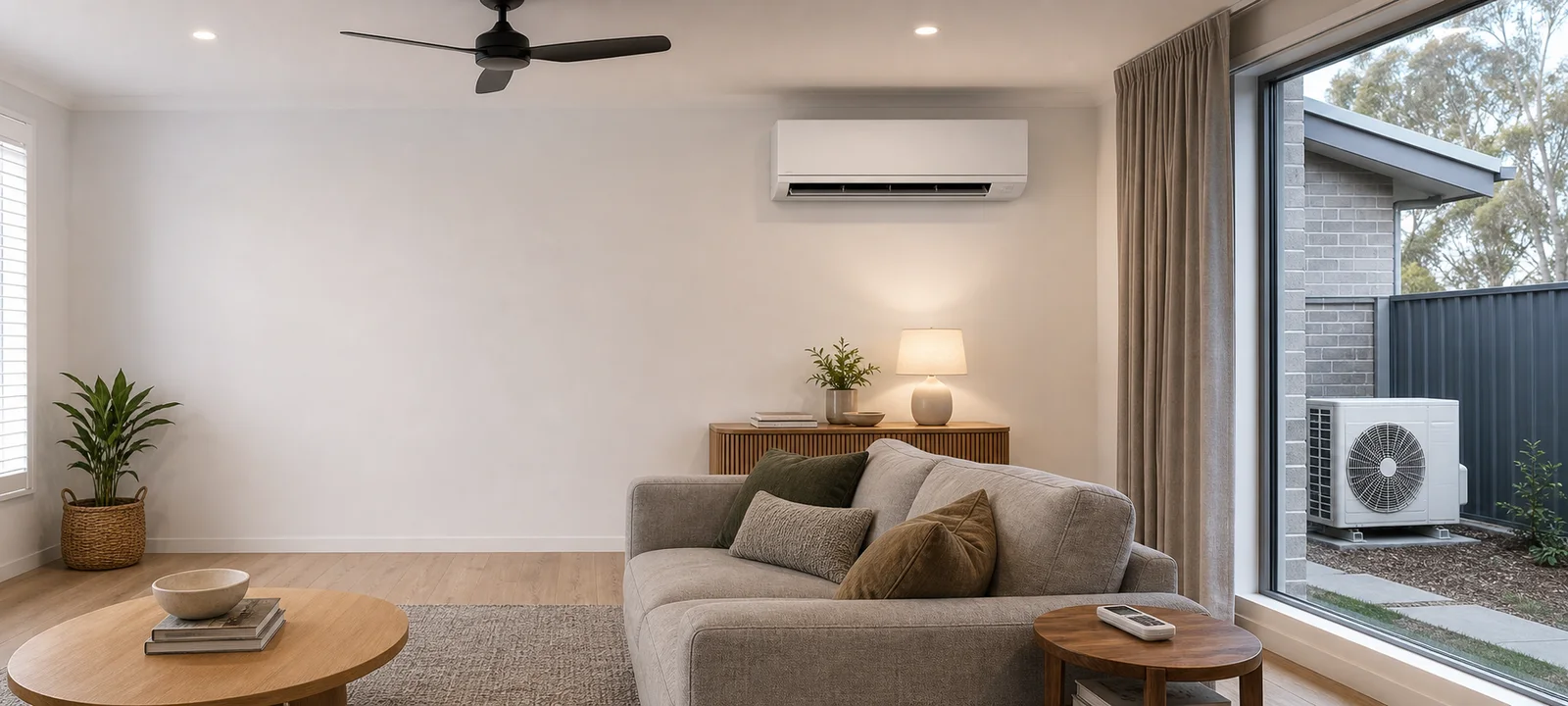
Reverse-cycle air conditioning is often treated as a summer purchase, but heating can be its most useful function in many Australian homes.
Instead of creating all its heat through an electric resistance element, a reverse-cycle system transfers heat from the outdoor air into the room. This allows it to deliver substantially more room heat for the electricity it uses than a standard portable resistance heater.
That does not make every reverse-cycle system equally suitable for winter.
Heating performance changes with the local climate, outdoor temperature, system size, airflow, defrost operation and the amount of heat the room is losing. A unit chosen mainly for summer cooling may not provide the winter performance expected in a cold inland, elevated or southern location.
This guide focuses on the winter-specific checks. For system types, installation scopes, approvals and general air-conditioning selection, use the Air Conditioning Buying Guide.
Our Take
Treat heating and cooling as separate performance questions.
A reverse-cycle air conditioner may provide both, but a strong cooling result does not automatically prove strong winter heating in the climate where the home is located.
Check:
- heating capacity
- heating efficiency for the relevant climate zone
- low-temperature performance where available
- indoor airflow
- defrost behaviour
- outdoor-unit drainage
- the room’s insulation, glazing and draughts
A suitable system in an enclosed, prepared room can provide efficient heating. The same unit may struggle when it is undersized or expected to heat several connected spaces through one indoor head.
How reverse-cycle heating works
A reverse-cycle air conditioner is an air-source heat pump.
In cooling mode, it transfers heat from inside the home to the outdoor air.
In heating mode, the refrigerant cycle reverses and transfers heat from the outdoor air into the room.
Electricity operates the:
- compressor
- indoor and outdoor fans
- controls
- pumps or accessories where fitted
The electricity is used to move and concentrate heat rather than create every unit of delivered heat directly through resistance.
This is why reverse-cycle heating can provide substantially more useful room heat per unit of electricity than fan, ceramic, panel or oil column heaters.
How can it collect heat from cold air?
Outdoor air still contains thermal energy when it feels cold.
The refrigerant in the outdoor coil absorbs that heat. The compressor raises the refrigerant’s pressure and temperature so the indoor unit can release warmth into the room.
As outdoor temperatures fall, the task generally becomes harder.
Depending on the system:
- available heating capacity may reduce
- electrical input may rise
- efficiency may decline
- warm-up may take longer
- frost may form on the outdoor coil
- defrost cycles may become more frequent
This is why the standard heating-capacity figure is not enough for a cold-climate decision.
Reverse-cycle and resistance heating compared
| Feature | Reverse-cycle air conditioner | Electric resistance heater |
|---|---|---|
| How heat is provided | Transfers heat from outdoors | Converts electricity directly into heat |
| Heating efficiency | Can deliver substantially more room heat than its electrical input | Heat output broadly follows electrical input |
| Summer cooling | Included | Not included |
| Installation | Fixed indoor and outdoor equipment with licensed work | Usually portable and connected to a suitable wall outlet |
| Cold-weather behaviour | Capacity and efficiency vary by model and outdoor conditions | Output is less affected by outdoor temperature |
| Air movement | Fan-forced | Depends on heater type |
| Best fit | Regular room heating and cooling | Short or localised heating in smaller spaces |
| Main buying risk | Choosing from cooling performance without checking winter suitability | Expecting a portable unit to heat a large room efficiently |
A portable heater can still suit occasional use in a small enclosed room.
Reverse-cycle heating becomes more compelling where the space is heated regularly, summer cooling is also needed and fixed installation is practical.
Heating capacity is not power input
Air-conditioner specifications use kilowatts for both output and electricity use.
These figures mean different things.
Heating capacity
Heating capacity describes how much heat the system can deliver under specified test conditions.
Power input
Power input describes the electricity used while operating under specified conditions.
A system with 5 kW of heating capacity is not necessarily drawing 5 kW of electricity.
When comparing systems:
- Determine the heating capacity required for the actual room.
- Check that the system can provide suitable output in the relevant climate.
- Compare heating efficiency between appropriately sized systems.
- Treat cooling performance as a separate comparison.
A low-input unit is not useful when it cannot provide enough heat for the space.
Sizing still depends on the room
Floor area is only the beginning.
Heating demand can be affected by:
- local winter conditions
- ceiling height
- ceiling, wall and floor insulation
- window area and glazing
- curtains and blinds
- external-wall exposure
- draughts
- open hallways and stairs
- room orientation
- desired indoor temperature
- operating duration
Two rooms with the same floor area can require different heating capacity.
A compact insulated bedroom is not equivalent to an open living area with high ceilings, large windows and a stairwell.
Measure every connected space the system cannot avoid heating. The Open-Plan Living Area guide explains this in more detail.
Read the heating side of the Zoned Energy Rating Label
The Zoned Energy Rating Label separates performance into:
- hot climate
- average climate
- cold climate
It also separates heating from cooling.
For winter use, check:
- heating capacity
- heating stars for the property’s climate zone
- indicative annual heating energy
- low-temperature information where published
- indoor and outdoor sound information
Do not rely on the largest star number visible on the label without confirming which function and climate zone it represents.
Use the Australian Government Energy Rating Calculator to identify the applicable zone and compare systems with similar suitable capacity.
A model may perform strongly for cooling in a hot climate while offering less convincing heating performance in a cold climate.
Cold-climate performance
Cold-weather capability matters more in places with:
- low overnight temperatures
- regular frost
- prolonged cold periods
- elevated or inland conditions
- alpine exposure
Where relevant, check:
- cold-zone heating stars
- capacity at lower outdoor temperatures
- permitted outdoor operating range
- defrost design
- outdoor-unit drainage requirements
- whether supplementary heating is used
Do not assume a system suitable for occasional Brisbane winter mornings will perform identically in Canberra, Ballarat, Hobart or an alpine town.
In warmer northern regions, winter heating may be occasional and cooling performance may remain the more important purchase consideration.
What is a defrost cycle?
During heating, the outdoor coil becomes cold while absorbing heat from the air.
In cool, damp or frosty conditions, moisture can freeze on the coil. Ice restricts airflow and reduces heat transfer.
The system may temporarily reverse operation to warm the outdoor coil and remove the frost.
During a normal defrost cycle:
- indoor heating may pause
- the indoor fan may slow or stop
- the outdoor fan may stop
- operating sounds may change
- water may drain from the outdoor unit
- brief steam or vapour may appear outside
The system should return to heating after the cycle finishes.
This behaviour can be normal and does not automatically indicate a fault.
When icing or defrost needs attention
Arrange professional assessment where:
- heavy ice remains on the outdoor unit
- ice does not clear
- heating fails to resume
- defrost cycles appear unusually frequent or prolonged
- the room repeatedly loses temperature
- error codes appear
- unusual noise is present
- drainage is blocked
- performance has declined noticeably
Do not:
- chip ice from the coil
- pour boiling water over the outdoor unit
- open its panels
- assume every heating interruption is a defrost cycle
Thermostat cycling, control settings, faults and equipment protection can also interrupt operation.
Winter drainage around the outdoor unit
Defrosting can produce water beneath the outdoor unit.
The installation should allow that water to drain without creating:
- pooling
- slippery paths
- wall staining
- erosion
- corrosion
- water entering the building
- refreezing in very cold locations
Before installation, confirm:
- where defrost water will go
- whether the unit is beside a path or doorway
- whether the mounting area drains freely
- whether local conditions can cause ice
- how the area can be inspected and maintained
Winter drainage should be considered when choosing the outdoor position, not after the first frost.
How reverse-cycle heat feels
Reverse-cycle heating moves warm air through the room.
It feels different from sitting beside an oil column or radiant heater.
Potential advantages include:
- relatively fast whole-room warm-up
- thermostat control
- no hot portable appliance on the floor
- summer cooling from the same system
- efficient regular heating
Potential compromises include:
- fan noise
- noticeable airflow
- direct air over a bed, desk or sofa
- warm air collecting near high ceilings
- uneven results in irregular rooms
- heating pauses during defrost
- outdoor-unit noise
The indoor-unit position and controls therefore matter as much as headline capacity.
Indoor airflow in winter
Warm air rises, so a high wall-mounted indoor unit needs to direct heat down into the occupied part of the room.
Check whether:
- the unit faces the main occupied area
- louvres can direct air downward
- furniture blocks the outlet
- curtains or cabinetry obstruct it
- warm air escapes into a hallway or stairwell
- airflow lands directly on a bed, sofa or desk
- filters can be removed safely
A position chosen solely for the shortest pipe route may produce poor winter comfort.
For bedrooms, see Heating a Bedroom for Overnight Comfort.
High ceilings and ceiling fans
Warm air can collect well above the occupied level in rooms with:
- high ceilings
- raked ceilings
- mezzanines
- open stairs
- double-height voids
A reversible ceiling fan operating slowly on its labelled winter setting can help redistribute that air.
The fan does not create heat or increase the air conditioner’s capacity. It improves circulation.
Follow the fan manufacturer’s direction setting rather than relying on a generic clockwise or anticlockwise rule.
Thermostats, fan speed and louvres
The temperature selected on the remote is a target.
Setting it far above the desired temperature does not necessarily make the system warm the room faster. It can simply cause the unit to continue heating for longer.
The sensor may be:
- inside the indoor unit
- in the remote
- in a wall controller
- near a ducted return-air grille
A sensor high on the wall may detect warmer air than occupants experience below.
Useful adjustments may include:
- directing louvres downward
- increasing fan speed during initial warm-up
- using automatic fan control
- moving a compatible remote sensor away from direct sun
- using a ceiling fan to improve mixing
Do not cover or relocate sensors outside the manufacturer’s instructions.
Filters and performance
Dirty filters restrict airflow.
This can reduce heating performance and increase noise.
Before winter:
- locate the filters
- remove them as instructed
- clean or replace them according to the manual
- allow washable filters to dry fully
- reinstall them correctly
Do not operate the unit without required filters or dismantle components beyond approved user maintenance.
Arrange service where there is:
- declining heating output
- repeated error codes
- indoor water leakage
- unusual vibration
- electrical smell
- heavy persistent icing
- damaged external pipe insulation
- abnormal noise
A sealed refrigeration system does not normally consume refrigerant. A claimed need for routine refrigerant “top-ups” may indicate a leak or another fault requiring licensed assessment.
Improve the room before increasing capacity
A larger system may not be the first answer when the room loses heat rapidly.
Check:
- ceiling and wall insulation
- window coverings
- gaps around doors and windows
- open hallways
- unused rooms
- blocked airflow
- large areas of cold glazing
The draught-reduction guide covers uncontrolled air leakage without blocking required ventilation.
The Home Insulation Basics guide covers ceiling, wall and floor performance.
Reducing heat loss can improve comfort and shorten operating time without increasing system capacity.
When reverse-cycle heating suits
It may be a strong option where:
- the room is heated regularly
- summer cooling is also needed
- a suitable indoor position exists
- an outdoor unit can be located correctly
- the space can be enclosed
- airflow and noise are acceptable
- winter performance suits the local climate
- licensed fixed installation is practical
Another option may be more sensible where heating is brief and occasional, permanent installation is not permitted or no suitable outdoor-unit location exists.
Before You Buy Checklist
Before relying on reverse-cycle heating, check:
- Which room or connected area needs heating?
- What are its dimensions and ceiling height?
- Can the space be closed off?
- What insulation, glazing and window coverings are present?
- Are significant draughts present?
- What local winter conditions must the system handle?
- Which Zoned Energy Rating climate zone applies?
- Has the heating side of the label been checked?
- Is heating capacity separate from electrical input?
- Is low-temperature performance relevant and available?
- Is the outdoor operating range suitable?
- Has expected defrost behaviour been explained?
- Is defrost-water drainage addressed?
- Will the indoor unit reach the occupied zone?
- Can louvres direct warm air downward?
- Will airflow blow directly onto furniture or a bed?
- Can filters be reached and cleaned?
- Is there a suitable outdoor-unit position with clear airflow?
- Are indoor and outdoor noise acceptable?
- Has the complete installation scope been checked in the Air Conditioning Buying Guide?
- Are required approvals and licensed work confirmed?
- Is product and installation support clear?
- Would insulation or draught reduction lower the heating demand?
Choose from the heating performance
Reverse-cycle heating can be one of the most efficient ways to warm an Australian room, but the system must suit the space and climate.
Do not choose from cooling capacity, appearance or the highest star figure alone.
Check the heating output, climate-zone rating, low-temperature performance, defrost behaviour and outdoor operating range. Then confirm that the indoor unit can distribute warmth through the occupied space and that winter drainage is properly handled outside.
A suitable system can provide efficient winter heating and summer cooling from one installation.
An undersized or climate-inappropriate unit may operate continuously while the room remains uncomfortable.
Official guidance
- Australian Government heating and cooling guidance
- Australian Government winter energy savings guidance
- Energy Rating heating and cooling guidance
- Energy Rating guidance for understanding the Zoned Energy Rating Label
- Australian Government Energy Rating Calculator
- Energy Rating guide to the Zoned Energy Rating Label for air conditioners
- Australian Government Your Home heating and cooling guidance
- Australian Government Your Home passive heating guidance
- Australian Refrigeration Council refrigerant-handling licence types
- Australian Refrigeration Council refrigerant-licensing frequently asked questions