
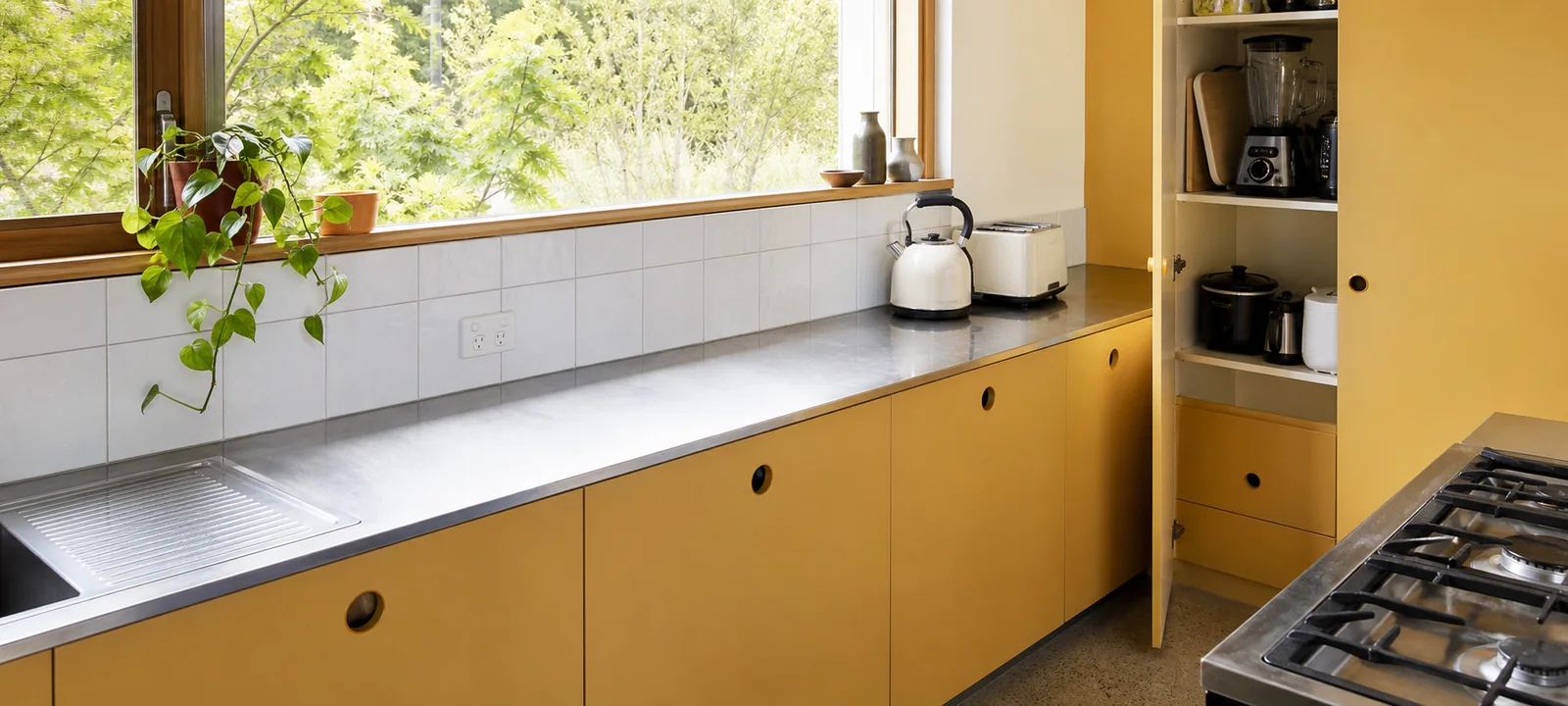
Bench space disappears one reasonable item at a time: a coffee machine, dish rack, fruit bowl, air fryer and stack of lunchboxes waiting for tomorrow. Soon there is nowhere to chop vegetables without moving three other things first.
Clear the bench by task, not by appearance. Protect the space needed for preparation, serving, washing up and any routine that genuinely happens there. Add a rack, shelf or trolley only when it gives that working space back.
For the broader room plan, see Kitchen Storage That Makes Small Cupboards Easier to Use.
Read the bench after a normal day
Leave the kitchen through breakfast, lunchbox packing and dinner, then group what remains. Appliances may stay because they are heavy, pantry food because shelves are hard to reach and mail because the kitchen is the household landing zone.
Each group needs its own answer. Moving everything into matching bench organisers will make the same problem look tidier without returning much work surface.
Protect the jobs the bench must perform
Mark the clear area needed for a chopping board, bowl or lunchbox row. Keep safe separation from the sink and cooking area as required by the task and equipment. Doors, drawers and appliance parts must still open.
A clear section of bench is not empty capacity. It is where the kitchen does its work.
Make each appliance earn a permanent position
Daily coffee may justify a stable station. A mixer used monthly probably needs a cupboard. Measure the appliance with lids, baskets or doors open, check manufacturer clearances and include the cleaning route before deciding it stays. The coffee machine types guide covers overhead cupboard clearance, water and bean access, grinder space and the milk routine.
The small kitchen appliances guide covers weight, power access, attachments and storage.
Send pantry overflow back to a visible shelf
Bread, snacks and unopened groceries often remain on the bench when the pantry is full or awkward. Remove expired and duplicate food, then group the items used in one routine. A shallow basket inside the pantry may work better than a bread bin added to the bench.
Use the pantry measurement guide before buying baskets, risers or turntables.
Find out what the drawers are rejecting
Utensils, wraps and lunchbox parts migrate to the bench when their drawer is overfilled or poorly divided. Give the drawer one main job, remove duplicates and measure its interior before adding an insert.
The kitchen drawer guide helps separate a fitting problem from a sorting problem.
Keep the sink edge ready to clean
Dishwashing liquid, a current sponge or brush and a place for wet items may belong near the sink. Bulk refills, duplicate cleaners and a collection of cloths do not all need to remain out. Leave enough clear surface to wipe splashes and clean the basin edge.
If supplies move below, inspect the cabinet first. The under-sink kitchen guide covers pipes, moisture, bins and controlled chemical storage.
Match the dish rack to the household rhythm
A permanent rack may be justified when handwashing happens throughout the day. If it is used only occasionally, a compact or stowable option can return valuable space. Measure it full, allow drainage and keep it from obstructing taps or preparation.
Stop mail and school items at another landing point
Paperwork on the bench is an entry-storage problem. Create the smallest useful drop zone near the door or household administration area: perhaps one tray, hook or folder. Moving it to a decorative kitchen basket only delays the same sorting.
Make containers leave the drying stage
Containers and lids often remain out because pairs are missing or the cupboard is difficult to reset. Match them, remove damaged and unmatched pieces, and keep enough for the household's real leftovers and lunch routine.
The container storage guide works through lids, stacking and cupboard fit.
Remember that bench organisers occupy the bench
A utensil crock, tiered shelf or coffee tray can clarify a routine, but its footprint remains unavailable for preparation. Measure the organiser full and make sure the items it contains were already legitimate bench residents.
Vertical storage can also block power points, splashbacks, window access or overhead doors. Test the whole area, not the empty rectangle beneath it.
A trolley needs a parking place
Mark the trolley footprint and test fridge, oven, dishwasher and cupboard doors open. It must stay stable when loaded and leave the main path clear. Wheels are useful only when there is a safe, convenient place for the trolley to roll.
If a major appliance is also being replaced, check the cavity, ventilation and door swing with the fridge dimensions guide, or confirm width, depth, services, kickboard and open-door clearance with the dishwasher sizes guide before treating nearby floor space as available for a trolley.
Renters should also check the lease and avoid designing the kitchen around a piece that cannot move easily to another home. The renter-friendly kitchen guide covers removable storage, surfaces and clearance.
Where attempts to clear the bench go wrong
- Storage is added before pantry, drawer and appliance overflow is sorted.
- Daily-use claims keep every appliance permanently visible.
- A rack or shelf occupies the only useful preparation area.
- Mail and household administration are moved into another kitchen container.
- A trolley blocks an appliance door or narrows the walkway.
- The bench looks arranged but still takes several moves to use.
A quick bench reset
- Remove everything unrelated to food preparation, serving or washing up.
- Return pantry food, utensils and containers to their task zones.
- Give permanent space only to appliances used often enough to justify it.
- Leave one uninterrupted work area clear.
- Wait a week before buying storage for what remains.
A useful bench does not need to be empty. It needs to become workable without a clearing ritual. If one tray or rack shortens a real routine, it may earn the space; if it only groups clutter, the kitchen is better without it.
Common Questions
How do I keep my kitchen bench clear every day?
Protect space for the jobs the bench must perform, then give mail, lunchboxes, pantry overflow and clean containers proper homes elsewhere. Let only genuinely frequent appliances keep permanent positions. A short reset after cooking works when every item has a reachable destination; it fails when nearby drawers and cupboards are already rejecting their contents.
Which appliances should stay on the kitchen bench?
Keep an appliance out when it is used often, fits without blocking preparation or sink space and can operate safely from the available power point. Also consider cleaning and the space needed to open lids or remove parts. Appliances used less often, or those light enough to lift easily, are stronger candidates for an accessible cupboard.
Will a bench organiser create more kitchen space?
An organiser still occupies the bench, so it helps only when it gathers a necessary group into a smaller area that is easier to clean. It will not fix pantry overflow, unused appliances or objects that belong in another room. Mark its proposed size first and check that enough uninterrupted preparation space remains around it.