
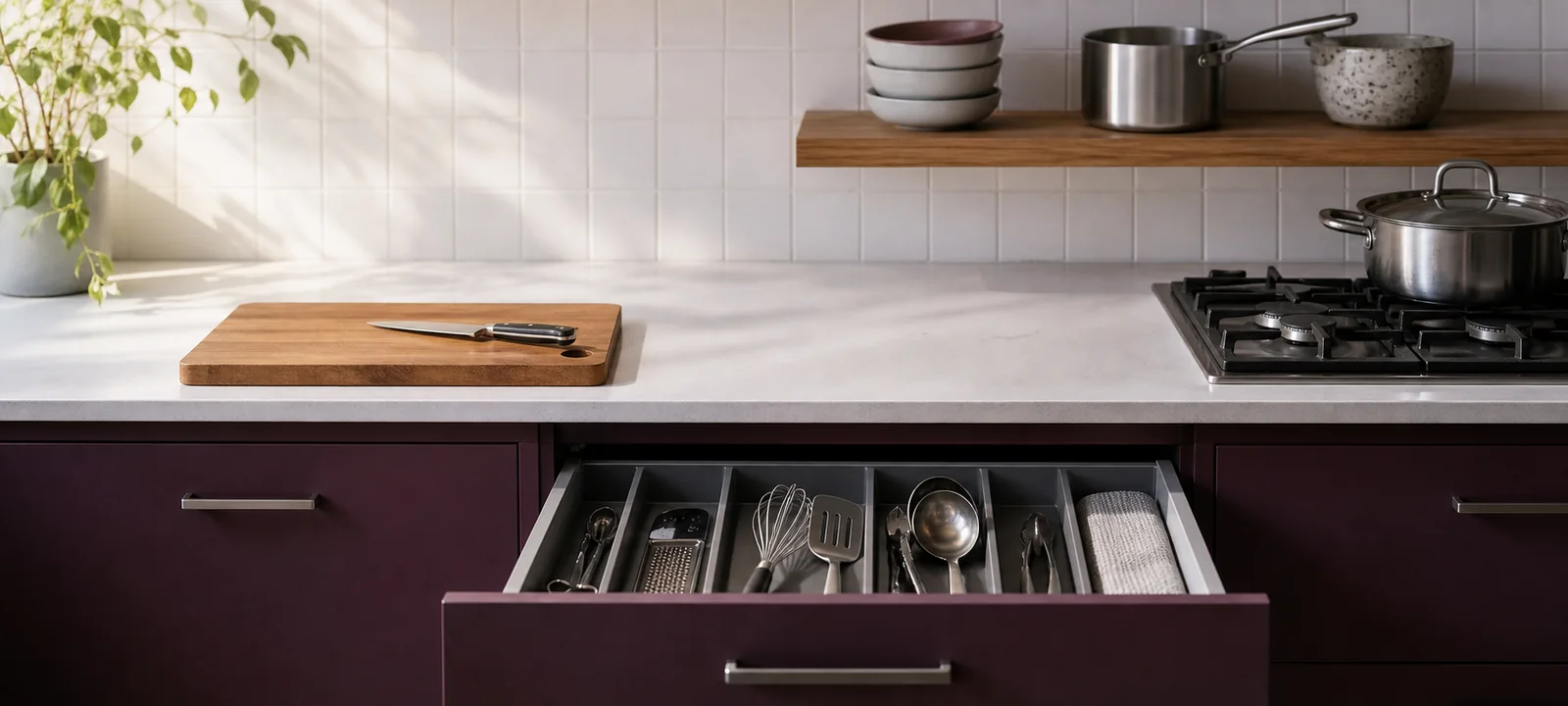
A working kitchen is not built by buying every gadget on a list. In many homes, the problem is not a lack of products; it is too many items fighting for bench space, awkward cupboards, duplicate tools and appliances that are used twice then pushed to the back of a shelf.
Kitchen basics should earn their place. Keep the things used every week, then add an extra only when it solves a problem that comes up often. A small kitchen does not need every item sold as essential. If the difficulty is finding space rather than choosing equipment, start with the small-kitchen storage guide.
A short list beats a crowded cupboard
The basics that handle most meals are a decent chopping board, sharp knife, saucepan, frypan, mixing bowl, measuring gear, storage containers and cleaning tools. We would avoid buying bulky appliances or specialist gadgets until you know where they will live and how often they will be used.
If an everyday home or kitchen item is being bought as a present and local manufacture matters, use the Australian-made gift guide to check the exact origin claim, delivered price and likely usefulness before choosing it.
Keep the things used every week close
Look at the meals and routines that happen on repeat: breakfast, lunchboxes, quick dinners, leftovers, coffee, tea and the nightly kitchen reset. Those routines should drive what stays within reach.
For most kitchens, a small set of reliable cookware is easier to store than a large set with pieces that rarely leave the cupboard. A saucepan, frypan, oven tray, colander and a few mixing or prep bowls will usually do more work than a drawer full of specialist tools. Check the cooktop before buying pans, especially if the home uses induction. The guide to cookware materials compares compatibility, weight, care and cooking response before a set is chosen.
Knives and boards are similar. One good chopping board that fits the sink, bench and drawer is better than several awkward boards that are annoying to wash. A chef's knife, paring knife, bread knife and kitchen scissors will cover many homes better than a large knife block that takes over the bench.
Cleaning and storage matter after dinner
Kitchen tools should be easy to wash, easy to store and easy to replace. That sounds plain, but it rules out a lot of clutter. A pan that is too large for the cupboard, a board that barely fits the sink or a container set that does not stack will create daily friction.
A set can be convenient, but only when its pieces share the work. Before buying cookware, utensils or containers as a group, check whether each piece has a job. Duplicate spatulas, spare peelers and mystery gadgets are how drawers end up jammed.
Stackable containers matter more than matching containers. Leftover containers, lunch containers and lids need to work together. If the lids go missing or the shapes do not nest, the cupboard becomes messy no matter how neat the set looked at first.
Buy for the meals you actually make
- Limited bench space: Start with tools that store in drawers or cupboards before buying another appliance.
- Small rental kitchen: Choose removable storage, compact cookware and items that do not need permanent fixing.
- Too many containers: Keep stackable containers with matching lids and remove odd pieces that no longer work.
- Drawers full of gadgets: Keep the tools used weekly and avoid single-purpose items unless they solve a frequent problem.
Be careful with bulky appliances
A bulky appliance is not a bargain if it lives permanently on the bench and rarely gets used. Air fryers, blenders, rice cookers, sandwich presses and mixers can all earn their place, but only if they suit the way the household actually cooks.
Small kitchens, rentals and open-plan homes make this more obvious because every bench item matters. If an appliance has no clear storage spot, it will either crowd the bench or disappear into the back of a cupboard. Either way, it should solve a frequent problem.
Containers and cleaning tools count too
Food storage, bins and cleaning tools are part of a working kitchen, not afterthoughts. Lunch containers without matching lids, containers that do not stack and drawers full of loose bottle parts can make a kitchen feel messy even when the cooking gear is sensible.
Pantry storage deserves the same restraint. The pantry storage guide compares baskets, turntables and containers without assuming every packet needs decanting.
Keep the daily reset simple: dishwashing liquid, a brush or sponge, cloths, tea towels, bin liners and a place for wet items to dry. If bulk cleaning supplies share kitchen space, keep the everyday items near the sink and move overflow elsewhere.
Bins need the same attention. A bin that is too small overflows; one that is too large can take over valuable floor or cupboard space. Match the bin setup to the actual rubbish, recycling and food-scrap routine.
What often ends up unused
- Buying a full set when only one or two pieces are needed.
- Keeping duplicate utensils that jam the main drawer.
- Choosing pans, boards or trays that do not fit the cupboard, sink or dishwasher.
- Buying single-purpose gadgets without a frequent use case.
- Letting appliances compete for bench space in a small or open-plan kitchen.
- Ignoring lids, bins and cleaning gear until the kitchen is already cluttered.
If cupboard space is limited, be strict. Renters and small-space households often need fewer, better-chosen items rather than more organisers. Keep heavy items low, sharp items stored safely and frequently used tools where they can be reached without unpacking half a cupboard.
Let the kitchen earn new additions slowly
A better kitchen does not need more gear by default. It needs the right basics in the right places. Add items that will be used often, clean easily and fit the space already available. Leave specialist gadgets until there is a clear, repeated reason for them.
Common Questions
What are the basic essentials for an everyday kitchen?
Begin with versatile cookware, a useful knife and board, everyday utensils, food-storage containers and cleaning tools that support the meals you actually make. The right list varies by household. A compact set used every week is more practical than a complete-looking collection of specialist tools that occupies working cupboards and benches.
Which kitchen items are commonly bought but rarely used?
Single-purpose gadgets, duplicate utensils and bulky appliances often become cupboard residents when they do not match regular meals. Novelty alone is not a reason to avoid something, but it should solve a repeated job and have a realistic storage and cleaning plan. Check what you already use before adding another version.
How do you know if a kitchen appliance is worth buying?
Name the job it will perform, how often that job occurs and what currently makes it difficult. Then count the appliance body, attachments, operating room, cleaning effort and storage position. An appliance earns its place when the whole routine is easier, not merely when one cooking step becomes faster.