
A messy pantry is rarely just a container problem. In many kitchens, the real issue is fixed shelves, half-used packets, deep corners, lunchbox snacks, bulk buys and spices disappearing behind larger items. Matching jars can help, but they are not the first fix for every pantry.
The first step is to work out what is actually going wrong: food you cannot see, packets that will not stand up, shelves that are too deep, or storage products that look tidy but waste space. A pantry should make normal food easier to find, use and put away. It does not need to look like a showroom.
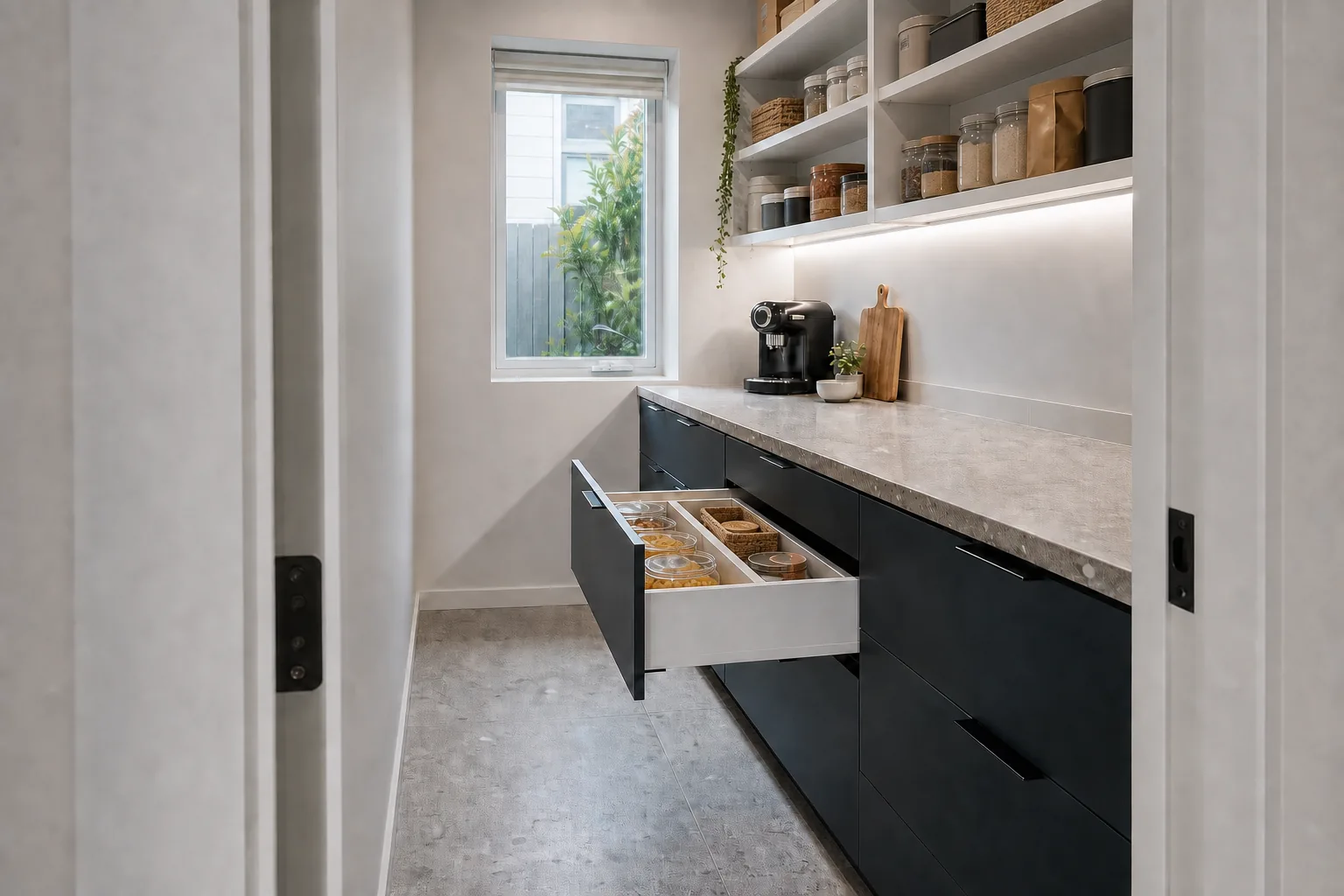
Start with this three-step pantry reset
- Choose the one shelf or routine that causes the most frustration.
- Measure the usable shelf and opening before comparing organisers.
- Test one change through a normal grocery shop before repeating it.
That small test shows whether you need baskets, risers, turntables, containers or simply fewer items on the shelf.
Match the pantry storage idea to the problem
The same organiser will not solve every pantry. Use the repeated frustration to narrow the choice, then measure the shelf and opening before buying anything.
On a small screen, swipe across the table to see every column.
| Pantry problem | Idea worth testing | Check first |
|---|---|---|
| Packets disappear at the back | A pull-out basket, low tub or turntable for one food group | Usable depth, opening width and whether labels stay visible |
| Short cans waste a tall shelf | A shelf riser that creates two visible levels | Room to lift items from both levels without removing the front row |
| Open packets fall over | A low-sided basket or simple divider | Packet height, sealing and access to dates and cooking directions |
| Bulk food crowds everyday items | A separate low shelf or overflow zone | Weight, lifting route and how often the bulk supply is refilled |
| A corner shelf is hard to reach | A correctly sized turntable or removable tub | Rotation diameter, side clearance and stability when full |
Fix the shelf that annoys you most
Start with the shelf, not the container. First, check what to measure before buying pantry organisers, then fix the annoying parts: pasta packets falling over, spices getting lost, snacks spreading across shelves, or bulk items taking up too much room. For many pantries, baskets and tubs solve more problems than decanting everything into matching jars.
Measure the shelf before choosing a container
Buying organisers before measuring is the easiest way to waste money. Measure the shelf width, depth and height, including hinges, shelf lips and the space needed to pull a tub forward. This matters in older cupboards with fixed shelves, narrow pull-out pantries and shallow apartment pantries where a few centimetres can decide whether something fits.
Do the boring clean-out at the same time. Pull enough food out to see what is there, wipe the shelves and remove stale packets. Flour, sugar and crumbs attract ants quickly in warm weather, and humidity can make dry goods clump or go stale faster than expected.
Change one shelf and see whether it holds
Do not try to reorganise the whole pantry in one go. Pick the shelf that causes the most irritation. It might be cereal boxes blocking smaller packets, rice and flour taking over a baking shelf, or oil bottles hiding spice jars at the back.
Change that one shelf, use it for a week and notice what still lands in the wrong place. The result is a better guide to the next change than an organiser bought for the whole cupboard at once.
Containers are not always the answer
Matching containers look tidy, but they can waste space if they do not suit the shelf depth or the way the household shops. Bulk cereal, rice or flour may not fit into a standard jar, leaving an awkward leftover packet that still needs somewhere to go.
Clear containers only work well if the household will actually refill them. Some packet foods are better grouped in baskets than forced into jars, especially open chip packets, pasta bags, baking sachets and lunchbox snacks. Where food does leave its original packaging, keep the name and expiry date visible. For flour, rice, pasta or cereal, keep any cooking instructions or useful information from the original packet. The kitchen container guide can help before another set enters the cupboard.
Keep everyday food easy to reach
Group food by routine. Breakfast items can sit together. Tea, coffee and spreads should be easy to reach if they are used every morning. Lunchbox snacks need a clear home before they spread across every shelf. Dinner staples such as pasta, rice, sauces and tins usually work better together than scattered by packet shape.
Keep everyday food between waist and eye height where possible. Heavy items belong lower down: bulk rice, large tins, oils, drink bottles and spare flour are easier and safer to lift from a low shelf.
Where baskets, tubs and turntables earn their space
Deep shelves usually need baskets, tubs or turntables before they need more jars. A pull-out tub lets you reach the back without moving every packet in front. A turntable can work for oils, spreads, sauces and condiments. Shelf risers only help if there is enough vertical clearance; if jars scrape the shelf above, the riser will annoy you every day.
Wire shelves can make small jars wobble, so a flat-bottomed tray or tub may be better than lining everything up. Deep corner shelves are better handled with turntables or pull-out tubs than with more stacking.
Start with removable storage, especially in rentals: tubs, turntables, shelf inserts, clip-on baskets and freestanding narrow trolleys where there is room. Avoid drilling into cupboards or doors unless the lease allows it.
What usually wastes space or money
- Buying a full matching set before measuring the pantry.
- Using jars for every packet food, even when baskets would be easier.
- Stacking heavy items high where they are awkward to lift down.
- Letting air fryer accessories, lunchboxes or small appliances steal everyday food space.
- Leaving open packets unsealed in warm or humid weather.
Also avoid treating storage as the whole answer. If the pantry is overfilled because the kitchen has no other home for bulk groceries, spare bottles or appliances, the fix may be moving those items elsewhere rather than buying another container.
A pantry does not need to match
A better pantry does not need to look like a showroom. It needs to make normal food easier to find, use and put away. Measure first, fix the shelf that annoys you most and let that change prove itself before buying organisers for the rest.
Common Questions
What are the best pantry storage ideas for a small kitchen?
Start with the shelf that causes the most repeated frustration. Group breakfast, lunchbox or baking packets by routine, bring frequently used food within easy reach and use a basket, riser or turntable only where it improves visibility. Testing one shelf first avoids buying a complete organiser system that does not fit real groceries.
Do matching containers improve pantry storage?
Matching containers are optional, not the goal of pantry storage. They can help selected foods stack or stay protected, but they also need filling, labelling and space for packet remainders. Keep products in their packaging when labels and dates are already easy to read, and decant only when it solves a specific problem.
How do you keep kitchen pantry storage organised?
Give everyday food the most visible positions, keep related packets together and avoid categories so narrow that nobody follows them. Return new groceries behind or beside the same group, notice duplicate open packets and reset one problem shelf when it drifts. A practical pantry can look varied while still making every regular item easy to find.