
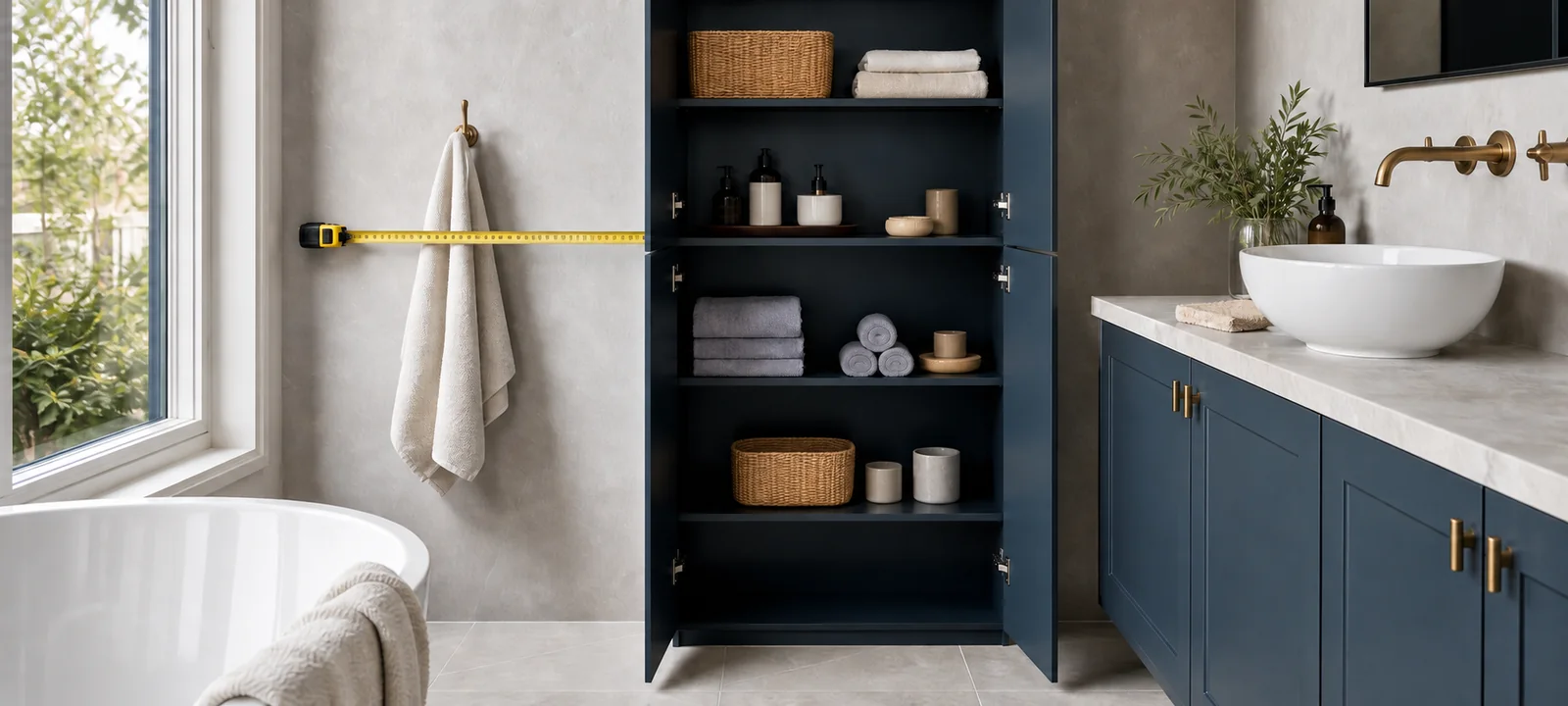
A bathroom can look orderly between uses and still fail at 7.30 in the morning. One person needs the mirror, another opens a drawer, wet towels have nowhere to spread out and the products beside the basin leave almost no room to wipe it.
Good storage removes those small collisions. It keeps the morning essentials close, gives damp items air and leaves enough room to move and clean. That usually takes more editing than organising: the bathroom does not need to hold every backup bottle in the house.
Start with the routine, not the empty wall
Watch the room while it is busy. Note where toiletries are dropped, which drawer blocks a doorway and where towels land after a shower. An ensuite used by two adults needs a different plan from a family bathroom shared with children.
Divide what remains into a few useful groups:
| Group | Examples | Best position |
|---|---|---|
| Everyday | toothbrushes, cleanser, deodorant, hairbrush | easy reach near the relevant routine |
| Weekly | treatments, grooming tools, occasional cosmetics | drawer, basket or cabinet |
| Backups | soap, toothpaste, unopened toiletries | one labelled reserve zone |
| Wet items | bath towels, face washers, shower bottles | somewhere that drains or dries |
| Controlled items | medicines, blades, cleaning products | secure storage suited to the item |
| Remove or relocate | expired products, duplicates, bulk packs | outside prime bathroom space |
Empty bottles and products nobody uses should leave before a new organiser arrives. For a more detailed category reset, use the bathroom product storage guide.
Measure the vanity from the inside
The outside dimensions of a vanity say little about what will fit inside it. Drawers may be shallow or shaped around the basin; cupboards lose space to traps, hoses, hinges and fixed shelves.
- Measure the internal width, depth and height of each drawer.
- Record shelf spacing and the clear opening between hinges.
- Mark the position of pipes, traps, hoses and valves.
- Measure the tallest bottle, including its pump or cap.
- Open doors and drawers fully to check the room around them.
A basket may fit on the cabinet floor yet be impossible to pull past a hinge. A tray may fit the drawer footprint but stop it closing. Measure the route in and out as carefully as the storage cavity.
Keep the basin ready to wipe
The benchtop is a work surface, not overflow storage. Keep only the few things used at the basin each day. A small washable tray can contain them, provided it does not crowd the tap, plug or mirror and can be lifted with one hand when the bench is cleaned.
Watch for splash. Cups and trays collect water, toothpaste and product residue, while toothbrushes and razors may need to dry between uses. If an organiser makes the bench slower to wipe, it is probably too large or holding too much.
Give shower products drainage and elbow room
A shower caddy has to work when it is loaded and wet. Measure its proposed position with the screen or curtain moving normally and allow for the shower hose, taps and the user's shoulders and elbows.
Before buying, check:
- the height, weight and number of bottles it will hold
- whether the shelf or basket drains freely
- whether the tiles or glass suit the stated fixing method
- whether bottles remain reachable without narrowing the shower
- whether the organiser can be removed or reached for cleaning
Suction and adhesive products are surface-specific. Follow the installation instructions and rated load rather than assuming a smooth-looking tile will hold them. Drilled storage needs extra care around tiles, waterproofed areas and concealed services.
Make towel storage a drying decision
Folded towels need storage; used towels need room to dry. Count the towels in daily use and see whether each can hang without touching the floor, blocking a door or bunching against another wet towel.
Rails spread fabric more than hooks, but they need more wall width. Hooks may be easier for children to use, while a basket is appropriate only for dry linen. The right choice depends on the room's airflow and the household routine, not simply the smallest footprint.
Use walls without crowding the room
Wall space is not automatically spare space. A deep shelf beside the basin can sit at head or shoulder height, and an over-toilet unit can obstruct the cistern, flush button or cleaning access.
Map these points before adding shelves, cabinets, rails or hooks:
- door, drawer and shower-screen swing
- mirror, switch and power point positions
- toilet, cistern and seat clearance
- wet and splash-prone areas
- the wall or tile surface and the required fixings
- rental, strata or body corporate restrictions
Avoid heavy, glass, sharp or spill-prone items above the toilet. Any tall or freestanding unit also needs to be stable and installed as its manufacturer requires.
Let moisture change the plan
Steam, splashes and slow-drying towels are normal bathroom conditions. Cardboard, fabric baskets, untreated timber and containers that trap water may be poor choices in damp positions. Wipeable, removable organisers are easier to inspect and clean.
Look for persistent condensation, musty cupboards, swollen cabinet board, pooling water and recurring mould before covering the area with storage. Those signs need attention to the underlying moisture, leak or ventilation issue; another basket is not a remedy.
Store medicines and chemicals by their instructions
Convenience does not make the bathroom suitable for every product. Healthdirect advises following each medicine's packaging and asking a pharmacist about storage; medicines may require protection from moisture or heat and should be kept away from children. It also recommends returning expired medicines to a pharmacy rather than putting them in the bin or flushing them. See its guidance on medicine storage and disposal.
Cleaning products also need their original labels and secure storage. Product Safety Australia recommends keeping household chemicals in their original containers, closing them after use and storing them out of children's reach and sight. A low vanity cupboard may therefore be the wrong location unless it can be secured appropriately. Read the household chemical safety guidance before assigning that space.
Razors, spare blades, hot hair tools, fragrances and glass containers deserve the same deliberate assessment. Open shelves and low baskets are useful for towels and ordinary toiletries, not for anything that needs controlled access.
Compare storage by the problem it solves
| Storage type | Useful for | Check first |
|---|---|---|
| Drawer trays or dividers | small daily grooming items | internal dimensions and cleanability |
| Under-sink baskets | grouped, suitable backup products | pipes, hinges, leaks and removal access |
| Shower caddies | the bottles used while washing | drainage, load, surface and movement |
| Hooks or rails | towels and robes | drying room, fixing and door clearance |
| Wall cabinets or shelves | light supplies outside the splash zone | depth, wall type and installation |
| Freestanding units | dry goods where floor space allows | stability, cleaning and walking room |
Measure while the bathroom is in use
Take one final set of notes with doors and drawers open:
- vanity, drawer and under-sink internal dimensions
- pipe, trap, hinge and shelf positions
- usable benchtop area around the basin and taps
- shower dimensions, surfaces and bottle load
- wall width, door swing and over-toilet clearance
- the number of towels that need to dry each day
- signs of dampness, leaks or poor airflow
- items needing secure or temperature-appropriate storage
- lease, strata or body corporate limits
In a tight room, continue with the small bathroom storage guide before choosing shelves or caddies.
Protect the space the room needs
The most useful bathroom storage is usually modest: daily products within reach, backups contained elsewhere, towels able to dry and hazardous items controlled. It leaves the basin clear enough to wipe and the room open enough to use without a daily shuffle.
If a product blocks movement, hides a leak, depends on an unsuitable surface or creates another damp corner, it is taking more from the bathroom than it gives back.
Common Questions
How can I add bathroom storage without making the room feel crowded?
Watch the bathroom during its busiest routine before adding anything. Solve the specific collision first, such as towels with nowhere to dry or daily products covering the basin. Use the vanity and existing cabinets well, then add only storage that leaves doors, drawers, cleaning access and comfortable movement space clear.
What should I measure before buying bathroom storage?
Measure internal cabinet width, depth and height, not just the outside of the vanity. Record pipework, hinges, drawer travel, door swings and the opening needed to lift items out. For wall or shower storage, include the loaded dimensions and check how far towels, bottles or baskets project into the room.
What type of storage works best in a damp bathroom?
Choose storage that drains, dries and can be removed or reached for cleaning. Open rails suit damp towels better than packed cupboards, while shower caddies need drainage and room around bottles. Keep bulk supplies away from persistent moisture, and let the room's airflow and wet zones influence which materials and products stay there.