
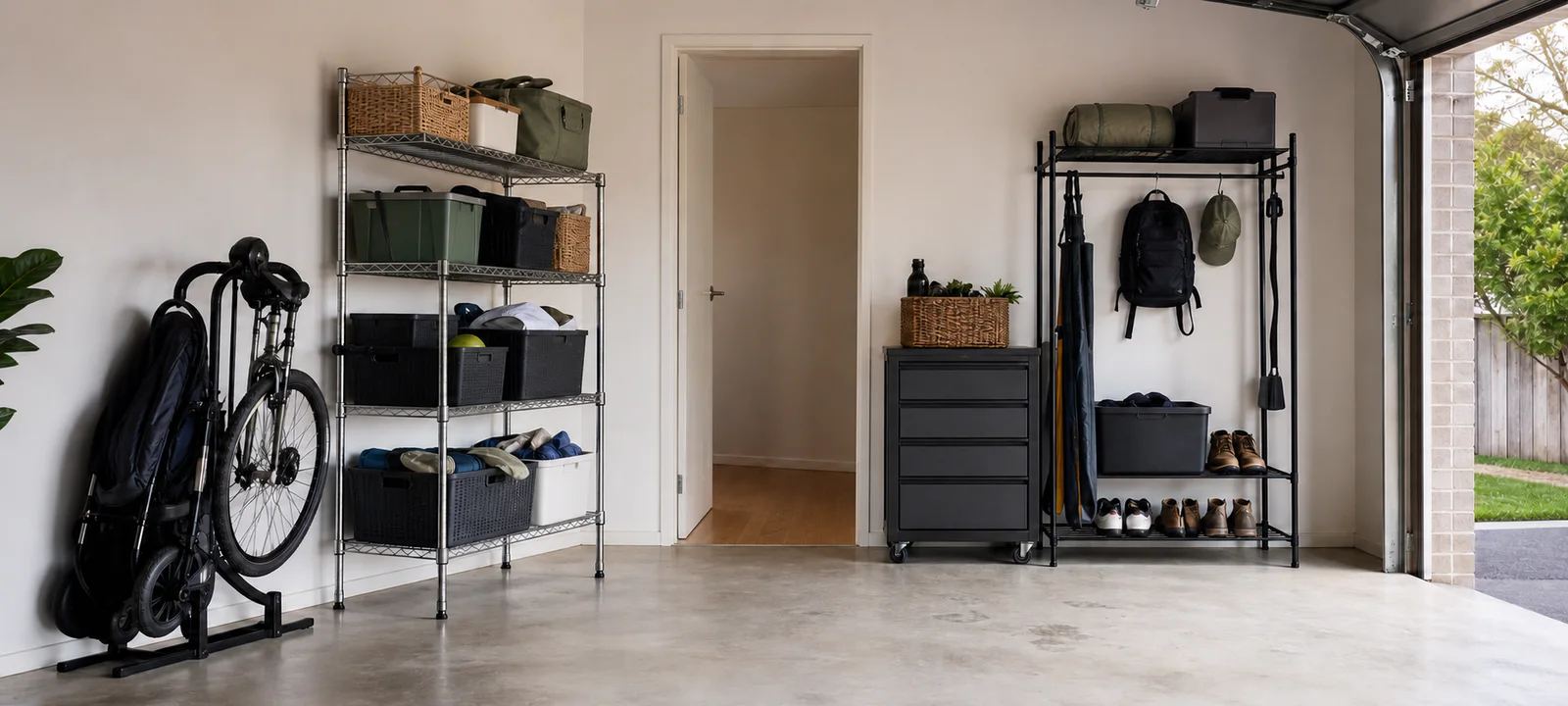
Freestanding shelves are not automatically the safe answer in a rental garage. A tall unit may require fixing, an uneven slab can make it unstable and a supposedly removable hook can still mark a shared wall.
Read the lease and any body corporate rules before planning the room. Note the property features that must remain accessible, including roller-door tracks, meters, power points and shared access. Ask for approval where the proposed change requires it.
Favour storage that is stable under its real load and useful beyond this one garage. Tubs, low units and portable tool storage can reduce permanent changes, but they still need clear walkways and protection from damp corners.
Read the property rules before shopping
Check the lease, property instructions and any body corporate requirements for drilling, fixing to shared walls, changing fixtures, ceiling storage and effects on parking or common property. This is practical planning, not legal advice; use the applicable approval process when a change may affect the property.
“Removable” is a claim to verify, not a guarantee. Adhesives can lift paint or leave residue, and over-door or clamp-on products can mark surfaces. Follow the product instructions and avoid hanging heavy, sharp or hazardous items from a light-duty temporary fixing.
Measure the garage as it is used
Park the vehicle, open its doors and walk the route to the house. Operate the garage door and note bins, bikes, steps and anything else that moves through the room. The main garage guide provides a full clearance checklist.
- protect vehicle doors, mirrors, boot or tailgate
- keep the route from the driveway to the house clear
- leave access to meters, switches, taps and power points
- stay clear of garage door tracks and moving parts
- account for slopes, drains, damp corners and uneven floor
Sort for the move as well as the room
Remove broken equipment, duplicates, empty packaging and items that belong elsewhere before buying temporary storage. Every new unit or tub will eventually need to be emptied, cleaned and moved, so the stored collection should justify that effort.
Group the remainder by frequency, weight, shape and risk. Weekly gear needs easy access; seasonal items can sit higher; heavy items belong low; hazardous products require label-led controlled storage.
Choose adaptable freestanding pieces
Low shelving, toolboxes, bike stands and utility carts can serve more than one room or future garage. Check the loaded dimensions, stability, floor requirements and manufacturer fixing instructions before assuming a product is truly freestanding.
A tall unit may still require anchoring. If the required fixing is not allowed or cannot be installed correctly, choose a different product. Do not improvise around an uneven floor or ignore an anchoring instruction because the tenancy is temporary.
Use tubs for defined, movable categories
Labelled tubs can reduce wall changes, but they should fit the shelves, remain manageable when full and keep their labels visible from the aisle. The guide to garage storage tubs covers lids, stacking, weight and garage conditions.
Avoid buying a collection of containers sized only for the current shelves. A smaller set of common, useful sizes is more likely to transfer to the next home.
Keep awkward items easy to move
Bikes, scooters and ladders do not automatically need wall hooks. A floor stand or measured zone may be easier to use, quicker to move and less likely to require approval. Keep them outside car door and walking routes.
Portable toolboxes and cases can replace permanent panels for many household tools. Small parts suit divided cases, while heavy and sharp items need controlled positions that do not rely on fragile temporary attachments.
Plan for inspections and maintenance
Property features should be visible and accessible without dismantling the entire setup. Leave room around meters, hot-water systems, fuse boxes, taps, drains, garage door motors and any other fixtures that may need inspection or servicing.
Keep the floor and wall behind storage capable of being checked for damp, pests or damage. A freestanding shelf that cannot be moved once loaded can hide as much as a fixed cabinet.
Match storage to garage conditions
Rental garages may have water entry, dust, heat, pests or poor sealing that the tenant cannot readily change. Keep delicate or valuable belongings elsewhere if the conditions are unsuitable. Store only clean, dry items in closed tubs and avoid cardboard in damp areas.
Deal with evidence of leaks or pests through the appropriate property process. Do not use shelving or containers to conceal a maintenance issue.
Keep hazardous products outside the convenience test
Chemicals, fuels, batteries, pesticides, paints and sharp tools require their own label or manufacturer guidance. Keep incompatible products separated where directed and restrict access by children and pets.
Portable does not mean safe for every product. Avoid chemicals above head height, ordinary tubs used as makeshift hazardous storage and positions where a leak could affect property or other belongings.
Spot temporary storage that still causes trouble
- adhesive products are assumed to remove cleanly
- freestanding units ignore anchoring instructions
- a trolley or tub blocks vehicle and house access
- the setup conceals property fixtures or damp
- heavy gear sits high because wall fixing is unavailable
- products are so layout-specific they cannot move with the household
- new capacity preserves clutter that should be removed
Check the setup can leave cleanly
- confirm permission before attaching or changing anything
- measure with the car and garage door in use
- follow stability, load and anchoring instructions
- keep property features visible and accessible
- choose pieces that can work in another room or home
- protect the property from damp, spills and poor placement
- remove excess belongings before adding storage
Renter-friendly garage storage is not simply storage without screws. It is measured, reversible and stable enough to improve this garage without becoming a burden at the next address.
Common Questions
How can renters add garage storage without drilling into walls?
Start with stable freestanding shelves, labelled tubs or movable racks that suit the load and floor. Read the lease and any body corporate rules before fixing anything to the property. Follow product anchoring requirements; a unit that requires wall fixing is not automatically suitable merely because drilling is inconvenient.
What garage storage is easiest to move to another rental?
Choose adaptable pieces that dismantle or move safely and use manageable tubs for defined categories. Avoid systems cut precisely for one wall unless they can serve another layout. Keep assembly instructions and hardware together, and measure the loaded containers so moving-day weight does not turn convenient storage into a burden.
What should I check before setting up storage in a rental garage?
Check lease conditions, shared-property rules, floor slope, moisture, access for inspections and the garage in normal use. Measure with the vehicle parked and preserve service points, doors and walking routes. Make sure every addition can leave cleanly without damage and does not prevent required maintenance or access.