
A garage can look spacious until the car arrives. Doors swing into shelves, bikes narrow the route indoors and a stack of tubs occupies the only place where bulky gear can be set down.
Define the jobs the room must keep doing before adding storage. It may need to shelter a vehicle, provide workshop space, handle sports gear or serve as the household entry. The floor and access routes that make those jobs possible are not spare capacity.
Sort what remains, then measure with the car, roller door and internal door in use. Shelves, cabinets and wall systems should protect movement and put heavy or hazardous items at sensible heights rather than simply fitting the largest number of boxes.
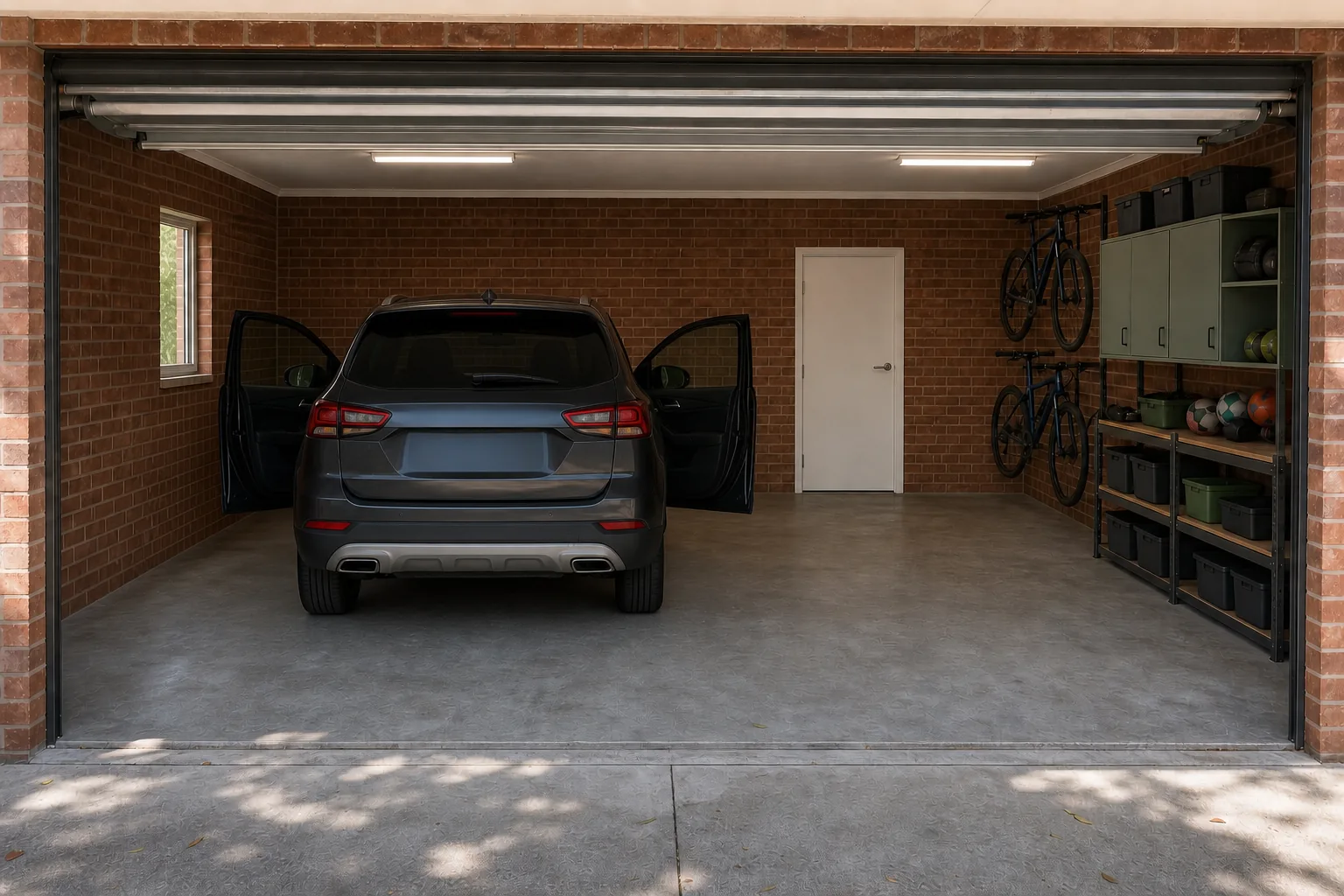
Decide what the garage must still do
Start with the non-negotiable jobs. Parking one or two vehicles, reaching the house, using a workbench, storing bikes and handling laundry overflow all claim different parts of the room. Rank them before assigning any space to storage.
A garage used several times a day needs a different layout from one holding long-term overflow. Weekly gear should be easy to reach and return. Seasonal items can sit higher or further back, provided retrieval remains safe and does not require emptying half the room.
Pay particular attention to the internal door. School bags, helmets, pet leads and reusable shopping bags often land there because it is the end of a routine. A small hand-off zone can work better than insisting every item travel to deep shelving at the rear.
Sort before adding capacity
Garage clutter often appears to be a storage shortage when it is really a sorting backlog. Shelves bought too early create new places for broken equipment, duplicates and household overflow to stay indefinitely.
The guide to sorting garage items before buying more tubs can help with the first pass. For planning purposes, group what remains by use and risk:
| Group | Examples | Planning implication |
|---|---|---|
| Frequent | hand tools, helmets, pet leads, car care gear | visible, comfortable access |
| Seasonal | camping gear, decorations, beach equipment | higher or deeper positions |
| Heavy | tools, hardware, paint tins, bulk supplies | low, load-rated storage |
| Awkward | bikes, ladders, long tools, folding chairs | a dedicated measured zone |
| Hazardous | chemicals, fuels, batteries, blades | label-led, controlled access |
Measure the garage in use
Park the usual vehicle in its normal position. Open its doors, boot or tailgate, the garage door and the entry to the house. Walk the route used with groceries, bikes or a pram. Only then mark the space a shelf or cabinet could occupy.
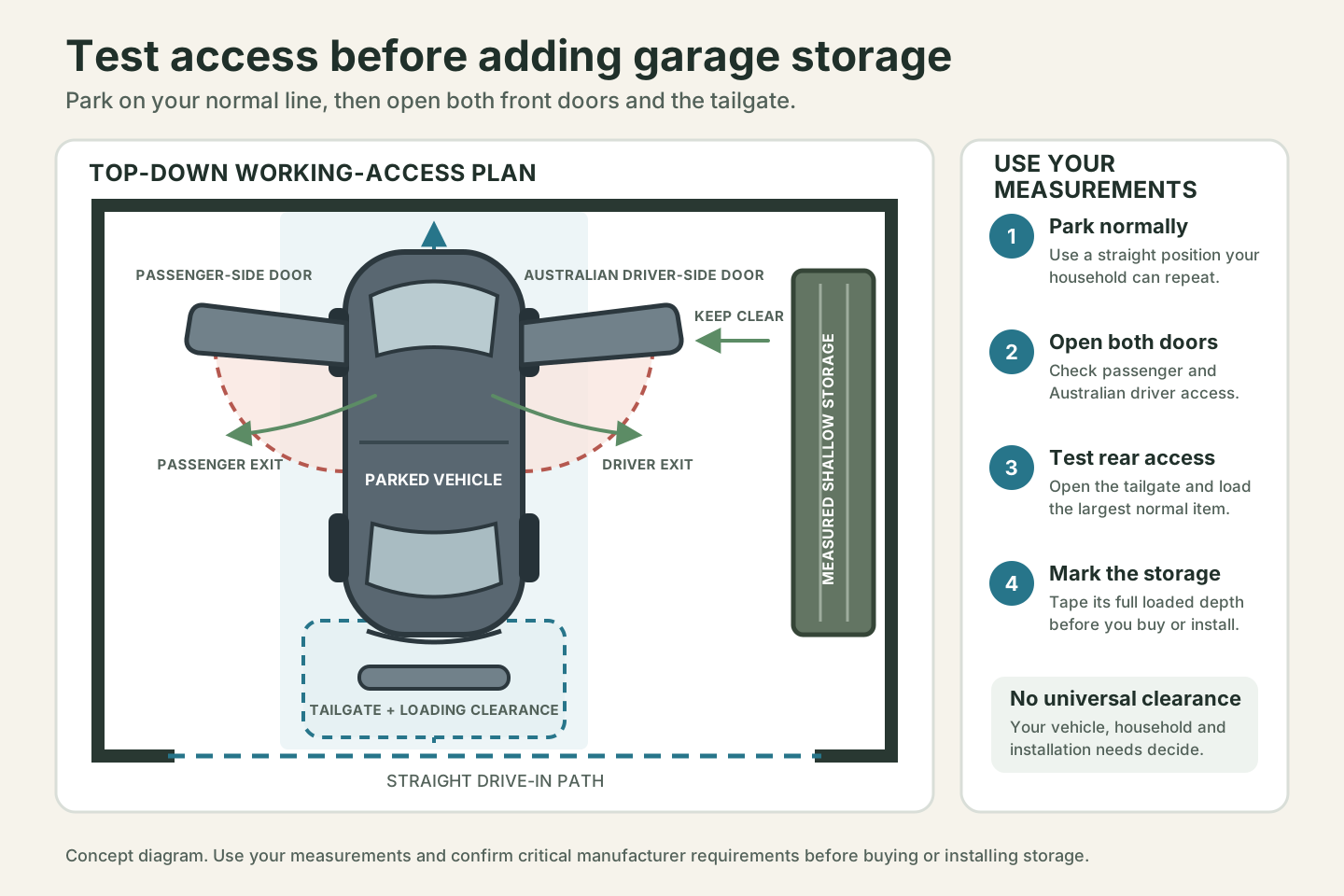
Record:
- garage width and depth, including posts, steps and floor slopes
- vehicle position and every regularly used door-opening zone
- the clear route from driveway and car to the house
- roller, tilt or sectional door movement and tracks
- taps, power points, switches, meters and fuse boxes
- laundry appliances, drains or other services in the room
- a temporary landing place for bulky items being unloaded
Storage depth often matters more than wall length. A deep unit can turn a comfortable car door into a careful squeeze, while a shallow shelf may hold the regular supplies without stealing the route indoors.
Use height according to weight and frequency
High storage suits light, rarely used items that can be retrieved without awkward lifting. Heavy tubs, tools and bulk supplies belong lower, where their weight is easier to control. Frequently used items generally work best between knee and shoulder height.
Before choosing tall shelving, check ceiling height, lighting, beams, pipes, door tracks and the product's stability or fixing requirements. A top shelf that nobody can use safely is not meaningful capacity.
Shelf ratings need the same attention. Check the load per shelf, total unit load, whether weight must be evenly distributed and whether the unit needs anchoring. The dedicated garage shelving guide covers depth, tubs, floors and load planning in more detail.
Plan awkward items before neat rows of tubs
Bikes, scooters, ladders, prams, surfboards and long-handled tools cause more disruption than small boxes. Assign their positions before general shelving occupies the useful wall and floor space.
Measure the full item, including handlebars, pedals, wheels and cases. Then check who needs to use it and whether they can realistically lift it. A bike hook is not useful when the rider cannot return the bike, and a ladder hung high may exchange floor clutter for awkward handling.
Check the wall before choosing the system
Garage walls may be plasterboard, masonry, timber-framed, steel-framed, lined only in part or shared with another property. Services may be hidden behind the surface. Match the fixing method and load to the actual construction rather than assuming every rail or panel suits every wall.
Follow the product's installation instructions and rated loads. Heavy or awkward equipment may call for qualified installation. Renters and body corporate properties also need the relevant permission before drilling or permanently changing a shared or private wall. The garage wall storage guide provides a fuller planning sequence.
Treat overhead storage as a separate risk decision
Ceiling racks can appear to use otherwise empty space, but they introduce structural, lifting and falling-object risks. Check the ceiling structure, manufacturer's fixing and load instructions, garage door movement, vehicle clearance and the height needed to load and unload the system.
Keep heavy or difficult objects out of overhead storage. For many homes, lower freestanding shelving is the more practical choice because it keeps the load visible and reachable.
Match the storage to garage conditions
Check for water entering under the door, damp corners, condensation, dust, direct sun, temperature extremes and pest activity. Cardboard and fabric are poor long-term choices in a garage that gets damp or dusty. Lidded tubs can protect suitable belongings, but only seal items that are already clean and dry.
Keep delicate, valuable and temperature-sensitive possessions inside the home when the garage cannot provide suitable conditions. In a water-prone area, lift appropriate storage off the floor and keep the lowest zone easy to inspect.
Control hazardous products deliberately
Cleaning chemicals, pesticides, fuels, oils, paints, solvents, batteries, sharp tools and power tools are not ordinary overflow. Follow each label or manufacturer's storage directions, keep incompatible products separated where instructed and restrict access by children and pets.
Avoid placing chemicals above head height or where a leak could run over other belongings. Do not decant them into unlabelled containers. If the garage cannot meet a product's storage requirements, choose another appropriate location or seek specific advice.
Choose a system that can be reset
Open shelves suit labelled tubs and visible everyday gear. Cabinets can provide more controlled access for tools or products needing doors, but they also require checks for depth, weight, ventilation and fixing. Rails and hooks suit selected awkward items when the wall, load and lift are appropriate.
If hand tools and power tools are the group that keeps spreading, the garage tool storage guide helps sort the set before choosing a cabinet, chest or pegboard.
Whatever the mix, items used weekly should return without moving something else first. Labels need to face the aisle and a small amount of empty capacity should remain for sorting incoming gear. If an item repeatedly lands on the floor, its assigned home is probably too awkward, too distant or already full.
Recognise storage that steals useful space
- deep shelves block a car door or narrow the route indoors
- heavy tubs are stacked above a comfortable lifting height
- hooks or racks are chosen without checking wall type and load
- daily gear sits behind seasonal storage
- meters, taps, switches or door tracks become obstructed
- chemicals are accessible, high or inconsistent with their labels
- every wall is filled, leaving nowhere to unload or sort
- new shelving only preserves items that should leave the garage
Protect access before increasing capacity
- Define the jobs the garage must keep doing.
- Remove items that no longer need to be stored.
- Group the remainder by frequency, weight, shape and risk.
- Measure with the car, doors and people in place.
- Plan heavy, awkward and hazardous items before general storage.
- Check loads, fixings, conditions and tenancy requirements.
- Buy only the pieces that improve access and return routines.
A good garage is not the one with the greatest number of containers. It is the one where the vehicle, people and equipment can move without negotiating the storage first.
Common Questions
What is the best way to plan garage storage?
Decide what the garage must still do, sort what belongs there and map awkward items before buying a system. Protect parked-car doors, walking routes and access to household services. Then match shelves, tubs, hooks or specialised storage to the real load, frequency, wall construction and garage conditions.
What measurements do I need before adding storage to a garage?
Measure with vehicles, doors and daily equipment in their normal positions. Record usable wall width and height, the maximum shelf depth, door-opening space, walking routes and floor conditions. Also measure full containers and awkward gear. A bare-wall measurement misses the clearances that make the garage usable.
How can I get more storage for a garage without losing floor space?
Use suitable wall height for lighter or less-used items only after checking the wall, fixings, load and handling reach. Plan bikes, ladders and other awkward gear before rows of tubs. Treat overhead storage as a separate risk decision, and leave part of the garage unfilled for parking, unloading and change.