
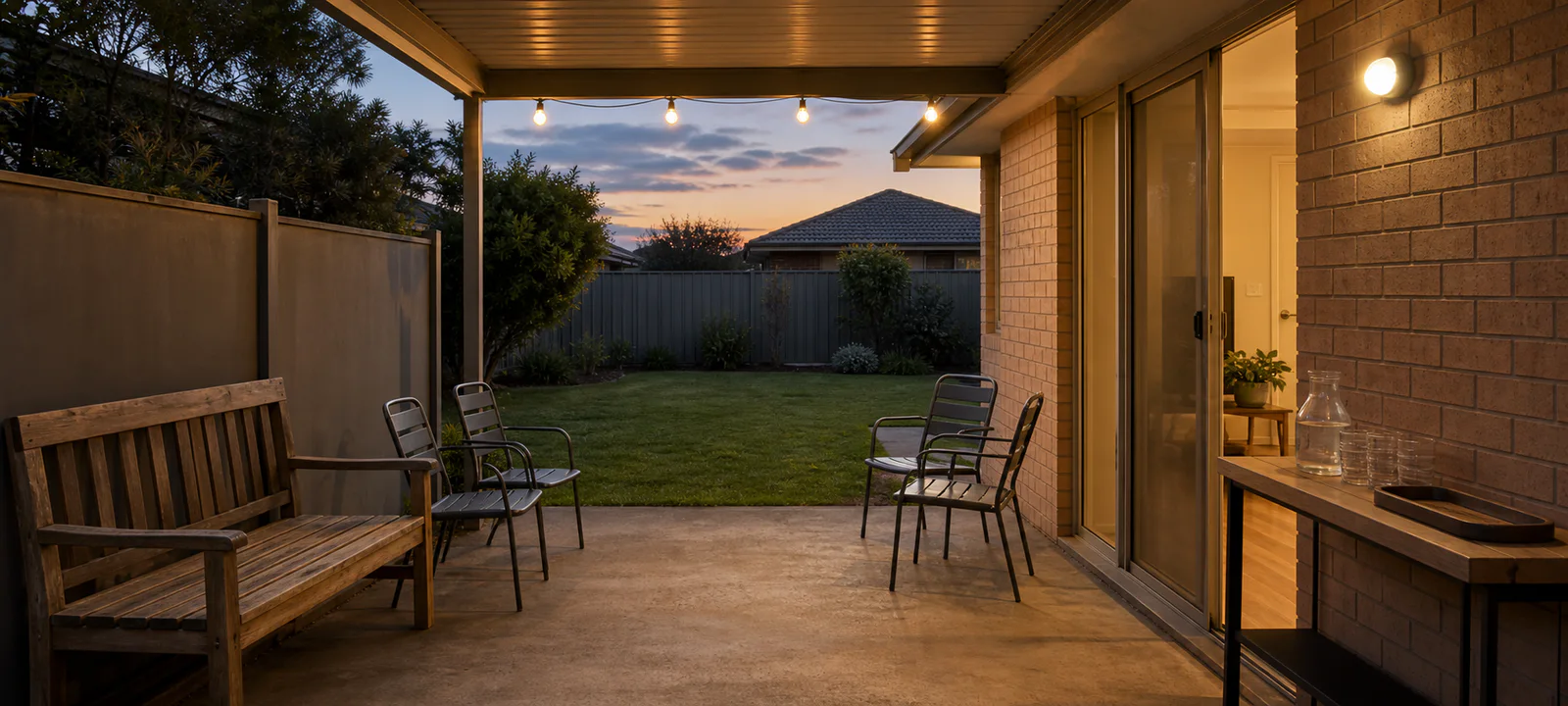
Entertaining extras spend far more time waiting than entertaining. Spare chairs, folding tables, serving trolleys and lanterns can crowd a patio every day for the sake of a gathering that happens a few times a year.
Plan for the group that really visits and the food route from kitchen to outdoors. Separate the permanent daily setup from occasional pieces, then decide where those pieces live before and after guests arrive.
Flexible seating or borrowed items may handle a larger event without owning the whole setup. The outdoor area should remain comfortable and easy to reset when no gathering is scheduled.
If the furniture already exists and the immediate job is preparing the whole area for hotter weather, use the outdoor-area summer checklist first.
Plan for the Gathering That Really Happens
Before buying extra furniture or accessories, think about the way people usually gather in your outdoor area.
The space may need to support:
- Casual weekend lunches.
- Family dinners outside.
- A few friends sitting around a table.
- Barbecue meals.
- Coffee or drinks outdoors.
- Kids moving between indoor and outdoor spaces.
- A relaxed lounge area.
- A balcony catch-up for two or three people.
- Occasional larger gatherings.
- Quiet everyday use when no one is visiting.
This matters because buying for the biggest possible gathering can make the space less useful every day. If most outdoor use is two to four people, a large collection of folding furniture may not need to live outside permanently. If outdoor meals happen often, serving space and storage may matter more than decorative extras.
Buy for the common use first, then plan flexible extras for the occasional larger day.
Separate Everyday Setup From Occasional Extras
A practical outdoor entertaining area usually has two layers: the everyday setup and the occasional extras.
The everyday setup may include:
- A dining table or small outdoor table.
- Regular seating.
- A barbecue or outdoor cooking area.
- A lounge chair or sofa.
- A shade option.
- A small storage spot.
- A few planters.
- Basic serving space.
Occasional extras may include:
- Folding chairs.
- Extra cushions.
- A temporary table.
- A serving trolley.
- Outdoor trays.
- Extra shade.
- Portable lighting.
- A gazebo or temporary shelter.
- Larger serving items.
- Outdoor games or kids' items.
The mistake is leaving occasional extras in the everyday layout. If folding chairs, spare tables and extra accessories are always visible, the space may feel cluttered even when it is not being used for entertaining.
Measure the Entertaining Zone
Outdoor entertaining needs movement space as much as furniture space. People need to sit, stand, carry plates, move between the kitchen and barbecue, access bins, reach storage and move around without constantly shifting chairs.
Before buying extras, measure:
- The main outdoor area width and depth.
- Dining table footprint.
- Chair pull-out space.
- Lounge seating footprint.
- Barbecue zone.
- Walkways between kitchen, table and barbecue.
- Door and sliding door opening space.
- Gate and side access.
- Storage access.
- Space for a temporary table or trolley.
- Space for people standing, not just sitting.
A spare table may seem useful until it blocks the main path from the kitchen. Extra chairs may help guests sit down but make the area difficult to move through. A trolley may add serving space but still needs somewhere sensible to park.
If the space already includes a table, compare the layout with the outdoor dining area setup guide before adding extra furniture.
Plan the Flow From Kitchen to Outdoor Area
Outdoor entertaining usually involves repeated trips between the kitchen, barbecue, table, bin and storage area. A good setup makes those trips simpler.
Check the path between:
- Kitchen door.
- Barbecue.
- Dining table.
- Lounge seating.
- Serving surface.
- Rubbish or bin area.
- Outdoor storage.
- Indoor fridge or pantry.
- Side gate or outdoor access path.
This is not about creating a commercial entertaining zone. It is about avoiding awkward movement. If people carrying food have to squeeze behind chairs, step around planters or move through the cooking area, the layout may need adjustment before buying more accessories.
If outdoor cooking is part of the gathering, compare the layout with the barbecue area setup guide before adding extra furniture or serving pieces.
Decide Whether You Need More Seating or Better Seating
Extra chairs are often the first outdoor entertaining purchase, but more seats are not always the answer.
Before buying extra seating, ask:
- How many people use the space most weeks?
- How often do larger groups visit?
- Where will extra chairs be stored?
- Can existing indoor chairs be used occasionally?
- Would benches, stools or folding chairs suit the space?
- Do the extra seats block walkways?
- Will people actually sit in all the positions available?
A compact outdoor area may work better with fewer comfortable seats and a flexible spare chair plan. A larger patio may support a dining setting and separate lounge seating. A balcony may only suit two regular chairs and one occasional stool.
For lounge-focused setups, compare seating choices with the outdoor lounge seating guide.
Plan Tables, Trolleys and Serving Surfaces
Outdoor entertaining often fails when there is nowhere to put food, drinks, plates or serving items. The solution is not always a larger dining table.
Possible serving options include:
- A small side table.
- A folding table used only when needed.
- A serving trolley.
- A barbecue side shelf.
- A storage cabinet with a usable top.
- A tray carried from the kitchen.
- A small outdoor bench or console.
- A coffee table in a lounge area.
Check:
- Whether the surface blocks movement.
- Whether it can be cleaned easily.
- Whether it stores away when not in use.
- Whether it is close enough to the table or barbecue.
- Whether it becomes clutter when not entertaining.
- Whether it suits the outdoor surface.
A trolley can be useful if the path is clear and storage exists. A folding table can help occasionally but may become annoying if it has nowhere to go. A side table can be enough for small gatherings without taking over the area.
Think About Shade Before Adding More Furniture
Shade can affect where people sit, where food is placed and whether the outdoor area feels usable at different times of day.
Before buying entertaining extras, check:
- Where shade falls during the usual entertaining time.
- Whether the dining table is shaded.
- Whether the lounge area is shaded.
- Whether a barbecue or serving zone competes with the shade position.
- Whether an umbrella base blocks a walkway.
- Whether temporary shade needs storage.
- Whether shade products can open and close properly.
Do not treat shade as the final accessory after furniture has already been bought. A large umbrella or gazebo can change the entire layout.
For broader shade checks, use the outdoor shade setup guide.
Avoid Overloading the Area With Accessories
Outdoor accessories can make the space feel finished, but they can also add clutter.
Common extras include:
- Outdoor cushions.
- Throws.
- Lanterns.
- Outdoor rugs.
- Planters.
- Side tables.
- Trays.
- Tableware.
- Decorative bowls.
- Storage baskets.
- Outdoor games.
- Portable speakers.
- Tablecloths and placemats.
Before buying accessories, check:
- Whether the item has a regular purpose.
- Whether it needs storage.
- Whether it can stay outside.
- Whether it makes cleaning harder.
- Whether it competes with furniture.
- Whether it suits the weather exposure.
- Whether it will still look useful when no one is visiting.
A small number of useful extras will usually work better than a large collection of decorative pieces that need to be moved, cleaned or stored.
Plan Storage Before Buying More Entertaining Gear
Outdoor entertaining extras need somewhere to live.
Storage may be needed for:
- Folding chairs.
- Outdoor cushions.
- Furniture covers.
- Serving trays.
- Tablecloths.
- Outdoor tableware.
- Barbecue tools.
- Cleaning cloths.
- Kids' outdoor items.
- Temporary shade accessories.
- Outdoor games.
- Spare pots or plant supplies.
Before buying, decide whether these items will be stored:
- In an outdoor storage box.
- In a garage.
- In a laundry cupboard.
- In a garden shed.
- In a kitchen cabinet.
- Under a bench or seat.
- In a weather-protected cabinet.
- In a portable tub used only for gatherings.
If storage is already tight, avoid buying accessories that need bulky storage for only occasional use.
For storage planning, use the small backyard outdoor storage guide and the outdoor storage ideas guide.
Consider the Reset After Guests Leave
A good entertaining setup should be easy to reset. If everything has to be carried around the house, dried, folded, covered or stored awkwardly, the setup may become too much effort.
Before buying, ask:
- How long will this take to pack away?
- Where does each item go afterwards?
- Can one person reset the area?
- Does the furniture need to be covered?
- Do cushions need to come inside?
- Does the floor need to be cleared for normal use?
- Will the items be left outside because storage is annoying?
- Does the space still work the next day?
A simple reset matters more than a highly styled setup. The easier the area is to return to normal, the more likely it is to be used regularly.
Outdoor Entertaining on Balconies
Balcony entertaining needs careful restraint because space is limited.
Before buying extras for a balcony, check:
- Balcony depth.
- Door opening space.
- Chair movement.
- Table size.
- Rail and view lines.
- Wind exposure.
- Storage space.
- Whether folding items have somewhere to go.
- Whether plants already use the best edges.
- Whether guests can move without shifting furniture.
A balcony may work best with a small table, two regular chairs, one occasional stool and a tray-based serving system. Large extras can quickly turn a balcony into storage rather than usable space.
Outdoor Entertaining in Courtyards
Courtyards can feel intimate and useful, but they can also become crowded because walls define the space tightly.
Before buying extras for a courtyard, check:
- Dimensions from one wall to the other.
- Door and gate positions.
- Existing planters.
- Furniture layout.
- Shade pattern.
- Storage access.
- Whether sound and activity carry into nearby rooms or neighbouring areas.
- Whether the courtyard looks crowded from inside.
A courtyard may suit one clear entertaining zone rather than multiple small furniture groups. Grouping planters and storage neatly can help the space feel calmer.
If planters are part of the setup, check the balcony and courtyard garden setup guide.
Outdoor Entertaining on Patios and Decks
Patios and decks may have more space, but the layout still needs planning.
Before buying extras, check:
- Whether dining and lounge zones overlap.
- Whether the barbecue has enough room.
- Whether chairs block doors.
- Whether shade reaches the main seating.
- Whether the deck or patio surface suits the furniture.
- Whether outdoor rugs, tables or trolleys create awkward clutter.
- Whether garden access stays clear.
- Whether the setup looks balanced from indoors.
A patio can often support a dining zone and a separate lounge zone, but only if there is enough space between them. If the area is smaller, it may be better to choose one main purpose and keep extras flexible.
Choose Flexible Extras Carefully
Flexible furniture and accessories can help, but only if they are genuinely easy to use.
Examples include:
- Folding chairs.
- Stackable chairs.
- Nesting tables.
- Lightweight side tables.
- Serving trays.
- Portable shade.
- Storage benches.
- Modular seating.
- Portable tubs for entertaining supplies.
Check:
- Whether the item is easy to move.
- Whether it folds or stacks neatly.
- Whether it has a clear storage place.
- Whether it suits the intended everyday use.
- Whether it will be used often enough.
- Whether it solves a real layout problem.
Flexible products can reduce clutter, but they still take up space somewhere.
Think About the View From Inside
Outdoor entertaining areas are often visible from the kitchen, dining room or living area.
Before buying extra furniture or accessories, check:
- Whether the setup looks crowded from inside.
- Whether spare chairs are always visible.
- Whether covers and storage boxes dominate the view.
- Whether planters soften or crowd the area.
- Whether a trolley looks like permanent clutter.
- Whether the colour and scale suit the outdoor surfaces.
- Whether the area still looks calm when not being used.
The outdoor area does not need to look styled all the time, but it should not feel like a holding zone for occasional party gear.
Avoid Buying the Whole Setup at Once
Outdoor entertaining areas often improve when they are built in stages.
A staged approach may be:
- Set up the main table or seating first.
- Check movement and access.
- Add one useful serving surface.
- Plan shade where it is actually needed.
- Add storage for cushions and accessories.
- Add extras only after using the space a few times.
- Remove items that do not earn their place.
This avoids buying items that look useful in theory but do not fit the actual flow of the home.
Rehearse the Gathering With What You Own
Borrow chairs from inside, use a small table as a serving surface and walk food from the kitchen to the outdoor area. This reveals whether the recurring problem is genuinely too little seating, nowhere to serve, poor shade or simply an obstructed layout.
- Keep the everyday layout in place first.
- Plan for the gathering size that happens often enough to justify storage.
- Protect chair movement and the route between the kitchen and table.
- Confirm cooking, serving and shade before adding decorative extras.
- Give folding chairs, trolleys, cushions and covers a storage position.
- Check weather, surface and product care requirements.
- Look at the temporary layout from inside the home.
- Practise returning the area to normal after guests leave.
Keep Everyday Use in Charge of the Layout
Outdoor entertaining is usually a combination of smaller decisions: where people sit, where meals are served, how shade works and where occasional items go afterwards. It is easier to plan when the main use comes first.
Let Occasional Extras Remain Occasional
A good entertaining area is still pleasant when no one is visiting. Keep the weekly layout clear, add only the seating or serving pieces that solve a repeated problem, and make their return to storage part of the plan. Flexibility is useful only when the outdoor area can reset.
Common Questions
How do you plan an outdoor entertaining area for everyday use?
Start with the gathering that actually happens and separate the permanent daily setup from occasional extras. Mark the furniture, serving route and movement zone, then protect the way the area works between gatherings. Shade, access and the reset after guests leave should be planned before decorative accessories or more seating.
Do you need more outdoor furniture for entertaining?
Rehearse a normal gathering with the furniture already available before deciding. A better layout, borrowed chair or flexible stool may solve an occasional need without filling the patio every day. Add permanent furniture only when it has a clear everyday role, measured footprint and practical place through changing weather.
Where should outdoor entertaining accessories be stored?
Give serving gear, spare cushions and occasional accessories a return point before purchasing them. The storage should suit the item's exposure and remain easy to reach without blocking doors, seating or paths. If the area cannot be reset soon after guests leave, the proposed collection is probably larger than the space can support.