
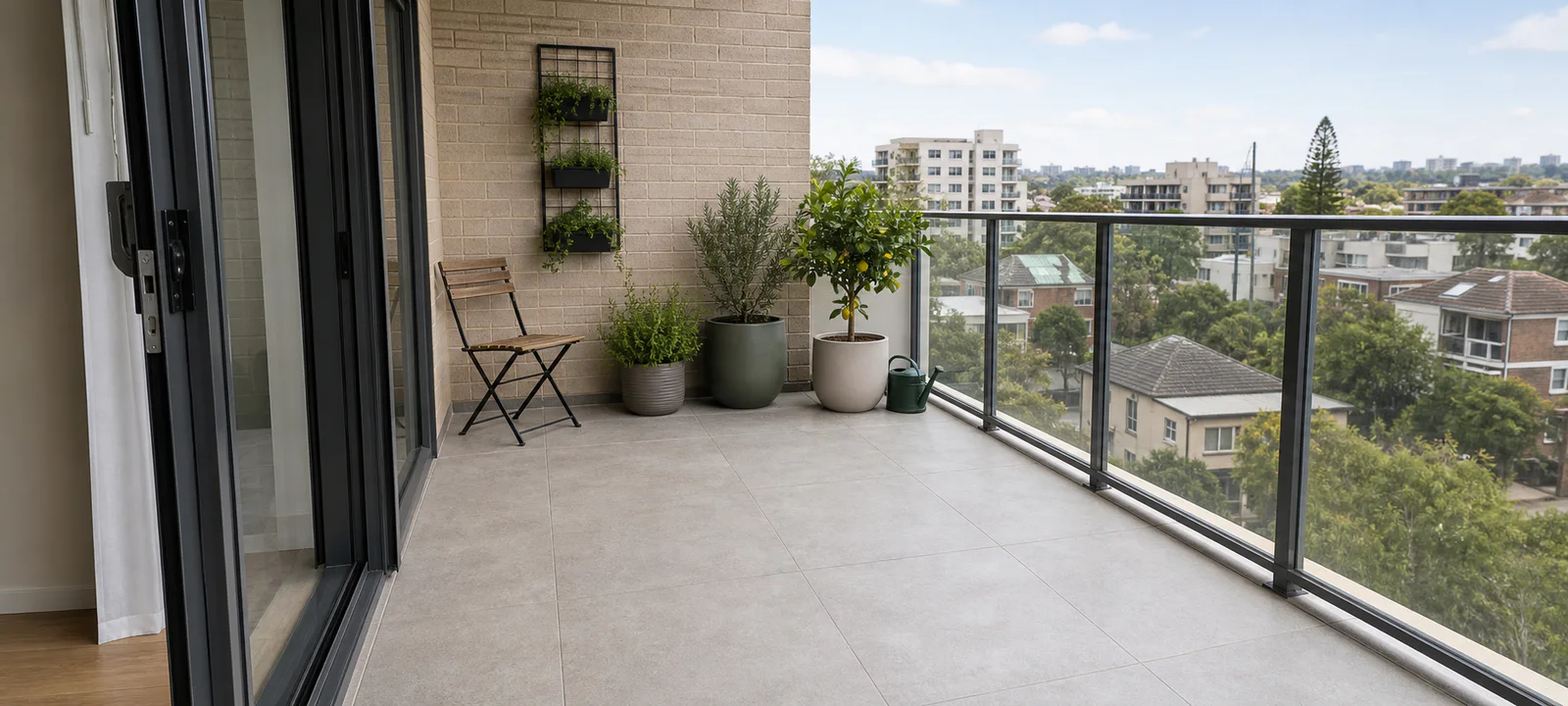
A balcony garden is experienced one pot at a time and maintained as a whole. Ten small pots may look flexible, then require ten watering checks and ten objects to move when the floor needs cleaning.
Protect the door and walking route first. Watch light and exposure across the day, plan how water drains without affecting neighbours or surfaces, and check any property or body corporate requirements that apply.
Begin with a small group of plants suited to those conditions and the care the household can provide. Remember that a large planter becomes far harder to move once filled.
Protect the Door and Walking Route
Before choosing plants or planters, look at the outdoor area as a working space.
Check:
- The available floor area.
- Door and sliding door clearance.
- Walkway space.
- Balcony rail or courtyard wall position.
- Existing outdoor furniture.
- Outdoor storage.
- Clothesline access.
- Tap or water access.
- Drainage points.
- Sun and shade patterns.
- Wind exposure.
- Views from inside the home.
This matters because a balcony or courtyard garden is rarely only a garden. It may also be a sitting area, dining spot, laundry overflow, pet area or access path. Pots and planters should improve the space without making normal movement harder.
If the area already includes seating or dining furniture, compare the garden footprint with the outdoor dining area setup guide and the outdoor lounge seating guide before adding more items.
Decide What the Garden Needs to Do
A small outdoor garden can serve different purposes. The setup should match the goal.
It may be used for:
- Adding greenery to a hard outdoor surface.
- Creating a small herb garden.
- Softening a balcony view.
- Making a courtyard feel less bare.
- Screening an unattractive corner.
- Defining a sitting area.
- Growing a few low-maintenance plants.
- Creating a more pleasant view from indoors.
- Giving children a small gardening activity.
- Keeping a few pots near the kitchen.
Each goal leads to different buying choices. A herb garden may need smaller pots near easy water access. A visual screen may need taller planters or grouped pots. A courtyard feature may need fewer, larger containers. A low-effort setup may need simpler pot numbers and easier access.
Avoid buying planters because they look good in isolation. Buy them because they solve a clear problem in the space.
Measure Floor Space and Movement Paths
Planters often take more room than expected, especially once they are grouped together.
Before buying, measure:
- The width of the balcony or courtyard.
- The depth available along walls or rails.
- The space needed to open doors.
- Walkway clearance.
- Space around dining chairs or lounge seating.
- Access to outdoor storage.
- Access to bins, taps or garden tools.
- Space for watering and cleaning.
- Whether pots can be moved if needed.
A line of pots along a wall may seem narrow, but it can still reduce usable floor area. A large planter may create a strong visual anchor, but it may also make a small balcony feel blocked. A tiered stand can add vertical interest, but it still needs floor space and access.
Use temporary markers, cardboard or existing containers to map the footprint before buying larger planters.
Think About Weight Without Guessing Limits
Pots and planters can become much heavier once filled with soil, water and plants. This is especially important on balconies, raised decks, older surfaces and areas where furniture, storage and people also use the same space.
Keep the checks practical:
- Avoid assuming a railing, wall or surface can hold hanging or mounted items.
- Consider whether large filled planters will be difficult to move.
- Check whether the surface is suitable before placing heavy containers.
- Be cautious with oversized pots in compact elevated spaces.
- Check permissions or professional advice where required.
- Choose smaller or lighter options if the setup may need to change.
Do not make structural guesses or rely on generic limits. The key point is simple: planters are easier to move and assess before they are filled.
For renters, apartment owners or strata properties, check any relevant rules or permissions before fixing, hanging or permanently placing garden items.
Choose Pot Size by Plant, Space and Access
Pot size affects the plant, the look of the area and how easy the setup is to manage.
Smaller Pots
Smaller pots may suit:
- Herbs.
- Small flowering plants.
- Seasonal plants.
- Narrow ledges or shelves.
- Easy rearranging.
- Beginner setups.
Trade-off: small pots can dry out faster and may need more frequent attention.
Medium Pots
Medium pots may suit:
- Mixed balcony planting.
- Compact shrubs.
- Feature plants.
- Courtyard corners.
- Grouped arrangements.
Trade-off: medium pots still need space and can become heavy when filled.
Large Pots and Troughs
Large pots and troughs may suit:
- Stronger visual impact.
- Screening.
- Larger plants.
- Fewer containers overall.
- Defining an outdoor zone.
Trade-off: large planters can be difficult to move and may dominate small areas.
The right pot is not just the one that suits the plant. It also has to suit the area, the surface, the access and the amount of maintenance the household is willing to manage.
Compare Planter Shapes
Planter shape changes how the garden fits into the outdoor area.
Round Pots
Round pots are flexible and easy to group. They can soften hard balcony or courtyard lines.
Trade-off: round shapes may waste space along straight walls or rails.
Rectangular Troughs
Troughs can work well along walls, rails or edges. They can create a more organised look and may suit herbs, screening plants or repeated planting.
Trade-off: long troughs can become awkward to move once filled.
Tall Planters
Tall planters can lift greenery and create a stronger visual feature.
Trade-off: they may feel bulky in a narrow area and can be harder to reposition.
Low Bowls
Low bowls can suit succulents, small feature plants or tabletop-style arrangements.
Trade-off: they may not provide enough depth or presence for every plant type.
Tiered Planters
Tiered planters can add vertical planting in small areas.
Trade-off: they still need floor space and can look cluttered if overloaded.
Choose the shape based on where the planter will sit, how people move around it and whether it supports the broader outdoor setup.
Plan Watering Before Buying
Watering is one of the practical issues that can make or break a balcony or courtyard garden.
Before buying pots and planters, check:
- Where the nearest tap is.
- Whether a watering can needs storage.
- Whether water can drain sensibly.
- Whether pots sit above or near surfaces that stain easily.
- Whether saucers or trays are needed.
- Whether excess water may affect nearby furniture.
- Whether the area dries quickly after watering.
- Whether plants will be easy to reach.
Do not treat watering as an afterthought. A planter may look good but become annoying if it is hard to reach, drips onto the wrong surface or requires carrying water through the home too often.
For small spaces, fewer well-placed pots may be more manageable than many scattered containers.
Think About Drainage and Surface Protection
Pots and planters need practical planning around water, dirt and surfaces.
Check:
- Whether pots have drainage holes.
- Whether saucers or trays are needed.
- Whether water may pool under containers.
- Whether the surface is tiled, timber, concrete, pavers or artificial turf.
- Whether pot feet or risers would help airflow and cleaning access.
- Whether soil, leaves or debris will be easy to sweep.
- Whether staining or marks are a concern.
Avoid making product performance claims. The practical point is that pots should be easy to water, clean around and move if needed.
On balconies and rental properties, be especially cautious about anything that may mark surfaces, block drainage or create disputes with neighbours or property managers. Keep the advice general and encourage checking rules where relevant.
Match Plants to Light and Exposure
This article is not a plant-care manual, but it should help readers avoid buying planters without thinking about the conditions.
Before buying plants and pots, observe:
- Morning sun.
- Afternoon sun.
- Full shade.
- Reflected heat from walls or paving.
- Wind exposure.
- Rain exposure.
- Nearby roof cover.
- Seasonal changes.
- Whether the area becomes very hot or dry.
A balcony with hot afternoon sun needs different planning from a shaded courtyard. A windy balcony may not suit tall, top-heavy arrangements. A covered patio may need different watering habits from an exposed courtyard.
Keep the advice simple: observe the space first, then choose pots and plants that suit those conditions.
Group Pots Instead of Spreading Them Everywhere
Small outdoor areas often look calmer when pots are grouped intentionally rather than scattered around every edge.
Grouping can help:
- Create a stronger visual effect.
- Keep watering simpler.
- Leave clearer walkways.
- Make cleaning easier.
- Define one garden zone.
- Avoid a cluttered look.
A useful approach is to create one or two planting zones rather than placing a pot in every spare corner. For example, a balcony may have one herb trough near the door and one feature pot near the rail. A courtyard may have a cluster of three pots in one corner and a narrow planter along a wall.
The trade-off is that grouped pots can still take up a noticeable footprint. Measure the full group, not just each pot individually.
Consider Vertical Gardening Carefully
Vertical gardening can be useful when floor space is limited, but it is not automatically the right answer.
Options may include:
- Freestanding plant stands.
- Tiered shelves.
- Wall-adjacent racks.
- Rail planters where suitable.
- Hanging baskets where suitable.
- Narrow ladder-style stands.
Before buying, check:
- Whether the surface or support is suitable.
- Whether the item needs fixing.
- Whether it can be removed later.
- Whether watering will drip onto lower items.
- Whether the plants will be easy to reach.
- Whether the setup blocks a walkway.
- Whether it suits a rental or strata property.
Freestanding vertical options may be more flexible than fixed ones, but they still need a stable, sensible location. Avoid drilling, fixing or hanging planters without checking whether it is appropriate for the property.
Plan Storage for Garden Supplies
Even a small balcony garden creates supplies.
You may need storage for:
- Potting mix.
- Fertiliser or plant food.
- Gloves.
- Small hand tools.
- Watering can.
- Plant labels.
- Spare pots.
- Trays and saucers.
- Twine or clips.
- Cleaning cloths or brush.
These items should not automatically end up on the balcony floor. A small lidded box, shelf, cabinet or indoor storage spot may be enough.
If the outdoor area already has storage, connect the garden plan with the small backyard outdoor storage guide or the outdoor storage ideas guide.
Balcony Garden Setup
Balconies need especially careful planning because the space is often narrow and exposed.
Before buying balcony planters, check:
- Balcony depth.
- Door access.
- Rail position.
- Wind exposure.
- Sun direction.
- Drainage.
- Whether water can affect lower areas.
- Whether planters block the view.
- Whether furniture still fits.
- Whether the setup needs to be removable.
A balcony garden may work best with fewer containers, slim troughs, small herb pots or one focused plant zone. Avoid filling the balcony edge with so many items that the space becomes hard to use.
Courtyard Garden Setup
Courtyards can suit larger pots and stronger planting zones, but they still need access and movement.
Before buying courtyard planters, check:
- Dimensions from one wall to the other.
- Door and gate access.
- Paving or ground surface.
- Drainage points.
- Sun and shade.
- Existing furniture.
- Outdoor storage.
- Whether pots are visible from inside.
- Whether leaves and soil will be easy to clean.
- Whether large planters can be moved if needed.
A courtyard can often handle a larger feature pot or trough better than a balcony, but too many containers can still make the space feel cluttered.
Patio Garden Setup
Patios often share space with outdoor dining, lounge seating, barbecues or storage.
Before buying patio planters, check:
- Whether the patio is covered.
- Where furniture already sits.
- Whether planters will block chair movement.
- Whether a barbecue or serving area needs clear access.
- Whether pots can sit near walls or corners.
- Whether plant debris will fall onto seating or dining areas.
- Whether watering affects cushions, rugs or furniture.
A patio garden should support the outdoor living area, not compete with it. In many cases, a few well-placed planters around the edge will work better than many small pots placed between furniture.
Avoid Buying Too Many Pots at Once
A common mistake is buying an entire balcony or courtyard garden in one shopping trip. This can make the space feel cluttered before you know which plants and placements work.
A staged approach may be better:
- Begin with one or two key planters.
- Check how they affect movement.
- See how watering works.
- Watch how the light changes.
- Add more only if the space still feels practical.
- Keep storage and cleaning in mind.
This approach also helps avoid buying planters that all look good individually but do not work together as a group.
Test One Planted Container in the Real Space
Mark the mature footprint of the plant and container, not only the empty pot. Carry water to the position, reach around it for cleaning and walk through the door with furniture in place. A pot that is easy to position empty may be difficult to move once filled.
- Keep the door, main walkway and existing furniture clear.
- Observe sun, shade and wind through the day and season.
- Choose the plant first, then a compatible container and potting setup.
- Plan how water reaches the pot and where excess water can go.
- Protect surfaces without obstructing drainage.
- Confirm structural limits with the relevant building or body corporate information; do not guess.
- Check approval before drilling, hanging or making rental or strata changes.
- Give tools, potting mix and watering equipment a contained home.
- Start with a small group and expand only after the care routine works.
Choose the First Plant and Its Care Routine
Pots and planters affect seating, dining, storage, movement and the view from inside. A balcony garden should not block the sitting area. A courtyard garden should not interrupt access. A patio garden should work around the furniture, shade and storage already planned for the space.
Grow the Garden at the Pace You Can Maintain
A useful balcony garden fits the available light and exposure, leaves room to move and can be watered without creating a drainage or cleaning problem. Begin with one purposeful group of containers. The result can expand after an ordinary week shows that the care routine and space both work.
Common Questions
How do you start a balcony garden without overcrowding it?
Protect the door and main walking route first, then decide what the garden needs to do. Mark the usable floor space and begin with one planted container in the real position. Group pots rather than spreading them everywhere, and expand only at the pace the household can water, clean and maintain.
What should you check before adding large pots to a balcony?
Do not guess structural limits. Check the relevant building, body corporate or property requirements and obtain appropriate advice where needed. Also plan the filled weight, drainage, surface protection, watering route and whether the pot can be moved or maintained without blocking access or creating an awkward lifting task.
Are vertical planters useful in a small courtyard or balcony?
They can preserve some floor space, but only when the wall, fixing method, load, watering and drainage all suit the location. Renters and apartment residents should check permissions before fixing anything. A vertical system still needs safe reach, cleaning access and enough room for the door and walking route.