
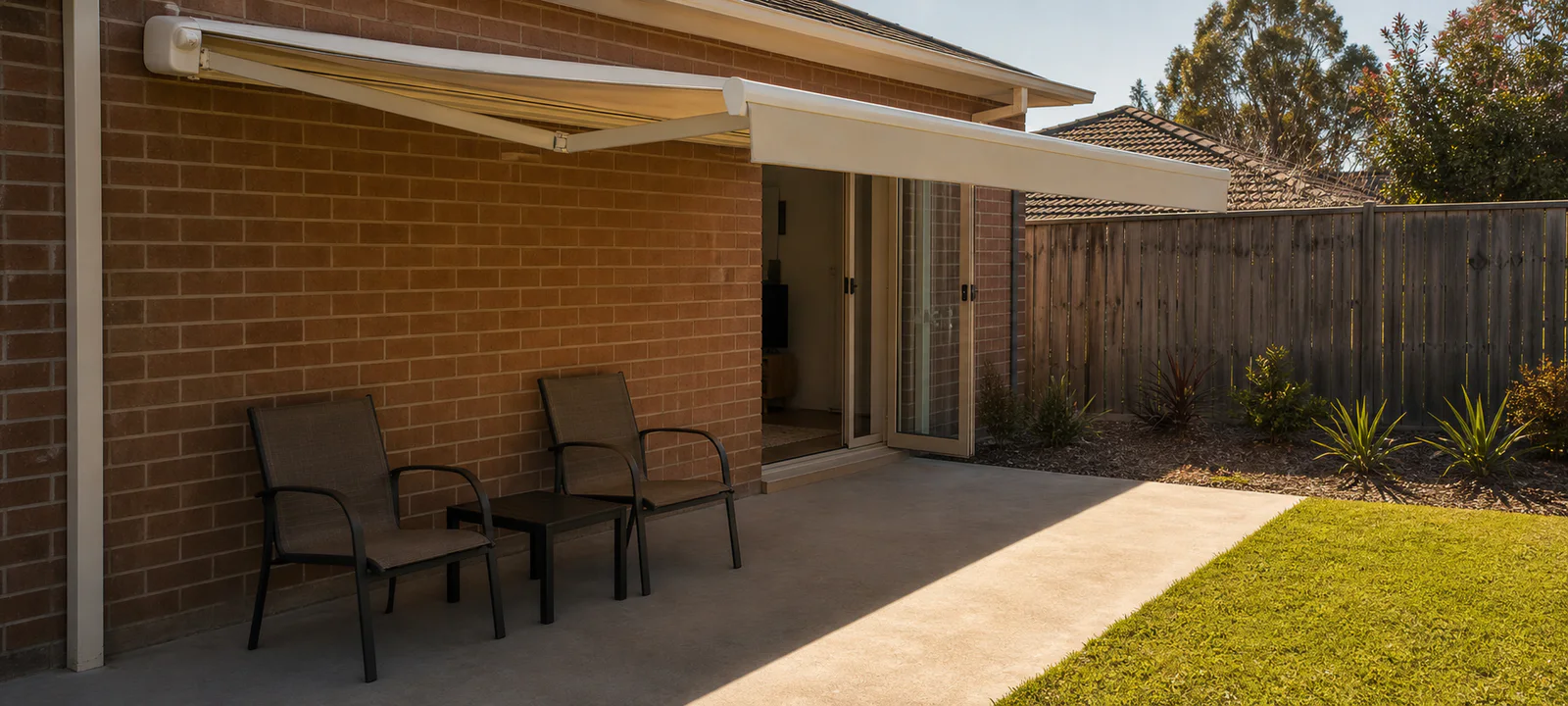
Shade is useful only when it reaches the seat or table at the hour people are there. A broad umbrella can miss late-afternoon sun entirely while its base occupies the clearest section of the path.
Watch the area at the intended time of use and mark both the desired shadow and the product footprint. Consider wind, exposure, moving parts and where temporary shade will be stored.
Fixed solutions require appropriate assessment, approvals and installation. Freestanding products still need to be used and secured according to their instructions and the conditions.
Watch Where the Sun Lands at the Time of Use
Before choosing an umbrella, gazebo, awning or shade screen, observe the outdoor area at different times of day.
Check:
- Where the sun reaches in the morning.
- Where the sun reaches in the afternoon.
- Which seats or table areas become uncomfortable.
- Whether the shade is needed over dining, lounge seating, plants or play space.
- Whether the area is already partly covered.
- Whether nearby walls, fences or trees create shade.
- Whether the shade problem changes by season.
- Whether the area is exposed to wind.
- Whether people move between multiple outdoor zones.
This matters because shade is not useful if it misses the area people actually use. A centre-pole umbrella may shade the table at midday but not the chairs later in the afternoon. A fixed shade option may suit one layout but become less useful if the outdoor furniture changes.
If the outdoor area is still being planned, compare the shade position with the outdoor dining area setup guide and the outdoor lounge seating guide before buying.
Decide Whether the Shade Needs to Move
Some outdoor areas need shade that moves with the sun or changes with the way the space is used. Others suit a more fixed solution.
Movable shade may suit:
- Balconies.
- Courtyards.
- Rental homes.
- Occasional dining areas.
- Flexible outdoor furniture layouts.
- Small patios used in different ways.
- Spaces where furniture moves between seasons.
More fixed shade may suit:
- Dedicated outdoor dining areas.
- Larger patios.
- Permanent lounge zones.
- Backyards with a clear sitting area.
- Areas where the furniture layout rarely changes.
The trade-off is flexibility versus consistency. Movable shade can be easier to adapt, but it may need storage and regular repositioning. Fixed shade can look neater and feel more integrated, but it may involve more planning and may not suit every property.
Common Outdoor Shade Options
Outdoor shade products are not interchangeable. Each type suits different spaces, furniture layouts and property situations.
Market Umbrellas
Market umbrellas are common for outdoor dining settings, patios and courtyards. They usually sit through a table hole or in a weighted base.
Check before buying:
- Canopy width.
- Pole position.
- Base size and weight.
- Whether the umbrella fits through the table.
- Whether chairs can still move freely.
- Whether the umbrella can tilt.
- Whether it needs to be packed down after use.
- Whether there is enough clearance around nearby walls or roofs.
Trade-off: market umbrellas are familiar and flexible, but the centre pole can interrupt table use or seating layouts.
Cantilever Umbrellas
Cantilever umbrellas have an offset pole and can shade a table or lounge area without placing the pole in the centre.
Check before buying:
- Total canopy reach.
- Base footprint.
- Rotation or tilt features.
- Clearance around furniture.
- Whether the base blocks walkways.
- Whether the umbrella can be closed without hitting walls or furniture.
- Whether the area has enough room for the full frame.
Trade-off: cantilever umbrellas can be useful for lounge zones, but the base and frame can take up more space than expected.
Gazebos and Pop-Up Shelters
Gazebos and pop-up shelters can suit occasional use, events or temporary backyard shade.
Check before buying:
- Full footprint.
- Packed storage size.
- Setup and pack-down effort.
- Whether the legs block movement.
- Whether there is enough clear ground.
- Whether it suits the surface.
- Whether it is practical for regular use.
Trade-off: gazebos can create a large shaded area, but they may be too much effort for everyday use and need storage when not in use.
Shade Sails
Shade sails can create a cleaner-looking shade zone where suitable, but they need more careful planning than a freestanding product.
Check before buying:
- Whether the fixing locations are suitable.
- Whether the product suits the area.
- Whether professional guidance is needed.
- Whether property, rental or strata rules apply.
- Whether the shade area matches the furniture layout.
- Whether the sail will affect views, doors or garden access.
Trade-off: shade sails can look simple once installed, but they are not a casual purchase and may not suit every home.
Awnings
Awnings can suit doors, windows, patios and more fixed outdoor zones.
Check before buying:
- Whether the product is freestanding, manual, retractable or fixed.
- Whether installation requirements are suitable.
- Whether the awning affects doors, windows or access.
- Whether the shade reaches the area people use.
- Whether professional installation is required.
- Whether the home or property rules allow it.
Trade-off: awnings can be neat and space-efficient, but they are more permanent than umbrellas and need careful checking before purchase.
Outdoor Screens and Privacy-Style Shade Panels
Outdoor screens can provide side shade, privacy or visual separation in some settings.
Check before buying:
- Whether the screen is freestanding or fixed.
- Whether it blocks useful airflow or access.
- Whether it suits a balcony, patio or courtyard.
- Whether it can be moved.
- Whether it becomes another item to store.
- Whether it affects plants, furniture or views.
Trade-off: screens can help with side sun or visual clutter, but they can also make small areas feel enclosed.
Measure the Shade Footprint and the Product Footprint
A shade product has two footprints: the shaded area and the physical product itself. Both matter.
Before buying, measure:
- The area that needs shade.
- The table, sofa or chair footprint.
- The umbrella canopy width.
- The umbrella base footprint.
- The space needed to open and close the shade.
- Clearance near doors, walls, fences and roofs.
- Walkway space.
- Gate and side access.
- Storage box or furniture clearance.
- Height under eaves, balconies or pergolas.
A large umbrella may shade the right area but leave its base in the wrong place. A gazebo may cover the furniture but block the path to the yard. A retractable shade product may need clear wall or roof-adjacent space.
Do not rely only on product photos. Check the listed dimensions and map them in the actual outdoor area.
Check the Furniture Layout Before Buying Shade
Shade should support the furniture layout, not force the outdoor area into an awkward arrangement.
For dining areas, check:
- Whether the umbrella sits through the table or beside it.
- Whether chairs can pull out.
- Whether the pole blocks serving space.
- Whether the shade reaches all seats.
- Whether the table can still be moved.
For lounge areas, check:
- Whether the shade covers the main seats.
- Whether a cantilever base blocks the walkway.
- Whether the canopy height suits the seating area.
- Whether side tables still fit.
- Whether cushions need storage nearby.
For plant zones, check:
- Whether the shade changes the amount of light plants receive.
- Whether planters block the shade base.
- Whether a screen or umbrella competes with vertical planters.
- Whether watering access remains simple.
If planters and garden items are part of the area, check the balcony and courtyard garden setup guide before adding a large shade item.
Think About Wind and Exposure
Wind exposure affects whether a shade product is practical in the chosen location. This is especially relevant for balconies, exposed decks and open backyards.
Before buying, check:
- Whether the area regularly feels windy.
- Whether wind comes through side access or between buildings.
- Whether the product needs to be packed down often.
- Whether the base or frame suits the intended use.
- Whether lightweight shade products will be annoying to manage.
- Whether the location is better suited to a smaller or more sheltered option.
Do not make claims about wind ratings or structural performance unless relying on verified manufacturer specifications. The practical buying point is that exposed locations need more caution, more checking and realistic expectations.
A product that works well in a protected courtyard may not be practical on an exposed balcony.
Plan Storage for Temporary Shade
Temporary shade products need somewhere to go when not in use.
Storage may be needed for:
- Umbrella covers.
- Umbrella poles.
- Gazebo frames.
- Gazebo canopies.
- Pegs, ropes or accessories.
- Side panels.
- Sandbags or weights.
- Replacement parts.
- Cleaning cloths or maintenance items.
Before buying, check:
- Packed length.
- Packed width.
- Whether the item fits in a shed, garage or cupboard.
- Whether it can be carried easily.
- Whether the storage location is dry and accessible.
- Whether the item will be used often enough to justify the pack-down effort.
For small homes, storage can be the deciding factor. A gazebo may be useful occasionally, but not if there is nowhere sensible to store it.
If outdoor accessories are already becoming difficult to manage, use the small backyard outdoor storage guide before buying another large outdoor item.
Consider Renters, Apartments and Strata Properties
Renters, apartment owners and strata properties often need more cautious shade choices.
Before buying, check whether the product:
- Is freestanding or fixed.
- Requires drilling.
- Attaches to a wall, balcony, fence or railing.
- Changes the appearance of the property.
- Affects shared areas.
- Needs permission or approval.
- Can be removed without leaving damage.
- Can be taken to another home later.
Freestanding umbrellas, portable screens and removable shade options may suit some situations better than fixed awnings or shade sails. The trade-off is that removable products may be less integrated and may need more storage.
This article is not legal or tenancy advice. Check property rules, lease conditions, strata requirements or professional guidance where relevant before buying fixed or attached shade products.
Match Shade to the Outdoor Surface
Shade products often rely on bases, legs, frames or fixing points. The surface underneath matters.
Common outdoor surfaces include:
- Concrete.
- Pavers.
- Tiles.
- Decking.
- Grass.
- Gravel.
- Artificial turf.
- Balcony flooring.
- Courtyard paving.
Before buying, check:
- Whether the base can sit level.
- Whether the product can be moved.
- Whether legs or bases block walkways.
- Whether water pools around the base.
- Whether the surface marks easily.
- Whether the shade product needs additional accessories.
- Whether cleaning around the base will be practical.
A freestanding umbrella base may be easy on a flat patio but awkward on uneven pavers. A gazebo may need a larger clear footprint than expected. A screen may need a more stable surface than a narrow balcony provides.
Keep the advice practical and avoid structural claims.
Shade options for the observed sun path
First move the activity or use existing building shade at the actual time of day; that may solve the problem without another structure. If coverage is still needed, compare the shade sail and portable gazebo by fixing or footprint, wind limits, rain guidance, pack-down storage and local approval requirements.
Some links below are affiliate links. If you buy through one, we may earn a commission at no extra cost to you. Learn more.
Rectangular shade sail
Wallaroo Heavy-Duty 280 GSM 3 x 5m Shade Sail
A 280 GSM rectangular shade sail for a measured four-point layout with structurally suitable anchors and the specified minimum 25-degree installation angle.
Research-supported option
View at Amazon AustraliaMay suit: yards with four verified anchor points, a suitable sun path and room for a 3 x 5 m sail.
May not suit: sites without structural anchors or households requiring a permanent rainproof cover.
Drawbacks to consider:
- Mountings and poles are not included, and the sail is not a substitute for an engineered waterproof roof.
- The warranty excludes damage from over-tensioning, storms, wind and rubbing, so anchor design and seasonal removal still matter.
Evidence confidence: moderate. Last reviewed 24 August 2026. Research-based assessment; we have not tested this product firsthand.
Portable outdoor gazebo
OZtrail Commercial Deluxe 3.0 Gazebo
A portable 3m gazebo for temporary shade where the packed size, setup help, anchoring and wind limits are acceptable.
Research-supported option
View at Amazon AustraliaMay suit: temporary backyard shade and events with storage space.
May not suit: permanent unattended shade or exposed high-wind sites.
Drawbacks to consider:
- It requires secure anchoring, dry storage and active management when weather changes.
- Current dimensions, variant, price, stock and seller details should be rechecked before ordering.
Evidence confidence: moderate. Last reviewed 24 August 2026. Research-based assessment; we have not tested this product firsthand.
Think About Views From Inside the Home
Outdoor shade often changes the way the outdoor area looks from inside.
Before buying, check:
- Whether the product blocks a garden view.
- Whether a large umbrella dominates the window view.
- Whether a gazebo makes the area feel crowded.
- Whether a screen makes the space feel closed in.
- Whether the colour suits the outdoor surfaces.
- Whether the product looks awkward when closed.
- Whether covers, bases and accessories create visual clutter.
This is especially important for small courtyards and balconies, where outdoor items are often visible from the kitchen, dining room, living room or bedroom.
Shade should make the area more useful without making it feel like outdoor equipment storage.
Compare Shade for Dining, Lounge and Garden Zones
Different outdoor zones need different shade choices.
Dining Zones
Dining areas often need shade over a table and chairs, with enough clearance for people to sit, stand and carry food.
A market umbrella, cantilever umbrella or covered patio may work, depending on the table layout.
Lounge Zones
Lounge zones often need shade over a wider seating area, plus clearance for cushions, side tables and movement.
A cantilever umbrella, screen, covered section or carefully placed shade option may suit, depending on the space.
Balcony Zones
Balconies usually need compact, removable and carefully measured options.
Freestanding or clamp-style products should be checked carefully for suitability, permissions and practical use before buying.
Garden Zones
Planters and herbs may need their own light and shade planning.
Avoid buying shade that makes the garden harder to maintain or changes the conditions without considering the plants.
Avoid Buying Shade as a Last-Minute Add-On
Shade often gets added after the furniture is already bought. This can create problems.
Common issues include:
- Umbrella bases blocking chair movement.
- Shade missing the seating area.
- Gazebos being too large for the furniture zone.
- Screens blocking access to plants or storage.
- Shade products clashing with existing furniture layout.
- No storage for covers, frames or accessories.
- Fixed products not matching how the area is used.
It is better to plan shade at the same time as outdoor furniture, storage and garden items. This helps avoid buying a product that solves one problem while creating another.
Mark the Shade and the Structure
Mark the canopy or shaded area at the hour it is needed, then mark the base, pole, frame and opening movement. Place the furniture inside that plan and walk every route. A wide canopy is not useful when its base occupies the only practical chair or doorway position.
- Observe the sun when the area is actually used.
- Define whether the shade serves dining, lounging, plants or play.
- Measure the shaded area and the complete physical footprint.
- Keep doors, gates and main walkways clear.
- Check wind, exposure, surface and manufacturer operating limits.
- Decide whether the shade must move as conditions change.
- Give temporary products and covers a storage position.
- Check property, rental and body corporate requirements before fixing anything.
- Use appropriately qualified help for fixed or installed systems.
Choose Between Moving Shade and a Fixed Solution
Outdoor shade should be planned with the furniture and garden area, not as a separate add-on. A product that suits a table may not suit a sofa. A screen that helps one corner may block planters or storage. A gazebo for occasional use may need more storage than the yard can spare.
Shade the Activity, Not the Empty Patio
Outdoor shade works when it reaches the occupied furniture at the right time and can be operated safely within the site conditions. Observe first, then compare products by the complete structure, movement and storage they bring to the outdoor area.
Common Questions
How do you choose the right position for outdoor shade?
Observe where the sun lands at the time the area is normally used, then mark the activity that needs protection. Include the moving sun, furniture layout and view from indoors. Shading an empty part of the patio will not help if the dining or lounge zone sits outside the useful coverage.
Should outdoor shade be movable or fixed?
Choose between them after watching the sun, wind and routine. A movable umbrella or temporary shelter needs a safe operating footprint and a storage plan, while fixed shade requires suitable permissions, structure and installation. Follow the product instructions and obtain appropriate advice rather than improvising fixings or load assumptions.
What should you measure before buying an umbrella or shade structure?
Measure both the shaded area and the physical product footprint, including bases, poles, arms, guy lines and the space needed to open or move it. Place the dining or lounge furniture inside that plan, keep doors and paths clear and account for where a temporary product will be stored.