
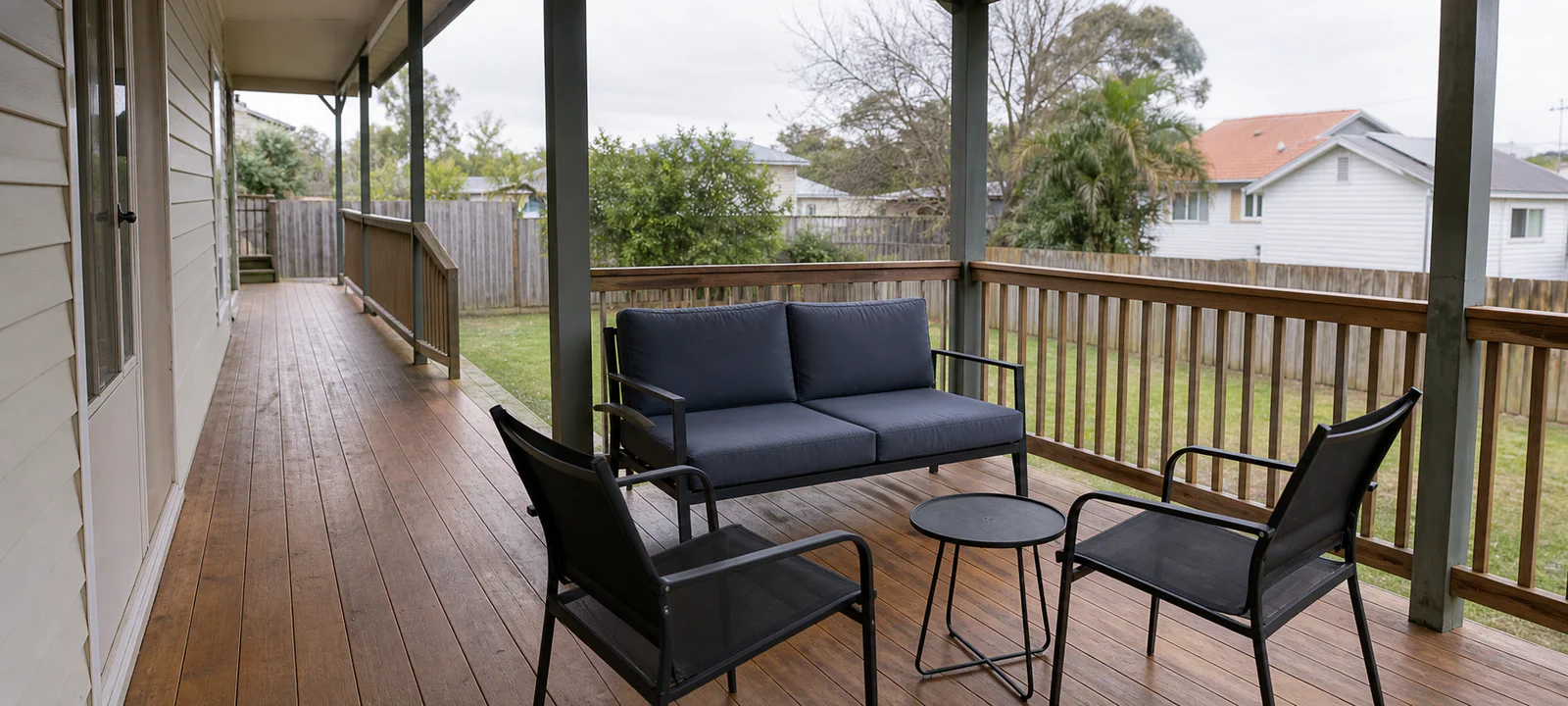
Outdoor lounge furniture uses space in depth. Thick cushions, angled backs and low tables can push a comfortable-looking setting farther into a walkway than its seat count suggests.
Picture the most common hour outside. Mark where people sit, place drinks and move between the house, garden and barbecue. Then include shade at that time and the route to wherever cushions go when bad weather arrives.
A pair of movable chairs may serve a small courtyard better than a corner lounge. Choose the seating type after the whole zone works, not after deciding how many seats can be squeezed in.
Picture the Most Common Hour Outside
Before comparing sofas, chairs or modular settings, decide what the outdoor lounge area needs to do most often.
The area may be used for:
- Morning coffee.
- Reading.
- Relaxing after work.
- Watching kids or pets outside.
- Casual entertaining.
- Weekend drinks.
- Outdoor dining overflow.
- A quiet spot near the garden.
- A balcony sitting area.
- A poolside or deck zone.
- A shared family sitting area.
This matters because the most comfortable-looking setting may not be the most practical one. A deep outdoor sofa may suit long relaxed sitting, but it may be too bulky for a narrow patio. A small bistro-style lounge area may suit coffee and reading, but it may not work for several people. A modular setting may be flexible, but it still needs enough space in every layout you plan to use.
Buy for the way the area is used most weeks, not only for the occasional larger gathering.
Measure the Whole Seating Zone
Outdoor seating needs more space than its listed width and depth. People need room to sit down, move around, use side tables and pass through the area.
Before buying, measure:
- The full width of the available area.
- The full depth of the available area.
- Sofa or chair depth.
- Space in front of the seats.
- Space behind or beside the seats.
- Walkway clearance.
- Door and sliding door clearance.
- Gate access.
- Distance to dining furniture.
- Distance to a barbecue or outdoor kitchen area.
- Space for side tables or coffee tables.
- Storage box or cushion storage access.
A lounge setting that technically fits can still make an outdoor area feel cramped if the walkway disappears. This is especially common on balconies, narrow patios and small courtyards.
Use tape, boxes or temporary markers on the ground to map the seating footprint before buying. Include the coffee table, side table and space for people to move, not just the chairs or sofa.
Choose the Seating Type Carefully
Outdoor lounge seating comes in several forms, and each suits different areas.
Outdoor Lounge Chairs
Separate lounge chairs can work well in small patios, balconies and flexible outdoor areas.
Check before buying:
- Chair width and depth.
- Whether arms make the chair too wide.
- Whether the chair can be moved easily.
- Whether there is room for a small table.
- Whether the chair looks balanced in the space.
Trade-off: chairs are flexible, but they may not create the same relaxed feel as a sofa.
Outdoor Sofas
Outdoor sofas can create a more comfortable lounge zone and may suit patios, decks and covered outdoor areas.
Check before buying:
- Total sofa length.
- Seat depth.
- Back height.
- Cushion storage needs.
- Whether the sofa blocks the view from inside.
- Whether the sofa is too deep for the area.
Trade-off: sofas are comfortable and social, but they are harder to reposition and can dominate small spaces.
Corner Lounges
Corner lounges can work well in larger alfresco areas or unused corners.
Check before buying:
- Which side the chaise or return sits on.
- Whether the corner blocks access.
- Whether the layout works with doors and windows.
- Whether the setting can be rearranged.
- Whether the corner seat will actually be used.
Trade-off: corner lounges can seat more people, but they reduce flexibility.
Modular Lounges
Modular settings can be useful when the space needs to change.
Check before buying:
- All possible layout dimensions.
- Whether each piece is easy to move.
- Whether clips or connectors are included.
- Whether cushions stay in place.
- Whether the modules store neatly if separated.
Trade-off: modular furniture can be flexible, but only if the outdoor area has enough room for the layouts you want.
Benches and Seating That Looks Built In
Bench-style seating can work against walls, fences or balcony edges.
Check before buying:
- Seat depth.
- Cushion needs.
- Whether the bench blocks access.
- Whether the style suits the outdoor area.
- Whether it can be moved later if needed.
Trade-off: benches can save visual space, but they may be less relaxed than lounge chairs or sofas.
Think About Chair and Sofa Depth
Depth is one of the easiest measurements to underestimate. Outdoor lounge furniture is often deeper than dining furniture, especially relaxed sofa settings.
Before buying, check:
- The seat depth.
- The full frame depth.
- The recline or back angle.
- Whether cushions add extra bulk.
- Whether people can sit comfortably without blocking the walkway.
- Whether a coffee table still fits in front.
A deep sofa may be comfortable, but it can make a small patio feel crowded. A shallower chair may leave more room to move but may feel more upright. Neither is automatically better; the right choice depends on the space and the way the seating will be used.
Plan Coffee Tables and Side Tables Early
Outdoor lounge areas often fail because the seating is planned first and the tables are added later. Without somewhere to put drinks, books, snacks or sunscreen, the lounge area may be less useful than expected.
Before buying, decide whether you need:
- A central coffee table.
- One or two side tables.
- A small stool-style table.
- A storage table.
- A tray that can be moved.
- No table, if the area is very compact.
Check:
- Whether table corners create awkward movement.
- Whether the table blocks access to seats.
- Whether the table height suits the seating.
- Whether the table is easy to clean.
- Whether the table adds storage or creates clutter.
- Whether it can be moved for entertaining.
A compact side table may suit a small balcony better than a central coffee table. A larger outdoor lounge may need both.
Consider Shade, Cover and Weather Exposure
Outdoor lounge furniture should suit the location where it will actually sit.
Before buying, check:
- Whether the area is fully covered.
- Whether rain reaches the seating.
- Whether direct sun hits the furniture.
- Whether cushions will be exposed.
- Whether wind moves lightweight cushions or covers.
- Whether leaves and debris fall onto the setting.
- Whether the area dries quickly.
- Whether furniture covers will be used.
- Whether cushions can be stored nearby.
Avoid assuming all outdoor lounge furniture suits every outdoor position. Some pieces may be better under cover. Some cushion-heavy settings may be impractical if the area is fully exposed. Some materials may need more regular cleaning depending on sun, rain, dust, leaves and nearby garden conditions.
This is a practical comparison point, not a promise about durability.
Plan Cushion Storage Before Buying
Outdoor lounge seating often comes with cushions, and cushions create storage decisions.
Before buying, check:
- How many cushions are included.
- Whether cushions are loose.
- Whether they need to be brought inside.
- Whether there is a nearby storage box.
- Whether cushions fit inside existing storage.
- Whether covers are removable.
- Whether cushions make the furniture harder to reset.
- Whether the seating can be used without cushions.
A lounge setting may seem simple until six or eight cushions need somewhere to go during bad weather or long periods without use.
If cushion storage will be part of the setup, connect the plan with the outdoor storage guide for small Australian backyards or the outdoor storage ideas guide.
Leave Access to Doors, Bins and Garden Areas
Outdoor lounge seating should make the area more useful, not harder to move through.
Check whether the seating blocks access to:
- Back doors.
- Sliding doors.
- Side gates.
- Rubbish bins.
- Clotheslines.
- Garden beds.
- Outdoor taps.
- Barbecues.
- Storage boxes.
- Pool equipment.
- Pet areas.
- Stairs or steps.
A chair placed in the wrong spot can become annoying even if the setting looks good. In smaller outdoor areas, movement paths are often more important than adding extra seats.
For spaces that also need dining furniture, compare the lounge footprint with the outdoor dining area setup guide before buying both.
Match Seating to the Outdoor Surface
The surface under the furniture affects how the seating sits and how easy it is to use.
Common outdoor surfaces include:
- Concrete.
- Pavers.
- Tiles.
- Decking.
- Gravel.
- Artificial turf.
- Grass.
- Brick.
- Compact courtyard surfaces.
Before buying, check:
- Whether the surface is level.
- Whether chair legs may wobble.
- Whether furniture will be easy to move.
- Whether the surface marks easily.
- Whether water pools nearby.
- Whether the area can be swept or cleaned around.
- Whether furniture feet suit the surface.
A heavy sofa may be fine on a covered concrete patio but awkward on a small tiled balcony. Lightweight chairs may be easier to move but may feel less settled on uneven pavers. Keep the choice practical for the surface and the way the area is cleaned.
Think About the View From Inside
Outdoor lounge seating often becomes part of the view from inside the home. This matters in small courtyards, patios and balconies where the outdoor area is visible from the kitchen, living room or bedroom.
Before buying, check:
- Whether the furniture blocks the view outside.
- Whether the back height feels too heavy.
- Whether the colour works with existing surfaces.
- Whether cushions look messy when not in use.
- Whether the setting makes the outdoor area feel smaller.
- Whether a lower-profile option would suit the space better.
- Whether the layout looks intentional from indoors.
This does not mean the furniture has to be decorative first. It means the setting should make sense as part of the home, not just as a separate outdoor purchase.
Outdoor Lounge Seating for Balconies
Balconies need careful measurement because depth is limited and access matters.
For balconies, check:
- Door clearance.
- Balcony depth.
- Rail height.
- View lines.
- Chair pull-out space.
- Wind exposure.
- Whether furniture can be folded or stacked.
- Whether plants or storage already use the area.
- Whether the seating blocks the usable floor area.
A two-chair setup with a small table may work better than a compact sofa if the balcony is narrow. A bench may work against a wall, but only if it leaves room to move comfortably.
Avoid buying furniture that turns the balcony into storage with seats attached. The area still needs to feel usable.
Outdoor Lounge Seating for Courtyards and Patios
Courtyards and patios often have more flexibility than balconies, but they can still become crowded.
For courtyards and patios, check:
- Dimensions from one wall to the other.
- Door and window positions.
- Shade patterns.
- Nearby plants or garden beds.
- Access to bins or side paths.
- Whether the area also needs dining furniture.
- Whether a corner lounge blocks movement.
- Whether cushions need storage nearby.
A courtyard may suit a small sofa and side table, while a narrow patio may suit separate chairs. A larger alfresco area may allow a lounge zone and a dining zone, but only if there is enough space between them.
Avoid Buying for a Display Photo
Outdoor lounge settings are often photographed in large, open spaces with generous clearance. A product photo may not show how the furniture works in a compact Australian backyard or balcony.
Before buying, check:
- The actual listed dimensions.
- Whether the photo includes all pieces.
- Whether the cushions add extra depth.
- Whether the setting is shown with wide clearance around it.
- Whether the same layout works in your space.
- Whether the furniture appears lower, higher or deeper than expected.
- Whether the coffee table is included or separate.
Use the photo as a style reference, not a space plan. The measurements matter more.
Sit in the Marked Zone Before Buying
Mark every sofa, chair and table, then place ordinary chairs in the intended positions. Sit down, stretch out, put a drink beside the seat and let someone walk past. This is more revealing than measuring the frame against an empty patio.
- Plan for the people who use the area on an ordinary day.
- Measure frame depth, occupied seating and tables as one zone.
- Preserve door, gate, bin, barbecue and garden access.
- Check shade and weather exposure at the hours the seating is used.
- Confirm cushion, cover and accessory storage.
- Match feet, weight and movement to the outdoor surface.
- Look at the arrangement from inside the home.
- Check that the setting can still be cleaned and reset.
Resolve Shade and Cushion Storage Next
Outdoor lounge seating works better when it leaves room for the other outdoor jobs: meals, plants, storage, cooking and easy movement. Before buying, compare the lounge footprint with any dining setting, storage box, garden area or walkway already in place.
Leave Space Around the Comfort
Comfort depends on more than a deep seat. The setting also needs shade where appropriate, a place for cushions, a useful side surface and clear movement around it. Buy the arrangement that makes the outdoor area easier to spend time in, not the one that fills every available centimetre.
Common Questions
How do you measure an outdoor lounge area for seating?
Mark the full depth and width of every chair or sofa, including arms, recline and the position of a seated person. Add coffee or side tables, doors, bins and the route through the garden. Test the whole occupied zone rather than relying on the furniture's compact-looking product dimensions.
What should you plan for outdoor lounge cushions?
Decide where cushions go when rain, strong sun or a long unused period makes removal necessary. Measure the storage volume and the route used to carry them before choosing a large lounge. Cushion care, drying and storage are part of the furniture footprint even when the seats themselves remain outside.
What outdoor seating works in a small balcony or courtyard?
Choose seating for the most common hour outside, not a display photo or rare gathering. Mark compact chairs, a small sofa or bench in the actual zone and sit there with doors and paths in use. Preserve comfortable movement, shade and the view from indoors before increasing the number of seats.