
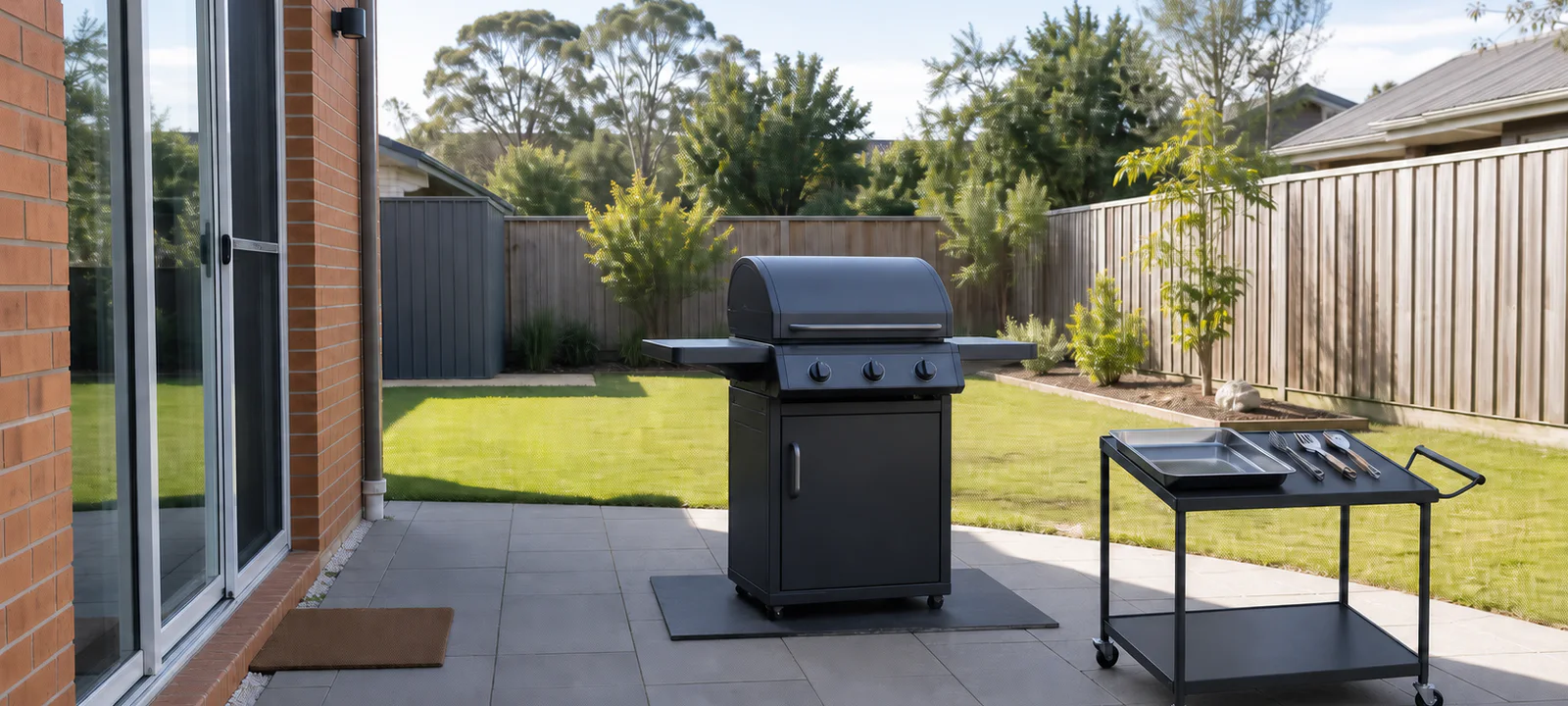
The barbecue footprint is only the closed, cold version of the setup. Cooking may require side shelves, tools, preparation space and room for the cook while other people move between the kitchen and table.
Follow food through that route. Mark the barbecue in its working position, keep doors and walkways clear, and follow the product instructions for placement, clearances, fuel and use. Check property rules before assuming outdoor cooking is permitted in a particular spot.
Add storage and accessories only for the way the household actually cooks. A larger model is not an upgrade if it removes preparation room or dominates the patio between meals.
Follow Food From Kitchen to Table
Before comparing barbecue sizes or features, think about how the area is used in real life.
The setup may need to support:
- Quick weeknight cooking.
- Weekend barbecues.
- Occasional entertaining.
- Family meals outside.
- Cooking while guests sit nearby.
- Moving food from the kitchen to the patio.
- Serving at an outdoor table.
- Cleaning up afterwards.
- Storing barbecue tools and covers.
- Keeping the barbecue out of the main walkway.
This matters because different households need different levels of setup. A small barbecue may suit occasional meals for two people. A larger barbecue may suit regular entertaining, but only if the outdoor area has enough room for movement, serving and storage. A barbecue trolley may add flexibility, but it still needs somewhere to sit when not in use.
Avoid buying for the largest possible gathering if most outdoor cooking is simple and occasional.
Measure the Full Barbecue Zone
The barbecue footprint is larger than the unit itself. Doors, lids, side shelves, trolleys and people all need room.
Before buying, measure:
- The width of the barbecue.
- The depth of the barbecue.
- Lid opening space.
- Side shelf space.
- Trolley handle or wheel clearance.
- Space in front for standing.
- Walkway clearance.
- Distance to outdoor dining furniture.
- Distance to lounge seating.
- Door and sliding door access.
- Gate or side access.
- Storage box or cabinet access.
- Space for covers and accessories.
A barbecue that fits against a wall may still be awkward if the lid cannot open comfortably, side shelves block movement or the person cooking stands in the main path between the kitchen and table.
Use tape, boxes or temporary markers to map the barbecue zone before buying. Include the person standing at the barbecue, not just the appliance footprint.
Decide Where the Barbecue Should Sit
The right position depends on the outdoor layout, not only the available wall space.
Common barbecue positions include:
- Beside an outdoor dining area.
- Near the kitchen door.
- Along a patio edge.
- In a courtyard corner.
- On a deck or paved area.
- Near outdoor storage.
- Away from the main seating zone.
- In a movable position when used.
Before choosing a position, check:
- Whether people can move around the cook area.
- Whether the barbecue blocks doors or windows.
- Whether serving food to the table is practical.
- Whether cleaning access is easy.
- Whether the barbecue competes with lounge seating.
- Whether storage for utensils and covers is nearby.
- Whether the position suits the product instructions and property situation.
Do not assume the most hidden corner is the best place. If the barbecue is too awkward to reach, clean or serve from, it may not be used as often.
Choose the Barbecue Type by Space and Use
This article does not rank cooking performance or make technical claims. The useful comparison here is practical: size, placement, storage, movement and setup needs.
Compact Barbecues
Compact barbecues may suit balconies, courtyards, small patios and occasional outdoor cooking.
Check before buying:
- Cooking area size.
- Bench or trolley requirements.
- Storage space.
- Cover storage.
- Whether it needs to be packed away.
- Whether the outdoor area suits the product type.
Trade-off: compact models save space, but may not suit larger meals or regular entertaining.
Freestanding Barbecues
Freestanding barbecues often include a trolley, shelves or storage below.
Check before buying:
- Total width with shelves.
- Depth including handles and wheels.
- Lid opening clearance.
- Wheel movement.
- Storage underneath.
- Cover size.
- Whether the unit dominates the patio.
Trade-off: freestanding units can be convenient, but they need more floor space.
Portable Barbecues
Portable barbecues may suit occasional use, camping-style storage or households that do not want a permanent outdoor cooking setup.
Check before buying:
- Packed size.
- Carry weight.
- Where it will be stored.
- Whether a table or stand is needed.
- Whether setup and pack-down are realistic.
- Whether accessories need separate storage.
Trade-off: portable options save permanent space, but they may be less convenient for frequent use.
Built-In or Outdoor Kitchen-Style Setups
Built-in or more permanent outdoor cooking setups need more careful planning and may involve professional installation, property rules and product-specific requirements.
Check before buying:
- Whether the area is suitable for a fixed setup.
- Whether the layout will still work long term.
- Whether professional guidance is needed.
- Whether plumbing, gas, electrical or structural considerations apply.
- Whether storage and prep space are included.
- Whether the setup will dominate the outdoor area.
Trade-off: built-in setups can look integrated, but they are a much larger commitment than a freestanding barbecue.
Plan Prep and Serving Space
A barbecue area often fails when there is nowhere to put food before and after cooking.
Before buying, think about where you will place:
- Ingredients.
- Cooked food.
- Plates.
- Tongs and utensils.
- Marinades or sauces.
- Serving trays.
- Drinks.
- Cleaning cloths.
- Rubbish or scraps.
Options may include:
- Barbecue side shelves.
- A nearby outdoor table.
- A small trolley.
- A side bench.
- A serving tray carried from the kitchen.
- A storage cabinet with a top surface.
- A folding table for occasional use.
A barbecue with side shelves may reduce the need for extra furniture, but it also increases the footprint. A separate trolley may be flexible, but it needs storage. A nearby dining table may help, but it should not become crowded with cooking gear.
If the barbecue area connects directly to outdoor meals, compare the layout with the outdoor dining area setup guide before buying.
Think About Storage for Barbecue Gear
Barbecue gear can spread quickly if it does not have a clear home.
You may need storage for:
- Tongs and utensils.
- Grill brushes or cleaning tools.
- Covers.
- Trays.
- Barbecue mats or liners where used.
- Fuel or accessories where appropriate.
- Gloves or cloths.
- Spare parts or manuals.
- Outdoor plates or serving items.
Before buying, check whether the barbecue has built-in storage or whether a separate cabinet, box or indoor drawer will be needed. A freestanding barbecue with shelves may reduce clutter, but it may not suit every outdoor area. A separate outdoor cabinet can help, but it adds another footprint.
If the outdoor area is already short on space, use the small backyard outdoor storage guide before adding more barbecue accessories.
Check Covers and Pack-Away Needs
Barbecue covers, portable stands and accessories need to be considered before purchase.
Check:
- Whether a cover is included or separate.
- Whether the cover is easy to put on and remove.
- Where the cover goes while cooking.
- Whether the barbecue needs to move after use.
- Whether portable items need indoor storage.
- Whether accessories have a dry, accessible place.
- Whether the barbecue will be used often enough to justify the setup effort.
A portable barbecue may be practical on paper but annoying if it has to be carried, assembled and cleaned every time. A freestanding unit may be more convenient but take up permanent outdoor space.
The right choice depends on how often it will be used and how much outdoor space the household is prepared to give it.
Keep Movement Between Kitchen, Barbecue and Table Clear
Outdoor cooking usually involves repeated movement between the kitchen, barbecue and dining area.
Before buying, check the path between:
- Kitchen door.
- Barbecue.
- Outdoor dining table.
- Serving surface.
- Rubbish or bin area.
- Sink or cleaning area.
- Storage cabinet.
- Indoor fridge or pantry.
If the barbecue sits too far from the kitchen, carrying food and plates may become annoying. If it sits too close to the dining table, the cook area may feel crowded. If it blocks the main walkway, people may constantly move around the person cooking.
The goal is a practical flow, not a commercial-style outdoor kitchen.
Consider Barbecue Setup in Small Patios and Courtyards
Small patios and courtyards need careful planning because one barbecue can change the entire layout.
Before buying, check:
- Whether the barbecue leaves room for seating.
- Whether the dining table still works.
- Whether the lid can open fully.
- Whether side shelves block movement.
- Whether the barbecue is visible from inside.
- Whether outdoor storage still opens.
- Whether the area feels crowded when people are present.
A compact freestanding unit, portable option or smaller cooking setup may work better than a large barbecue if the patio also needs dining, lounge seating or garden space.
If the outdoor area already includes seating, check the outdoor lounge seating guide before adding a large barbecue footprint.
Consider Balcony Barbecue Setups Carefully
Balcony barbecue setups need extra caution because space, property rules and exposure may be more restrictive.
Before buying, check:
- Whether barbecues are allowed in the property situation.
- Whether the product suits the location.
- Whether the balcony has enough floor space.
- Whether doors and rail areas remain clear.
- Whether storage is available.
- Whether the barbecue can be moved if needed.
- Whether neighbours or shared areas may be affected.
- Whether the manufacturer's instructions suit the intended setup.
This is not legal, strata, tenancy, gas, electrical or fire-safety advice. Check product instructions, property rules and appropriate professional guidance where relevant before buying.
Think About Shade and Cover
Barbecue placement often overlaps with shade decisions. A barbecue may sit near a covered patio, umbrella, awning or shade sail, but not every shade arrangement will suit every barbecue or cooking product.
Before buying, check:
- Whether the barbecue position affects shade placement.
- Whether an umbrella base blocks movement.
- Whether a shade product competes with the cook area.
- Whether a cover or roofed area is suitable for the product.
- Whether the manufacturer provides placement requirements.
- Whether professional guidance is needed for fixed or covered setups.
Do not make universal claims about cooking under shade or cover. The practical message is to check the product instructions and plan the shade and barbecue layout together.
For broader shade planning, use the outdoor shade setup guide.
Think About Cleaning Access
Barbecue areas need cleaning access, even without getting into detailed cleaning or safety advice.
Before buying, check:
- Whether the barbecue can be moved if needed.
- Whether there is room to clean around it.
- Whether grease trays or removable parts are easy to reach.
- Whether the floor surface is easy to clean.
- Whether nearby walls, screens or furniture may collect splatter.
- Whether cleaning tools have storage nearby.
- Whether the barbecue cover is easy to remove and replace.
A barbecue squeezed into a tight corner may look tidy but become frustrating when cleaning or maintenance is needed.
Match the Barbecue Area to the Outdoor Surface
The surface under and around the barbecue affects movement and cleaning.
Common surfaces include:
- Concrete.
- Pavers.
- Tiles.
- Decking.
- Gravel.
- Artificial turf.
- Balcony flooring.
- Courtyard paving.
Before buying, check:
- Whether the barbecue can sit level.
- Whether wheels can move across the surface.
- Whether the surface is easy to clean.
- Whether a trolley will wobble.
- Whether water pools nearby.
- Whether the surface may mark or stain.
- Whether the barbecue needs a mat or protection product recommended by the manufacturer.
Avoid claims about fire safety, heat protection or surface suitability. Keep this framed as practical buying and maintenance planning.
How the Barbecue Looks From Inside
A barbecue is often visible from the kitchen, living room or dining room. In small outdoor spaces, it may become one of the most visible outdoor items.
Before buying, check:
- Whether the barbecue dominates the view.
- Whether the cover colour suits the outdoor area.
- Whether the side shelves look bulky when folded out.
- Whether a trolley creates visual clutter.
- Whether accessories will be left on display.
- Whether the barbecue blocks plants, furniture or garden views.
- Whether a smaller unit would look more balanced.
This does not mean the barbecue has to be hidden. It should simply make sense in the outdoor area when it is not being used.
Avoid Buying Too Many Accessories Early
Barbecue accessories can multiply quickly.
Common accessories include:
- Tool sets.
- Covers.
- Mats.
- Cleaning brushes.
- Trays.
- Racks.
- Thermometers.
- Rotisserie-style accessories.
- Pizza stones.
- Smoking boxes.
- Utensil hooks.
- Storage bags.
Before buying accessories, decide what will be used regularly and where each item will live. Accessories that are used once or twice can fill drawers and outdoor cabinets quickly.
Keep what supports the way the household actually cooks. Add specialist items only when there is a clear use and storage plan.
Rehearse the Cooking Route
Mark the complete unit with its lid open and shelves extended. Stand in the cooking position, carry a tray from the kitchen and move finished food to the table. Keep guests and children out of the working route rather than forcing traffic past the hot cooking zone.
- Buy for the cooking that happens most often.
- Measure the body, open lid, shelves, handles, wheels and standing space.
- Follow the manufacturer's location, clearance, fuel and operating instructions.
- Keep door, gate and main walkway access clear.
- Provide practical preparation, serving and cleaning space.
- Give tools, covers and compatible supplies an appropriate home.
- Check the surface and whether the unit must move or pack away.
- Confirm rental, body corporate and local restrictions before buying.
- Use appropriately licensed or qualified help for gas, electrical or built-in work.
Fuel-burning barbecues must not be treated as indoor or enclosed-space appliances. Product Safety Australia's carbon monoxide guidance identifies gas, charcoal and wood barbecues as possible sources and warns about fuel combustion in areas with little or no ventilation. Follow the specific product instructions and local fire restrictions every time the barbecue is used.
Give Cooking Its Own Clear Zone
A barbecue setup works better when it supports the dining or seating area without taking over the path between kitchen, table and storage. It should not block the dining table, crowd the lounge area, compete with planters or make outdoor storage harder to access.
Give Cooking a Clear Boundary
Cooking capacity is only one part of the setup. A practical barbecue zone leaves room to prepare, serve, clean and move safely between the kitchen and table while the rest of the outdoor area continues to work. Let that full routine, not the catalogue, set the product size.
Common Questions
How much space should you allow around a barbecue area?
Measure the barbecue in its full cooking position, including lids, doors, side shelves and the person using it. Add preparation and serving space, the route from the kitchen and clear movement to the table. Product placement and clearances must follow the manufacturer's instructions rather than a generic gap.
Where should a barbecue sit in an outdoor entertaining area?
Choose the location only after checking the product instructions, outdoor surface, weather exposure and route between kitchen, cooking and dining. Keep the cooking zone from becoming a passageway. In a balcony, rental or strata property, confirm the relevant rules before buying or deciding where equipment will live.
What barbecue accessories are worth storing nearby?
Keep the first kit limited to the tools used during ordinary cooking, cleaning and serving. Give those items a dry, accessible return point without crowding the preparation surface. Plan where any cover goes while cooking, and avoid buying a full accessory set before the real routine shows what is missing.