
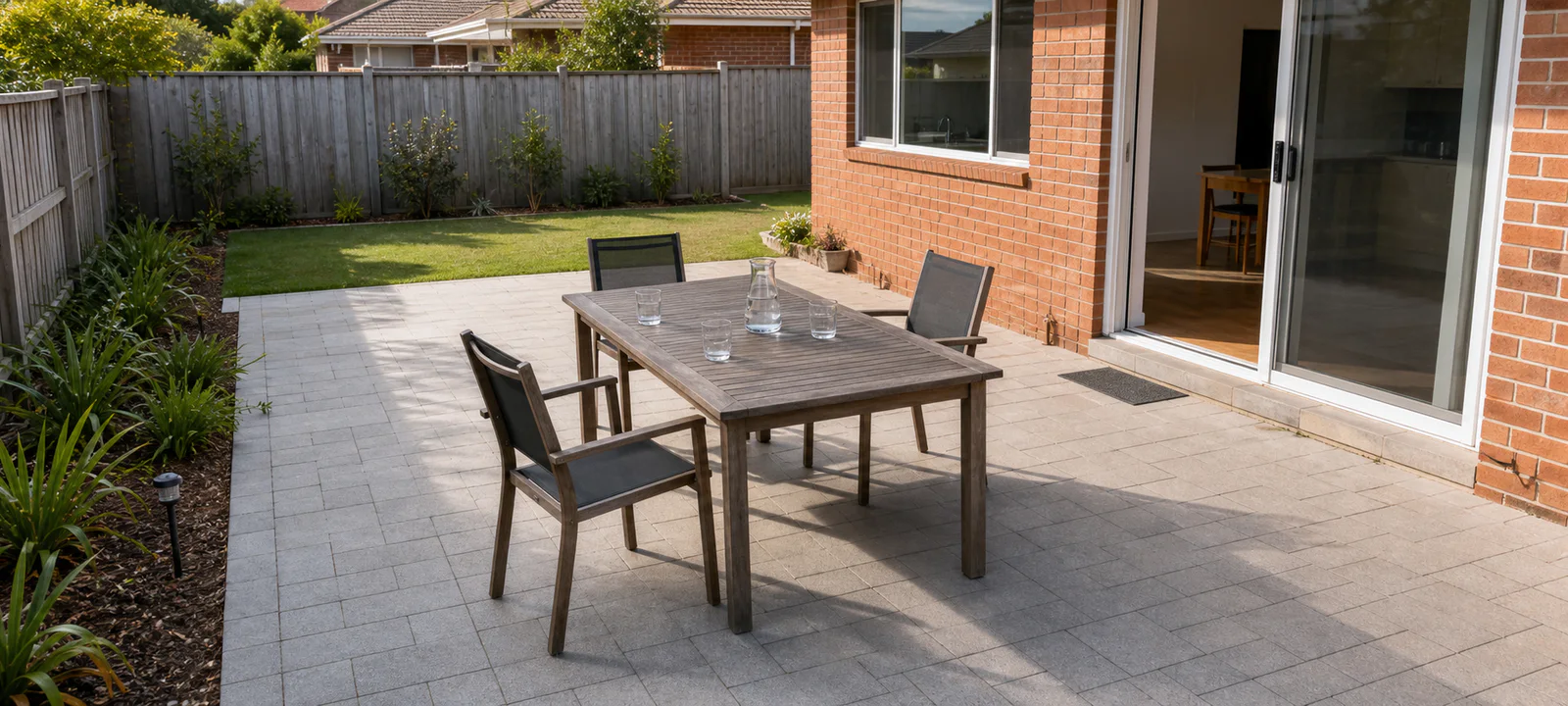
An outdoor table is at its smallest when nobody is using it. Pull out every chair, add the person sitting in it and the server walking behind, and a compact setting can occupy most of a patio or balcony.
Set out a normal meal with tape or existing furniture. Open the house door and gate, walk the route from kitchen to table and check where shade falls at the time the space is usually used.
Choose the table shape and seat count within that working zone. Extra chairs for rare events should not make every ordinary meal harder or leave the outdoor area crowded between uses.
Set the Table for a Normal Meal
Before choosing a table size or furniture style, decide how the outdoor area is used most often.
The space may need to support:
- Weeknight dinners.
- Weekend barbecues.
- Morning coffee.
- Kids' meals.
- Occasional entertaining.
- Reading or relaxing.
- Pot plants and gardening.
- Pet access.
- Clothesline access.
- Outdoor storage.
- A barbecue or small cooking zone.
This matters because a large dining setting is not always the best choice. A six-seater table may be useful for entertaining, but it may dominate a small patio used mostly by two people. A small round table may suit daily meals but may not leave enough room for serving dishes. A bench seat may save space, but it may be less flexible than individual chairs.
The right outdoor dining setup should match the most common use, not the largest occasional event.
Measure the Total Furniture Zone
The table size is only one part of the footprint. Chairs need pull-out space, and people need room to sit down, move around and access the rest of the outdoor area.
Before buying, measure:
- Available floor width.
- Available floor depth.
- Table width and length.
- Chair depth.
- Chair width.
- Chair pull-out space.
- Walkway space around the setting.
- Door and sliding door clearance.
- Gate access.
- Distance to barbecue or serving area.
- Distance to steps, garden beds or walls.
A table that technically fits may still be awkward if the chairs hit a wall or block a path. In narrow patios and balconies, chair movement often causes more trouble than the table itself.
Use tape on the ground, cardboard or temporary markers to map the table and chair area before ordering furniture. This simple check can prevent buying a setting that looks right in dimensions but feels cramped in daily use.
Check Doorways, Gates and Access Paths
Outdoor dining furniture should not block the way people naturally move through the space.
Check access to:
- Sliding doors.
- Back doors.
- Side gates.
- Garage or shed doors.
- Garden paths.
- Clotheslines.
- Rubbish bins.
- Outdoor taps.
- Storage boxes or cabinets.
- Barbecue areas.
- Pet doors or pet paths.
This is especially important in small backyards and courtyards, where one table can interrupt several functions at once. If people have to squeeze around chairs every time they go outside, the setting may be too large or placed poorly.
If storage is already part of the outdoor area, check the outdoor storage guide for small Australian backyards before deciding where the dining setting should sit.
Choose the Table Shape Carefully
Different table shapes suit different outdoor areas.
Rectangular tables
Rectangular tables suit longer patios, decks and outdoor rooms. They often work well against the flow of a long space if there is enough chair clearance.
Trade-off: they can feel too dominant in compact courtyards or narrow balconies.
Round tables
Round tables can work well in square patios, small courtyards and more social seating arrangements.
Trade-off: they may be less efficient against walls and may offer less straight-edge serving space.
Square tables
Square tables can suit small households and balanced spaces.
Trade-off: they may become awkward when more chairs are added.
Extendable tables
Extendable tables can help when the household entertains occasionally but does not need a large table every day.
Trade-off: they still need enough space when extended, and the mechanism should be considered before buying.
Bar-height or balcony tables
Higher tables can suit narrow views, balconies or casual meals.
Trade-off: they may not suit every household or every type of outdoor meal.
The best table shape depends on the space, not just the number of seats.
Decide How Many Seats Are Realistic
Outdoor dining settings are often sold by seat count, but the advertised number may not reflect how comfortable the setup feels in a small space.
Before buying, ask:
- How many people use the setting most days?
- How often do guests actually eat outside?
- Could extra chairs be stored elsewhere?
- Would a smaller table with occasional extra seating work better?
- Does every seat have enough room to pull out?
- Will people be sitting near walls, rails or garden beds?
- Is there enough space for serving dishes?
A four-seater setting that leaves room to move may be more useful than a six-seater that makes the patio feel crowded. For occasional entertaining, flexible chairs, folding options or indoor-outdoor movement may be more practical than buying for the largest possible group.
Think About Shade and Weather Exposure
Outdoor dining furniture needs to suit the location. A covered patio behaves differently from an exposed deck or sunny courtyard.
Before buying, check:
- Whether the area is covered.
- How much direct sun reaches the table.
- Whether rain reaches the furniture.
- Whether wind moves cushions or lightweight items.
- Whether leaves and garden debris fall onto the setting.
- Whether the table sits under trees.
- Whether the area dries quickly after rain.
- Whether furniture will be stored, covered or left outside.
Avoid assuming all outdoor furniture suits every outdoor location. Some materials and cushions may be better under cover. Some settings may need more regular cleaning if placed under trees or exposed to dust, leaves or coastal air.
Keep the decision practical: choose furniture for the exposure it will actually face.
Match Materials to Maintenance Expectations
Outdoor furniture materials vary in appearance, weight, comfort and maintenance.
Common options include:
- Timber.
- Metal.
- Plastic or resin.
- Wicker-look materials.
- Concrete-look or stone-look tops.
- Glass tops.
- Fabric cushions.
- Rope or sling-style seating.
Before buying, compare:
- How often the furniture may need cleaning.
- Whether cushions need storage.
- Whether the surface shows dust, marks or water spots.
- Whether the furniture is light enough to move.
- Whether the furniture feels too visually heavy for the space.
- Whether the material suits the home's outdoor style.
- Whether the setting will sit under cover or exposed.
The trade-off is usually between look, weight, comfort, maintenance and storage. A heavier setting may feel substantial but be harder to move. A lighter setting may be flexible but may not feel as solid. Cushions can improve comfort but add storage and cleaning considerations.
Plan Cushion and Cover Storage
Outdoor dining furniture often creates a storage problem after purchase. Cushions, covers, placemats, outdoor tableware and barbecue accessories need somewhere to go.
Before buying a setting with cushions, check:
- Whether cushions are included.
- Whether they are loose or attached.
- Whether they need to be stored when not in use.
- Whether there is space nearby for a storage box.
- Whether covers are practical to put on and remove.
- Whether the furniture can be used comfortably without cushions.
- Whether spare covers or accessories will need storage.
A cushioned setting may be comfortable, but it may be annoying if cushions have to be carried inside every time the weather changes. If the outdoor area is small, the storage needed for cushions may matter as much as the furniture itself.
For broader storage planning, see the outdoor storage ideas guide for patios, balconies and gardens.
Leave Space for Serving and Everyday Use
Outdoor dining rarely involves only plates and chairs. People need somewhere for serving dishes, drinks, barbecue tools, napkins, condiments and cleared plates.
Before buying, think about:
- Whether the table is large enough for meals and serving.
- Whether a side table would be useful.
- Whether a barbecue is nearby.
- Whether food will be carried from the kitchen.
- Whether there is a bench, trolley or shelf close by.
- Whether a small table would become overcrowded during meals.
A compact table can work well for daily use, but it may need support from a small side table or nearby surface when entertaining. Buying a larger table only for serving space may not be the best answer if it makes the whole outdoor area harder to use.
Consider Balcony and Courtyard Constraints
Balconies and courtyards need extra care because space is limited and the furniture is often visible from inside.
For balconies, check:
- Table depth.
- Chair pull-out space.
- Door swing or sliding door access.
- Rail height and view lines.
- Wind exposure.
- Whether furniture needs to be folded or stacked.
- Whether the setting blocks plants or storage.
For courtyards, check:
- Width from one wall to the other.
- Access to garden beds or pots.
- Drainage points.
- Light and shade patterns.
- How the furniture looks from indoors.
- Whether the setting makes the space feel smaller.
A narrow balcony may suit a slim table, folding chairs or a small two-seater setup. A courtyard may suit a round table or compact rectangular setting, depending on the movement paths.
Think About How the Setting Looks From Indoors
Outdoor dining furniture often becomes part of the view from the kitchen, dining room or living area.
Before buying, check:
- Whether the setting will be visible through glass doors.
- Whether the size makes the yard feel crowded.
- Whether the colour suits existing outdoor surfaces.
- Whether the shape works with the patio or deck.
- Whether cushions and covers will look messy when not in use.
- Whether a lower-profile setting would keep the view more open.
This does not mean the furniture has to be decorative first. It means the setting should make sense as part of the whole home, not just as a product sitting outside.
Set the Table on the Ground Before Buying
Mark the tabletop, place chairs or boxes around it and pull each seat into its working position. Open the back door and carry a tray from the kitchen or barbecue. The test should feel like a normal meal, not an empty furniture plan.
- Buy for the people who eat there most often.
- Measure the table, occupied chairs and movement behind them.
- Keep doors, gates, bins, clothesline and garden routes clear.
- Check how serving works from the kitchen or cooking zone.
- Compare the table shape with the actual circulation path.
- Account for weather exposure, shade and prevailing conditions.
- Give cushions and covers a realistic storage position.
- Check care instructions and the view from inside the home.
Resolve Shade or Storage Before Adding Seats
An outdoor dining setting should be planned around what else the area already needs to do: storage, movement, shade, cooking and the view from inside. A table that technically fits can still make the space harder to use if chairs, planters or storage have nowhere sensible to go.
Choose Everyday Ease Over Maximum Seats
The useful setting is the one people can sit at, serve and leave without shifting the rest of the yard. In a compact patio, balcony or courtyard, a smaller table used comfortably every week is usually a better buy than extra seats that consume the space between gatherings.
Common Questions
How do you measure an outdoor dining area for a table and chairs?
Mark the full table footprint, then pull every chair out to the position used for sitting and standing. Include people moving behind the chairs, doors and gates opening, serving routes and access to the rest of the yard. Measure that working zone rather than the tabletop alone.
Which outdoor table shape works best in a small space?
Choose the shape that fits the measured movement zone and normal number of diners. Round, square, rectangular, extendable and bar-height tables create different chair and serving patterns. Mark the proposed shape on the ground, test doors and paths, and compare everyday ease before choosing maximum seating capacity.
Should you buy extra outdoor dining seats for guests?
Plan the permanent setting for ordinary use first. Occasional guests may be better served by flexible extra chairs than by a large table that crowds the area every day. Resolve shade, cushion storage and the route from the kitchen before adding seats, because those limits often matter more than the advertised capacity.