
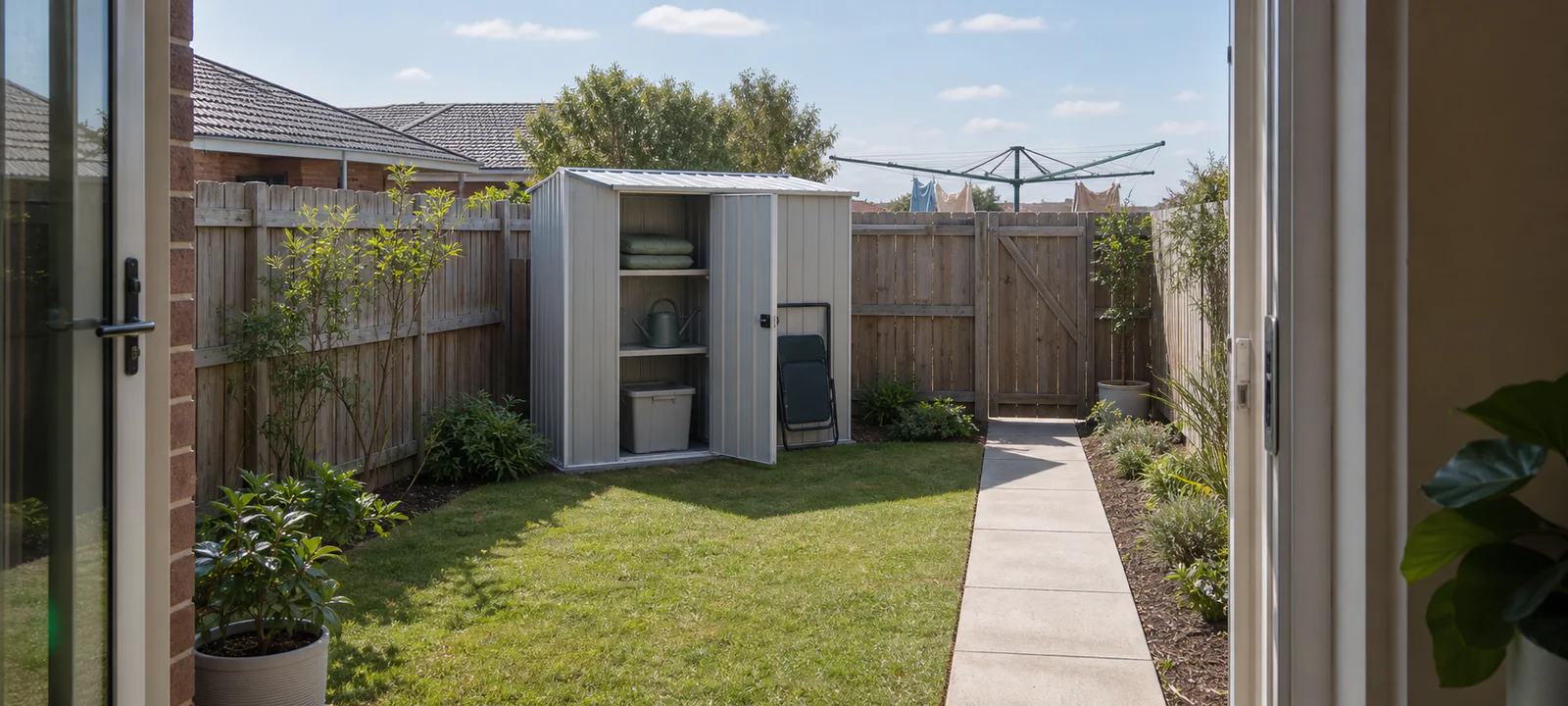
In a small backyard, a storage box is furniture. It changes the view from inside, takes a section of the path and may compete with the table, bins, bikes or the only sunny patch.
List what genuinely must stay outdoors and remove household overflow from the calculation. Then mark the full footprint of a box, cabinet or shed, including doors and the space needed to reach inside.
Choose capacity only after access, exposure and the main use of the yard are protected. A smaller unit that can be reached and maintained is more valuable than one that turns the remaining outdoor area into a corridor.
List What Must Stay Outdoors
Before choosing a storage product, list the outdoor items that currently need a home.
Common outdoor storage items include:
- Gardening tools.
- Potting mix and small garden supplies.
- Outdoor cushions.
- Barbecue tools.
- Kids' outdoor toys.
- Sports gear.
- Bike helmets and accessories.
- Pool or water-play items.
- Cleaning supplies.
- Outdoor mats.
- Plant pots.
- Hose fittings.
- Small hand tools.
- Seasonal decorations.
This matters because outdoor storage products are not interchangeable. A low storage box may suit cushions and toys but not tools. A tall cabinet may suit brooms, small gardening tools and cleaning items but may not fit in a narrow courtyard. A small shed may hold more, but it can change how the outdoor area feels.
The first decision is not "what is the biggest storage I can fit?" It is "what problem am I trying to solve?"
Measure the Outdoor Area Before Buying
Small outdoor spaces often have less usable area than they appear to have. Doors swing open, bins need access, paths need to stay clear and outdoor furniture may already define how the space is used.
Before buying storage, measure:
- The width and depth of the available floor area.
- Door, gate and sliding door clearance.
- Walkway space.
- Bin access.
- Clothesline access.
- Barbecue or outdoor cooking space.
- Furniture movement.
- Wall or fence space.
- Height limits under eaves or balconies.
- Access to taps, hoses or garden beds.
A storage unit that technically fits may still be impractical if it blocks a path, makes bins harder to move or prevents chairs from being pulled out. In a small courtyard, even a shallow cabinet can feel large if it sits in the wrong place.
Decide Whether You Need a Box, Cabinet, Shed or Shelf
Outdoor storage usually falls into a few broad types. Each suits different items and different spaces.
Outdoor storage boxes
Outdoor storage boxes are useful for cushions, toys, small garden items and loose accessories. They are usually easy to place and can work on patios, decks and courtyards.
Check before buying:
- Internal dimensions.
- Whether cushions actually fit.
- Whether the lid opens fully.
- Whether the box blocks a walkway.
- Whether the material suits the exposure.
- Whether the box needs to be moved for cleaning.
Trade-off: storage boxes can be simple and flexible, but they do not suit long tools or tall items.
Outdoor cabinets
Outdoor cabinets can work well for tools, cleaning supplies, small pots, sprays, gloves and accessories. Tall cabinets use vertical space and may keep items easier to separate.
Check before buying:
- Shelf spacing.
- Door swing.
- Height under eaves.
- Whether tall tools fit.
- Whether the cabinet needs wall support.
- Whether the base sits level on the ground.
Trade-off: cabinets can store mixed items neatly, but they can feel visually bulky in a small space.
Small sheds
Small sheds suit households with more equipment, larger tools or several outdoor categories to store.
Check before buying:
- Footprint.
- Height.
- Door access.
- Ground surface.
- Whether the shed dominates the yard.
- Whether there is enough room to reach items inside.
- Whether the shed suits the way the outdoor area is used.
Trade-off: sheds hold more, but they can reduce usable outdoor space and may be too much for a compact yard.
Wall shelves and hooks
Wall-mounted or fence-adjacent storage may help when floor space is limited, but it needs careful planning.
Check before buying:
- Whether the surface is suitable.
- Whether fixing is appropriate for the home.
- Whether the items will be exposed to weather.
- Whether hooks or shelves will block movement.
- Whether the setup is removable if needed.
Trade-off: wall storage saves floor space, but it may not suit every surface, rental arrangement or exposed area.
Think About Weather Exposure
Outdoor storage needs to suit the level of exposure in the actual location. A covered patio is different from a fully exposed backyard corner.
Check whether the storage location is exposed to:
- Direct sun.
- Wind-driven rain.
- Damp ground.
- Pool splash.
- Dust.
- Leaves and garden debris.
- Heat build-up.
- Shade and poor drying conditions.
Avoid assuming that "outdoor" means suitable for every outdoor position. Some products are better under cover. Some may be fine for toys but not for cushions or items that should stay dry. Some materials may fade, become brittle, rust or show dirt more obviously over time.
Keep the decision practical: match the storage material and location to what you are storing and how exposed the area is.
Plan for Access, Not Just Capacity
Outdoor storage often becomes frustrating when it holds enough but is awkward to use.
Before buying, check:
- How often each item is used.
- Whether frequently used items are easy to reach.
- Whether lids and doors open fully.
- Whether heavy items need to be lifted out.
- Whether items at the back will be forgotten.
- Whether children or household members need access.
- Whether the storage can be cleaned around.
A deep box may hold many items but make everything hard to find. A cabinet with shelves may hold less but make daily items easier to reach. A small shed may hold the most but become a dumping zone if it has no internal organisation.
The best outdoor storage is usually the one that makes items easier to use, not just easier to hide.
Match Storage to the Outdoor Surface
The ground surface affects how storage sits and how easy it is to use.
Common surfaces include:
- Concrete.
- Pavers.
- Decking.
- Tiles.
- Gravel.
- Grass.
- Soil.
- Artificial turf.
A storage unit may sit neatly on concrete but wobble on uneven pavers. A box placed on grass may be harder to keep clean and dry around. A tall cabinet on an uneven surface may need more care when positioning.
Before buying, check whether the base needs to be flat, whether the storage has feet, whether water can drain around it and whether it will be easy to sweep or hose the area nearby.
Outdoor Storage for Renters
Renters often need storage that can be moved, removed or taken to another property.
Rental-friendly options may include:
- Freestanding storage boxes.
- Compact outdoor cabinets.
- Portable caddies.
- Stackable tubs kept under cover.
- Shelving that does not require permanent fixing.
- Lightweight storage that can be repositioned.
- Furniture with built-in storage where suitable.
The trade-off is that removable storage may hold less or look less built-in. However, it can be easier to adapt if the outdoor area changes or the household moves.
If a product requires drilling, fixing to a wall, attaching to a fence or making permanent changes, pause before buying and consider whether a freestanding option would be more suitable.
Storage for Outdoor Cushions and Soft Items
Outdoor cushions, throws and soft furnishings need different storage from garden tools. They take up space, can be awkwardly shaped and may need to stay cleaner than other outdoor items.
Before buying cushion storage, check:
- Cushion dimensions.
- Whether cushions stack or fold.
- Whether the storage box is long enough.
- Whether the lid opens fully.
- Whether the storage location is protected from weather.
- Whether the box will be easy to access before and after use.
- Whether cushions should instead be stored indoors during long unused periods.
A box that looks large may still be too short or too shallow for outdoor cushions. Measure the actual cushions before buying.
Storage for Gardening Tools and Supplies
Gardening tools create a different problem because some are long, dirty, sharp-edged or awkwardly shaped.
Before buying storage for garden supplies, check:
- Whether long tools fit upright.
- Whether hand tools need a tray or small container.
- Whether potting mix needs sealed storage.
- Whether gloves and small items need a dry spot.
- Whether garden products need separate storage.
- Whether the storage can be cleaned easily.
- Whether dirty items are kept away from cushions or toys.
Do not mix every outdoor item into one box if it makes the contents harder to use. A small cabinet, shelf or separate tub may work better than one large storage container.
Storage for Kids' Outdoor Items
Kids' outdoor items often need to be easy to access and easy to put away.
Items may include:
- Balls.
- Bubbles.
- Chalk.
- Water toys.
- Sandpit toys.
- Helmets.
- Scooter accessories.
- Small sports gear.
- Outdoor craft items.
A low storage box or basket may work better than a tall cabinet if children need to help pack up. However, open storage can look messy and may not protect items from weather. A lidded box can look tidier but may become disorganised without smaller containers inside.
The right setup depends on who needs access and how often the items are used.
Avoid Turning Storage Into a Backyard Obstacle
In small outdoor areas, every storage item changes how the space works. Before buying, imagine the storage in place during normal use.
Check whether it will affect:
- Walking from the door to the yard.
- Moving bins.
- Accessing the clothesline.
- Opening gates or side access.
- Sitting at an outdoor table.
- Moving around a barbecue.
- Reaching garden beds.
- Kids playing.
- Sweeping or cleaning the area.
Outdoor storage should reduce clutter, not create a new obstacle. Sometimes two smaller storage items placed carefully work better than one large unit. If the same area also needs a table and chairs, the outdoor dining area setup guide can help check furniture clearance before storage takes over the space. If the space is more for relaxed seating, the outdoor lounge area setup guide covers sofa depth, side table space and cushion storage. If pots and planters also need room, the balcony and courtyard garden setup guide can help plan garden zones without crowding access. If shade products are part of the setup, the outdoor shade setup guide can help check packed storage, base placement and movement paths. If barbecue gear is part of the same area, the barbecue area setup guide can help check covers, tools, prep space and outdoor access. If occasional entertaining gear is creating clutter, the outdoor entertaining setup guide can help separate everyday items from occasional extras.
Consider How the Storage Looks From Inside
Small backyards, patios and courtyards are often visible from inside the home. A bulky storage box or shed may affect the view from the kitchen, living room or bedroom.
Before buying, check:
- Whether the storage will be visible from main indoor areas.
- Whether the colour suits the outdoor space.
- Whether the height blocks plants or sightlines.
- Whether it makes the yard feel smaller.
- Whether a lower or narrower option would be less intrusive.
- Whether the storage can sit beside existing furniture or screening.
This does not mean outdoor storage has to be decorative. It means the product should not make the space feel more cramped than the clutter it is meant to solve.
Plan Internal Organisation
Even a good outdoor storage product can fail if everything is thrown inside.
Useful internal organisation may include:
- Small tubs.
- Labels.
- Hooks.
- Shelf baskets.
- Tool clips.
- Separate bags for small items.
- A tray for gardening gloves and hand tools.
- A dedicated spot for frequently used items.
For a storage box, smaller containers can stop items from sinking to the bottom. For a cabinet, shelf zones can separate gardening, cleaning, toys and barbecue accessories. For a shed, hooks or shelves may prevent the floor from becoming the only storage area.
Test the Storage With the Backyard in Use
Mark the complete footprint, including open doors or a raised lid. Carry the bulkiest item to the marked position, then walk to the bins, clothesline, garden and back door. Look at the zone from inside the home. This exposes the cost of the unit before it becomes a permanent outdoor obstacle.
- Confirm that every category genuinely belongs outdoors.
- Measure the unit, opening space and internal dimensions.
- Keep doors, gates, bins, clothesline and garden access clear.
- Check the product against the real weather exposure and surface.
- Separate clean cushions and toys from tools and garden supplies.
- Check that long and bulky items can be placed without forcing them.
- Plan smaller containers or labels only where they improve retrieval.
- Confirm fixing and placement requirements, including rental approval.
Keep Indoor Overflow Out of the Backyard
Outdoor storage often overlaps with garage, laundry and general household storage. Items that do not need to live outside may be better stored elsewhere. Items used outdoors every week should be easier to reach than seasonal or spare items.
Before buying, check whether the backyard is the right place for each category. The goal is not to push every awkward household item outdoors. It is to give outdoor items a sensible home without making the outdoor area less useful.
For broader item planning, see the outdoor storage ideas guide. If outdoor overflow already lives in the garage, the garage storage guide can help separate shelves, tubs and tool zones.
Storage-box options for the outdoor items that remain
First discard, relocate or hang suitable items and protect soft goods indoors where possible. If a defined outdoor category still needs a box, compare these compact and large deck formats by lid and access path, weather exposure, base surface, loaded capacity and the usable yard left around them.
Some links below are affiliate links. If you buy through one, we may earn a commission at no extra cost to you. Learn more.
Compact outdoor storage box
vidaXL 90L Garden Storage Box
A compact lockable plastic box for small outdoor items where the footprint, drainage and weather exposure have been checked.
Research-supported option
View at Amazon AustraliaMay suit: balconies and small yards storing compact accessories.
May not suit: large cushions, heavy tools or exposed windy sites.
Drawbacks to consider:
- Ninety litres will not hold large cushions or long tools, and lightweight boxes need sensible positioning.
- Current dimensions, variant, price, stock and seller details should be rechecked before ordering.
Evidence confidence: moderate. Last reviewed 18 August 2026. Research-based assessment; we have not tested this product firsthand.
Large outdoor deck box
Keter Borneo Outdoor Storage Box
A larger resin deck box for cushions and bulky outdoor items where lid clearance, delivery access and the full footprint fit.
Research-supported option
View at Amazon AustraliaMay suit: yards needing a large weather-resistant cushion store.
May not suit: very small spaces or households needing easy portability.
Drawbacks to consider:
- The bulky box is expensive to move, and owner feedback includes concerns that should be checked against the current seller and model.
- Current dimensions, variant, price, stock and seller details should be rechecked before ordering.
Evidence confidence: moderate. Last reviewed 18 August 2026. Research-based assessment; we have not tested this product firsthand.
Buy for the Yard That Remains
Choose outdoor storage by the problem it resolves and the usable yard it leaves behind. In a compact space, a modest box or cabinet that protects movement and daily access will usually do more than a larger product that turns the backyard into household overflow.
Common Questions
Which type of outdoor storage suits a small backyard?
Choose between a box, cabinet, small shed, shelf or hook only after listing what genuinely must stay outside. Compare the item's size, weather exposure and access frequency with the measured yard. The useful option is the one that leaves the door, path, seating and maintenance route workable.
Where should outdoor storage go in a compact yard?
Mark the unit with its lid or doors fully open, then view it from inside and walk every normal route around it. Keep drainage, gates and garden access available. A generous-looking corner is not suitable if the storage blocks light, narrows the path or becomes difficult to clean behind.
How should cushions and garden tools be stored outside?
Treat soft items and tools as different storage jobs. Cushions need a dry enough, manageable home and should not be sealed away while damp. Tools need stable, accessible positions where they cannot fall into a path. Match every storage claim to the exact sun, rain, drainage and exposure at that location.