
Outdoor storage is often most noticeable from inside the house. A cushion box replaces the garden view, toys gather beside it and barbecue tools migrate to the garage because the box is awkward to open once the chairs are out.
Notice what is left outside after use and why. Some things need quick access; others need protection from sun, rain, dust or wind. Keep the main purpose of the patio, balcony or garden in charge, then fit storage around movement, seating and the conditions at that exact spot.
Choose outdoor storage in this order
- Remove anything that does not genuinely need to live outside.
- Protect the door, seating area, balcony or garden path before assigning floor space.
- Match the box, bench or cabinet to the rain, sun, wind and drainage at that spot.
Only then compare capacity. A larger unit is not useful if it makes the outdoor area harder to use.
Sort by exposure as well as frequency
Begin with what genuinely needs to live outdoors. Garden tools and a hose may need to stay close to the yard. Cushions, beach gear or entertaining supplies might be safer and drier inside when they are not in use.
Divide what remains into three groups:
- Everyday items that need one-step access.
- Occasional items that can sit in deeper or closed storage.
- Sensitive, hazardous or valuable items that need a more suitable location.
If the area is especially tight, the small outdoor storage guide goes further into boxes, cabinets, sheds, access and exposure.
Map the outdoor room before adding a box
Measure the storage footprint with its lid or doors fully open. Protect the route from the house, the space needed to pull out a chair and access to taps, drains, railings and garden beds. On a balcony, check rental or body corporate requirements and any limits relevant to the space before adding large items or wall fixings.
Storage should also leave room for the activity already planned there. The outdoor dining guide covers chair clearance and serving routes, while the outdoor lounge guide focuses on seating depth and movement.
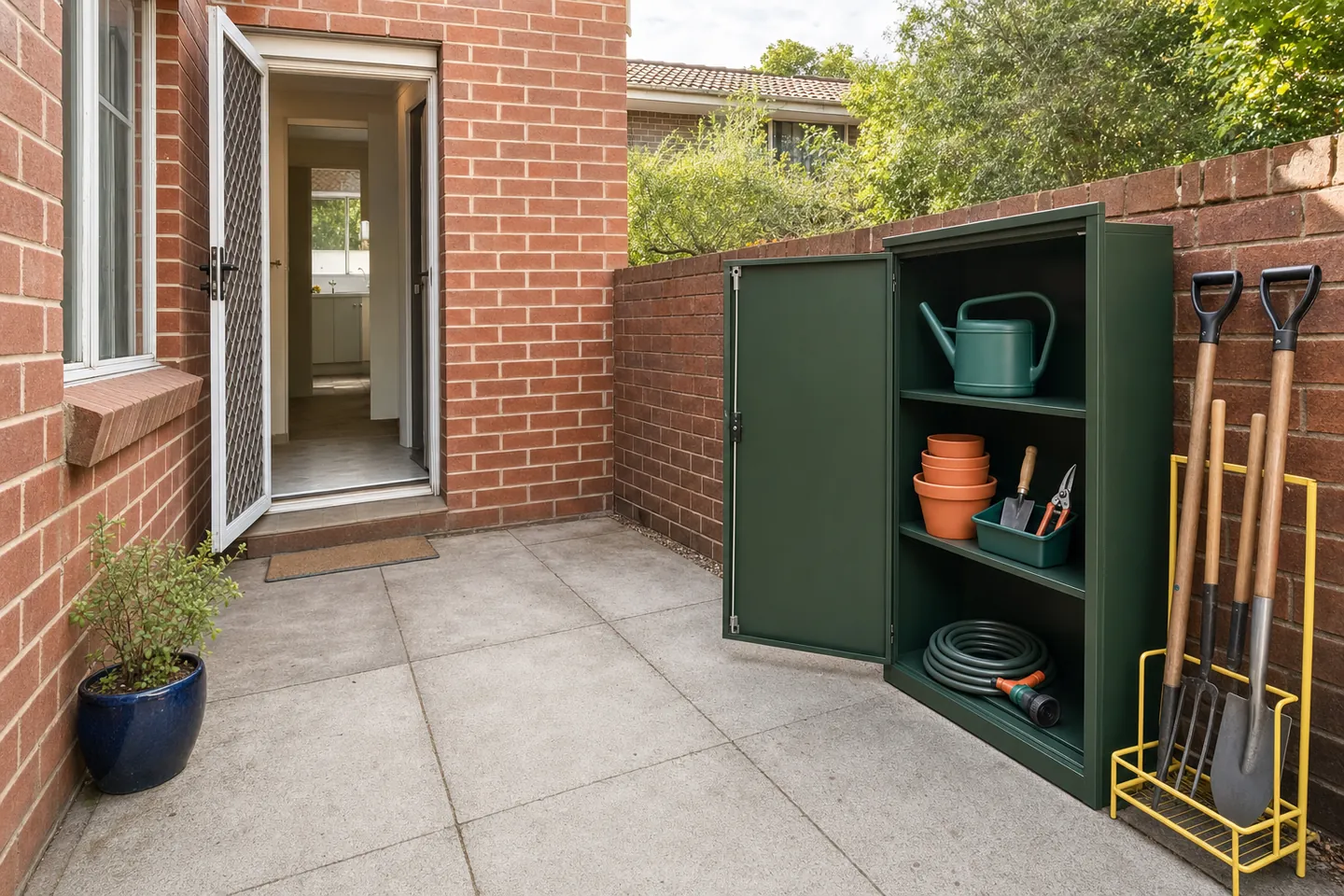
Match the storage claim to the actual weather
“Outdoor”, “weather-resistant” and “waterproof” do not necessarily promise the same level of protection. Read the product information and consider whether the location receives driving rain, intense afternoon sun, salt air, dust or water pooling beneath it.
Plastic or resin can be light and easy to clean, but quality and UV resistance matter. Coated metal may offer strength, though damaged coatings and coastal exposure can encourage corrosion. Timber can suit the garden visually but may need ongoing maintenance. Choose for the exposed position, not just the material name.
Keep cushions dry enough to store
Even outdoor-rated cushions benefit from protection when they are not being used. A box, bench, bag or cupboard may work, provided the cushions fit without being forced and the storage remains dry and ventilated as its instructions require.
Do not seal damp cushions away. Let them dry first, particularly in humid or coastal areas where trapped moisture can lead to odour or mildew. If the available box cannot hold the cushion set comfortably, fewer cushions may be a better answer than larger storage.
Make a storage bench pass both tests
A bench can combine seating and storage on a small patio, but only if it works in both roles. Check seat height and stability, lid clearance, internal dimensions and whether the contents will be crushed when people sit down. Confirm that the product is designed to be used as seating rather than assuming any storage box can take a person's weight.
Place it where the lid can open without moving the dining table or blocking the door. A dual-purpose product that needs the whole area rearranged each time is not saving useful space.
Store tools where they cannot fall into the path
Long-handled tools are easier to manage when they stand in a stable rack or hang from a suitable fixing rather than lean against a wall. Keep frequently used tools within easy reach and store heavy items lower down. A small caddy can hold gloves, secateurs and hand tools close to the garden task.
Wall-mounted systems depend on the wall, fixings, rated load and installation instructions. Renters may need a freestanding stand instead. Protect tools from ongoing rain and clean or dry them before storage rather than enclosing soil and moisture.
Give barbecue gear a clean boundary
Tongs, trays, covers and cleaning brushes are easier to use when they live near the barbecue, but food-related equipment should not share a mixed tub with fertilisers, pest products or garden chemicals. A small caddy or dedicated shelf may be enough.
Follow the barbecue and gas-cylinder instructions for use and storage, as well as applicable local requirements. Do not improvise an enclosed storage position for fuel or heat-producing equipment. The barbecue area guide covers the cooking footprint, preparation space and outdoor dining flow.
Get hoses and cords off the walkway
A reel or holder can keep a hose accessible without leaving loops across the path. Choose one that suits the hose length, wall or ground position and the person who will rewind it. On a small balcony, a watering can may be more proportionate than a permanent hose setup.
Outdoor electrical leads and lighting need products and connections suitable for their use. Keep cords away from water and walkways and follow the equipment instructions rather than treating a storage hook as an electrical-safety solution.
Let wet toys drain before they disappear
Children's outdoor toys need a return point that is low, stable and simple to use. Open tubs, mesh bags and rinseable baskets can work well for sandy or wet items because the contents can dry before longer-term storage.
Avoid turning a deep box into an unsorted toy pit. Keep the frequently used set outside and rotate the rest. Check that lids and hinges are suitable for the household and that stored water cannot collect in toys or containers.
Keep pet gear close to the door
A washable basket or hook near the back door can hold leads, outdoor toys and a dedicated towel. It should support the transition inside rather than create a new obstacle on the patio.
Store pet food and treats according to the packaging instructions; a hot or damp outdoor box may be unsuitable even when it closes securely. Move food, medicines and grooming products to a more controlled location where necessary.
Use shelves only where the contents suit the location
Shelving can keep pots, watering fittings and small tools off a shed floor, but open shelves do not protect against dust, pests or rain. Check shelf load ratings, keep heavier items low and avoid placing hazardous products where children or pets can reach them.
Clear tubs and labels can help with occasional supplies, provided everything is dry before it is enclosed. Pots and planters create their own questions about drainage and floor loading; the balcony and courtyard garden guide covers that setup.
Leave enough room to clean around storage
Leaves, dust, webs and pollen collect behind boxes and beneath cabinets. Check whether the unit can be moved, whether water drains beneath it and whether the back and hinges are reachable. A neat-looking cabinet that traps damp debris against a wall can create more work than it removes.
Shade changes exposure but also changes the furniture footprint. If an umbrella, gazebo or screen is part of the area, place it before committing the remaining wall or floor space to storage. The outdoor shade guide helps map that zone.
Before another box or cabinet goes outside
- Name the items it will hold and check they suit the location.
- Measure access with the storage, furniture and doors all in use.
- Compare the product's protection claims with the site's real exposure.
- Check stability, drainage, cleaning access and any installation requirements.
- Keep hazardous products and fuel-related equipment in appropriate, controlled storage.
Outdoor storage has done its job when the area is easier to use and the garden, balcony or patio still feels like a place to spend time. Protect the things that need to remain outside, move the rest to a more suitable home and resist letting household overflow become the main outdoor feature.
Common Questions
What outdoor storage solutions work in Australian weather?
Choose for the exact exposure rather than a broad weather-resistant claim. Check how rain, sun, wind and drainage reach the proposed spot, then compare boxes, cabinets, benches or shelves with the product instructions. Keep wet items able to drain and leave enough access to inspect, clean and dry the storage zone.
How do you add balcony storage without blocking the space?
Protect the door, main walking route, seating and any required balcony access before assigning floor space. Mark the storage with its lid or doors open and check permissions, surfaces and exposure. A narrow bench, box or cabinet only helps when it can be opened, cleaned around and used without crowding movement.
What garden storage ideas work for tools, cushions and barbecue gear?
Separate items by exposure and routine instead of putting everything into one large box. Keep tools stable, allow wet toys or hoses to drain, give barbecue gear a clean boundary and store cushions only when suitably dry. The best garden storage idea is the smallest system that protects paths and keeps each group accessible.