
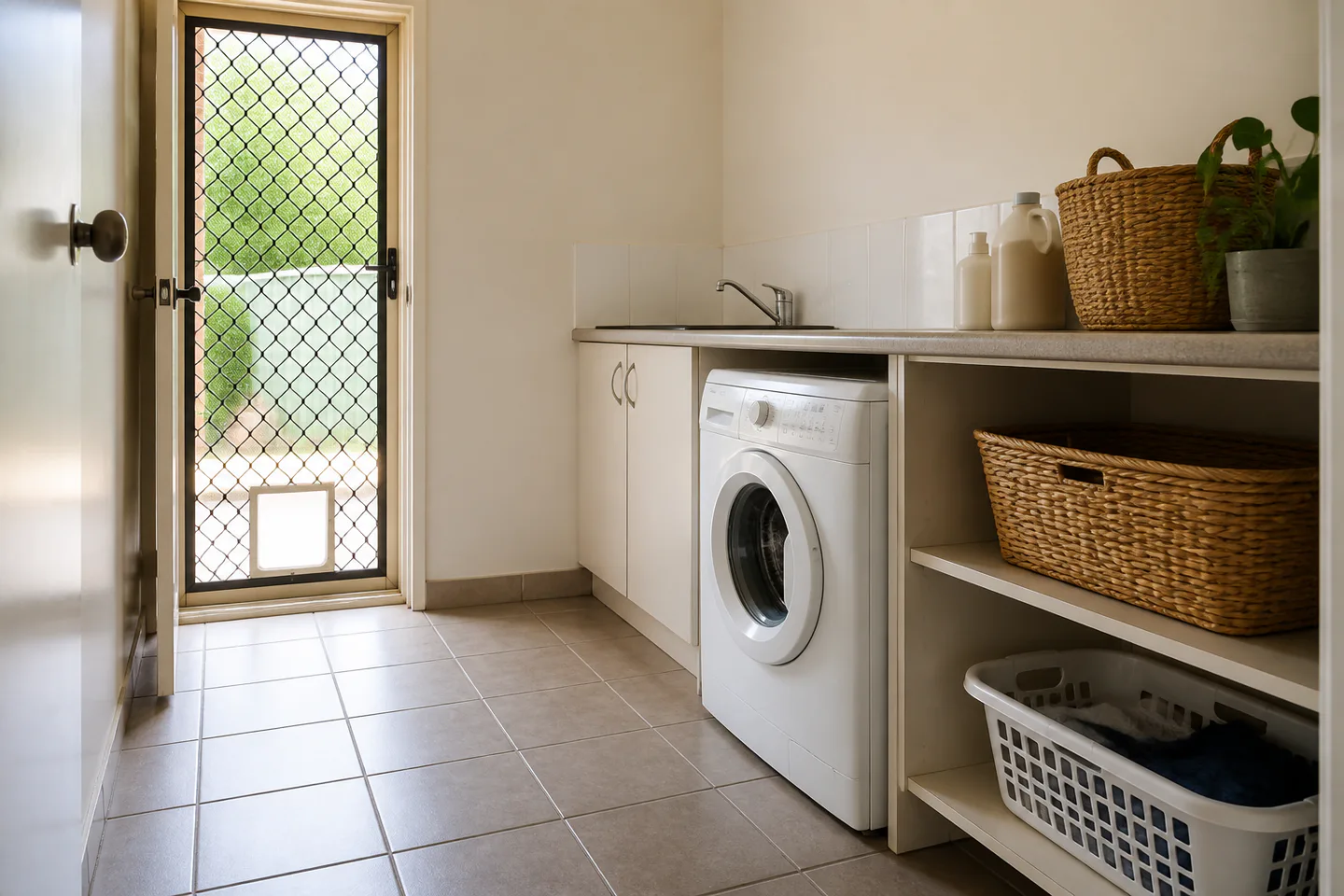
A laundry can look short of storage when the real problem is the route through it. A basket sits in front of the machine, wet clothes wait for the only airer and detergent gathers on the tub because the cupboard is awkward to reach.
Watch one load move from bedrooms to machine, drying space and wardrobe before buying anything. That short exercise shows whether the room needs a hamper, a drying solution, safer cleaning product storage or simply less clutter.
The aim is not to fill every gap. It is to remove the points of friction while keeping appliances, plumbing, doors and walkways accessible. In a compact laundry, clear floor space often earns its place more convincingly than another organiser.
Start with the bottleneck
Different problems call for different storage. If dirty clothes collect in several rooms, review the hamper system. If wet washing has nowhere to go, protect drying space before adding shelves. If detergent and sprays have taken over the tub, group them and measure the bottles before choosing a caddy or cupboard insert.
A narrow trolley can be useful beside a machine, but only if it rolls out past the skirting, hoses and door. A larger hamper may hold more, but not if it is unpleasant to carry through the hallway. Name the problem in one sentence before comparing products.
Match the storage to the job
Collecting and sorting
One carry basket may be enough for a household that sorts at the machine. Families that already separate towels, uniforms or workwear may benefit from a divided hamper. Capacity matters, but so do handle comfort, ventilation and a permanent parking spot. The laundry basket guide helps test those choices against the route a full load actually follows.
Drying
Measure an airer fully open and folded. It needs enough room to stay open until the load is dry without blocking a door, appliance or main walkway. Indoor drying also needs useful airflow and a sensible surface beneath anything likely to drip.
Cleaning supplies
Remove empty or duplicate products, then group what remains by use. Keep chemicals in their original containers, follow the label and store them securely away from children and pets. A portable caddy suits supplies carried between rooms; a stable cupboard or shelf may suit products that stay in the laundry.
Small rooms and rentals
Freestanding shelves, portable racks and compact baskets are usually easier to adapt than fixed systems. Renters should check their agreement before drilling, and should not assume an adhesive product will leave paint, tiles or cabinetry unmarked.
Measure the room in working mode
Open the room door, appliance doors, top loader lid and cupboards. Put the usual basket where it lands. A measurement taken from an empty wall is of little use if the proposed shelf occupies the space needed to unload the machine.
Around the washing machine and dryer
- appliance width, depth and height
- the space needed behind the appliance for hoses, taps and connections
- full lid or door clearance
- access to filters, vents, power points and controls
- the space needed to clean, maintain or move the appliance
- any movement during the spin cycle
Top loaders need usable space above the machine; front loaders need it in front. Dryer placement, ventilation and stacking requirements vary, so follow the manufacturer's instructions rather than building storage tightly around the appliance.
The dedicated guide to Australian laundry dimensions guide covers side gaps, doors, hoses, filters and ventilation in more detail.
At the tub and under the sink
- internal cabinet width, depth and height
- the position of pipes, hoses, hinges and shut-off points
- the clear opening once the doors are open
- bottle height and the space needed to lift items out
- signs of moisture, leaks or damaged cabinet material
Pipes divide the space into irregular pockets, so measure each usable section rather than relying on the cabinet's outside dimensions. Organisers should lift out easily and must not hide plumbing that needs inspection or access.
Across the floor and walls
- the clear walkway with every door open
- the route used to carry a full basket
- floor wastes, slopes, skirting and uneven surfaces
- wall material, tiles, services and fixing restrictions
- a comfortable reach height for everyday supplies
- the open and folded dimensions of any drying rack
For fixed shelves, rails or racks, confirm the wall type, the product's fixing and load requirements, and whether drilling is permitted. Store heavy bottles below shoulder height and avoid placing anything where a fall or spill would land on a person or appliance.
Choose pieces that still work when full
Laundry storage has to cope with lint, moisture, spills and hurried wash days. Smooth, wipeable surfaces and enough clearance to clean around a unit are often more valuable than intricate compartments.
Compare a product with the items it will hold. Record detergent bottle height, basket width, mop length, ironing-board size and the folded dimensions of the current airer. A shelf that fits the room but not the bottle is not a useful shelf.
Also count the steps a system adds. Decanting, relabelling or sorting into six categories may look orderly, but it will fail if nobody maintains it. The best test is simple: can an item be returned with one hand while the other holds a basket?
Know when another organiser will not help
Empty bottles, duplicate cleaners, broken baskets and unused racks can make a storage shortage appear larger than it is. Move linen overflow, pet supplies and household items that do not support the laundry routine. Then reassess the space.
Watch for solutions that create a second problem: a shelf that prevents the machine lid opening, a hamper that blocks the doorway, a trolley that cannot roll out, an airer with no folded home, or a wall rack installed without checking the wall and tenancy conditions.
If clean clothes are living in baskets, the obstacle may be folding or putting away rather than storage for dirty washing. If the airer is always full, more cupboard capacity will not shorten the drying queue. Fix the stage that is actually failing.
Take this final list shopping
- the exact routine problem the product will solve
- usable width, depth and height with doors and appliances open
- access to taps, hoses, filters, vents, power points and plumbing
- the product's dimensions when open, loaded and stored
- basket routes, walkway clearance and comfortable reach heights
- the size and weight of the items it will hold
- materials suited to the room's moisture and cleaning needs
- secure storage for chemicals, following their labels
- fixing, load and tenancy requirements for anything mounted
- a clear reason the existing setup cannot be rearranged instead
The useful result is not a laundry that looks full of coordinated storage. It is a room where a basket can pass, every appliance opens properly and the next load has an obvious place to go.
Common Questions
How do you organise laundry storage around the washing routine?
Follow a full load from collection and sorting through washing, drying and folding, then fix the point where items repeatedly stop. Keep daily products near their task, give baskets and airers parking places and move bulk supplies away from the working zone. Storage should shorten the route rather than merely hide its unfinished stages.
What should I measure before adding laundry storage?
Measure the installed appliances, open doors or lids, hoses, taps, power access, tub plumbing and the route used by a full basket. Record floor space with the room working, not empty. For shelves or trolleys, include loaded dimensions, handles and the clearance needed to remove items without moving the machine.
Can you put storage above a washing machine or dryer?
Only use the area after checking the appliance instructions, service access, controls and the reach needed to lift stored items safely. Storage must not rely on the appliance top or block ventilation, connections or maintenance. A high shelf that encourages heavy bulk products overhead may be less useful than a smaller accessible zone elsewhere.