
Pet essentials become obvious through care tasks: where the animal eats, sleeps, toilets, plays and travels for veterinary care. A long generic shopping list can obscure those basics and fill the home with products for routines that never develop.
Plan for the species, individual animal, life stage and advice from the animal's veterinarian. Then follow an ordinary day through the home: where water splashes, where the animal rests, which door wet paws use and which rooms need a boundary. Buy for the next recurring need and let experience shape the rest.
Build the list around five care tasks
Most first setups need a practical answer for:
- Appropriate food, fresh water and stable bowls.
- A comfortable place to rest.
- Toileting and everyday clean-up.
- Safe, suitable activity and enrichment.
- Transport for veterinary care and other necessary trips.
Species-specific needs quickly extend this list: a cat may need litter trays and scratching surfaces; a dog may need walking equipment; a bird, rabbit or other animal needs an appropriate enclosure and care plan. General household advice cannot replace veterinary or species-specific guidance.
Map a few clear pet zones through the home
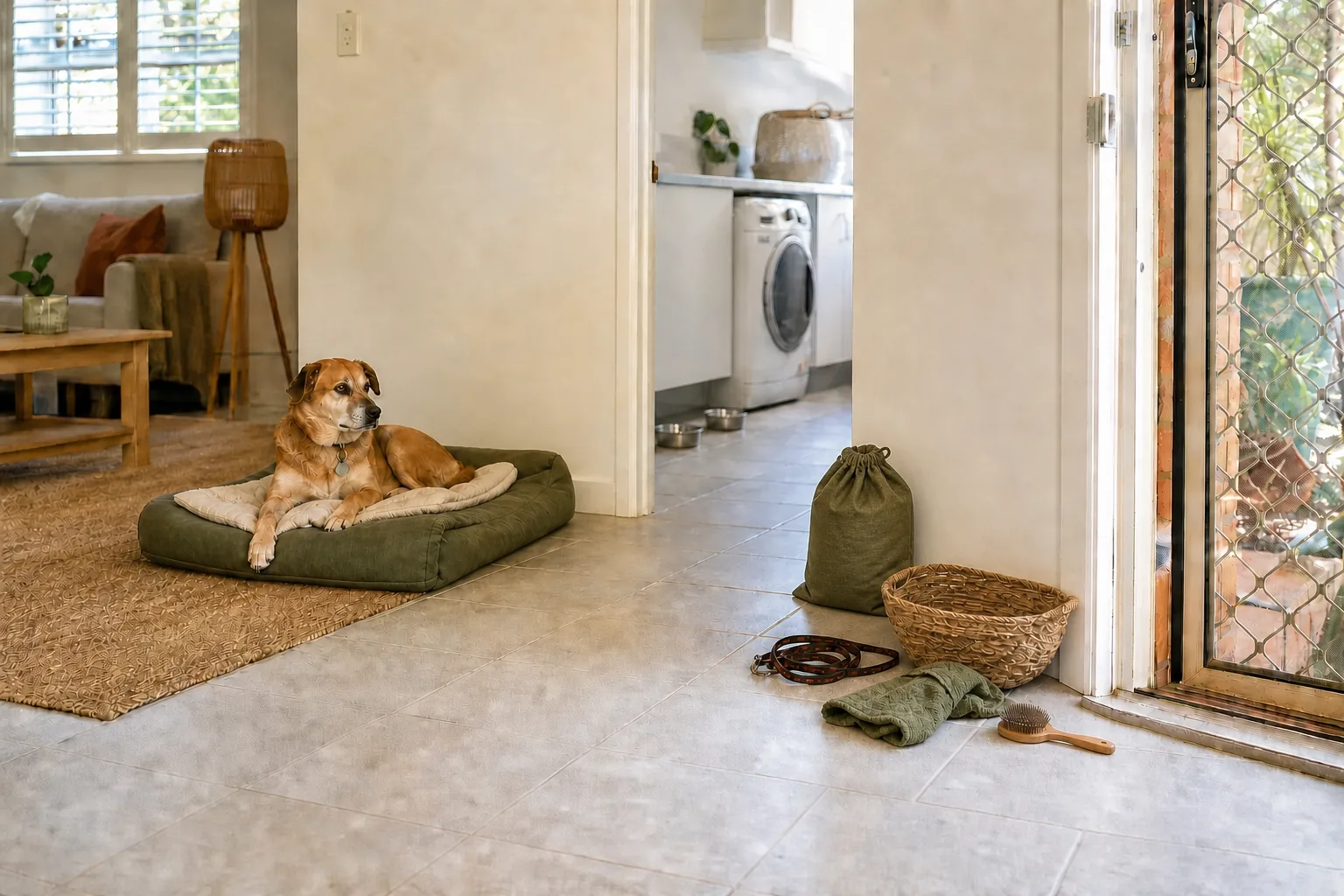
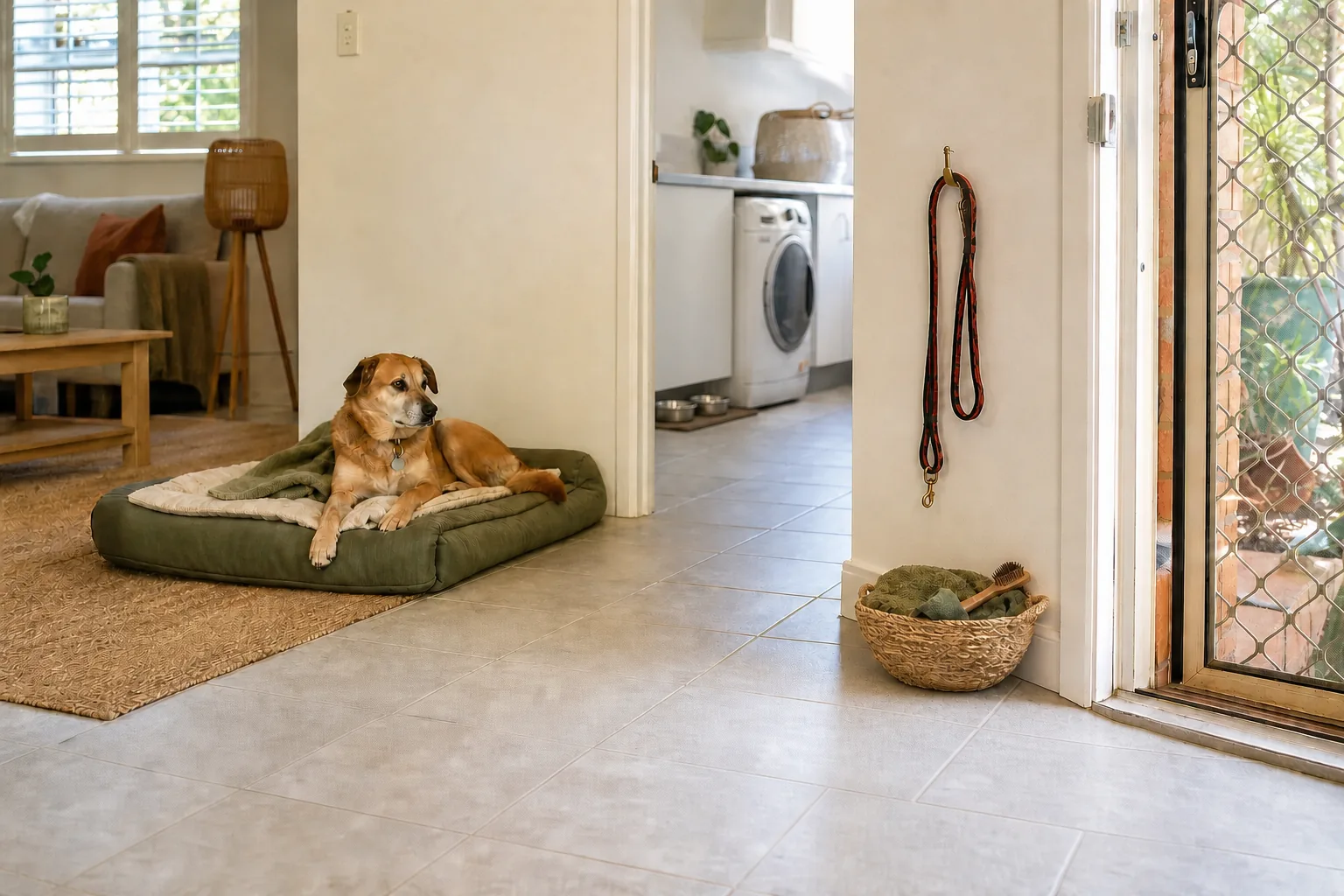
A useful setup follows the animal's existing routes instead of scattering supplies across several cupboards. The feeding area needs bowls and a cleanable floor; the resting area needs quiet and enough space; the main entrance may need a towel and a place for a lead; litter and toileting areas need reliable access and a realistic route to clean-up.
Put ordinary tools at their point of use, but keep medicines, treatments and cleaning chemicals stored as their labels require. A small basket or hook can support a routine without becoming a reason to buy furniture for every pet zone.
Make feeding stable, cleanable and easy to repeat
Choose bowls for the animal and the food routine, then place them where the animal can eat without sitting in a busy thoroughfare. A washable mat can contain crumbs and water if it is large enough to catch the usual spill and easy to lift for cleaning.
Food storage must follow the packaging directions. Heat, moisture and pests can make a convenient outdoor or garage position unsuitable. Keep the original information available if food is placed inside another container. The pet feeding station guide covers bowls and flooring, while the pet food storage guide examines dry food, wet food, treats and decanting.
Choose one bed for the animal in front of you
A bed should suit the animal's sleeping position, size, mobility and the floor beneath it. Washability becomes important quickly: removable covers, forgiving fabric and a stable base often matter more than decorative shape.
Older, recovering or very young animals may have particular comfort and access needs to discuss with a veterinarian. The dog bed guide helps compare dimensions, filling, cover care and room placement.
Prepare for the mess that is most likely
Toileting accidents, fur, litter, wet paws and food spills need different responses. Start with washable cloths or towels, waste bags or litter tools appropriate to the animal, and a cleaning product suited to the surface and type of mess.
Follow product labels, keep cleaning chemicals and medicines out of reach and avoid using products around an animal unless they are suitable for that use. The pet cleaning supplies guide separates daily fur, mud, bedding and odour tasks.
Protect the surfaces that repeatedly take wear rather than covering the whole home. A feeding mat should lift so the floor beneath can be checked, a washable throw can cover the part of the sofa the animal actually uses, and a towel kept at the usual entrance can stop wet paws before they cross the room. Check that mats and runners remain flat, dry and suitable for the surface.
Keep grooming basics genuinely basic
A brush or comb suited to the coat, nail-care arrangements and any species-specific grooming supplies may be enough. The right choice depends on coat, skin, age, temperament and health; ask a veterinarian or appropriate groomer when the task or tool is uncertain.
Store sharp grooming tools and treatments securely. A small caddy can group routine items, but it should not become a substitute for checking expiry dates, labels or whether an item is still appropriate.
Plan the next real trip before buying travel accessories
Every pet needs a safe, practical way to reach veterinary care. The exact carrier, restraint or enclosure depends on the species, animal and vehicle. Check fit, ventilation, access, product instructions and applicable road rules rather than assuming a general travel product suits every situation.
Keep a towel, waste supplies and any necessary documents ready for the trip. The pet travel guide covers car journeys, carriers, restraints and clean-up.
Add walking and outdoor gear only where it applies
Dogs may need a correctly fitted collar or harness, identification, lead and waste bags. Other animals have different containment and outdoor needs. Fit and suitability matter more than colour or matching sets, and an animal should not be left with equipment that creates a snag or entanglement risk.
Store departure gear near the door without narrowing the exit. A hook and a small drawer may be enough; duplicate leads and travel bowls do not all need prime space.
Use barriers as a management tool, not a guess
A gate can protect a room or separate an animal temporarily, but it must suit the opening, mounting method and animal's size and behaviour. Check climb, jump and push risks as well as the route people need through the doorway. The pet gates and barriers guide covers those measurements.
Give enrichment a small rotation
Toys, scratching surfaces, chew items, foraging activities and training can support natural behaviour when they suit the individual animal. A small rotation is easier to inspect and clean than a deep basket of forgotten products.
Remove damaged items when loose pieces, sharp edges or exposed filling make them unsuitable. Supervise or use products as directed and seek professional advice for persistent behaviour or safety concerns rather than buying repeated variations of the same toy.
Keep daily supplies at their point of use
Leads belong near the exit, feeding tools near the food and cleaning towels near the door where wet paws arrive. Medicines, treatments and chemicals need controlled storage according to their instructions. One large “pet cupboard” is not efficient if care happens across the house.
Walk the route with the item in hand. A towel belongs within reach before the door opens, a scoop needs a hygienic place near the food and a litter tool needs a return point that is not a food-preparation surface. If the storage position creates a second trip every time, the item will drift back into the room.
Let rental gear move without damaging the home
Washable rugs, freestanding storage and removable protection can help in a rental, but “removable” products may still mark a surface. Check the lease and product instructions before fixing gates, hooks or wall storage. The rental-friendly pet setup guide covers floors, doors, odour and inspections.
Before adding another pet essential
- Name the recurring care task it supports.
- Check that it suits the species, individual animal and life stage.
- Decide where it will be used, cleaned and stored.
- Follow veterinary advice, product labels and applicable rules.
- Remove an unsuitable or duplicate item before expanding the collection.
A shorter list is easier to clean, inspect and maintain. Start with feeding, rest, toileting, clean-up and necessary travel, then let the animal's real routine—not a generic checklist—show what the home needs next.
Common Questions
What are the basic pet essentials for a home?
Build a short list around feeding, rest, cleaning, enrichment and the next real trip outside the home. That usually means suitable bowls and food storage, one practical bed, a small cleaning setup and a modest activity rotation. Add walking, travel or barrier gear only where the animal and routine require it.
How can you avoid buying too much pet gear?
Follow an ordinary week and name the repeated problem before choosing a product. Keep daily supplies near their point of use, rotate rather than accumulate enrichment items and plan for the next actual trip instead of every possible outing. If an item has no clear routine or return point, wait.
What pet products work well in a rental home?
Prioritise washable, movable pieces that protect the surfaces and can move to the next property. Check the agreement before fixing anything, test contact points and do not assume removable products are damage-free. Feeding mats, portable bedding and freestanding storage work best when they are easy to lift for cleaning and inspections.