
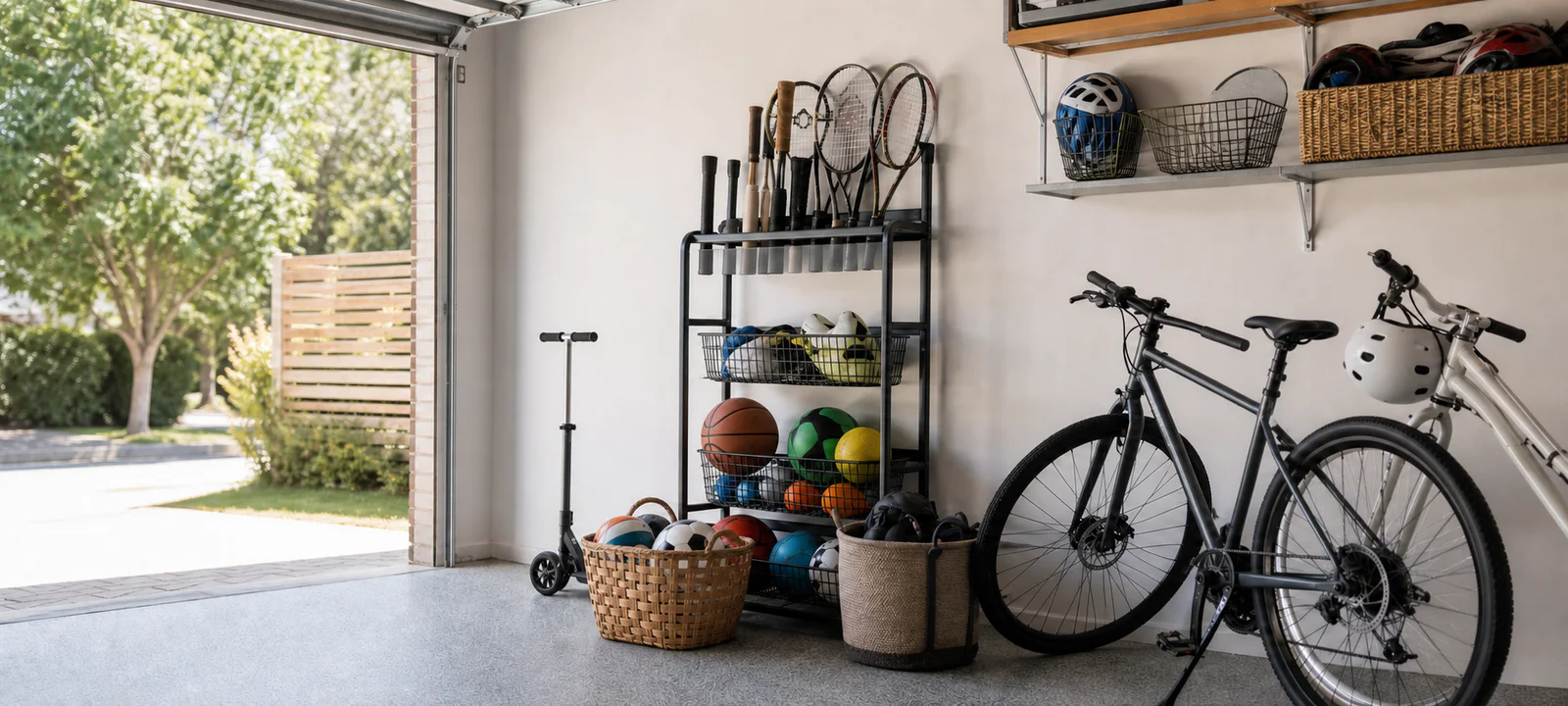
Sports gear is most likely to be dropped in the first clear space after training. If the rack is across the garage or the ball bin is too high for a child, the walkway becomes the storage system instead.
Follow the gear from the car or front door. Separate items that arrive wet or dirty, keep helmets and paired protective equipment visible, and give frequently used balls, racquets and bags a return point near that route.
Hooks, racks and bins should be sized for the gear and the person putting it away. The best setup is not the one that holds the most; it is the one the household can reset without blocking the car or internal door.
Follow the return path
Watch what happens after training or a weekend game. Note where bags are opened, muddy shoes come off, drink bottles are removed and uniforms head to the laundry. The storage zone should sit close to this natural hand-off without occupying the path itself.
The main garage storage guide helps map the car door and walking zones before a drop point is assigned.
Edit the team before buying the bench
Group equipment by sport and frequency, then remove items that are outgrown, broken or no longer used. Damaged protective equipment should not be kept merely because a new bin has room for it; assess it according to the manufacturer's guidance and dispose of it appropriately.
Keep current weekly gear in the easiest positions. Occasional beach games or seasonal equipment can sit higher or further back, while shared balls and pumps need a clear common home.
Separate dry storage from the drying stage
Muddy shoes, damp towels, sweaty pads and wet bags are not ready for a closed tub. Give them a washable landing surface and enough airflow to dry before they join clean gear. Shake out sand and grass where it can be cleaned up easily.
Open or ventilated storage can help suitable light gear air, but it also exposes contents to garage dust and pests. Choose the position according to both the state of the gear and the garage conditions.
Design for the person returning it
A child's ball bin should have an opening and height they can use independently. An adult's golf bag or board may need more controlled handling. Put everyday items between comfortable reaching heights and keep heavy equipment low.
Easy return matters as much as easy retrieval. If a lid, latch or high hook adds a step that people routinely skip, the floor will keep winning.
Measure the loaded system
- largest ball, bag, helmet, racquet or board
- bin opening and the reach to its bottom
- rack footprint or wall projection with gear loaded
- clearance from car doors, walkways and the internal door
- space needed to lift items on and off hooks
- the loaded weight and the product's rated load
A wall rack may look shallow when empty and project much further once bags, bats or boards are attached. Mark that finished depth on the floor before installing it.
Give awkward equipment its own decision
Bikes, scooters, skateboards, surfboards and golf bags rarely work well inside a general sports bin. Measure their length, width, turning path and handling weight, then decide whether a floor stand, dedicated zone or wall system is realistic.
Wall storage is only useful when the user can lift the item and the loaded rack stays outside the vehicle and walking zones. Check the wall construction, fixings and load instructions; the garage wall storage guide covers those checks in detail.
Keep protective sets together
Pair helmets, pads, guards and sport-specific accessories so one missing item is obvious before departure. A shallow tray or labelled open basket is often more useful than a deep mixed tub.
Small accessories—pumps, goggles, tape, mouthguards and spare laces—need their own contained place close to the matching gear. The category should be specific enough to find an item without emptying the whole sports zone.
Choose storage by the return action
Open bin
Suits light balls and everyday gear that need a quick drop. Check stability, reach and cleaning access.
Lidded tub
Useful for clean, dry seasonal gear. Keep a front-facing label and avoid making the loaded tub too heavy.
Hook or rail
Suits selected light items when the wall, fixing, load and projection are all appropriate.
Floor stand
Can make bikes, scooters or boards easier to return, provided the footprint stays outside the traffic zone.
Spot a system nobody will reset
- daily gear is stored at the back of the garage
- children cannot reach or return their own equipment
- damp items are sealed before they dry
- small accessories disappear beneath balls and bags
- loaded racks protrude into a car door or walking zone
- wall storage ignores construction or load ratings
- broken and outgrown gear occupies the new capacity
Sports gear storage types to compare
Compare storage against the gear's size, condition and return route. These options suit ordinary light sports equipment; bikes, boards, heavy bags and protective items may need separate product, wall and manufacturer checks.
Open floor bins
- May help with
- Balls and light everyday gear that several household members need to return quickly.
- Measure first
- The largest ball or item, bin opening and the floor area outside car doors and walking routes.
- Check before buying
- Whether users can reach the bottom and whether the bin can be emptied and cleaned after dirty gear.
- Avoid if
- Wet equipment will be trapped, small accessories will disappear underneath or the bin will block access.
Ventilated baskets or mesh bags
- May help with
- A limited group of light gear that may return damp and needs to remain visible.
- Measure first
- The full bag or basket dimensions and the space needed around it for air movement.
- Check before buying
- Loaded weight, handle strength and where sand, grass or drips will collect.
- Avoid if
- The gear is heavy, sharp or likely to damage the mesh, or the storage position has poor airflow.
Freestanding ball racks
- May help with
- Separating several regularly used balls without a deep mixed bin.
- Measure first
- Ball diameters, rack footprint and clearance needed to remove a ball from each level.
- Check before buying
- Stability on the intended floor and whether the rack protrudes into the vehicle or walking zone.
- Avoid if
- The household owns only a few balls or the rack creates more floor obstruction than an existing basket.
Small accessory trays
- May help with
- Pairing pumps, guards, goggles, tape or other small items with one sport or routine.
- Measure first
- The grouped items, tray dimensions and the shelf height available above them.
- Check before buying
- Whether the tray has one clear label and can be carried to the packing area.
- Avoid if
- It will mix accessories from several sports or be placed where children cannot return their own gear.
Make the easy action the right action
- place the zone near the natural return path but outside the walkway
- remove damaged, outgrown and unused gear
- air wet or dirty equipment before enclosed storage
- measure bins, racks and hooks with the gear loaded
- keep each sport's protective items and accessories together
- make the system usable by the person who returns the gear
When putting a ball or helmet away is simpler than dropping it beside the car, the storage system has a fair chance of surviving the season.
Common Questions
How should balls, racquets and helmets be stored in a garage?
Give each awkward category a return action that suits the person using it. Open bins can catch balls, hooks or rails may suit racquets, and protective sets should stay together. Measure everything loaded, keep the walkway clear and place children's equipment at a height they can safely reset.
What should I do with wet sports gear before storing it?
Separate the drying stage from dry storage. Give damp shoes, pads, towels and uniforms enough airflow in an appropriate place before they enter a tub or closed cupboard. Packing wet equipment with clean gear creates odour and a harder reset. The return path should make drying the easiest first action.
How can I make sports storage easy for children to use?
Design from the child's height, strength and normal route home. Use obvious categories, manageable containers and simple one-step returns instead of high hooks or heavy lids. Keep protective sets together and test the system after a real activity. If an adult must finish every return, the storage is not truly shared.