
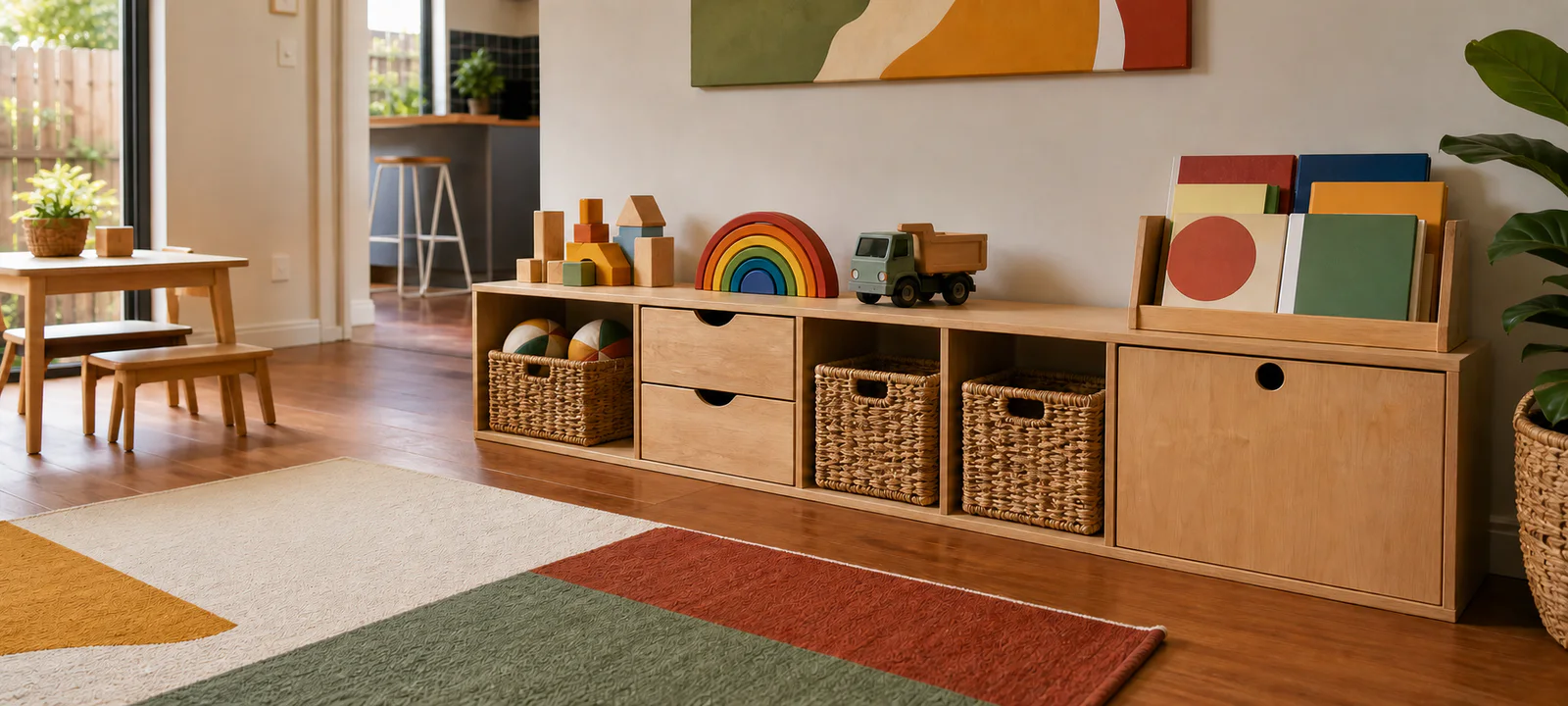
Children’s storage changes faster than most household storage. Baby toys give way to building pieces, dress-ups, craft supplies, school bags and half-finished projects, while the available room often stays exactly the same.
Start with the activities happening now. Give the most-used groups shallow, obvious homes near where they are used, keep a clear play surface and move outgrown or inactive items elsewhere. The system should be simple enough for the child and adults to reset together.
Start With Activities, Not Storage Products
Watch what comes out during an ordinary week. A child may build on the rug, draw at the dining table, read in bed and drop a school bag near the entry. One large toy box will not support all of those routines equally well.
Group the active items into a short list such as:
- books and quiet activities
- building pieces and small-world play
- soft toys and dress-ups
- drawing and craft supplies
- puzzles and board games
- school, sport or activity bags
Items that are outgrown, broken, incomplete or rarely chosen should not occupy the easiest positions. Sort them before deciding how many tubs, baskets or shelves are needed.
Keep a Usable Play Surface
Floor space, a small table or part of a desk is often more valuable than another storage unit. Mark the area needed to spread out a puzzle, railway, drawing pad or game, then keep storage outside that footprint and away from doors and main walkways.
In a shared bedroom or living room, decide what can remain set up overnight and what needs to pack away. A tray for an active project can preserve progress without surrendering the whole surface.
Match the Container to the Item
Deep tubs hide small pieces and become difficult to sort. Shallow trays can suit building pieces or drawing supplies, upright files can hold paper, and front-facing shelves can make a small rotation of books easier to see.
| Item group | Useful home | Check first |
|---|---|---|
| Large toys and dress-ups | open basket or low tub | handles, edges and realistic capacity |
| Small pieces | shallow divided tray | age suitability and secure storage where needed |
| Books | low shelf or short book basket | stability and how many books remain visible |
| Craft supplies | portable caddy or drawers | which items require adult-controlled access |
| School gear | hook, basket or landing zone | clearance near doors and the child’s reach |
Use Labels Children Can Understand
A word label may work for an older child, while a simple picture or colour can make more sense earlier. Keep categories broad enough that returning an item does not require a long decision. “Building”, “drawing” and “dress-ups” are usually easier to maintain than many tiny categories.
Labels are most useful when they face the person resetting the room. Test the system after a normal play session; if one container is always overflowing, reduce the group or give it a more suitable home.
Plan for Clothing, School and Growing Interests
A Nursery & Kids space should not remain organised only for baby routines. Leave one flexible zone for the next stage: current-size clothing, library books, a school bag, sports gear or a developing hobby. Avoid filling every wall with fixed storage for today’s toys.
Review next-size clothes and keepsakes separately from daily items. The things adults are storing for later do not need to take the child’s easiest shelves and drawers.
Check Furniture Stability and Anchoring
Children may pull on shelves or use drawers as steps. Before buying or rearranging freestanding furniture, read the warning labels and assembly instructions, plan how it will be secured and keep heavy items low.
The ACCC Product Safety toppling furniture guide explains current Australian advice on stable placement, warning information and anchoring. Renters should discuss suitable anchoring with their landlord or agent rather than assuming a tall unit can safely remain unsecured.
Make the Reset Possible for the Household
Low storage can support independence only when the item is appropriate for unsupervised access. Materials, tools or small parts that need adult control should have a separate, clearly managed home. Follow age guidance and product instructions rather than relying on the height of a shelf as the only safeguard.
Before buying more toy storage, check:
- which activities happened during the last week
- what can leave the room or rotate out
- where play needs clear floor or table space
- whether the child can see and return the everyday items
- whether shelves and drawers are stable and secured as required
- which supplies need adult-controlled access
- whether the setup can change for school, clothing and new interests
Fewer Active Groups Make Resetting Easier
A useful kids’ zone does not display or contain everything the child owns. It keeps current activities easy to begin, makes pack-up understandable and preserves enough room to play.
Sort first, protect the play surface, choose containers that suit the real items and leave capacity for the next stage. That approach will usually last longer than buying a matching set of organisers for a short-lived phase.
Common Questions
How do you organise toys in a small play area?
Start with the activities children currently choose, then group books, building pieces, dress-ups, craft supplies and school gear into a few broad homes. Keep the main play surface and walkways clear, and move outgrown, broken or rarely used items away before buying more storage.
What type of toy storage is easiest for children to use?
Match the container to the item: shallow trays help small pieces stay visible, open baskets suit larger toys and low shelves can keep a small book rotation easy to reach. Use stable furniture as instructed and keep any items needing adult control in a separate, secure position.
How can children help reset a play zone?
Use a small number of broad categories with labels the child understands, such as pictures, colours or simple words. Place the return points near the activities and within a suitable reach. If one container constantly overflows, reduce the active group or give it a more practical home.