
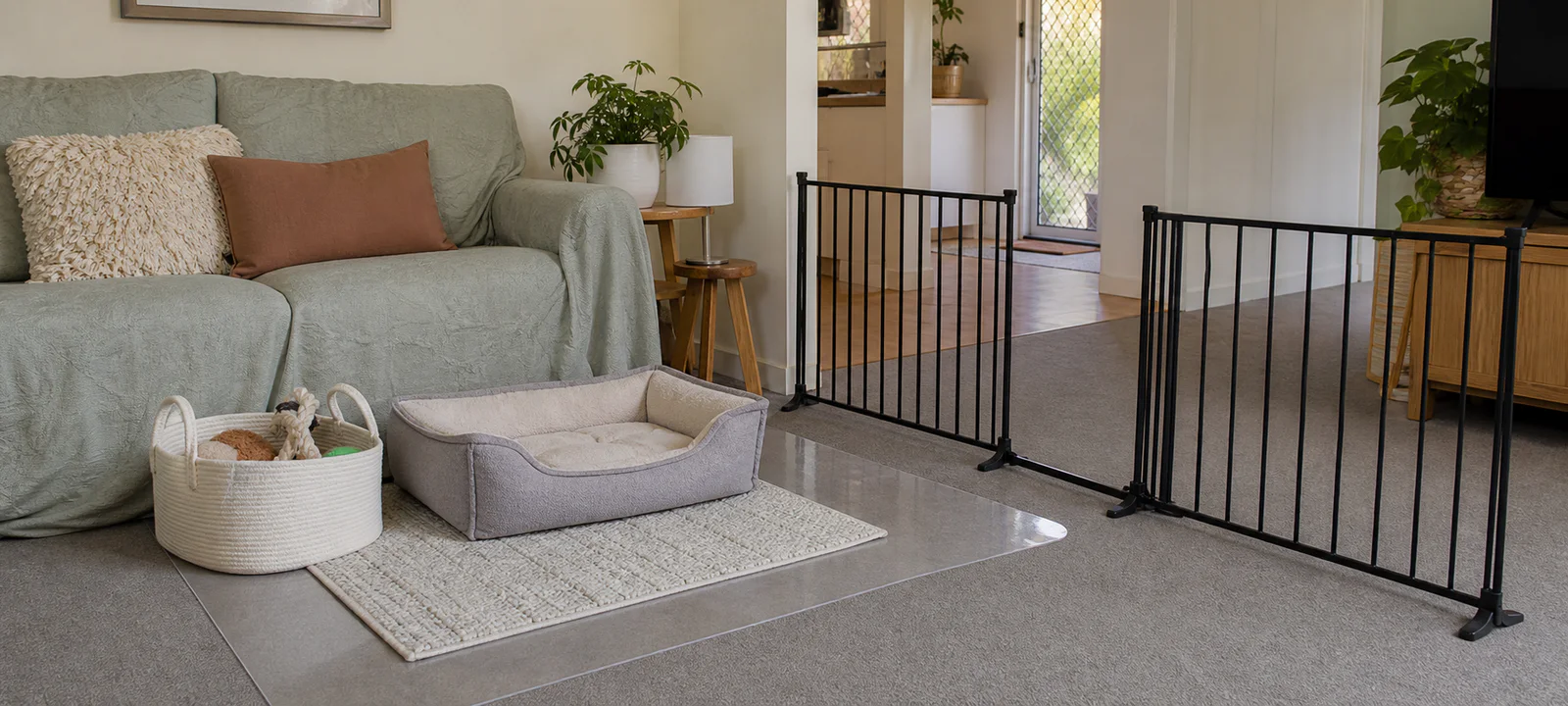
Pet protection works best when it follows the animal's route through the rental. Water lands beside one bowl, muddy paws enter through one door and scratching happens at one corner. A house full of generic covers can miss all three.
Read the lease, pet agreement, condition report and relevant property rules before changing anything. Then use washable, movable protection suited to the surface. The setup should reveal moisture and wear, move easily for cleaning and leave without damage when the tenancy ends.
Record the rules and starting condition
Approval processes and responsibilities vary by location and property. Check the current agreement and ask the property manager, owner or body corporate where a change may require permission. Keep any appropriate written approval with the product and installation details.
Photograph existing scratches, stains, worn paint and damaged flooring before placing mats or furniture over them. This guide is general household planning, not legal advice; seek local tenancy advice if rights or obligations are unclear.
Map the high-risk route
Follow the pet from the entry to the bowl, bed, favourite furniture and toileting area. Focus first on the points where mess or wear actually repeats.
| Risk point | Possible issue | Practical response |
|---|---|---|
| Main entry | mud, water and scratching at the door | washable mat and towel within reach |
| Feeding area | spills, crumbs and pests | liftable mat and protected food storage |
| Sleeping area | hair, odour and trapped moisture | washable bedding with floor checks beneath |
| Furniture corner | scratching, chewing or rubbing | appropriate alternative placed at the behaviour |
| Litter or toilet zone | tracking, odour and floor marks | accessible tray, washable mat and cleaning route |
Protect floors without sealing in moisture
Check the flooring and mat manufacturers' directions. Rubber, foam, fabric and adhesive backings can behave differently on timber, laminate, vinyl, tile and carpet. Colour transfer, trapped water and grit beneath a mat may cause the damage the mat was meant to prevent.
Choose pieces that lift easily and check underneath them regularly. Dry spills promptly, sweep out trapped grit and avoid a permanent stack of layers around beds or bowls. For shared-room layout ideas, see the pet essentials guide.
Make the feeding zone easy to lift
Put bowls where the pet can eat comfortably without blocking the household route. The mat should contain ordinary mess, wash and dry readily, and expose the floor when lifted.
Store food according to its packaging and keep the identifying information. Avoid a heavy bin that scratches the floor or cannot move for inspections. The pet food storage guide covers containers, pests and the route from bag to bowl.
Choose bedding for washing and moving
A removable cover, manageable size and realistic drying time matter more than a decorative shape. Check whether the bed fits the household's laundry setup, whether its base marks the floor and whether moisture or hair builds underneath.
One washable spare cover may help more than a second bulky bed. The whole setup should move easily for vacuuming, inspection and a future home.
Put scratching and chewing alternatives at the problem
A scratching post across the room will not protect the corner the cat already uses. A chew toy hidden in a basket does little for a puppy focused on a skirting board. Place a suitable, stable alternative where the behaviour occurs and supervise or manage access as appropriate.
Check that the product suits the animal's size and behaviour and does not slide or mark the floor. Persistent or concerning behaviour deserves advice from a veterinarian or appropriately qualified behaviour professional, not an escalating collection of barriers.
Measure removable gates at every contact point
Pressure-mounted gates can mark weak paint or frames, while hardware-mounted gates alter the property. Measure the opening at the top and bottom, inspect the contact surfaces and check whether the model suits the animal and the location.
A gate must not introduce a trip or stair hazard or obstruct the normal household exit. Follow the product instructions and obtain permission where required. “Renter-friendly” marketing is not proof that every frame can take the pressure.
Before choosing a model, use the pet gates and barriers guide to check width range, mounting limits, stair position and the animal's behaviour at the boundary.
Stop mud before it reaches carpet
Keep a washable mat and dry towel at the entrance the pet uses. Leave enough room to pause without blocking the door, and send wet towels directly to a place where they can dry or be washed.
The pet cleaning supplies guide helps match tools to hair, mud, water and litter without building a cupboard of duplicate products.
Treat odour as a routine signal
Wash bedding, clean bowls, remove waste promptly, dry towels and air rooms safely. Fragrance can mask odour without addressing its source and must still be used according to the label around animals.
New or persistent odour, toileting or skin changes may warrant veterinary advice. Inspection preparation should be the ordinary routine working well, not a last-minute layer of scented products.
Keep cleaning supplies close but controlled
Non-chemical tools—a towel, hair brush, dustpan or washable cloth—can live near the mess. Cleaning products should remain in original labelled containers, stored according to their directions and inaccessible to pets and children.
Return products to secure storage after use and keep them away from food, bowls, bedding and toys. If an animal may have been exposed or becomes unwell, contact a veterinarian or appropriate emergency service and keep the label available.
Keep litter areas visible enough to clean
The cat must be able to reach the tray and the household must be able to scoop, sweep and inspect around it. A cabinet or screen that hides the tray but delays cleaning is a poor rental compromise.
Choose a mat that lifts without spreading litter, does not hold moisture against the floor and fits clear of doors. Keep the surrounding corners free of storage that traps dust.
Do not improvise balcony or courtyard security
Outdoor areas bring escape, fall, heat, shade, water, drainage, neighbour and property-rule considerations. Check the current rules and obtain any required permission before attaching screens, netting, hooks, fencing or enclosures.
The area must suit the animal and prevailing conditions; a portable product is not automatically secure or appropriate. Seek qualified or professional advice where the setup affects animal safety or the building.
Use simple furniture protection
A washable throw placed where the pet actually rests can be more useful than a fitted cover that slips, bunches or cannot be washed. Check for colour transfer, trapped moisture and any fastener that may mark the furniture.
Lift covers regularly to remove hair and inspect the surface. Protection should make the room easier to use, not turn every seat into a complicated pet-only zone.
Buy with the next inspection and move in mind
Large beds, crates, gates and food bins should move without damaging floors or requiring a specialist disassembly. Check hidden hair, dust and marks beneath them before inspection week.
Portable and modular pieces are useful only when they still fit the current pet and routine. For carriers, vet visits and car setup, use the pet travel guide.
Run a removal test before purchasing
- Does the agreement allow the setup or require permission?
- Is the existing condition recorded?
- Does the product suit the exact floor, wall or frame?
- Can moisture, hair and damage still be seen and cleaned?
- Will the pet use it safely and as intended?
- Can it move for an inspection without marking the property?
- Can it be washed, dried and packed for another home?
- Does it solve a repeated risk rather than a hypothetical one?
Make protection part of the ordinary routine
A rental pet setup works when floor checks, bowl cleaning, bedding washing and entry resets happen naturally. The products support those habits and remain easy to move.
If protection traps moisture, hides damage or depends on an unapproved alteration, it has shifted the risk rather than reduced it.
Coordinate Pet Gear With Rental Storage
Room-specific rental guides can help keep the pet setup within the wider household plan. See the renter-friendly kitchen guide, bathroom guide and laundry guide. Keep pet supplies separate from products covered in the cleaning product storage guide. For shared-room planning, browse Living Spaces.
Common Questions
How do you protect a rental home when living with a pet?
Start with the agreement and a record of the property's condition, then map the routes where mud, feeding spills, scratching or hair actually occur. Use washable, movable protection at those points and keep the ordinary cleaning routine simple enough to maintain between inspections rather than covering every surface with pet gear.
Are removable pet products always safe for rental surfaces?
No. Adhesive, pressure-mounted and other removable products can still mark paint, floors, trim or cabinetry. Check the agreement, surface and product instructions, test contact points where appropriate and avoid assuming a damage-free result. A freestanding or portable alternative may be easier to inspect, clean and move later.
What makes pet gear easier to manage before an inspection or move?
Choose bedding, feeding mats, barriers and storage that can be lifted, washed, dried and packed without dismantling the room. Keep supplies grouped by routine and run a removal test before buying bulky pieces. The best rental setup should protect daily use while remaining straightforward to clean and return to a neutral state.