
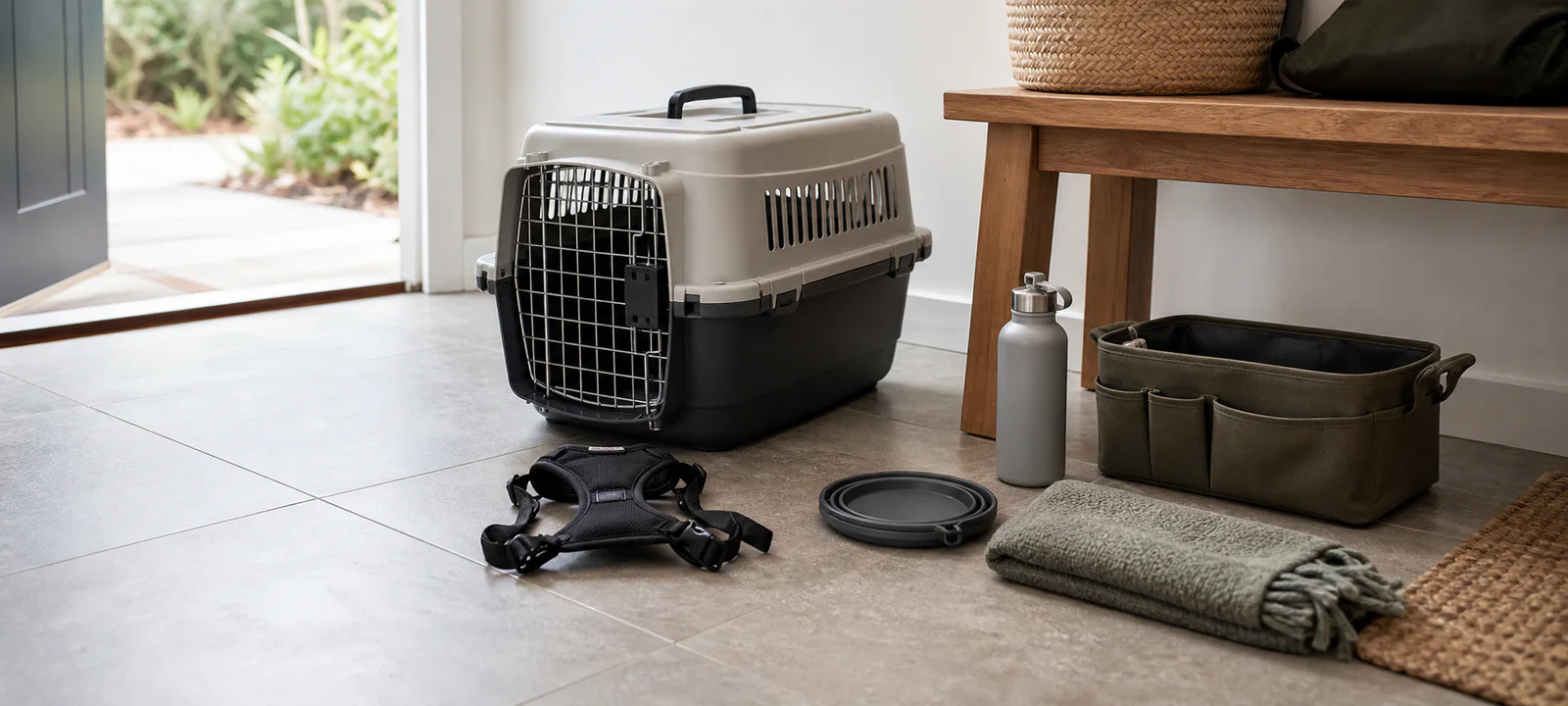
The trip that exposes a poor pet-travel setup is often an ordinary vet appointment. The carrier is awkward to lift, the restraint does not sit properly in the car and the towel needed for the journey is still in the wash.
Start with the journeys you actually make. Work out how the animal will be safely contained, measure the vehicle and keep a small kit ready for the messes and delays that happen in real life. Extra equipment is only useful if it fits, can be used correctly and is easy to reset.
Plan for the Next Real Trip
A dog driven to a local park needs a different setup from a cat that travels only to the vet. A puppy learning to tolerate short drives has different needs again. Write down the most common destination, journey time, passengers and the way the pet behaves before comparing products.
Include the unglamorous details: who lifts the carrier, where a wet lead goes, whether the animal becomes travel-sick and how much boot or back-seat space remains when people are in the car. This quickly separates essential gear from equipment bought for an unlikely weekend away.
Settle Restraint and Containment First
Australian rules for transporting animals vary between states and territories. Check the current road and animal-welfare rules where you live and travel. The RSPCA's Australian guidance on dogs in cars explains why restraint matters and directs owners to the relevant local authorities.
A carrier, crate, harness or restraint needs to suit the animal and be attached exactly as its manufacturer directs. Check the stated size and weight range, attachment points, ventilation and whether the pet can maintain a natural position. A walking harness is not automatically a vehicle restraint, and a cargo barrier may protect occupants without protecting the animal in a collision.
Product claims also need scrutiny. Australia does not have a formally recognised crash-test standard for dog car restraints or carriers, so look for clear information about how any claimed testing was performed rather than relying on words such as “safety tested”. No product removes every travel risk.
Measure the Car in Its Normal Configuration
Measure with the usual passengers, child restraints and luggage space accounted for. Record the back-seat width, boot width and depth, cargo height, door opening and the position of seat belts, headrests and approved attachment points. A crate that fits inside the boot may still be impossible to manoeuvre through the opening.
Fit matters beyond dimensions. Make sure the setup does not obstruct the driver, interfere with seat belts or require improvised attachments. Practise installing and removing it while the car is stationary. Equipment that takes too much effort to fit is less likely to be used properly on a rushed morning.
Choose a Carrier You Can Use Calmly
Cats and small pets commonly travel in a carrier. It should be secure, well ventilated, stable when carried and large enough for the animal to stand naturally, turn and lie down comfortably. Check the closure, handle and base with the animal's weight in mind, not just the carrier's empty weight.
A removable or wipeable base makes accidents easier to manage. An opening that allows the pet to be placed and removed without a struggle can also make vet visits calmer. Let the animal become familiar with the carrier at home rather than bringing it out only for stressful trips.
Build the Vet-Visit Kit Around the Animal
Keep the carrier or restraint, lead and any essential documents together. Add a towel or washable mat, waste bags, a cleaning cloth and water when the journey warrants it. Medication should travel only as directed by the treating vet, with any necessary instructions.
A familiar blanket or other appropriate comfort item may help some animals settle, but avoid filling the carrier with loose items that reduce space or ventilation. If travel causes marked anxiety, motion sickness, breathing difficulty or distress, ask a veterinarian for advice before the next journey rather than trying products at random.
Treat Heat as a Journey Risk, Not a Packing Problem
Never leave an animal unattended in a car or ute. Shade and partly open windows do not prevent a vehicle from becoming dangerously hot. Consider the forecast, time of day, destination and possible delays before leaving, and make sure the animal has adequate airflow while travelling.
Water equipment should be simple, leak-resistant and accepted by the pet. For a short local trip, that may be a bottle and collapsible bowl rather than a large travel system. Longer journeys need planned breaks suited to the animal's physical and behavioural needs. For everyday bowl placement, see Pet Feeding Station Ideas for Australian Homes.
Expect Mud, Hair and Wet Towels
Beach trips and wet walks turn seat covers, boot liners and towels into part of the cleaning routine. Choose items that can be removed without spreading sand through the car, and check that covers do not obstruct restraint points or seat belts.
A washable towel and simple mat may be more useful than a fitted system with seams that trap hair and moisture. Plan where wet items will dry as soon as you return; leaving them folded in the boot creates odour and can damage surfaces. Our pet cleaning supplies guide covers hair, mud and odour, while the laundry drying guide can help if towels and covers are hard to dry.
Adapt the Setup as the Pet Changes
Puppies benefit from short, calm practice trips and washable equipment that can adapt as they grow. Check fabric, clips and loose parts if chewing is likely. The New Puppy Essentials guide covers the wider first-week setup.
Older animals may need a non-slip surface, lower entry and more time to get in and out. Do not assume a ramp or step is automatically suitable: it must fit the vehicle, remain stable and be usable by that animal. Seek veterinary advice where pain, injury or mobility changes affect travel.
Multiple pets may need separate carriers or zones, particularly when one animal becomes anxious around another. Confirm that every restraint can be secured as intended and that the combined setup leaves adequate space and ventilation.
Keep a Small Kit Ready to Reset
A useful short-trip bag might hold waste bags, a towel, cleaning cloth, travel bowl and a spare lead or other species-appropriate item. Add health documents, medication or treats only where relevant. Main food storage and bulky cleaning supplies can stay at home; the pet food storage guide explains how to manage that part of the routine.
Give the carrier, covers and bag a defined home. Towels need to be dry before they are packed away, and a carrier should remain accessible before an urgent appointment. If space is limited, a washable mat that works in the carrier and at home may be more useful than several specialised pieces. For home resting and room separation, see our guides to choosing a dog bed and pet gates and barriers.
Renters and people using a shared, leased or work vehicle should also check for colour transfer, trapped moisture and marks from clips or non-slip backings. The rental-friendly pet setup guide covers the home side of that planning.
Travel options for the next real trip
First reduce loose cabin items, choose the safest available seating position and rehearse loading the pet while the car is parked. If restraint or seat protection is still needed, compare these harness and rear-seat hammock options against the vehicle manual, the pet's size and calm entry and exit.
Some links below are affiliate links. If you buy through one, we may earn a commission at no extra cost to you. Learn more.
Vehicle dog harness
EzyDog Drive Car Harness, Small
A padded vehicle harness with seat-belt webbing loops for owners who can confirm the exact dog fit and vehicle setup.
Research-supported option
View at Amazon AustraliaMay suit: small dogs whose measurements match the maker size chart.
May not suit: dogs outside the listed measurements or vehicles with incompatible belt geometry.
Drawbacks to consider:
- Correct sizing and adjustment are essential, and it may restrict movement more than a walking harness.
- Current dimensions, variant, price, stock and seller details should be rechecked before ordering.
Evidence confidence: moderate. Last reviewed 18 August 2026. Research-based assessment; we have not tested this product firsthand.
Rear-seat pet hammock
eDog Heavy Duty Waterproof Dog Car Hammock
A rear-seat cover with hammock panels intended to contain dirt and protect upholstery during routine pet travel.
Research-supported option
View at Amazon AustraliaMay suit: vehicles needing removable rear-seat dirt and claw protection.
May not suit: owners looking for a crash restraint or rigid carrier.
Drawbacks to consider:
- A seat cover is not a restraint and must not replace suitable occupant protection.
- Current dimensions, variant, price, stock and seller details should be rechecked before ordering.
Evidence confidence: moderate. Last reviewed 22 August 2026. Research-based assessment; we have not tested this product firsthand.
Check the Whole Setup Before Departure
- Confirm the restraint or carrier suits the animal and is installed as directed.
- Check current road and animal-welfare rules for every jurisdiction on the route.
- Make sure the setup does not obstruct the driver or interfere with passenger restraints.
- Plan for temperature, airflow, water and appropriate breaks.
- Carry only the cleaning, comfort and health items the journey is likely to need.
- Check that wet or dirty equipment can be removed, washed and dried afterwards.
Good travel gear makes the routine calmer without filling the car. Fit and test it before the day of travel, keep the short-trip kit small and revisit the setup when the animal, vehicle or journey changes.
Common Questions
What pet travel essentials should stay ready for short trips?
Start with suitable restraint or containment for the animal and trip, then keep a small resettable kit with water, a bowl, towel, waste supplies and familiar comfort items where appropriate. Add only what the next real journey, vet visit or short stay requires rather than packing for every possible trip.
What should you measure in the car before buying pet travel gear?
Measure the vehicle in its normal passenger and luggage configuration, including the seat, cargo area, door opening and route used to lift or place the carrier. Check whether the proposed setup leaves controls and people unobstructed, then follow the restraint, carrier and vehicle instructions for installation and use.
How should hot weather change a pet travel plan?
Treat heat as a journey-planning issue rather than something extra gear can solve. Review the weather, timing, stops and whether the trip should proceed, and follow the current animal-welfare guidance already cited in the article. Never rely on a product to make an unsuitable hot vehicle or journey safe.