
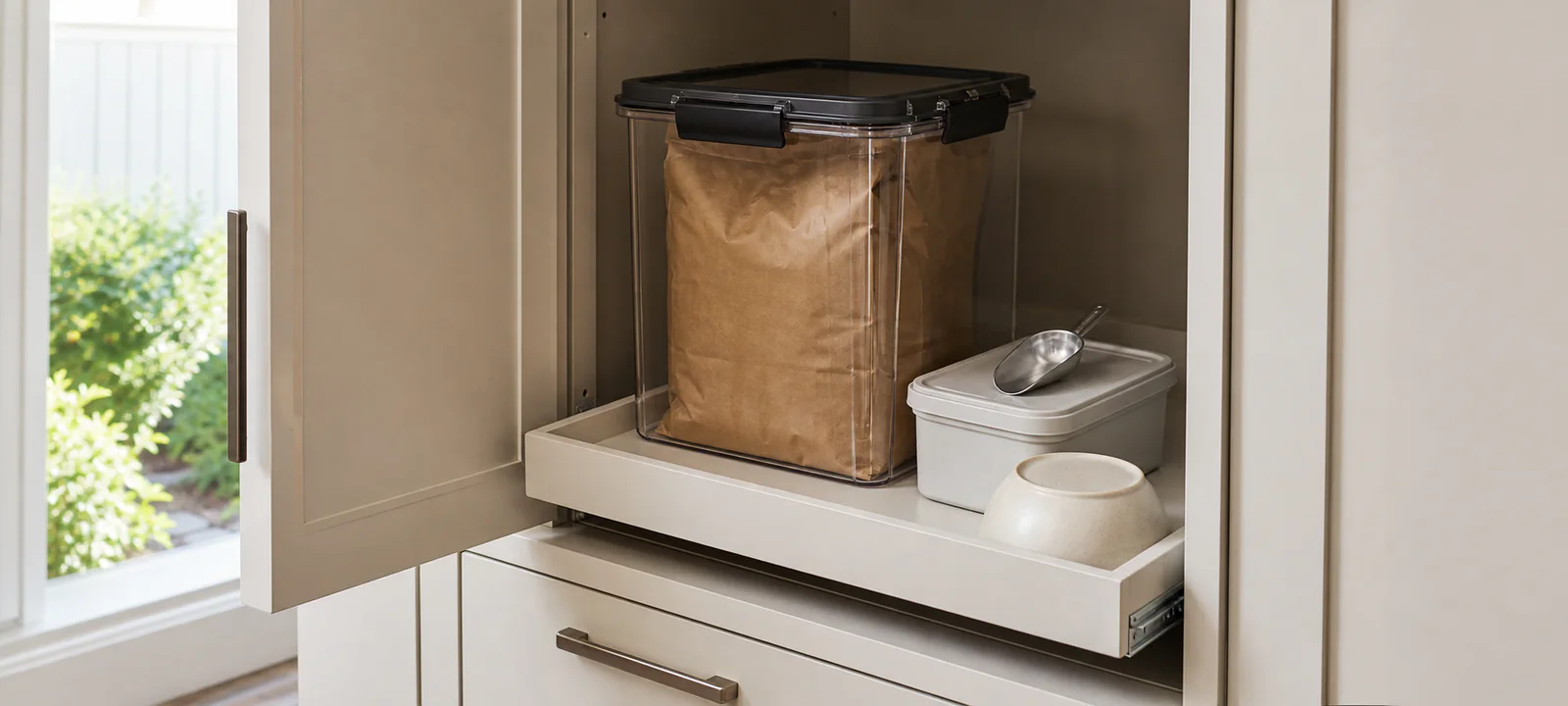
Pet food moves from package to scoop to bowl. Every unnecessary transfer is another chance to spill crumbs, mix old and new food or lose the batch, date and feeding information from the original pack.
Start with the label. Store the food as directed, keep its identifying information and choose a container only after measuring the bag and the place it will live. Treats, open wet food and a daily feeding station may each need a different solution.
Keep the food information attached to the food
Read the directions for storage, feeding and use after opening before decanting anything. Keep the best-before date, batch or lot details and manufacturer information available in case the food needs to be identified later.
One straightforward method is to place the closed original bag inside a suitable outer container, provided the food and container instructions allow it. If food is transferred, retain the relevant packaging information and avoid topping new food onto old remnants.
If a pet has a prescribed or special diet, follow the veterinarian's advice and the food directions. The Australian Department of Agriculture notes that states and territories have primary responsibility for pet-food manufacturing and sale requirements; its current pet food safety overview explains the national context.
Sort the whole feeding routine
| Group | Examples | Storage need |
|---|---|---|
| Active dry food | the open bag and scoop | labelled, protected and easy to portion |
| Wet food | unopened tins or pouches and opened food | packaging directions and a defined fridge process |
| Treats | training rewards, chews and dental products | separate labels and sensible quantities |
| Serving gear | scoop, bowls, mats and travel containers | washable, dry storage |
| Cleaning | cloths and floor towel | nearby but separate from food and chemicals |
Choose a cool, dry, manageable location
Compare the pantry, kitchen, laundry, garage or hallway cupboard with the directions on the pack. Check heat, moisture, direct sunlight, pests and access by pets or children. A large garage corner is not useful if the conditions do not suit the food.
The storage should sit near the feeding route without blocking a doorway or appliance. You should be able to open the lid, measure a portion and clean around the container without dragging a heavy bin across the room.
Measure the unopened bag and the lid path
Record the bag's height, width and depth at the quantity normally purchased. Then measure the shelf or floor position, including clearance to lift or hinge the lid.
- Check whether the full original bag fits inside.
- Include the loaded weight and whether the container can be moved safely.
- Make sure wheels or handles work in the actual cupboard.
- Allow room to remove and clean the inner surfaces.
- Check the pet cannot nose, paw or chew the closure open.
Buying a larger bin than the feeding routine needs can encourage oversized purchases and make first-in, first-out use harder. A smaller active container may be more manageable only if refilling it still follows the food's storage directions and keeps identifying details.
Manage crumbs before they attract pests
A secure closure matters, but so does the floor around it. Food dust beneath a container, open treat packets and bowls left with scraps can attract pests even when the main bin is sealed.
Keep the base easy to sweep and wipe, clean the scoop, close treat packets and review any repeated pest activity rather than assuming another decorative container will solve it. Outdoor and semi-outdoor feeding areas need particular care because conditions and pest access differ from an indoor pantry.
Give treats the same label discipline
Training treats, dental products and chews can spread between kitchen drawers, pockets and cars. Keep each product's directions and identifying information, and separate foods for different animals or dietary needs.
Store only the active amount near the routine. Travel treats can live in a small labelled pouch that is refreshed from the main supply; see the pet travel guide before building a permanent car stash.
Connect storage to the bowl area
Follow the food from container to bowl. A feeding mat should contain ordinary crumbs or splashes without trapping moisture underneath. Bowls need to lift out for cleaning, and the setup should not narrow a walkway.
For water spills, multiple animals, flooring and bowl placement, use the pet feeding station guide. Food storage and bowl layout should form one easy route rather than two unrelated product displays.
Keep cleaning chemicals in a different zone
A clean cloth or paper towel can sit near the feeding area, but household chemicals should remain stored separately and according to their labels. Do not place sprays where they can leak onto food, treats, scoops or bowls.
The pet cleaning supplies guide helps place a small working kit near the mess while keeping products controlled.
Handle wet food as a separate process
Follow the package directions for unopened and opened tins, trays or pouches. If opened food requires refrigeration, give it a defined covered position, retain its date information and clean any reusable lid or container after use.
Do not infer a safe holding time from the storage container. The food manufacturer's directions or veterinary advice should decide how it is stored and when it is discarded. Wash feeding dishes promptly as appropriate for the product and household routine.
Make multiple diets impossible to confuse
When pets eat different foods or portions, label each storage position clearly and keep the correct scoop with it. Do not rely on similar-looking kibble or an unmarked container.
If one animal steals another's food, the solution may be supervised feeding or room separation rather than a more elaborate bin. Make the person feeding the pets able to identify the right food and portion without guesswork.
Keep small rooms workable
In a narrow kitchen or laundry, test the proposed container with doors and appliances in use. The lid must open fully, the bin must move for cleaning and nobody should step around it while carrying washing or hot food.
Renters should also check that wheels, hard bases or mats will not scratch or trap moisture against the flooring. The rental pet setup guide covers reversible floor protection and inspection access.
Check the full feeding route before buying
- Read the food's storage and feeding directions.
- Keep date, batch and manufacturer information.
- Measure the usual bag and loaded container weight.
- Confirm the location suits heat, moisture and pest control.
- Keep pets and children from opening the storage.
- Separate treats and different animals' diets clearly.
- Handle opened wet food according to its directions.
- Keep chemicals separate from food, bowls and scoops.
- Leave enough access to sweep, wipe and wash the area.
Container options when the original bag needs support
First keep the food in its labelled bag, move it to a cooler dry shelf and reduce open duplicates. If crumbs, pests or an unstable bag remain the problem, compare these lidded formats by the unopened-bag footprint, lid path and the amount a household member can lift and clean comfortably.
Some links below are affiliate links. If you buy through one, we may earn a commission at no extra cost to you. Learn more.
Lidded pet-food container
Paws & Claws 30L Pet Food Storage Container with Scoop
A wheeled 30-litre container for measured bags of dry food where a scoop and mobile format suit the feeding routine.
Research-supported option
View at Amazon AustraliaMay suit: households buying dry food in quantities that fit 30 litres.
May not suit: very large bags or food requiring the original bag to remain fully upright.
Drawbacks to consider:
- The bag should fit without overfilling, and the seal and wheels need routine cleaning.
- Current dimensions, variant, price, stock and seller details should be rechecked before ordering.
Evidence confidence: moderate. Last reviewed 18 August 2026. Research-based assessment; we have not tested this product firsthand.
Screw-top container lid
Gamma2 Gamma Seal Lid, Orange
A screw-on sealing lid that converts a compatible bucket into an accessible dry-food container while retaining a removable inner lid.
Research-supported option
View at Amazon AustraliaMay suit: households that already have a compatible food-safe bucket.
May not suit: buyers expecting a complete storage container.
Drawbacks to consider:
- It is a lid only, so bucket compatibility and food-safe container choice must be resolved separately.
- Current dimensions, variant, price, stock and seller details should be rechecked before ordering.
Evidence confidence: moderate. Last reviewed 22 August 2026. Research-based assessment; we have not tested this product firsthand.
Let the package remain part of the system
Good pet food storage protects the product without separating it from the information that explains what it is and how to use it. It keeps the feeding route short, visible and easy to clean.
If a container loses the label, mixes old and new food or becomes too heavy to move, it has made the pantry look tidier while making feeding less reliable.
Place Pet Food Within the Wider Storage Plan
If pet food shares household storage, compare the setup with the pantry storage guide and broader Kitchen guides. Keep it separate from the products covered in the cleaning product storage guide, with related utility-room planning in Laundry and the lower-waste laundry guide.
For the broader pet setup, continue with pet essentials, or the new puppy guide.
Common Questions
Should pet food be removed from its original packaging?
Keep the product information connected to the food. The article recommends retaining the original bag, label, batch details, expiry information and feeding directions even when using a larger storage container. One practical option is placing the closed original package inside a suitable bin rather than pouring the food loose and losing that information.
What should you measure before buying a pet food container?
Measure the unopened bag, the available floor or shelf space and the full path needed to open and remove the lid. Include the loaded weight, comfortable reach and room to scoop without spilling. Choose a cool, dry, manageable position that does not crowd the animal's feeding area or the household walkway.
How do you organise food for pets with different diets?
Keep each diet clearly labelled and physically difficult to confuse, with its original information retained. Separate treats and wet food into their own routines, and place scoops or bowls so they do not migrate between foods. The system should remain obvious to every person who may feed the animals.