
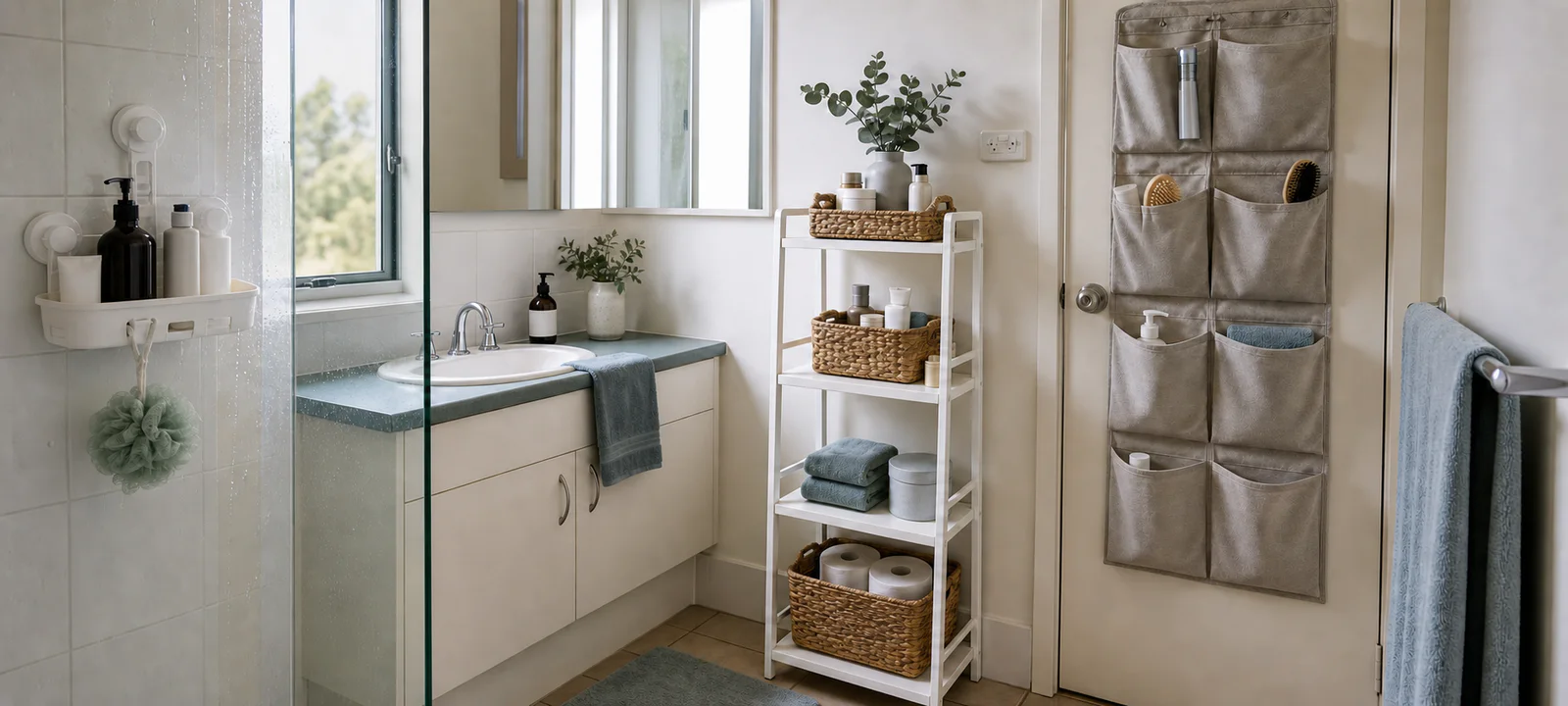
A rental bathroom can be short on storage exactly where a permanent shelf would help. The obvious wall may be tiled, the vanity belongs to the property and a “removable” product can still leave adhesive, pressure marks or chipped paint.
Read the agreement and seek permission where required before choosing a fixing. Then use the storage already paid for—drawers, cupboards and suitable door space—before adding furniture. The most useful purchases are stable, easy to clean and likely to work in the next home too.
Begin with the agreement and the condition report
Check the lease, condition report and any guidance from the property manager or owner. Rules and approval processes vary, so do not assume a small hole, changed fitting or adhesive strip is automatically acceptable.
Photograph existing chips, worn paint, cracked grout or damaged cabinetry before covering the area with storage. If permission is required, obtain it in an appropriate written form and keep the product and installation details with it.
Plan the whole room first with the bathroom storage guide, then choose the least invasive option that solves the actual problem.
Test the surface, not the marketing label
Removable does not mean universal. Smooth glazed tile, textured tile, grout, glass, painted plaster, laminate and stone all behave differently. Steam, splashes, soap residue and cleaning products also affect how a fixing performs.
For suction or adhesive storage, confirm:
- the exact approved surface and preparation method
- whether the area may be wet, humid or under direct spray
- the rated load once bottles or damp towels are added
- any curing time, maintenance or replacement instructions
- the recommended removal method and risk of residue or marks
Avoid placing heavy, sharp, glass or breakable items on a doubtful fixing. If the surface is uncertain, prefer storage that sits inside a cupboard or stands safely on the floor.
Make the existing vanity work first
Sort the vanity into daily products, occasional products, backups, cleaning supplies and items that should leave. Expired bottles and bulk stock should not determine the size of a new trolley.
Shallow drawer trays, handled baskets and removable cabinet tubs can improve access without changing the property. Measure internal drawer dimensions and the clear cabinet opening, then allow for hinges, pipes and traps. The vanity organiser guide covers the routine-based reset.
Over-cabinet organisers need their own test. Check door thickness, closure, hinge load and whether the basket hits pipes or shelves. A padded hook can still scratch a soft or glossy finish if it moves each time the door opens.
Measure freestanding pieces in use
A slim shelf, trolley or towel ladder avoids wall fixing but consumes floor and movement space. Measure the footprint beside the vanity or toilet with every door, drawer and shower screen open. Leave access for cleaning and do not cover a vent, drain or area that needs inspection.
Stability matters more than height. A tall narrow unit may require wall anchoring under its instructions; if that cannot be approved, it is not a suitable rental shortcut. Keep heavy bottles low and check whether the floor is level before loading the shelves.
In a tight room, use the small bathroom storage guide to protect door and standing clearance.
Check an over-door rack with the door closed
Measure door thickness and the gap above it. Fit a paper or cardboard template, close the door and check the frame, latch and wall behind it. The rack should not scrape, swing into fittings or stop the door closing properly.
Load changes the decision. Damp bath towels are heavier and bulkier than robes, while a basket of bottles can stress a lightweight door. Check the rack's instructions and the door's suitability rather than using every hook simply because it is available.
Keep shower storage light and drainable
A rental-friendly caddy should fit the existing shower without loading or scratching a fitting that was not designed to carry it. Check the shower arm, rail or screen before hanging anything, and follow the caddy manufacturer's intended support and load guidance.
For suction and adhesive models, inspect the exact surface and include full bottle weight. Whatever the method, the caddy should drain, clear the screen and hose, and come out for cleaning. See the shower storage guide for the complete loaded-use check.
Find drying space before adding towel hooks
One existing rail may not handle every daily towel, but squeezing several hooks together can leave damp fabric bunched against the door or wall. Count the towels after the busiest shower and measure their hanging length.
A stable freestanding rack can help where floor space and airflow allow. Over-door hooks may suit robes or lighter towels if the door works normally. Keep clean bulk towels outside a small humid bathroom and use the towel storage guide to compare drying options.
Keep the under-sink cabinet reversible and visible
Removable baskets are often more practical than fixed pull-outs in a rental vanity. Measure around the pipes, traps, hinges and shelf cut-outs, and leave enough room to see leaks and reach plumbing.
Do not screw a system into cabinetry without the required permission. If the cupboard is damp, swollen or stained, report or address the underlying issue through the appropriate property process rather than covering it with a liner. For detailed measurements, use the under-sink bathroom guide.
Choose products that can leave for cleaning
Bathroom storage collects hair, dust, product drips and moisture. A trolley should roll or lift away without emptying every shelf. Baskets need washable surfaces, and floor-standing pieces should leave enough room to mop around the toilet and vanity.
Avoid fabric or cardboard in damp positions, deep units that hide wall damage and narrow gaps that cannot be reached. Persistent dampness, mould or water damage needs attention to the cause, not another storage layer.
Compare reversible options by their trade-off
| Option | Useful for | Check before buying |
|---|---|---|
| Drawer tray | daily grooming items | internal dimensions and cleanability |
| Handled cabinet basket | grouped backups | hinges, pipes, loaded weight and removal |
| Slim trolley | a measured clear floor gap | door clearance, stability and cleaning |
| Over-door rack | robes or suitable light storage | door fit, closure, marks and load |
| Freestanding towel rack | daily towels where airflow allows | footprint, stability and drying room |
| Removable shower caddy | current shower products | support, surface, load and drainage |
Take a move-out view before buying
Ask these questions while the room is in use:
- Is the change allowed, and is written permission needed?
- Does the product suit the exact surface or support?
- Will it remain stable at the intended loaded weight?
- Can every door, drawer and screen still open?
- Can towels dry and shower shelves drain?
- Can the walls, floor and plumbing still be inspected and cleaned?
- Can the product be removed as directed without damage?
- Would it be useful in another room or the next home?
Make improvements that move with you
Renter-friendly storage is more than avoiding a drill. It respects the agreement, the existing surfaces and the daily movement of the bathroom. It also remains easy to remove when the room needs cleaning or the tenancy ends.
Start inside the vanity, keep shower storage light, give towels genuine drying room and add freestanding furniture only where the floor can spare it. A smaller adaptable piece is usually more valuable than a perfect-looking fit that belongs to one address.
Browse the complete Bathroom guide collection for related shower, vanity, towel and product-storage planning.
Common Questions
How can renters add bathroom storage without drilling?
Start with lift-out drawer trays, baskets inside the existing vanity and stable freestanding pieces that fit without blocking doors. Over-door or surface-mounted products may also work, but check the rental agreement, the exact surface and the product instructions first. Prioritise storage that can leave easily for cleaning and move to another home.
Are removable bathroom hooks safe for rental walls and tiles?
A removable label is not a guarantee that a hook will leave every surface unchanged. Paint condition, tile texture, grout, moisture, load and removal method all affect the result. Check the agreement, follow the maker's directions and test cautiously in an inconspicuous suitable area before relying on adhesive or suction storage.
What bathroom storage is worth buying for a rental?
Choose pieces that solve a current problem yet are likely to work at another address: adjustable drawer inserts, washable baskets, a properly sized over-door rack or a stable narrow unit. Avoid buying around one unusual gap unless the item has another use, and check that it remains practical when loaded and during cleaning.