
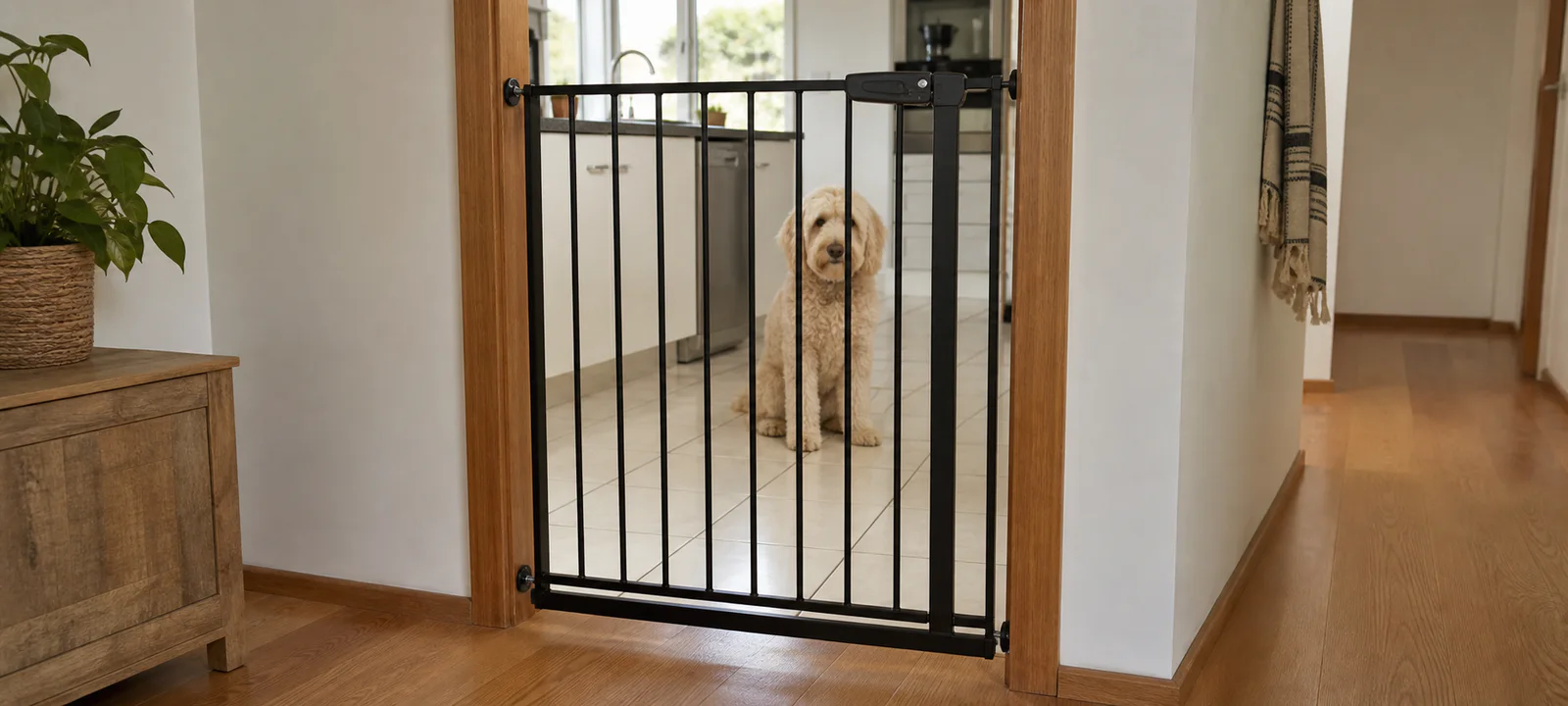
A gate is often bought when separation suddenly feels urgent: dinner is on the stove, a puppy has reached the laundry or two animals need space. In that moment, the width of the doorway can seem like the only measurement that matters.
The animal and the people using the room matter just as much. Height, gaps, stability and latch design need to suit observed behaviour, while the household still has to move through the opening without creating a daily trip hazard.
If the boundary is part of a first setup, begin with pet essentials for Australian homes or the new puppy checklist. This guide starts once there is a defined room-separation problem and an exact opening to measure.
Name the Moment That Needs a Barrier
Keeping a dog out of the kitchen during cooking is different from separating pets at mealtimes or creating a quiet room for an older animal. Decide whether the boundary is occasional, used several times a day or expected to manage a serious escape or behaviour concern.
A lightweight folding barrier may be enough when supervised visitors arrive. A high-use doorway needs a latch people will reliably close. Fear, aggression, distress and persistent escape behaviour need veterinary or qualified behavioural advice; a gate can help manage space but does not treat the cause.
Measure the Opening at More Than One Point
Doorways and hallways are not always square. Measure width near the floor, through the middle and at the intended mounting height. Note skirting boards, door trims, floor transitions and whether the two mounting surfaces are flat and structurally suitable.
- Compare the measurements with the product's stated range.
- Confirm whether extensions are approved for that model and opening.
- Allow room for a walk-through panel to swing fully.
- Open nearby doors, drawers and appliances before fixing the position.
- Check whether a bottom rail will sit across a busy walking route.
For an extra-wide opening, mark the full barrier footprint on the floor. Bracing feet and angled side panels can use much more room than the product's nominal width suggests.
Match Height, Gaps and Materials to the Animal
Watch the pet before choosing a design. Some cats and dogs jump; small animals may squeeze between bars; a determined larger dog may push a light freestanding panel aside. Chewers and scratchers can damage mesh, soft plastic or timber.
Check for gaps around the frame as well as within it, and avoid accessible sharp edges, loose parts and obvious pinch points. A taller barrier is not automatically safer if it encourages climbing or is difficult to install securely. Follow the maker's limits for species, size, placement and mounting surface.
Choose a Mounting Method the Room Can Support
Pressure-mounted gates are easy to remove and can suit some doorways, but “no screws” does not mean no marks. Pressure pads may dent or discolour paint and skirting, and the bottom rail often creates a trip point. Recheck tension because movement and repeated use can loosen the fit.
Hardware-mounted gates use brackets or screws and may provide a firmer installation where the product and surface are suitable. They require accurate fixing, may conceal services behind the wall and usually need approval in a rental. Follow the installation instructions rather than substituting fixings or mounting into an uncertain surface.
Freestanding barriers and playpens avoid wall fixings and are useful for temporary, supervised separation. Their flexibility is also their limit: they can move, fold or be pushed over and should not be treated as secure containment for every animal.
Do Not Treat a Pet Gate as a Child-Safety Gate
A household with children needs a product designed for child safety, not a pet barrier chosen because the dimensions look similar. The ACCC's Australian safety-gate guide specifically advises against buying or using a pet gate for children.
Stairs, fireplaces, pools and balconies also require location-specific safety planning. Do not improvise or assume a general pet barrier is suitable. Use only a product whose instructions expressly approve the intended location and installation, and meet any separate legal or child safety requirements that apply.
Make Daily Access Part of the Test
A latch that is difficult with one hand may be left open when someone is carrying groceries, laundry or a food bowl. A step-over panel that seems harmless in daylight can be a recurring obstacle at night or for an older person. Test the movement people will repeat, not just the gate's closed position.
Kitchens need separation without blocking work zones. A barrier near a feeding area should not trap bowls or make cleaning harder; our pet feeding station guide and pet food storage guide cover that routine. If the boundary protects a resting space, see Dog Beds in Australia.
Allow for Life Stage and a Changing Household
A growing puppy may outgrow a low barrier or discover how to move it. An older animal may need fewer rails to step over and a calmer route to food, water and bedding. Multi-pet homes may need temporary separation for introductions or meals, but the animals' responses should be watched rather than assuming one barrier arrangement will remain suitable.
In an apartment, rattling hardware and lost floor space can matter as much as appearance. In an open-plan home, a very wide gate may be less workable than closing a nearby room or rearranging the pet zone. The simplest boundary that solves the actual problem is often easier to use consistently.
Protect Rental Surfaces Without Assuming Damage-Free
Check the lease and obtain approval before drilling or making a permanent change. Pressure pads, adhesive protectors and trapped moisture can still mark a surface, so inspect beneath them and keep installation records. The rental-friendly pet setup guide covers other removable and washable choices.
Gates collect hair, paw marks and food residue around hinges and bottom rails. Make sure the barrier can be opened or removed for vacuuming and mopping, then checked and refitted correctly. Our pet cleaning supplies guide can help with the surrounding mess.
Pet-barrier types to compare after you measure
These are product types, not ranked recommendations. Use only a model whose instructions cover the animal, opening, mounting method and intended location.
Pressure-mounted pet gates
- May help with
- Some measured doorways where a removable barrier suits the animal and intended use.
- Measure first
- Opening width at the top, middle and bottom, skirting and trim depth, mounting height and walking clearance.
- Check before buying
- The exact fit range, approved extensions, contact surfaces, bottom rail, latch and the maker's stated placement limits.
- Avoid if
- The surfaces are unsuitable, the opening is outside the stated range or the intended location requires a different approved fixing method.
Hardware-mounted pet gates
- May help with
- Openings where the exact product instructions approve fixed brackets and the mounting surfaces are known to be suitable.
- Measure first
- Opening width, swing area, bracket positions and the clear route through nearby doors, drawers and appliances.
- Check before buying
- Approved fixings, surface requirements, hinge direction, latch operation and any rental or installation permission needed.
- Avoid if
- The wall or frame is uncertain, services may be concealed behind it or permanent fixing is not approved.
Freestanding barriers and pens
- May help with
- Temporary, supervised room zoning where wall contact is unnecessary and enough floor area is available.
- Measure first
- The complete footprint, including feet, angled panels and the space people need to pass around it.
- Check before buying
- Panel height and gaps, stability, joints, floor contact and how the individual animal pushes, climbs or chews.
- Avoid if
- The animal can move or overturn it, or the situation requires secure containment rather than temporary supervised separation.
Barrier options for the measured opening
First test whether closing an existing door, moving the pet's resources or changing the household routine solves the separation problem. If a barrier is still needed, compare these configurable and tall pressure-mounted formats only after checking opening width at several heights, animal behaviour and mounting limits.
Some links below are affiliate links. If you buy through one, we may earn a commission at no extra cost to you. Learn more.
Configurable barrier gate
BabyDan Flex M Configurable Safety Gate
A wall-fixed, multi-panel barrier that can span awkward openings once the fixing points and panel geometry are checked.
Research-supported option
View at Amazon AustraliaMay suit: wide or irregular openings needing configurable panels.
May not suit: renters unable to use wall fixings.
Drawbacks to consider:
- It requires suitable wall fixings and more setup space than a straight pressure gate.
- Current dimensions, variant, price, stock and seller details should be rechecked before ordering.
Evidence confidence: moderate. Last reviewed 22 August 2026. Research-based assessment; we have not tested this product firsthand.
Tall pressure-mounted gate
Dreambaby Liberty Tall Security Gate
A tall straight-opening barrier for measured doorways and hallways where extra height is useful for larger pets.
Research-supported option
View at Amazon AustraliaMay suit: straight rigid openings and taller dogs.
May not suit: uneven walls, skirting conflicts or step-free access needs.
Drawbacks to consider:
- Pressure fit depends on a square, rigid opening and the bottom rail remains a trip point.
- Current dimensions, variant, price, stock and seller details should be rechecked before ordering.
Evidence confidence: moderate. Last reviewed 18 August 2026. Research-based assessment; we have not tested this product firsthand.
Check the Barrier After Installation
- Confirm the model suits the measured opening, animal and intended location.
- Use only the approved extensions, fixings and mounting method.
- Check gaps, height, stability, latch operation and possible pinch points.
- Make sure people can cross without a recurring trip or access problem.
- Inspect the fit after bumps, cleaning, adjustment or heavy use.
- Replace or repair the setup if parts become loose, damaged or unreliable.
- Seek professional help when separation involves fear, aggression or distress.
A useful barrier fits the opening, suits the animal and remains practical for everyone who uses the room. Measure carefully, follow the product instructions and watch what happens after it is installed. If the gate creates a problem the household works around, it is not solving the original problem well. Browse more practical advice in the Pets category.
Common Questions
How do you measure an opening for a pet gate?
Measure the opening at the top, middle and bottom, noting skirting boards, uneven walls, door trim and anything that changes the contact points. Mark the space needed for the gate to open and for people to pass through. Compare those measurements with the product's stated fit range and instructions.
Should you choose a pressure-mounted or fixed pet gate?
Choose the mounting method only after checking the opening, surface, animal and product instructions. A removable setup may suit some rental situations, while another opening may require a different approved fixing method. Do not improvise between types, and test stability, latching and daily access after installation.
Can a pet gate be used as a child safety gate?
Do not assume the two products are interchangeable. The article specifically warns that a pet gate should not be treated as a child safety gate. Use any barrier only for the purpose, location and installation method covered by its instructions, and obtain an appropriately rated product where child safety is involved.