
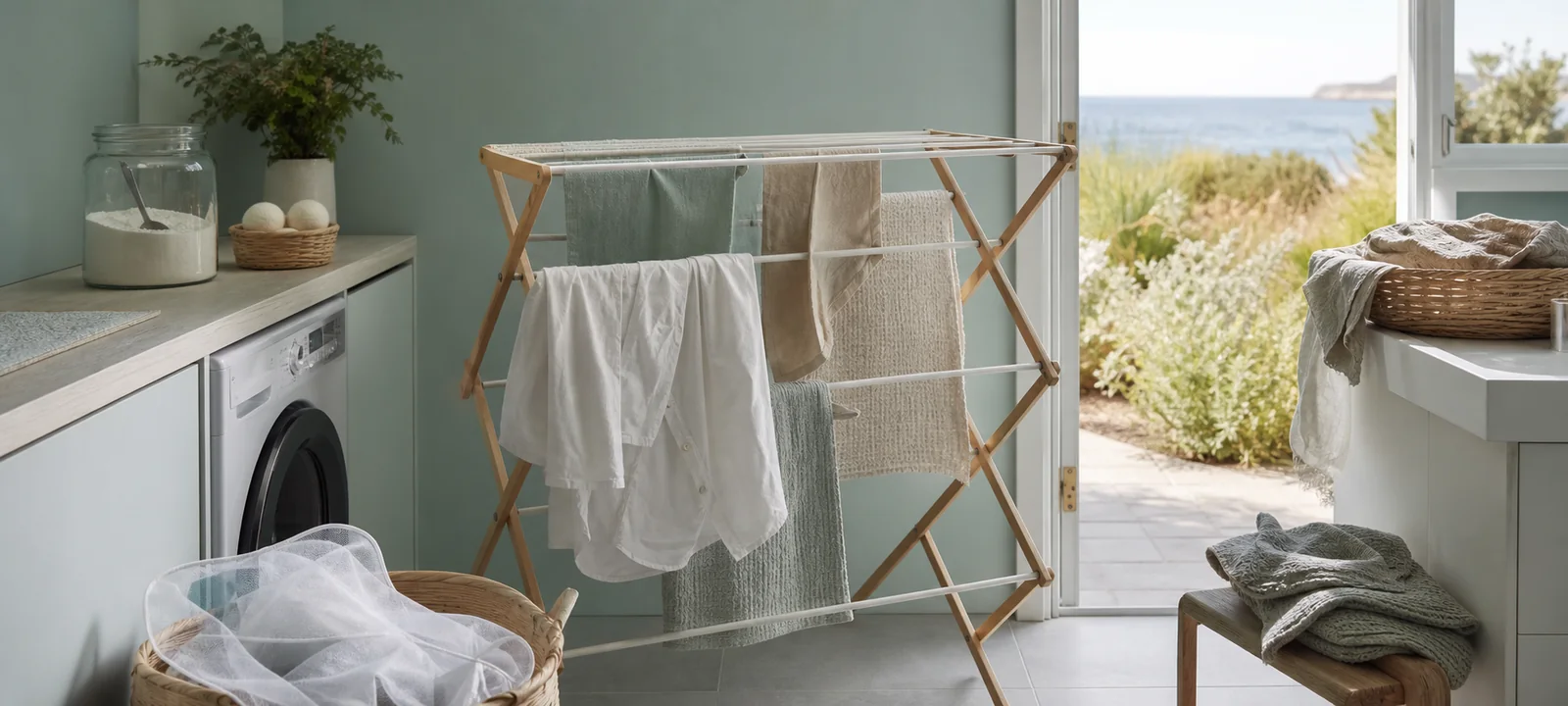
The least wasteful laundry purchase is often the one you do not need to make. Using the detergent already in the cupboard, repairing a sound drying rack and washing clothes in a way that helps them last can matter more than replacing everything with products carrying greener-looking labels.
Any improvement also has to survive a normal week. School uniforms, work clothes, pet bedding, damp towels and sudden rain place different demands on the laundry. A system that creates extra mess or takes too much time will soon be abandoned.
The repeat decisions matter most: how much product goes into each load, when the machine runs, where clothes dry and what gets replaced.
Finish suitable products before replacing them
Finish suitable detergent and stain products before changing formats. Disposing of a usable product to buy a supposedly better one simply brings the replacement purchase forward. Check the label first, particularly if the product has been stored for a long time or its container is damaged.
Pull everything into view and note the duplicates. A half-used bottle at the back of the tub is easy to forget. Keeping one active detergent and one backup, where the household genuinely needs a backup, makes it easier to see what is on hand.
Measure detergent instead of pouring by eye
More detergent does not automatically mean cleaner clothes. Follow the product directions and the washing machine instructions, taking account of load size, water conditions and how soiled the washing is. The correct amount varies, so a single rule for every household is not helpful.
Keep the supplied scoop or use a clearly marked measure. If several people do the washing, agree on where it lives and how the label directions are read. This is less glamorous than decanting products into matching jars, but it reduces guesswork and keeps important instructions close to the product.
Run loads that suit the machine
Combining tiny loads can reduce how often the machine runs, but overloading causes its own problems. Clothes need enough room to move, and bulky towels or bedding may reach the machine's limit before the drum looks full. Use the appliance guidance rather than forcing everything into one cycle.
Separate loads when colour, hygiene, fabric care or heavy soiling calls for it. A lower-waste routine should not override care labels or sensible washing practices. It should remove unnecessary cycles, not necessary ones.
Choose the cycle from the washing, not a slogan
Cooler or shorter cycles can suit many ordinary loads, but the right setting depends on the fabric, the soil level, the detergent and the machine. Read garment labels and the appliance manual before changing an established routine. Workwear, illness-related washing, nappies and pet items may need different treatment from lightly worn clothes.
If a favourite setting is being used for every load, check what the other cycles actually do. A cycle that matches the contents is more useful than treating one program as the responsible choice in every situation.
Make the drying method fit the day
Outdoor line drying works when the weather, space and fabric allow it. The barrier is often the trip between the machine, basket, pegs and backyard or balcony. Keep pegs near the exit, use a basket that is comfortable to carry and leave the line clear enough to use.
Indoor drying needs more care. Give damp washing room and airflow, avoid blocking exits or heaters, and pay attention to condensation or musty smells. A rack that folds away into a known spot is usually easier to live with than a large airer that stays in the walkway.
Help clothes and linen last
Deal with stains promptly, close fasteners that may catch, use mesh bags where the garment calls for one and follow drying instructions. Small repairs can keep otherwise sound clothes, towels and linen in use. A visible mending container is more likely to be acted on than a large pile hidden in a cupboard.
Avoid buying a specialised laundry accessory for every fabric problem. Begin with the care instructions and the equipment already available. Add something only when the same problem keeps recurring and the product has a clear storage place.
A refill is not automatically the better fit
Refills and concentrates may reduce packaging, but formats differ. Compare the usable quantity, dose per load, packaging, price and whether the refill works with a container you already own. A format that spills, is hard to measure or requires special trips may not suit the household.
Broad words such as eco, natural or green do not explain a product's full impact. Look for specific information that can be checked and read the use and safety directions as carefully as you would for any other laundry product.
Replace equipment when it has stopped doing the job
A stable basket, peg bag, airer or ironing board can serve for years. Tighten accessible fasteners, clean the item and see whether a small repair is sensible before replacing it. Retire equipment that is unstable, has sharp damage or cannot be used safely.
When replacement is justified, look at the failure point. Strong handles matter if a basket carries heavy towels. A rack needs a reliable folding mechanism if it is opened several times a week. Buying for the real workload is more convincing than choosing from a list of fashionable laundry essentials.
The lower-waste routine is the one that lasts
- Use suitable products already on hand before buying replacements.
- Measure each dose according to the product and appliance directions.
- Match the load and cycle to the washing rather than relying on one setting.
- Keep the basket, pegs and drying space ready for use.
- Repair clothes and sound equipment when it is reasonable to do so.
- Compare refill and environmental claims using specific information.
The most credible lower-waste laundry is not a shelf of newly purchased products. It is a routine that uses sensible amounts, looks after what the household owns and remains workable when the washing pile is at its worst.
Common Questions
How can I reduce waste in my laundry routine?
Finish suitable products before replacing them, measure each dose according to the product and machine guidance, and choose loads and cycles that fit the washing. Use a practical drying method and care for clothing so it remains useful. Small repeatable changes usually matter more than discarding working products for a newly marketed alternative.
Are refill laundry products always a lower-waste choice?
Not automatically. Consider whether the refill suits the existing dispenser, whether the household will finish it and how its packaging and transport compare with the usual product. A refill that leaks, encourages overbuying or requires a new container may not improve the routine. Check the complete system rather than the refill label alone.
When should laundry equipment be replaced?
Replace an item when it no longer performs its real job, cannot be maintained appropriately or no longer suits the routine. Do not discard a functional basket, airer or dispenser simply to buy a product with a lower-waste claim. Keeping suitable equipment in service avoids turning a purchasing decision into unnecessary waste.