
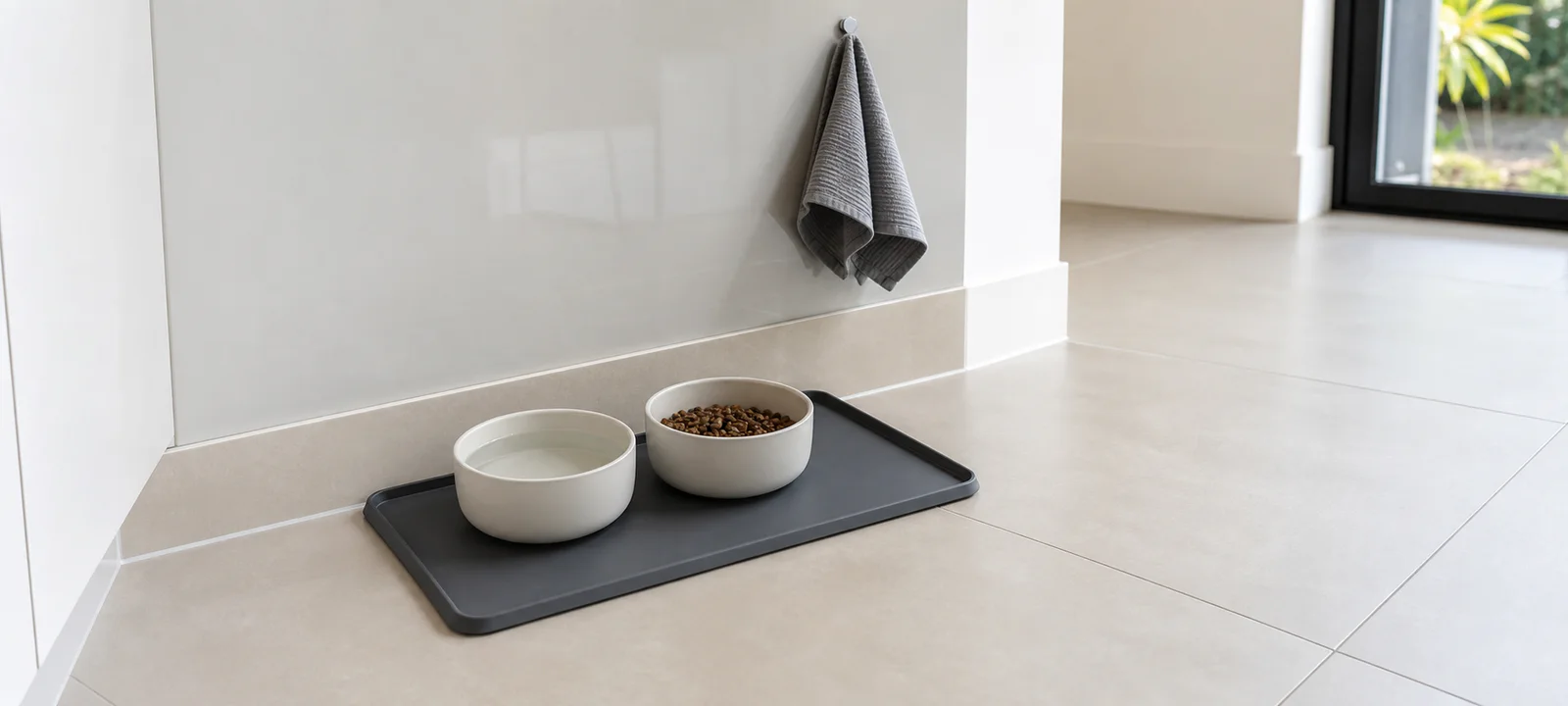
A feeding station is also a cleaning zone. Water travels beyond the bowl, crumbs settle under the mat and a fixed cabinet that looks tidy can become awkward the first time the floor needs a proper wash.
Watch one complete meal and drink before buying anything. Note how the pet approaches the bowls, how far the mess spreads and whether people, children or other animals interrupt the area. A good setup is stable, easy to lift and simple enough to clean every day.
Choose the Position Before the Products
Kitchens are convenient but bowls can obstruct preparation zones. Laundries are often easy to clean but may be noisy, hot or isolated. In a small apartment, the most available corner may also be a doorway or a route used at night.
Look for a position outside the main walking path, with straightforward access to fresh water, food storage and a sink or cleaning cloth. Open nearby doors, drawers and appliances to make sure the bowls will not be trapped behind them. The pet should be able to eat without being repeatedly stepped over or startled.
Match the Bowls to the Animal
Compare internal diameter and depth rather than broad size labels. The bowl needs enough capacity without being awkward for the pet to reach into. Weight, base width and grip matter if the animal pushes a bowl across tiles at every meal.
Stainless steel is usually straightforward to clean. Ceramic can be stable but should be replaced if chipped or cracked. Plastic is light and inexpensive, although scratches and odour can make it harder to maintain over time. Whatever the material, follow the maker's washing and dishwasher instructions.
A wide, shallow shape may be more comfortable for some animals, but persistent difficulty eating or drinking is a veterinary matter. Bowl shape should not be used to self-treat dental, swallowing, digestive or mobility problems.
Measure the Mess, Not Just the Bowl
Place the existing bowls on newspaper or an old towel for a day to reveal the real splash and crumb zone. A mat should extend into that zone and still be easy to lift without pouring trapped water onto the floor.
- Raised edges can contain small spills but also collect hair and residue.
- Silicone-style mats rinse easily but may attract dust.
- Fabric mats absorb water and can hold odour if they dry slowly.
- Hard trays protect the floor but need enough grip to stay put.
- Every mat should be lifted regularly so moisture cannot sit underneath.
Timber and laminate need prompt attention to water. In rentals, also check that a non-slip backing will not stain, stick to or mark the finish. Our rental-friendly pet setup guide covers floor protection in more detail.
Keep Water Simple and Accessible
Water bowls need a stable position where they can be refilled and inspected often. A large dog or enthusiastic drinker may need a wider mat and more capacity; a second water point can help in a larger home. Fresh water still needs to be available even when one bowl is being washed.
During warmer weather, clean and refill outdoor bowls rather than removing access to drinking water. The guide to keeping flies and mosquitoes away from the home explains how pet bowls fit into a wider check for entry points, food residue and standing water.
Fountains add filters, pumps, cords, noise and cleaning. They can suit some pets and routines, but only if the household will dismantle and maintain them as directed. Keep electrical cords away from puddles and chewing, and retire damaged equipment. For water away from home, see the pet travel essentials guide.
Use Specialist Feeders for a Defined Reason
Raised stands can reduce bowl movement and may suit an individual animal, but they are not automatically healthier or more comfortable. Check the actual height, stability and space needed to clean underneath. Seek veterinary advice before using height or posture to manage a medical or mobility concern.
Slow feeders and puzzle feeders add complexity as well as enrichment. Grooves must be reachable and thoroughly washable, and the animal should not become frustrated or damage the product. Automatic feeders add portion settings, batteries or power and mechanical parts. A basic bowl remains the better choice when added equipment will not be cleaned or checked reliably.
Fast eating, vomiting, appetite changes, food anxiety or guarding deserve veterinary or qualified behavioural advice rather than an equipment-only response.
Keep Food Storage Separate but Convenient
Food should be protected from heat, moisture, pests and access by children or pets. Keep the original label and batch information, even when food is transferred to another container. The Australian Government's pet-food safety information explains the national framework and where to report a problem.
A large container is not useful if it blocks the feeding area or cannot be lifted for cleaning. Check food-contact suitability and follow the container maker's care instructions. Our pet food storage guide covers packaging, pests, scoops and storage conditions in detail.
Plan for Daily Cleaning
Lift the bowls and mat rather than wiping around them. Remove wet-food residue promptly, sweep dry crumbs before ants find them and allow washed pieces to dry. Use cleaning products only as their labels direct, away from food, bowls, children and animals.
Ant control begins with removing food and sticky residue and sealing stored supplies. Do not place pest-control chemicals where a pet can reach them. The pet cleaning supplies guide can help organise the wider routine without turning the feeding corner into a chemical-storage area.
Give Multiple Pets Enough Space
Separate bowls allow intake to be monitored and prevent one animal casually finishing another's meal. Some pets need different rooms or feeding times, particularly when diets differ or one animal guards food. A barrier may help only if it suits the animals and does not create a new household hazard.
Do not force animals to eat side by side for the sake of a symmetrical setup. If meals involve tension, intimidation or guarding, seek qualified help. For wider household basics, see Pet Essentials for Australian Homes.
Check the Whole Feeding Zone
- Keep bowls clear of doors, drawers, appliances and walking routes.
- Choose a stable bowl that suits the pet's size and way of eating.
- Cover the actual splash zone and lift the mat to clean underneath.
- Make fresh water easy to refill, inspect and replace.
- Add fountains, stands or automatic feeders only when their benefit justifies the upkeep.
- Store food away from heat, moisture, pests and unauthorised access.
- Ask a vet about appetite, swallowing, digestive, mobility or diet concerns.
The most successful feeding station is rarely the most elaborate. Stable bowls, enough floor protection and a location that can be lifted and wiped will usually do more for the household than feeding furniture that hides mess until cleaning day.
Common Questions
Where is the best place for a pet feeding station?
Choose a position the animal can reach comfortably and the household can lift and clean without moving furniture. Keep bowls out of main walkways and away from surfaces that cannot handle regular spills. Observe the route, nearby doors and other animals before buying a stand, mat or storage unit.
What should you check before buying pet bowls?
Match the bowl size, shape and access to the individual animal, then check stability and how easily the whole item can be washed. Measure the space taken by food and water together. A specialist feeder or raised setup should solve a defined need rather than being added only for appearance.
How do you keep a pet feeding area cleaner?
Give spills and crumbs a contained, wipeable area, keep food storage close but separate and make every bowl easy to lift. Reset the whole feeding zone rather than cleaning around fixed clutter. If ants or mess recur, address crumbs, storage and the surrounding route before adding more organisers.