
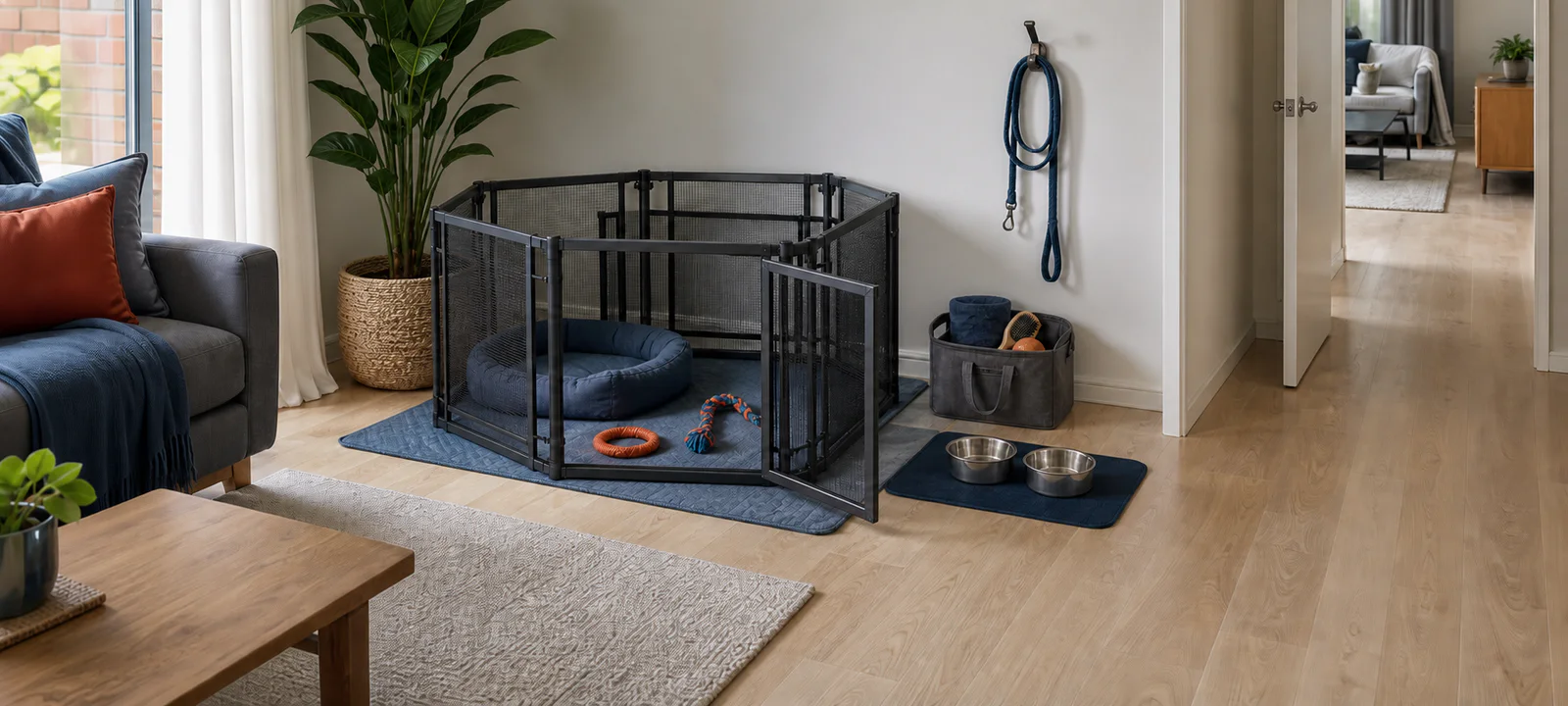
The first week with a puppy is easier when the next few hours are predictable. The puppy needs a safe place to rest, clean water, suitable food, supervised toilet opportunities and people who know what happens when the puppy wakes, cries, chews or has an accident.
Prepare those routines before bringing the puppy home. Keep the initial area modest and easy to supervise, then expand access as the household learns the puppy's behaviour. A room full of beds, toys and organisers cannot replace time, veterinary care and patient reward-based training.
Use the pet essentials guide for the wider household list. Keep the first setup focused on feeding, sleep, toileting, health care and a safe supervised home base.
Book the vet before the first week fills up
Arrange a veterinary appointment and bring the health, vaccination, microchip and feeding information supplied by the breeder, rescue or previous carer. The veterinarian can advise on nutrition, vaccination, parasite control, desexing, identification and any health concerns for the individual puppy.
Registration and identification requirements vary by state, territory and local council. Check the rules where the puppy lives and make sure contact details associated with the microchip are current. Do not rely on a collar tag as the only form of identification.
Create one calm, supervised home base
Choose an area away from household hazards and constant foot traffic but close enough that the puppy is not simply isolated. Check cords, medicines, cleaning products, plants, dropped food, children's toys and small objects that could be reached or chewed. Secure bins and make sure doors, gates and balcony access are managed.
A pen, gate or crate may form part of the setup when it suits the puppy and is introduced and used appropriately. Follow the product instructions and seek guidance from a veterinarian or qualified reward-based trainer rather than treating confinement as a way to avoid supervision.
A barrier still has to fit the measured opening, mounting surface and puppy's current size and behaviour. The barrier guide compares pressure-mounted, hardware-mounted and freestanding options without treating any gate as a substitute for supervision.
Give sleep a simple, washable place
Puppies sleep frequently. Use bedding that is dry, comfortable, easy to access and suited to the temperature of the room. A washable cover and a second basic layer for laundry day are generally more manageable than several decorative beds bought before the puppy's sleeping habits are known.
Place the bed where the puppy can settle without blocking a walkway. Watch for chewing and inspect bedding for damage. Ask the veterinarian about bedding if mobility, temperature, allergy or another health issue affects the puppy.
Before buying a larger or more elaborate bed, use the dog bed guide to compare usable sleeping dimensions, washing instructions and styles. A simple washable option may be enough while adult size and sleeping habits are still changing.
Keep the first food familiar
Find out what and how the puppy has been eating and keep that information with the food. Sudden dietary changes may not suit the puppy, so discuss any transition with the veterinarian and follow the food directions for life stage, storage and feeding.
Provide constant access to clean fresh water in a stable bowl made from a suitable material. Put bowls on a surface that can be cleaned and check how far water and food travel during an actual meal before buying a large feeding station.
Prepare for accidents, not a cleaning warehouse
Keep a small cleaning kit where accidents are most likely. Include washable cloths or paper, bags and a product suitable for the surface, used according to its label. Store cleaning products where the puppy and children cannot reach them.
Covering every floor with loose mats can introduce chewing, slipping or trapped moisture. Begin with the feeding, sleeping and entry zones, then respond to the mess that actually occurs.
Plan the toilet route
Decide who takes the puppy to the appropriate toilet area after waking, eating, drinking and play, and how that route works at night or in bad weather. Apartment and rental households may need extra planning around lifts, shared areas, balconies and property rules.
Keep the routine calm and use reward-based guidance. If toileting changes suddenly, seems painful or remains concerning, speak with the veterinarian rather than assuming it is simply a training problem.
Choose a few toys for different jobs
Begin with a small selection suited to the puppy's size and stage: something for supervised play, an appropriate item for chewing and a simple enrichment activity. Inspect toys often and remove damaged items. No toy is indestructible, and supervision still matters.
Rotate the selection instead of leaving everything out. This keeps the floor clearer and makes it easier to notice which materials, shapes and activities the puppy actually uses.
Fit walking and travel gear to the puppy you have now
Collars, harnesses, carriers and restraints need to fit the puppy at its current size and be checked as the puppy grows. Follow product and vehicle instructions and seek qualified advice if fit or use is uncertain. Buying a much larger item for the puppy to grow into can compromise the fit now.
Prepare the carrier or vehicle setup before the first veterinary trip. A towel, waste bags and a small clean-up kit are often more useful than a bag of travel accessories intended for long holidays.
Socialisation is not forced exposure
Puppies benefit from carefully managed, positive experiences, but the balance between disease risk and socialisation depends on the individual puppy and local circumstances. Discuss the plan and vaccination status with the veterinarian. Let the puppy engage at its own pace rather than forcing it towards people, animals, sounds or places when it is fearful or overwhelmed.
The Australian Veterinary Association explains the role of positive early experiences and veterinary guidance. The RSPCA Knowledgebase also covers safe living space, nutrition, water, training, identification and preventive health care.
Day-one checklist: what needs to be ready
- a veterinary appointment and the puppy's existing records
- a checked home base with comfortable washable bedding
- the familiar food, feeding information and a stable water bowl
- a planned toilet route and people responsible for it
- a small labelled cleaning kit stored out of reach
- a few size-appropriate toys inspected before use
- suitably fitted identification and travel equipment
What can wait until you know the puppy
- duplicate or premium beds chosen before sleeping habits and adult size are clearer
- large feeding furniture before the household has observed a complete meal and drink
- a deep toy basket instead of a small, inspected rotation for different activities
- walking or travel gear bought for an expected adult size rather than fitted for use now
- specialist organisers without a defined routine or return point in the home
The first weeks will show what the puppy, the veterinarian and the household routine genuinely require. Waiting on optional gear makes it easier to choose against observed behaviour rather than a generic shopping list.
Buy for the next repeatable task, not every possible future stage. That keeps the first setup easier to inspect and makes the specialist buying guides useful when a real need appears.
Common Questions
What essentials should be ready before a new puppy comes home?
Prepare a calm supervised home base, a simple washable sleeping place, the familiar food already being used, a toilet route and a small cleaning kit. Arrange the veterinary plan, then add a few suitable toys and properly fitted walking or travel gear for the puppy you have now.
How many toys does a new puppy need at first?
Begin with a small rotation chosen for different jobs rather than a large basket of similar toys. The article suggests supporting chewing, carrying and calm interaction, then watching what the puppy actually uses. Check each item's condition and suitability regularly instead of assuming every toy remains appropriate as the puppy grows.
How do you set up a calm first week for a puppy?
Keep the first routine simple and predictable. Give the puppy a supervised base, familiar food, a clear sleeping area and an easy route to the chosen toilet spot. Avoid filling the week with equipment or forced experiences; let the puppy's behaviour show which practical adjustment is needed next.