
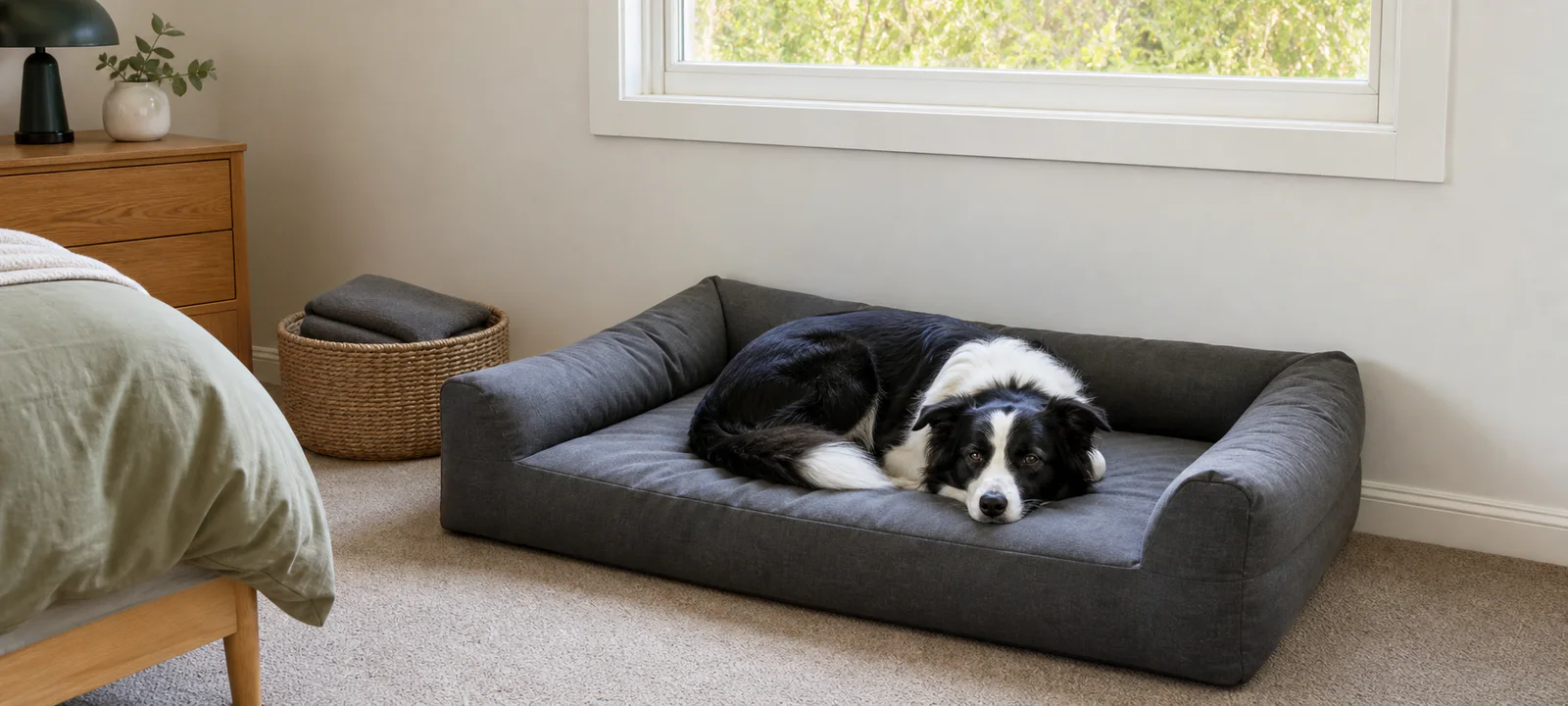
A dog bed can be the right size on paper and still remain untouched. It may sit in an exposed walkway, feel too warm or force a dog that likes to stretch into a curled position. The animal notices those details even when the bed looks perfect in the room.
Watch how and where the dog sleeps before comparing shapes or fabrics. Then measure the usable sleeping area, decide how the bed will be washed and mark its full footprint on the floor. The best bed is one the dog chooses and the household can maintain.
If the bed is part of a first setup, make sure feeding, care and a safe home base are settled first. This guide is for the narrower buying decision: which bed type fits the dog, the room and the laundry routine.
Let Sleeping Habits Lead the Choice
Observe the dog over several days. Curled sleepers may appreciate soft sides; dogs that sprawl usually need a generous flat surface. Some lean against furniture, burrow under a blanket or move between rooms as the temperature and household activity change.
Location is part of that preference. A social dog may settle near people but outside the main traffic path. Another may seek a quiet corner. Moving an existing mat between two possible locations can reveal more than choosing a bed from a product photo.
Measure the Dog and the Usable Surface
Measure the dog in its usual resting position and allow room to change position. Product size names are not consistent, and outside dimensions can be misleading: thick bolsters may leave a much smaller sleeping surface than a plain rectangular bed with the same footprint.
- Compare the internal sleeping length and width.
- Check how much space raised sides and backrests remove.
- Use the maker's weight guidance as an extra check, not a substitute for dimensions.
- Make sure the dog can get in, turn and lie down without hanging over an edge.
- Tape the outside dimensions on the intended floor before ordering.
Choose a Shape That Supports the Usual Posture
Flat mats are easy to move and can work in crates, laundries and cars. Bolster beds give some dogs an edge to lean against, but take up more floor space. Round or doughnut-style beds suit many curled sleepers and frustrate dogs that stretch out. Raised beds increase airflow and are easy to sweep under, although they feel less enclosed and may not suit a dog with limited mobility.
“Orthopaedic” is not a guarantee of comfort or clinical benefit. Compare the actual thickness, firmness, construction and support under the dog's weight. If pain, arthritis, injury or a mobility change affects rest, ask the dog's veterinarian what matters for that individual.
Look Past Fabric Names to Everyday Wear
Plush fabric can feel cosy while holding hair, dust and grass seeds. Canvas-style covers may be easier to brush down but should not feel abrasive. Waterproof liners protect an insert, yet can add warmth or noise. Very soft loose fill may flatten quickly under a heavier dog.
Check seams, zips and removable parts as carefully as the top fabric. No bed is indestructible. Torn covers, exposed filling and detached pieces should be removed from use, particularly with a dog that chews. Persistent destructive chewing calls for veterinary or qualified training advice, not simply a tougher-looking bed.
Make Washing Part of the Buying Decision
Dog bedding collects hair, drool, dust, mud and odour. A removable machine-washable cover helps only if it comes off without a wrestling match and fits the household washing machine. If the whole bed must be washed, check that it fits when dry and consider how heavy it will become when wet.
- Confirm whether the cover, liner and insert have different care instructions.
- Check drying time, especially in humid or wet weather.
- Look for replacement covers if the insert is expected to last.
- Choose a surface that can be vacuumed or brushed between washes.
- Plan more frequent cleaning for beds near back doors or outdoor areas.
Our pet cleaning supplies guide can help with the wider hair, mud and odour routine.
Match the Bed to the Life Stage
Puppies can toilet on bedding, chew it and outgrow it quickly. A simple washable option may be a better first purchase than a large premium bed chosen before adult size and sleep habits are clear. See New Puppy Essentials for the rest of the first-week setup.
Older dogs often benefit from stable placement, low entry and a surface that does not slide as they step on or off. Avoid making assumptions based on age alone: some prefer firmer support, while pain or restricted movement may require specific veterinary advice.
Dogs that run hot may choose a breathable mat or raised bed over deep plush sides. In cooler rooms, the same dog may seek a blanket. A bed that allows the household to adjust warmth is more versatile than one built around a single season.
Give the Bed a Restful Position
Keep the bed away from opening doors, cooking traffic and routes used at night. At the same time, avoid placing a social dog in an isolated laundry simply because the floor is easy to mop. The Australian RSPCA's general dog-care guidance calls for a clean, comfortable and safe environment that meets the dog's physical and mental needs.
On tiles or timber, check whether the base slides, scratches or traps moisture. A separate non-slip layer should remain flat and dry. In a rental, also check for colour transfer from rubber backings and make sure the whole setup can be lifted for cleaning. The rental-friendly pet setup guide covers these floor-protection details.
Where children share the home, the bed should give the dog a place to rest without constant interruption. Adults still need to supervise interactions and teach children to leave a resting dog alone.
Resolve the Trade-offs Before Buying
- A deep, soft bed may be warm and difficult to dry.
- A bolster offers an edge to lean on but reduces usable sleeping space.
- A raised design improves airflow but may be awkward for limited mobility.
- A very large bed supports sprawling but can obstruct a compact room.
- A decorative cover may demand more maintenance than the household will provide.
There is no need to maximise every feature. Choose the combination that suits the dog's actual posture, the room and the cleaning routine. If the dog already sleeps happily on a washable mat, a new bed may not solve a problem.
Dog-bed styles to compare after you measure
These are product types, not ranked recommendations. Compare the exact model's internal dimensions, care instructions and stated limits before buying.
Flat mats and rectangular beds
- May help with
- Dogs that stretch out, compact rooms and households that need a bed that is straightforward to move.
- Measure first
- The dog's usual stretched sleeping length and width, plus the full outside footprint in the room.
- Check before buying
- Usable sleeping area, cover and insert care, base grip, thickness under the dog's weight and drying space.
- Avoid if
- The dog consistently seeks an edge to lean against or the proposed bed offers too little support for an individual need.
Bolster beds
- May help with
- Dogs that curl or regularly rest their head and body against a raised edge.
- Measure first
- The internal sleeping surface; thick sides can remove much of the space inside the outside dimensions.
- Check before buying
- Entry height, firmness of the sides, removable parts, seam access and whether the cover and filling can be cleaned separately.
- Avoid if
- The sides restrict a dog that sprawls, make access awkward or create more washing than the household can manage.
Raised frame beds
- May help with
- Airflow, sweeping beneath the bed and dogs that prefer a taut surface.
- Measure first
- Frame length and width, sleeping surface, step-up height and clearance around the assembled frame.
- Check before buying
- Stated size and weight limits, frame stability, fabric tension, assembly instructions and replacement-cover availability.
- Avoid if
- Step-up height, movement or a taut surface does not suit the individual dog, particularly where mobility has changed.
Bed options for this sleeping pattern
First try the current bed in a quieter, draught-free position and observe whether the dog curls, stretches or seeks a cooler surface. If support, heat or washability is still the issue, compare these bolstered foam and elevated mesh options against the dog's measured posture and the room.
Some links below are affiliate links. If you buy through one, we may earn a commission at no extra cost to you. Learn more.
Bolstered memory-foam dog bed
Costway Orthopedic Dog Bed with Memory Foam
A supportive bolstered bed with a removable cover for dogs that prefer a defined edge and a flatter sleeping surface.
Research-supported option
View at Amazon AustraliaMay suit: dogs that rest against a raised edge.
May not suit: dogs that overheat easily or chew soft furnishings.
Drawbacks to consider:
- Foam feel, bolster height and the listed size still need to match the individual dog.
- Current dimensions, variant, price, stock and seller details should be rechecked before ordering.
Evidence confidence: moderate. Last reviewed 18 August 2026. Research-based assessment; we have not tested this product firsthand.
Elevated mesh dog bed
Coolaroo The Original Elevated Pet Bed, Medium
A ventilated raised bed for dogs and rooms where airflow and wipe-clean access matter more than deep cushioning.
Research-supported option
View at Amazon AustraliaMay suit: warm rooms and dogs that prefer a firmer raised surface.
May not suit: dogs needing thick orthopaedic cushioning.
Drawbacks to consider:
- An elevated mesh surface does not provide the pressure-relieving cushioning some older dogs need.
- Current dimensions, variant, price, stock and seller details should be rechecked before ordering.
Evidence confidence: moderate. Last reviewed 18 August 2026. Research-based assessment; we have not tested this product firsthand.
Check the Bed in Context
- Measure the dog at rest and compare the internal sleeping area.
- Mark the full bed footprint where it will sit.
- Confirm that covers and inserts can be washed and dried at home.
- Check grip, floor protection, seams, zips and loose filling.
- Allow for the dog's temperature preference, life stage and chewing habits.
- Seek veterinary advice for pain, allergy, skin or mobility concerns.
The right dog bed does not have to be elaborate. It needs enough usable space, a position the dog accepts and a cleaning routine the household can sustain. Those practical details matter far more than how closely the cover matches the sofa.
Common Questions
How do you measure a dog for a bed?
Watch the dog's usual sleeping posture, then measure the space used while curled and fully stretched. Compare those measurements with the bed's usable sleeping surface, not just its outside dimensions. Also mark the proposed bed footprint on the floor so doors, walkways and furniture still work around it.
What should you look for in a washable dog bed?
Check whether the cover comes off, which parts can be washed, how the filling is cleaned and how long everything may take to dry. A bed that suits the washing machine, drying space and likely level of hair, mud or accidents will usually be easier to keep in service.
Where should a dog bed be placed in the home?
Choose a restful position near the household without placing the bed in a doorway, busy walkway or harsh weather exposure. Check the floor, airflow, nearby heat and the dog's current life stage. Test the marked position before buying, because a comfortable bed still fails when its location is constantly disturbed.