
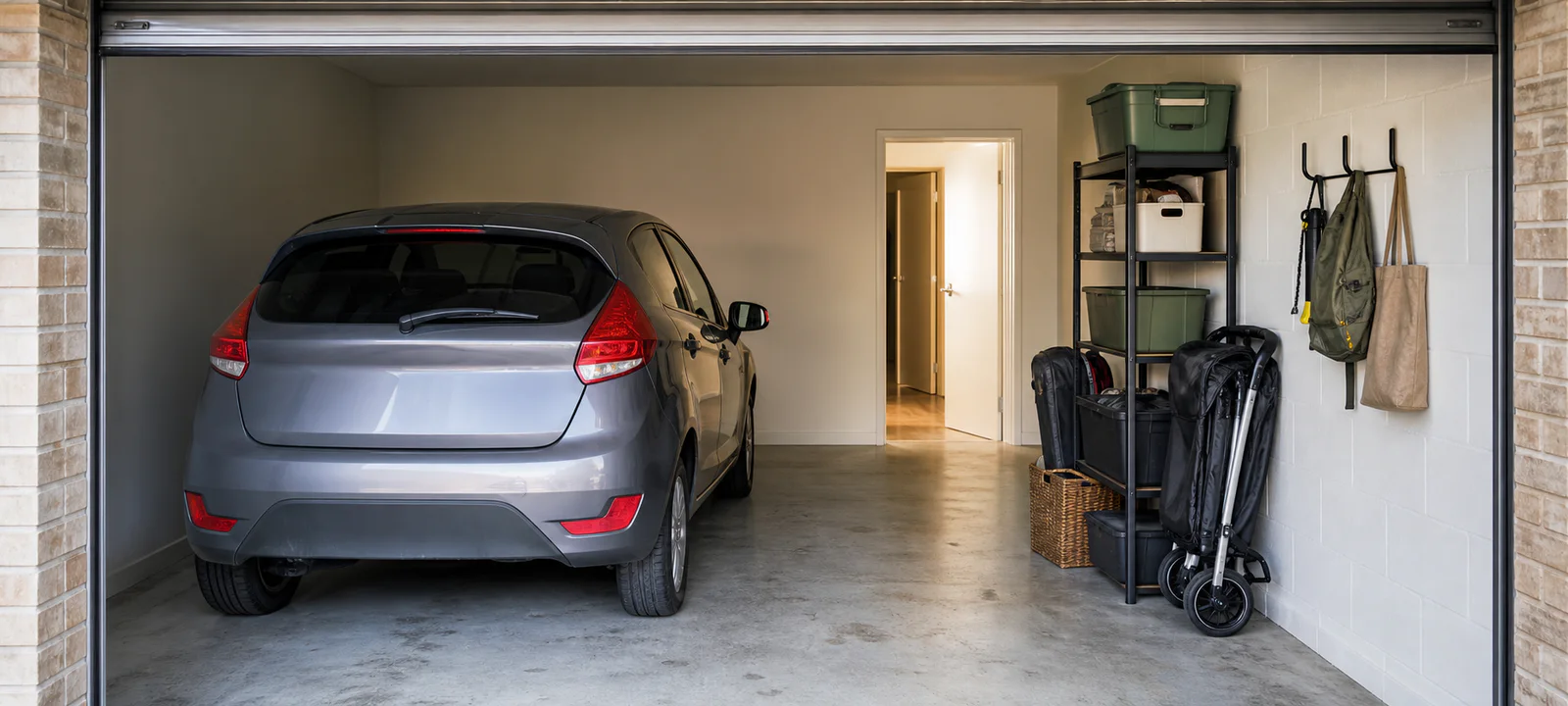
In a small garage, the most important measurements are taken after parking. The driver's door has to open, somebody needs a route to the house and groceries or sports gear need a temporary landing place.
Mark those zones before considering shelves. A shallow unit may fit where a standard rack would catch the car door, while leaving one wall bare may be the only way to handle bikes or a pram without daily shuffling.
Store the items that genuinely belong in the garage, then use height selectively. The room succeeds when parking, unloading and reaching the house remain ordinary rather than careful manoeuvres around storage.
Protect the main job first
Decide whether the garage's first job is parking, storage, a workshop or some combination. If a vehicle still belongs inside, its door-opening zones and the route to the house outrank any proposed shelf. The broader garage storage guide can help rank competing uses.
A small garage often also contains steps, drains, meters, power points, a laundry area or the only household entry. Mark these fixed features on a simple floor sketch before assuming an empty-looking wall is available.
Measure after parking
Park in the normal position, open the driver's door as far as it is used and repeat for any passenger doors. Include mirrors, handles, charging cables, the boot or tailgate and enough room to carry bags or a child indoors.
Record the boundaries that storage must not cross:
- car door arcs and the space needed to step out
- the clear path from driveway and vehicle to the house
- room for bins, bikes or a pram to pass
- roller, sectional or tilt-door tracks and movement
- access to taps, switches, meters and power points
- steps, slopes, drains and uneven floor patches
Leave a little tolerance. A measurement that works only when the car is parked perfectly or a door is opened carefully is unlikely to survive daily use.
Choose depth before height
Deep shelving increases capacity by taking working floor area. In a narrow garage, a few centimetres can decide whether a door opens comfortably or the route becomes a squeeze. Establish the maximum safe depth first, then compare widths and heights.
Measure existing tubs with their lids and handles, and make sure they will sit fully on the shelf. Check the unit's load rating, floor requirements and any need for wall fixing. The guide to garage shelving provides more detailed checks for load and fit.
Sort by access as well as category
| Access group | Examples | Useful position |
|---|---|---|
| Daily or weekly | helmets, pet leads, hand tools | visible and easy to return |
| Occasional | car care, sports and garden gear | labelled shelf or measured wall zone |
| Seasonal | decorations, camping and beach gear | higher only if retrieval is practical |
| Heavy | tools, hardware and bulk supplies | lower load-rated shelves |
| Hazardous | chemicals, batteries and blades | controlled, label-led storage |
If weekly gear remains on the floor while seasonal tubs occupy the easiest shelf, the system is organised in theory only. Give frequent items a position that can be reset in one movement.
Give awkward items their floor plan first
Bikes, scooters, prams and ladders can consume the remaining space after shelving is installed. Measure their full width and turning path before general storage. A simple floor zone may be more useful than a hanging system when the user cannot comfortably lift the item.
Wall storage should also be judged by projection. A bike mounted neatly on the wall can still intrude into the car door zone or walkway. Check the wall construction, rated load, fixings and the effort required every time the item is returned.
Keep heavy items low
Vertical space is limited but heavy tubs, tools, paint tins and bulk supplies should not be pushed high merely to free the floor. Check the product's load per level, total unit rating, required weight distribution and fixing instructions.
Higher shelves are better reserved for lighter items used infrequently. If retrieving a tub requires awkward reaching, twisting or climbing beside a parked car, that position is not practical storage.
Leave part of the room unfilled
A bare section of wall or floor can be the place where groceries land, a bike turns, a box is sorted or a bin passes. Filling every surface removes that flexibility and often pushes the next incoming item into the walkway.
Keep services and the garage door mechanism clear. Do not place tall shelves, loose tubs or hanging gear where they can interfere with the door, lighting or emergency access. Follow the door manufacturer's guidance if a proposed layout approaches the operating area.
Control chemicals and sharp tools
Small garages compress hazardous products and household traffic into the same space. Follow product labels, separate incompatible items where directed and restrict access by children and pets. Keep sharp tools enclosed or otherwise controlled.
Avoid chemicals above head height or anywhere a spill could run onto household belongings. Do not use a general tub or open shelf as a substitute for the storage conditions specified on a product.
Use freestanding storage thoughtfully in a rental
Freestanding shelving, labelled tubs, toolboxes and bike stands avoid permanent wall changes, but they still need level support, stable loading and clear access. Renters and body corporate residents should check requirements before drilling or altering shared walls or fixtures.
“Removable” products can still mark a surface or fail under load. Follow their installation instructions and favour pieces that can adapt to a future garage.
Rehearse parking and unloading
- park the vehicle and open every regularly used door
- walk the route indoors while carrying a bulky item
- set a maximum shelf depth before comparing units
- plan bikes, prams, ladders and bins before general shelving
- keep heavy items low and weekly items easy to return
- check wall type, loads, floor level and garage door clearance
- leave a useful patch of wall or floor unfilled
- remove items that no longer justify scarce garage space
The best small-garage storage is not the largest system that fits. It is the arrangement that lets the car, people and everyday gear move without a careful sequence of shuffling.
Common Questions
How do I maximise storage in a small garage?
Protect parking, car door clearance and the route indoors before adding capacity. Sort by access frequency, plan awkward equipment first and choose shelf depth while the car is parked. Use reachable height for lighter, less-used items and leave some space unfilled so unloading, cleaning and future changes remain possible.
What shelving works best in a narrow garage?
Choose the shallowest unit that safely holds the measured containers or equipment. Mark its loaded footprint beside the parked car, including shelf overhang and items projecting from it. Check the floor, load rating and anchoring instructions. Tall shelving is not useful when the upper levels cannot be handled safely.
Where should heavy items go in a small garage?
Keep heavy, manageable items low so they do not need to be lifted from above shoulder level and cannot overload light upper storage. Measure their full weight and footprint before selecting shelves. Place them where they can be reached without moving the car, climbing around other gear or dismantling a stack.