
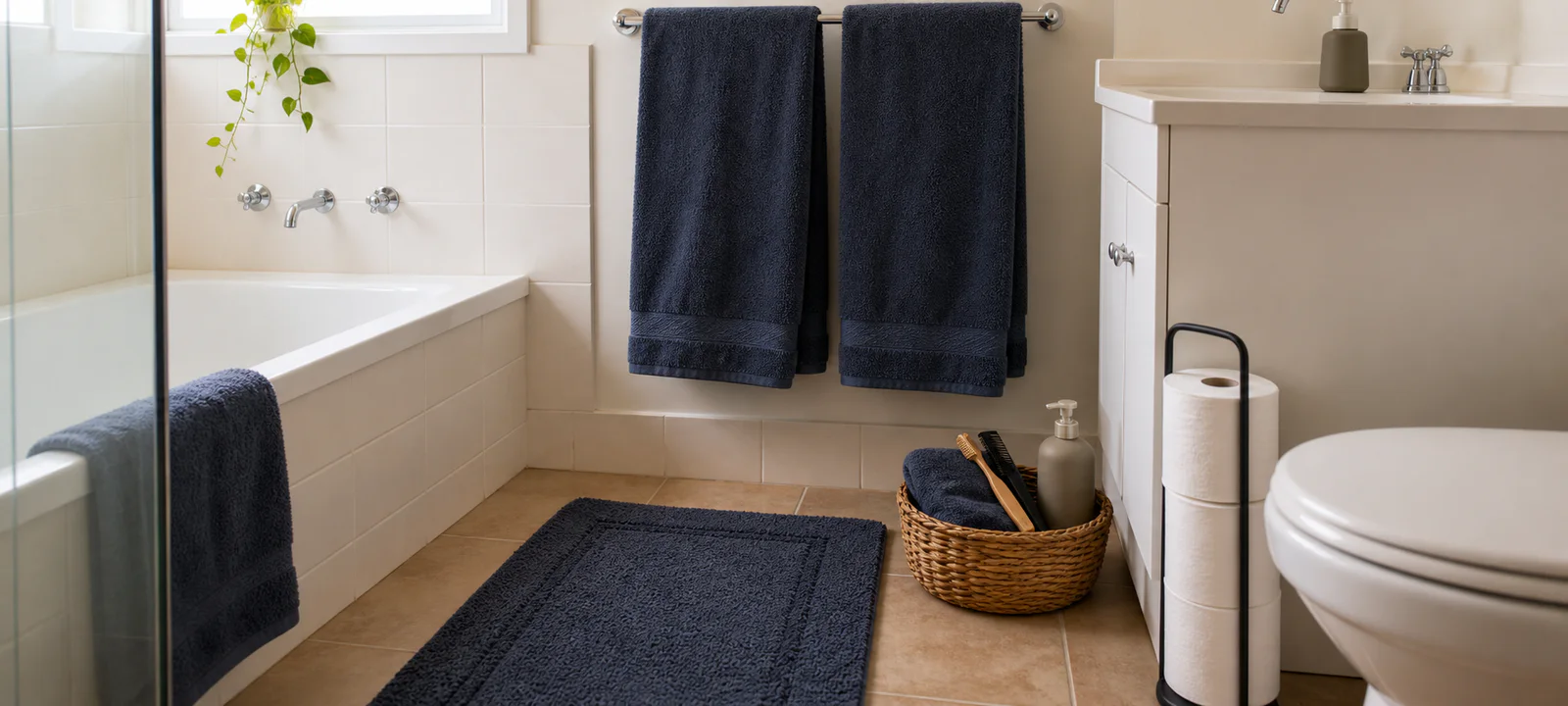
A bathroom is ready for the next person when towels can dry, water stays out of the walkway, toiletries return easily and cleaning does not require shifting a display of accessories. Those are the essentials; matching dispensers can wait.
Use this bathroom essentials list for a new home, rental, ensuite or shared family bathroom, then remove anything the room does not need. A family bathroom may require several hanging places and controlled storage. An ensuite may need little more than towels, a bath mat, a bin and one clear vanity drawer.
Begin with a short bathroom essentials list
Most bathrooms need some version of:
- Bath towels and a hand towel.
- A bath mat suited to the floor and washing routine.
- Soap or hand wash and the toiletries used every day.
- A stable place for toothbrushes and shower products.
- Toilet paper and a hygienic toilet brush.
- A bin suited to the room and household.
- Cleaning cloths and products appropriate for the surfaces.
- Enough storage to keep daily items accessible and controlled.
Start with one person's normal routine from washing to drying and leaving the room. That exposes missing items more reliably than a long shopping checklist.
Make room for towels to dry
Towels need enough hanging width and airflow to dry between uses. A rail spreads a towel more effectively than a small hook, but may require more wall space. Hooks can suit hand towels, robes or a crowded family bathroom when each person has a defined place.
Count the towels used at the busiest time, not when the room is empty. Keep clean spares elsewhere if a stack inside the bathroom becomes damp or steals useful storage. The towel storage guide covers wall width, reach, fixing requirements and drying space.
Choose a bath mat that can recover after use
A bath mat should catch the usual drips without creeping into a doorway or folding against the vanity. Check that it remains stable on the bathroom floor and that its size, backing and care instructions suit regular washing.
Hang or position the mat so it can dry rather than leaving it wet on the floor all day. Two modest mats in rotation may be more practical than one thick style that is difficult to wash and slow to dry.
Keep only active products in the shower
Bottles multiply quickly when unfinished products and bulk refills remain in the wet zone. Keep the shampoo, conditioner, soap and other products currently in use; move replacements to dry storage outside the shower.
A caddy or shelf should drain, tolerate the bottle load and leave room to move and clean. Test its proposed position against the shower door, tapware and spray. The shower storage guide compares hanging, corner, freestanding and fixed options without assuming every surface suits an adhesive or drilled fitting.
Give the vanity an everyday layer and a reserve layer
The easiest drawer or shelf should hold the small group used every morning and evening. Back-up toiletries, travel items and occasional products can sit deeper or elsewhere. This prevents daily grooming from becoming a search through bulk supplies.
Measure around pipes, hinges and drawer runners before adding organisers. A tray or small caddy may be enough; too many dividers can waste irregular space. Sort cosmetics, razors, medicines and spares with the bathroom vanity guide.
Keep the basin clear enough to wipe
The basin area usually needs soap and perhaps one small group of daily items. When bottles, brushes and cosmetics form a permanent line around it, water and dust collect between them and a quick wipe becomes a full rearrangement.
Return products after use, group shared items in one cleanable tray if needed and resist decanting purely for appearance. Original labels and instructions can matter, especially for products with specific use or storage requirements.
Store toilet paper for the next change, not the whole bulk pack
Keep at least one spare roll within easy reach of the toilet and place the rest somewhere dry. A basket or holder can work if it stays clear of splashes and does not narrow the walkway.
Over-toilet shelving can add storage, but it also places items above a frequently used space. Check stability, wall fixings, reach and cleaning access. Keep heavy, breakable or awkward items lower and avoid crowding the cistern or controls.
Choose a bin around what the household discards
A compact bin may suit an ensuite; a shared bathroom may need more capacity or a lid. Check whether it fits beside the vanity or toilet without catching feet or blocking cupboard doors. A removable liner and smooth surfaces make regular cleaning easier.
The bathroom bin is not appropriate for every product. Follow local disposal advice and product instructions for medicines, batteries, sharps or other items that need special handling.
Keep cleaning supplies close but controlled
A cloth, suitable surface cleaner and toilet-cleaning tool are easier to use when they have a clear home. In households with children or pets, convenience must not put cleaning products within reach. Follow label directions, keep products in their original containers and do not mix cleaners.
Bulk supplies can live in a more appropriate storage area. Inside the bathroom, keep only what supports the regular clean and make sure damp cloths or brushes can dry hygienically.
Add hooks only where the item can hang freely
A hook behind the door may hold a robe until the hanging item stops the door opening. One beside the shower may be convenient until the towel drags on the floor. Test the item at full length and the door at full swing before fixing anything.
Check the wall or door material, product instructions, rated load and wet-area suitability. Renters should review the lease before drilling or relying on a removable product; the renter-friendly bathroom storage guide covers lower-impact options and surface checks.
Keep guest supplies separate from daily clutter
A guest does not need a hotel display. A clean towel, accessible soap, toilet paper and a small clear space for personal items are usually more useful than a basket of miniatures.
Keep occasional guest supplies in one labelled group outside the prime daily zone. Bring them out when needed rather than making the household work around them all year.
Give hair tools a dry cooling and storage plan
Hair dryers and heated styling tools need a position away from water and a storage routine that follows their instructions. Do not wind cords tightly around hot appliances or put an item away before it has cooled as directed.
If the power point, basin and mirror make the routine awkward, do not solve it with an extension lead across the bathroom. Use electrical products only where and as intended, and seek appropriate advice if the room's electrical setup needs changing. Queensland's Electrical Safety Office provides practical guidance on using household electrical equipment around water.
Let airflow influence what stays in the room
Towels, mats and shower products all add moisture to a room that may already be slow to dry. Use the bathroom's ventilation as intended, clear vents and openings, and avoid packing cupboards so tightly that damp items remain enclosed.
Persistent damp, leaks or mould need the underlying cause addressed rather than hidden behind a cabinet. A small bathroom may benefit from fewer stored products; the small bathroom storage guide helps protect movement and cleaning space.
Before another bathroom accessory comes home
- Name the washing, drying, storage or cleaning task it will support.
- Measure it with doors, drawers and the household in the room.
- Check wet-area suitability, cleaning access and installation requirements.
- Keep hazardous, sharp and electrical items appropriately controlled.
- Prefer clear surfaces and dry towels over extra display storage.
If the whole room needs a storage plan, use the bathroom storage guide before comparing shelves, caddies or cabinets. A well-equipped bathroom is not the one with the longest essentials list. It is the one that can be used, dried and reset without the next person working around somebody else's things.
Common Questions
What does every bathroom need?
Start with the items that support washing, drying and cleaning: usable towels, a bath mat, active toiletries, toilet paper, a suitable bin and a small set of cleaning supplies. Adjust that list to the people using the room instead of filling the bathroom with matching accessories that do not help the daily routine.
How do you keep bathroom essentials from becoming clutter?
Keep only current products within easy reach and give backup supplies one separate reserve zone. Leave enough clear basin space to wipe, return hair tools to a dry storage place after they cool, and move bulk packs elsewhere if the bathroom is too humid or crowded to hold them well.
Where should wet towels be kept in a bathroom?
Hang each used towel where it can spread out rather than bunching against another towel, a wall or the floor. Choose rails or well-spaced hooks around the room's actual shower routine, and store folded clean towels separately so the drying area is not competing with the household's reserve supply.