
Most vanity clutter comes from two collections sharing the same small space: the products used every morning and everything kept for later. Spare toothpaste, half-used samples and travel bottles crowd the drawer until the toothbrush ends up on the benchtop.
An organiser helps only after those collections are separated. Rebuild one drawer or cupboard around a real routine, then measure the remaining products. The result should reduce reaching and shuffling, not create smaller compartments full of the same clutter.
Reset one vanity zone at a time
Start with the top drawer, benchtop or one cabinet shelf. Emptying the entire bathroom can turn a practical edit into a day-long project and makes it easy to push everything into a different cupboard.
As each item comes out, put it into one of four groups:
- used at this vanity every day
- used weekly or occasionally
- unopened backup stock
- expired, empty, unsuitable or ready to leave
Follow labels and appropriate disposal advice for medicines, cosmetics and skincare. Healthdirect recommends taking expired or unwanted medicines to a pharmacy rather than putting them in household rubbish or flushing them. Its guide also explains why each medicine's storage instructions matter: storing and disposing of medicines.
Organise around the quickest routine
Put the items used together into a simple sequence. A morning group might include a toothbrush, cleanser, deodorant and sunscreen. Shaving gear, daily makeup or contact-lens supplies can each have their own defined zone if the household uses them regularly.
| Routine | Possible contents | Useful position |
|---|---|---|
| Morning basics | toothpaste, cleanser, deodorant, sunscreen | top drawer or a small washable tray |
| Makeup | current products, brushes and remover | shallow tray with visible categories |
| Hair | brush, ties, clips and current products | drawer or upright holder |
| Shaving | razor, cream and replacement blades | dry, controlled storage |
| Backups | unopened soap, toothpaste and toiletries | lower shelf or labelled basket |
When several people share the vanity, one broad zone per person often works better than a complicated set of tiny product categories. Each person should be able to return their daily items without rearranging somebody else's.
Measure the drawer, not the cabinet front
Vanity drawers may be shallow, narrow or cut around plumbing. Record the internal width, depth and height, including any loss of space beneath the drawer frame. Check whether the drawer opens fully in the room and whether an organiser's raised edge or handle would stop it closing.
Measure the products too. A tray can fit perfectly while deodorant, cleanser or a makeup brush sits too high. If bottles must lie down, consider whether they can leak and whether their labels will still be readable.
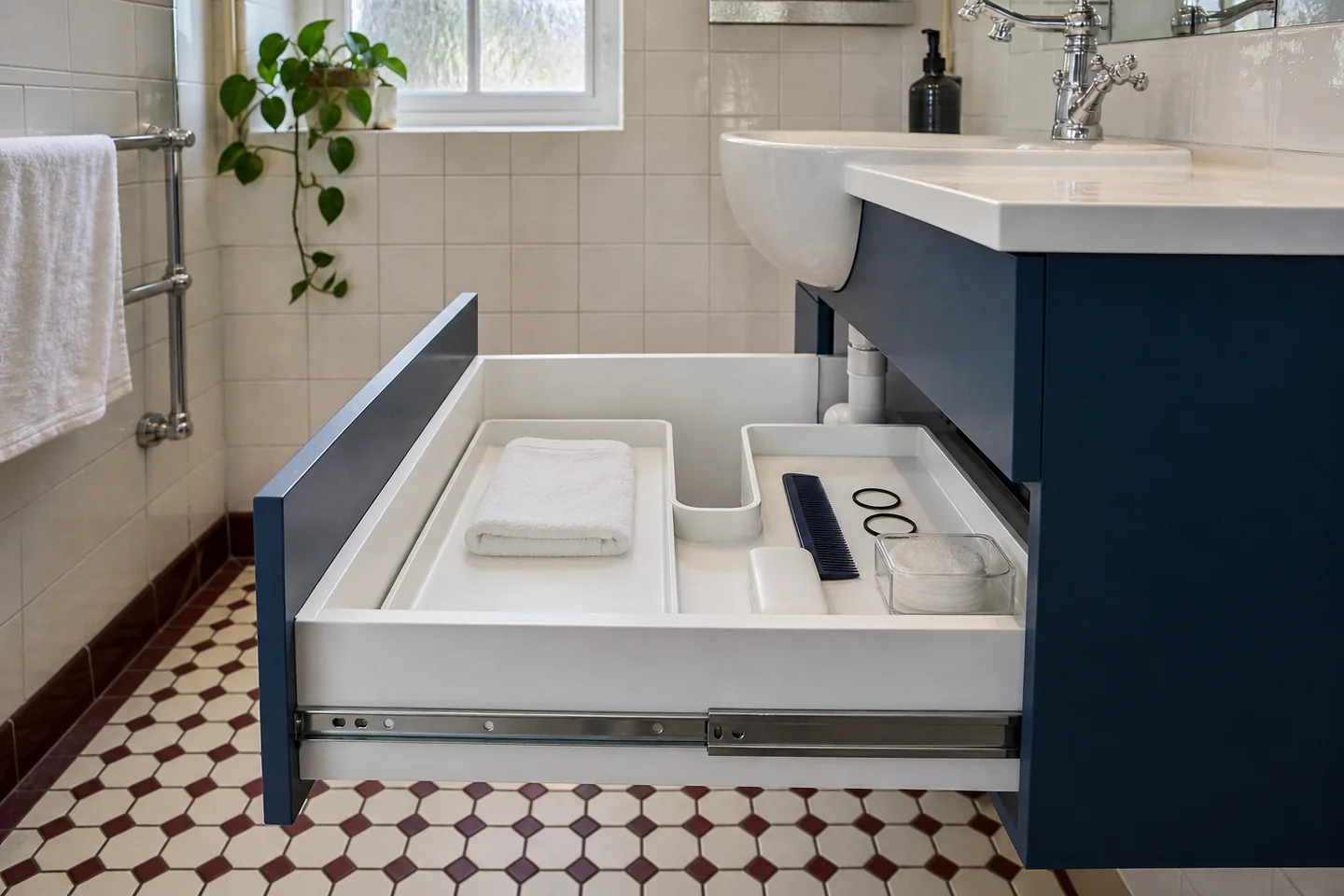
Keep the benchtop as a working surface
Hand soap, toothbrushes and perhaps one or two daily products may deserve benchtop space. The rest should not live there by default. Leave the tap, plug and mirror clear and make sure the surface can be wiped without moving a dozen containers.
A small tray can make the morning group easy to lift, but it also needs regular cleaning underneath. If it becomes a home for unopened products, medicines or spare razors, move those items instead of buying a larger tray.
Fit under-sink storage around the plumbing
Measure the cabinet opening, floor, shelf spacing, pipe and trap positions, hoses and hinge clearance. Any basket or pull-out must be removable without pressing against plumbing and should leave leaks or dampness visible.
Before buying a tiered shelf or drawer, follow the full under-sink bathroom measuring guide. If the cabinet is musty, swollen or stained, address the moisture or plumbing issue before loading it with organisers.
Separate products that need more care
Razors and blades should not roll loose beside toothbrush heads. Cleaning products should not share an unlabelled basket with skincare or towels. Medicines may be unsuitable for a warm, humid vanity and should be stored according to their packaging or pharmacist advice.
Low drawers and cupboards are also easy for children and pets to reach. Product Safety Australia advises keeping household chemicals in original containers and securely out of children's reach and sight. If a low cupboard is accessible, ordinary open baskets are not a substitute for suitable controlled storage.
Give hair tools a cool, dry position
Hair dryers and styling tools introduce heat, cords and electricity to a room with water. Allow a tool to cool as its manufacturer directs before putting it away, keep cords out of wet areas and avoid makeshift power arrangements.
Queensland's Electrical Safety Office says not to use electrical appliances around water or touch them with wet hands. Its electrical equipment guidance covers safe use and inspection. A tool used only occasionally does not need the most accessible vanity position.
Choose broad categories that stay visible
Too many dividers create their own maintenance. Use enough separation to stop small items mixing, but leave finger room to remove products and enough flexibility for the routine to change.
- Keep current makeup separate from unopened backups.
- Give hair ties and clips one small, reachable compartment.
- Store sharp grooming tools in a deliberate, controlled place.
- Group spare toiletries in one labelled basket rather than across every drawer.
- Move samples and travel products out of prime space.
If a category keeps overflowing, review what is being bought and used before adding another container.
Prefer organisers that lift out to clean
Toothpaste, powder, hair and product drips eventually reach the bottom of every tray. Choose organisers that can be removed without unloading the whole vanity and materials that suit a damp room.
Avoid containers that hide spills, trap wet cloths or cover signs of a leak. Persistent mould, damp smells or swollen cabinetry require attention to the underlying cause, not a more tightly fitted insert.
Compare the organiser with the items inside it
Before shopping, record:
- the products used in each daily routine
- what has been removed, relocated or reduced
- internal drawer width, depth and height
- the tallest and longest item in each group
- cabinet opening, shelf and hinge clearances
- pipe, trap and hose positions
- the usable benchtop area around the basin
- items needing dry, secure or child-resistant storage
- whether every organiser can be lifted out and cleaned
Vanity organiser types to compare
Compare organisers only after expired products and duplicates are removed. Medicines, sharp items, electrical tools and cleaning products need their own controlled storage decisions rather than an ordinary vanity organiser.
Shallow drawer trays
- May help with
- Keeping a small daily routine visible without stacking products on top of each other.
- Measure first
- Internal drawer width, depth and height, plus the tallest item intended for each tray.
- Check before buying
- Whether trays can be lifted out for cleaning and leave enough finger space to remove products.
- Avoid if
- The drawer still contains expired products, duplicates or tall bottles that prevent it closing.
Adjustable drawer dividers
- May help with
- Separating broader groups such as skincare, grooming and spare items in a wide drawer.
- Measure first
- Drawer width and height at the divider position and the length of the products in each zone.
- Check before buying
- How the divider stays in place and whether its ends suit the vanity surface.
- Avoid if
- Several small categories would create more shuffling or the divider would press against delicate drawer sides.
Handled cabinet baskets
- May help with
- Grouping backup toiletries on a shelf where the whole group needs to pull forward.
- Measure first
- Shelf depth, opening width, bottle height and clearance around hinges or plumbing.
- Check before buying
- Whether the loaded basket remains easy to lift and whether labels can be read without emptying it.
- Avoid if
- The basket would hide leaks, block pipe access or become too heavy when filled with large bottles.
Small benchtop trays
- May help with
- Containing the few products used every day while keeping the rest of the vanity clear.
- Measure first
- The usable benchtop area after allowing for taps, basins, doors and normal cleaning.
- Check before buying
- Whether the tray and the surface underneath can be wiped and dried easily.
- Avoid if
- It will become a holding area for backups, medicines, sharp items or products rarely used at the basin.
Options for the vanity zone that still slows the routine
First remove expired products, return daily items to one visible zone and move reserves out of prime space. If the morning routine still involves lifting and searching, compare these portable caddy and sliding-basket options against the drawer, plumbing, loaded weight and cleaning path.
Some links below are affiliate links. If you buy through one, we may earn a commission at no extra cost to you. Learn more.
Portable bathroom caddy
Joseph Joseph EasyStore Bathroom Caddy
A divided handled caddy for grouping daily toiletries before deciding whether fixed vanity dividers are necessary.
Research-supported option
View at Amazon AustraliaMay suit: shared bathrooms where a portable daily kit is useful.
May not suit: large bottles or owners needing sealed storage.
Drawbacks to consider:
- Its fixed compartments will not suit every bottle diameter or tall pump.
- Current dimensions, variant, price, stock and seller details should be rechecked before ordering.
Evidence confidence: moderate. Last reviewed 18 August 2026. Research-based assessment; we have not tested this product firsthand.
Sliding basket organiser
SimpleHouseware Stackable 3-Tier Sliding Basket Organiser
A vertical mesh drawer unit for measured vanity cupboards where ventilation and quick access are more useful than sealed bins.
Research-supported option
View at Amazon AustraliaMay suit: vanities storing small items by category.
May not suit: minimal vanities or storage needing child-resistant closure.
Drawbacks to consider:
- The mesh baskets expose contents and need enough front clearance to slide.
- Current dimensions, variant, price, stock and seller details should be rechecked before ordering.
Evidence confidence: moderate. Last reviewed 18 August 2026. Research-based assessment; we have not tested this product firsthand.
Make tomorrow morning easier
A useful vanity does not need a compartment for every product. It keeps the short daily routine close, gives backups a limited zone and separates anything sharp, hazardous or sensitive to heat and moisture.
If an organiser makes products harder to reach, hides plumbing or fills the benchtop with another object to clean, it has organised the appearance rather than the routine.
Common Questions
How do you organise a small bathroom vanity?
Reset one drawer or cupboard at a time and separate daily products from occasional items and backups. Measure the true internal space, including drawer height and plumbing, then use a few lift-out trays or broad categories. Keeping the quickest routine visible is more useful than dividing every small product into its own compartment.
What should stay on a bathroom vanity benchtop?
Only items used in the immediate routine should compete for benchtop space, and even those may work better in a shallow tray that lifts away for cleaning. Keep the basin and a useful section of the surface clear enough to wash, place products down and wipe splashes without moving a display first.
How can I organise a vanity around under-sink plumbing?
Map the pipes, trap, hinges and clear route needed for maintenance before choosing an organiser. Use the separate pockets of space beside the plumbing, preferably with removable baskets or trays that can be lifted out quickly. Leave the cabinet floor and pipe connections visible enough to notice moisture and clear the cupboard when required.