
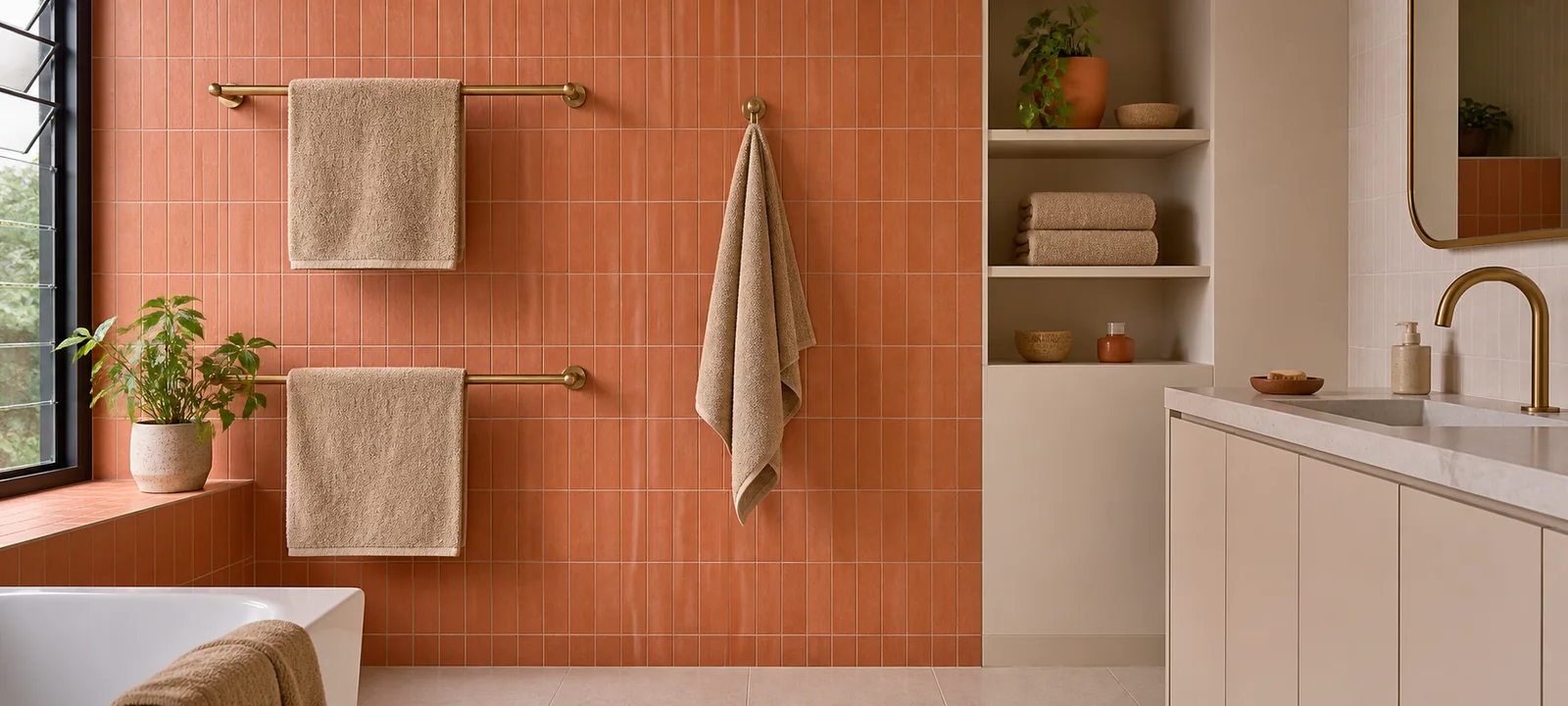
Count the damp towels after the bathroom's busiest shower. That number—not the width of an empty wall—reveals how much hanging space the room needs. The clean towels folded in a basket are a separate storage problem.
Rails spread fabric but need wall length. Hooks fit narrow spaces but bunch thick towels. Before choosing either, hang the largest towel in the proposed position and check the door, drawers, floor and neighbouring towels.
Separate drying from clean storage
List the bath towels, bath sheets, children's towels, hand towels and face washers used on a busy day. Then divide them by condition rather than size.
| Towel group | What it needs | Likely position |
|---|---|---|
| Damp bath towels | separation and airflow | rail, hook or drying rack |
| Hand towels | easy reach from the basin | small rail, ring or hook outside direct splash |
| Clean spares | a dry, accessible home | shelf, basket or linen cupboard |
| Used towels for washing | a clear path to laundry | appropriate hamper or laundry routine |
A basket of damp towels may make the room look tidy for an hour, but it does not replace drying space. If the bathroom is small, keep bulk clean linen elsewhere and reserve the room for the towels in active use.
Observe how the bathroom dries
Note whether the exhaust fan or window is used, how long towels remain damp and whether condensation lingers after showers. A rail cannot correct an underlying ventilation, water or moisture problem, but good spacing can avoid making drying harder.
If towels already stay damp or the room has persistent mould, water damage or musty areas, deal with the cause rather than adding more hooks. Storage should keep fabric away from wet floors and damp walls and leave room to clean behind it.
Measure the towel as well as the wall
Bath sheets can be considerably longer and wider than standard towels. Measure the largest towel used in the room, then hang or tape a paper outline at the proposed height.
- Allow the towel to hang clear of the floor, toilet, vanity and bath.
- Check the full width required to spread it on a rail.
- Include the drop from a hook, where fabric hangs lower and bunches.
- Leave separation between neighbouring towels.
- Make the position reachable for the person expected to use it.
A high rail may keep a towel off the floor but make it unusable for a child. A low hook may be easy to reach yet leave a bath sheet dragging. Use the household's actual reach and towel dimensions rather than a standard installation height.
Compare rails and hooks by drying behaviour
A single rail generally gives a towel more spread, while hooks use less wall width and can make individual family zones obvious. Neither is automatically better: towel thickness, spacing, room airflow and user habits all matter.
| Option | Advantage | Check before choosing |
|---|---|---|
| Single rail | spreads one bath towel | wall length, towel drop and fixing |
| Double rail | uses one wall area for two towels | depth, overlap and airflow between layers |
| Individual hooks | small footprint and clear ownership | spacing, bunching and damp loaded weight |
| Over-door rack | avoids a new wall fixing | door closure, frame, swing and marks |
| Freestanding rack | portable and non-fixed | floor space, stability and cleaning |
| Shelf with rail | combines a clean-linen shelf with hanging space | depth, wall fixing and splash exposure |
Check the room with towels hanging
Empty hooks and rails look slimmer than they are in use. Hang the largest towel or use a template, then open the bathroom door, shower screen and every nearby vanity drawer.
Over-door products need top clearance and should not scrape the frame, stop the latch or swing into a wall. Wet towels add weight and bulk. A rack that suits a robe may be less effective for several bath sheets.
Keep towels out of the walking route and leave enough access to mop the floor and clean the toilet or vanity. The wider bathroom storage guide helps map these shared clearances.
Place the towel where the routine ends
A rail across the room from the shower may stay empty because people reach for the nearest door handle instead. Position daily towels where they can be reached safely after washing, without leaning across a wet floor or brushing the toilet.
Hand towels should be obvious from the basin but outside constant splashes. In a family bathroom, a lower child-accessible hook may work if the towel still clears the floor and dries adequately. Labels or different towel colours can prevent mix-ups without adding more furniture.
Use shelves and baskets for dry towels
Measure folded towel depth and the dry shelf area before buying a unit. Clean towels should not overhang into a walkway, absorb basin splashes or sit against a persistently damp wall. A shelf above shoulder height may suit light spares but should still be easy to reach safely.
Baskets need a defined job: clean linen or dry used towels ready for washing. Do not use a closed or poorly ventilated basket as the everyday destination for wet towels. Choose a washable material suited to the room and keep the floor beneath it accessible.
Treat removable fixings cautiously
Adhesive and suction hooks depend on the approved surface, preparation, moisture exposure and rated load. A damp bath towel weighs more than a dry hand towel and may be pulled sideways rather than straight down.
Follow the manufacturer's installation and load guidance. Do not assume a hook will hold on textured tile, grout, damp paint or an uneven surface. Consider what happens if it fails, particularly where children pull on towels or hard fittings could fall.
Check before drilling or fixing
A fixed rail needs a surface and fixings suitable for the product and loaded use. Bathroom walls may contain tiles, waterproofed areas, masonry, framing or concealed services. If the construction or installation is uncertain, seek appropriately qualified advice.
Renters and people in strata or body corporate properties should confirm approval before drilling or changing fittings. For reversible choices, use the renter-friendly bathroom storage guide.
Plan for the busiest shared routine
Give each regular user a defined hanging position and make sure all towels can hang at the same time. Multiple hooks are useful only when spaced far enough apart and located where the towels actually dry.
Keep guest towels and clean spares separate from the active daily set. Pool and beach towels may belong closer to the laundry or outdoor routine rather than taking over the bathroom rail.
Take these measurements when comparing products
- the number of damp towels after the busiest shower
- length and width of the largest towel or bath sheet
- clear wall width and practical reach height
- door, drawer, screen and walking clearances
- distance from shower, bath, basin and toilet
- towel overlap and spacing
- surface type and required fixing method
- rated load with a damp towel
- room airflow and existing drying performance
- rental, strata or body corporate restrictions
Give damp fabric room before adding folded storage
The first towel-storage job is to handle the towels in use. Once each damp towel has an accessible place to hang, clean spares can be kept on a dry shelf or outside the bathroom.
If the proposed rail blocks a door, the hooks bunch every towel together or the basket hides damp fabric, the setup is storing towels without solving the drying problem.
Common Questions
Are towel rails or hooks better for drying towels?
A rail generally lets a towel spread out, while a hook uses less wall space but leaves more fabric bunched together. The better choice depends on airflow, towel size, available wall width and how many people use the room. Test the busiest routine with towels hanging, not just the empty fixture dimensions.
How much space do bathroom towels need?
Count every damp towel present after the busiest shower, then measure each towel in the way it will hang. Include the depth of the hanging fabric, door and drawer movement, nearby switches and the space people need to pass. An empty wall can appear suitable until full towels project into the room.
Should clean and wet towels be stored together?
Treat them as separate storage jobs. Used towels need an open position with enough room to dry, while clean towels can sit folded on a dry shelf or in a basket. Using the clean-towel reserve to solve the drying problem usually crowds both collections and makes the room harder to reset.