
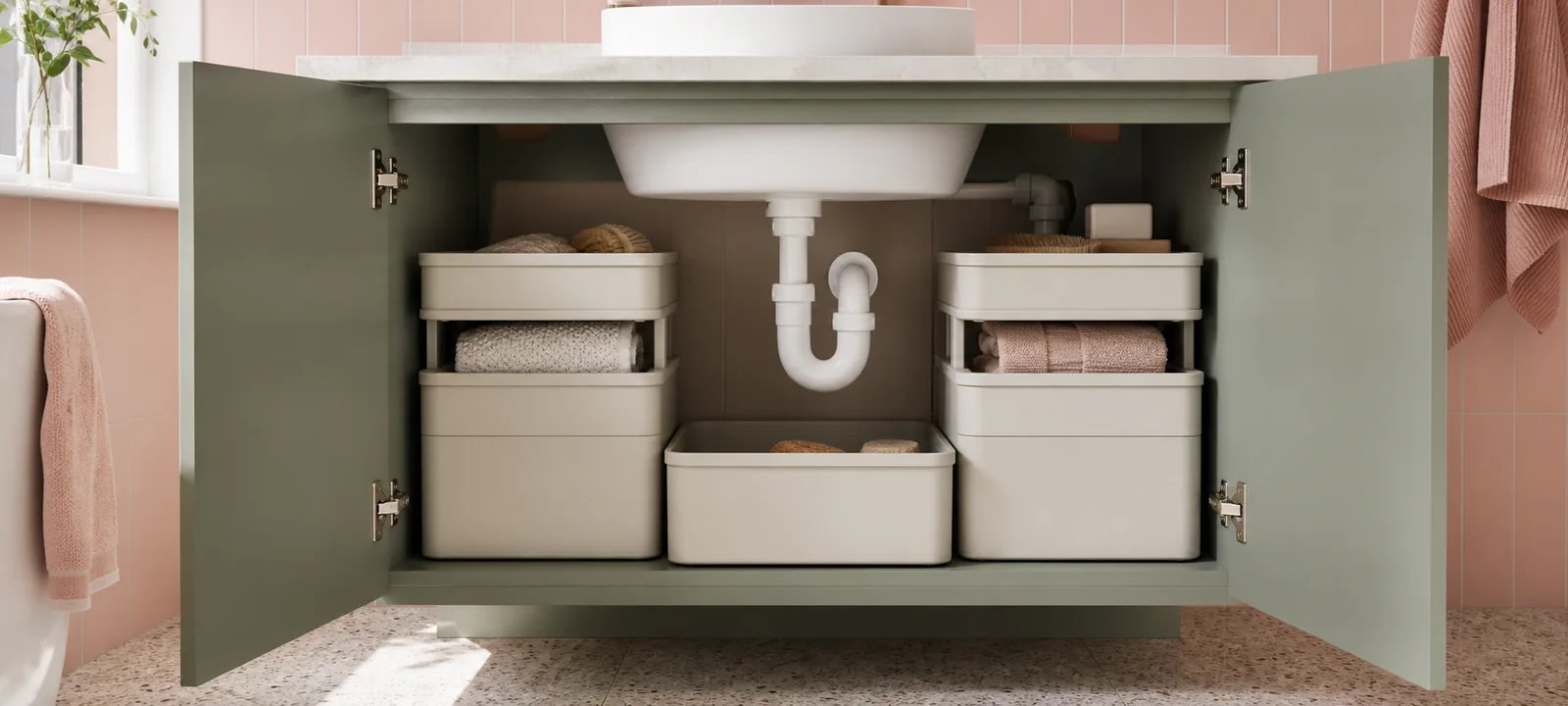
An under-sink cupboard looks wide until the doors open. The trap takes the centre, pipes break up the back wall and hinges claim the easiest corners. What remains is not one neat rectangle but several small pockets with different heights.
Empty the cupboard before trying to fill those pockets. Check for dampness and damage, measure around the plumbing and decide which products are genuinely suitable for a low, enclosed bathroom cabinet. The best organiser is usually removable and modest enough to leave the pipes visible.
Inspect the empty cabinet first
Products and baskets can hide the early signs of a problem. With the cupboard empty, look and feel for water marks, swelling, peeling surfaces, rust, musty smells and damp corners. Check around bottles as well as beneath the basin; an old product leak can resemble a plumbing leak.
Do not cover persistent dampness, mould, water damage or a loose fitting with a liner or tub. Seek appropriate plumbing, building or property advice for the cause before loading the cabinet again. Storage should make later inspection easier.
Remove what no longer belongs
Under-sink cupboards tend to collect almost-empty toiletries, unused cleaners and travel bottles because they are out of sight. Remove empty, expired, leaking or unidentifiable products before estimating how much storage is needed.
Then divide the remaining contents:
| Category | Possible contents | Question to ask |
|---|---|---|
| Bathroom backups | unopened soap, toothpaste and toiletries | how many need to stay here? |
| Cleaning supplies | labelled sprays, toilet cleaner and cloths | can they be stored safely and separately? |
| Dry goods | toilet paper and spare hand towels | will they stay dry? |
| Controlled items | razors, blades, medicines and glass | does a low cupboard provide suitable access control? |
| Relocate | bulk packs, heat- or moisture-sensitive items | is another cupboard more appropriate? |
If the whole bathroom needs a reset, sort it with the bathroom product storage guide before returning to this awkward cabinet.
Map the plumbing in three dimensions
Measure the cabinet width, depth and height, then add the obstacles. A quick sketch is useful: mark how far each pipe sits from the side and back, the trap's lowest point, hose movement, valves, shelf cut-outs and fixed dividers.
- Measure the flat floor area on each side of the trap.
- Record usable height beneath and beside the pipes.
- Measure the clear opening between the hinges, not only the interior width.
- Open both doors fully and note any centre stile or frame.
- Keep access to fittings and valves unobstructed.
A two-tier shelf can fit the cabinet but collide with the trap. A pull-out can sit neatly on the floor yet fail to pass the hinge. Measure every organiser's route through the door as well as its final position.
Match shelf height to real bottles
Include pumps, triggers and caps when measuring shampoo, body wash and cleaning bottles. Allow enough clearance to lift them over a shelf edge without tilting everything around them. Products designed to stand upright should not be laid down simply to make a riser fit.
Keep heavy bottles low and make labels visible from the door. If the organiser creates two shallow levels but most bottles need the full cabinet height, it is not adding useful capacity.
Use pull-outs only where the path is clear
A pull-out basket can make a deep corner accessible, but it needs clearance at the front, sides and above. Test whether the loaded unit passes the hinges, clears the trap and stays stable when extended.
Turntables need a clear circle to rotate; they are rarely useful where plumbing cuts through that circle. Fixed runners and screw-mounted systems also require a suitable cabinet and permission in a rental. A simple handled basket may provide the same access with less installation and can be removed quickly if the plumbing needs attention.
Contain spills without hiding leaks
A shallow, wipeable tray can catch a dripping product and protect the cabinet floor. It should lift out easily and leave enough visibility to notice water from the basin or pipes. Deep opaque tubs may conceal both the back row and the cabinet surface beneath them.
Be cautious with cardboard, fabric baskets, untreated timber, rust-prone metal and paper labels in a damp cabinet. Whatever the material, remove it periodically to wipe and inspect the space.
Separate cleaning products from toiletries
Toothbrush heads, skincare and clean towels should not share a loose basket with bathroom cleaner. Keep chemical products in their original containers, with labels and closures intact, and follow the storage directions on each product.
Product Safety Australia recommends securing household chemicals out of children's reach and sight; a child-resistant lock is advised when they are stored in a low accessible cupboard. See its chemical and poison safety guide. If this cabinet cannot provide suitable storage, move the products rather than relying on an open caddy.
Question medicines, blades and damp fabric
Bathrooms can be warm and humid, so medicine storage should follow the packaging or a pharmacist's advice. A low cabinet may also be accessible to children or pets. Do not mix medicines or first-aid items with cleaning products simply because both fit under the sink.
Razors and spare blades need controlled storage, not a loose open basket. Towels, face washers and cleaning cloths should be completely dry before entering an enclosed cupboard. Damp fabric belongs somewhere it can dry.
Choose a simple organiser for each side
| Organiser | Useful for | Check first |
|---|---|---|
| Handled basket | one group of backup toiletries | loaded weight, opening and hinge clearance |
| Shallow tray | containing product drips | removal access and visibility beneath it |
| Narrow shelf | using height beside the pipes | bottle height, stability and trap clearance |
| Pull-out basket | frequent items in a deep clear bay | hinges, frame, plumbing and installation |
| Small divided box | dry grooming accessories | child access and cleanability |
One organiser on either side of the pipes is often more practical than a fitted system across the full width. Leave enough room to remove either piece without dismantling the cupboard.
Organiser options for the usable side pockets
First repair moisture problems, move medicines and damp fabric elsewhere, and sketch the pipes, hinges and bottle heights. If clear side space remains, compare these expandable shelf and pull-out options only where the organiser can lift out quickly and leaves plumbing and the cabinet floor visible.
Some links below are affiliate links. If you buy through one, we may earn a commission at no extra cost to you. Learn more.
Expandable under-sink shelf
SimpleHouseware 2-Tier Expandable Under-Sink Shelf
An adjustable two-tier shelf that can work around plumbing when the cupboard width, pipe positions and shelf heights are measured.
Research-supported option
View at Amazon AustraliaMay suit: wide vanity cupboards with offset plumbing.
May not suit: narrow cabinets or centrally crowded plumbing.
Drawbacks to consider:
- Pipework and trap access may still prevent both tiers being used across the full width.
- Current dimensions, variant, price, stock and seller details should be rechecked before ordering.
Evidence confidence: moderate. Last reviewed 18 August 2026. Research-based assessment; we have not tested this product firsthand.
Two-tier pull-out organiser
SimpleHouseware 2-Tier Pull-Out Under-Sink Organiser
A compact sliding organiser for smaller bathroom supplies where the cabinet depth and door hinge sweep allow the trays to move.
Research-supported option
View at Amazon AustraliaMay suit: deep cupboards holding small frequently used toiletries.
May not suit: cupboards with low clearance or obstructions near the door.
Drawbacks to consider:
- Tall bottles and central plumbing can reduce use of the upper tray.
- Current dimensions, variant, price, stock and seller details should be rechecked before ordering.
Evidence confidence: moderate. Last reviewed 18 August 2026. Research-based assessment; we have not tested this product firsthand.
Label from the doorway
Use categories people understand immediately: spare oral care, hair products, bathroom cleaning or guest toiletries. Avoid “miscellaneous” and “bathroom stuff”, which become permanent holding zones.
Labels should face the open doors. In a shared bathroom, one basket per person or routine may work better than many narrow categories, provided anything hazardous or sensitive is stored separately and appropriately.
Leave room to see the cabinet floor
Storage is not successful when every centimetre is occupied. Keep enough space to see the pipes, remove an organiser, wipe a spill and check the cabinet floor. If the cupboard is full on the day it is reset, move bulk backups to another suitable location.
Continue with the bathroom vanity guide if daily products are still competing for the most accessible drawers and benchtop.
Take the cabinet sketch when shopping
- clear cabinet opening, depth and height
- pipe, trap, valve and hose positions
- hinge, frame and fixed-shelf clearance
- flat floor area on each side of the plumbing
- the tallest bottles, including pumps and triggers
- signs of dampness, leaks or damage
- items needing secure or moisture-appropriate storage
- the loaded weight of any basket or pull-out
- rental, strata or body corporate limits
Keep the awkward space easy to inspect
A good under-sink setup accepts that plumbing owns the centre of the cupboard. It uses the clear space beside it, contains a small number of suitable products and comes apart quickly for cleaning or inspection.
If an organiser presses against pipes, hides water damage or makes hazardous products more accessible, it is not reclaiming space; it is disguising a problem.
Common Questions
How do you organise a bathroom cupboard around sink pipes?
Empty the cabinet and sketch the trap, supply lines, hinges and separate pockets of usable space. Fit simple removable organisers beside the plumbing rather than trying to bridge every gap. Keep the route to pipe connections clear, and make sure baskets can lift out through the actual door opening when they are full.
What can be stored under a bathroom sink?
The cupboard can suit contained toiletries or spare supplies that tolerate the location. Store cleaning products there only when their labels allow it and children and pets cannot access them; otherwise use an appropriate child-resistant lock or a safer location. Keep medicines, blades and damp fabric elsewhere, and preserve quick plumbing access.
How can you spot leaks behind under-sink organisers?
Leave enough of the cabinet floor and pipe connections visible to inspect them. Use shallow, removable trays that contain small drips without concealing ongoing moisture, and avoid tightly packing opaque bins across the entire cupboard. A simple layout that clears quickly makes routine checks and plumbing access much easier.