
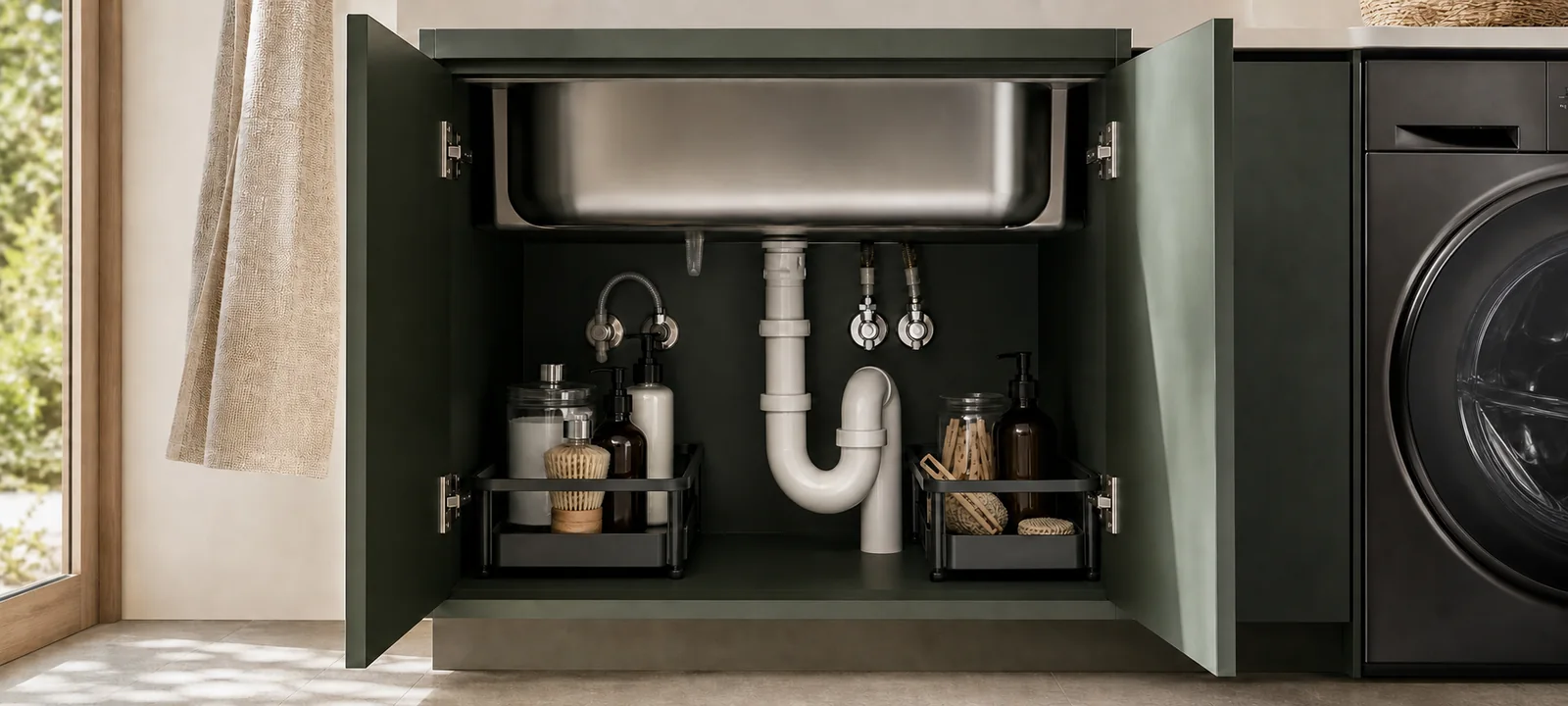
The cupboard under a laundry tub is not an empty rectangle. Pipes cross the middle, hoses claim the back corners and a hinge can make the opening narrower than the cabinet itself. Deep inside, a slow leak may be easier to miss than a bottle of cleaner.
Empty the space and open both doors fully. Look for damp patches, staining, swelling or a musty smell before measuring anything. Plumbing should remain visible and reachable; storage has to fit around it rather than treating it as wasted space.
Removable trays and baskets often make more sense here than a complex fixed organiser. They let the household reach bottles at the back and clear the cupboard quickly when plumbing needs inspection or repair.
For broader laundry planning, see our main guide: Laundry Storage That Keeps Everyday Items Within Reach.
Inspect before you organise
Remove every product, loose cloth and piece of packaging. With the cabinet empty and dry, check the floor, side panels, back and pipe connections for:
- water marks, drips or damp residue
- swollen, soft or discoloured cabinet material
- rust, mould-like spotting or a persistent musty smell
- hoses rubbing against sharp edges or stored items
- product leaks around caps and bottle bases
If there is active leaking, unexplained dampness or cabinet damage, leave the space clear and arrange appropriate attention before adding storage. A tray can contain minor bottle residue; it is not a repair for plumbing or water entry.
Draw the pipework, not just the cabinet
Outside dimensions give a misleading idea of capacity. Sketch the inside front-on and from above, then record:
- clear internal width, depth and height
- the lowest point of the pipework
- each pipe's distance from the sides and back
- hoses, fittings or shut-off points that need clearance
- usable pockets in front of and beside the plumbing
- the clear door opening after hinges and any centre stile
The opening is often the tightest measurement. Test the proposed basket dimensions against the path through the doors, not only the space where it will sit. Anything stored at the back should lift out without scraping a fitting or requiring the cupboard to be unloaded.
Measure what will live there
The tallest detergent bottle, spray trigger, caddy handle and small bucket define the useful shelf heights. Keep liquid products upright and allow enough room to grasp and lift them.
The under-tub cupboard is best reserved for a small, related group of supplies that suit the conditions. Depending on the household, that may include detergent, stain remover, gloves, dry cloths, brushes or a portable cleaning caddy. Paper goods, electrical items, food, pet food and moisture-sensitive belongings are better kept elsewhere.
Cleaning chemicals need to remain in their original labelled containers and be stored as directed. Low cupboards are readily accessible, so consider whether children or pets make a secure alternative necessary. The guide to cleaning product storage covers this in more detail.
Choose organisers that clear out quickly
Removable basket
Groups items that are used together and brings the back of the cabinet forward. Choose a wipeable basket that clears the hinges and keeps every bottle upright.
Freestanding shelf
Uses clear height beside the pipes. Check stability, bottle lift-out space and whether the shelf can be removed without disturbing the plumbing.
Shallow tray
Makes minor bottle drips easier to spot and clean. It should lift out independently and leave the cabinet floor and pipework visible during routine checks.
Pull-out system
Can improve access in a deep cupboard, but the runner path must clear pipes, hinges and the centre opening. Fixed systems also need permission in a rental.
Options that fit around the laundry pipes
First clear the cabinet, deal with moisture and sketch the pipework, hoses, valves and bottle heights. If a usable pocket remains, compare these expandable shelf and pull-out formats only where the loaded organiser can be removed quickly without blocking the service path.
Some links below are affiliate links. If you buy through one, we may earn a commission at no extra cost to you. Learn more.
Expandable under-sink shelf
SimpleHouseware 2-Tier Expandable Under-Sink Shelf
An adjustable shelf for making use of laundry-tub cupboard width around measured pipes, traps and hoses.
Research-supported option
View at Amazon AustraliaMay suit: wide tub cabinets with plumbing concentrated to one side.
May not suit: crowded cabinets that need frequent plumbing access.
Drawbacks to consider:
- Laundry plumbing and appliance hoses may leave less usable shelf width than expected.
- Current dimensions, variant, price, stock and seller details should be rechecked before ordering.
Evidence confidence: moderate. Last reviewed 18 August 2026. Research-based assessment; we have not tested this product firsthand.
Two-tier pull-out organiser
SimpleHouseware 2-Tier Pull-Out Under-Sink Organiser
A narrow sliding organiser for laundry consumables once bottle height, cabinet depth and hinge clearance have been checked.
Research-supported option
View at Amazon AustraliaMay suit: smaller bottles and frequently used cleaning supplies.
May not suit: bulk detergent storage or low cupboards.
Drawbacks to consider:
- Heavy bulk containers can be awkward on a small pull-out frame.
- Current dimensions, variant, price, stock and seller details should be rechecked before ordering.
Evidence confidence: moderate. Last reviewed 18 August 2026. Research-based assessment; we have not tested this product firsthand.
Leave a service path
Do not pack products against pipes or bend hoses around an organiser. Taps, fittings and connections should remain visible where the cabinet design allows, and the whole area should be capable of being cleared without dismantling a storage system.
A useful setup usually occupies the clear side pockets and leaves space beneath vulnerable connections. If an organiser covers the whole cabinet floor or hides the back completely, it makes routine inspection harder.
Keep damp tools out of closed baskets
Used cloths, brushes and mop heads may carry moisture into the cabinet. Give them somewhere to dry before they are enclosed with bottles. Clean, fully dry cloths can return to a separate basket; damp tools should not be buried where they mask leaks or make musty conditions harder to notice.
Smooth trays and open plastic baskets are generally easier to wipe than absorbent fabric or untreated materials in this position. Whatever the material, remove it periodically and inspect the cabinet beneath it.
Make rental storage reversible
Loose trays, baskets, caddies and freestanding shelves can be cleaned, removed and taken to another home. Screw-fixed runners, adhesive racks and door-mounted systems need closer checks for permission, fit and possible surface damage.
An organiser designed around one unusual set of pipes may have little value at the next address. For a rental, a small collection of adaptable pieces is usually easier to justify. The guide to small laundry storage provides more options for tight rooms.
Know when to leave the cupboard alone
- there is an active leak, dampness or unexplained cabinet damage
- an organiser would block fittings or hose movement
- baskets cannot pass through the clear door opening
- bottles would have to lie on their sides
- the only available storage would be accessible to children
- most of the contents are empty, duplicate or belong elsewhere
Sometimes the cupboard becomes useful as soon as it is emptied and cleaned. Do not buy an organiser merely to preserve products the household does not use.
Check it open, closed and ready to clear
- confirm the cabinet is dry before storing anything
- map pipes, hoses, hinges and the true opening
- measure bottles upright and include lift-out room
- keep plumbing visible and serviceable
- choose removable, wipeable pieces where practical
- store chemicals according to their labels and household access risks
- keep damp tools out until they have dried
- make sure the cabinet can be emptied quickly
Under-tub storage works when it fits the irregular spaces around the plumbing and still lets the household see what is happening behind the bottles.
Common Questions
How do you organise the cupboard under a laundry tub?
Empty and inspect the cupboard, then map pipes, the trap, hinges and any damp areas before returning supplies. Use simple lift-out baskets, a shallow tray or a freestanding shelf in the separate usable pockets. Keep the service path and cabinet floor visible so the entire setup can clear quickly if plumbing needs attention.
What should I measure for a laundry under-sink organiser?
Measure each section's usable width, depth and height around the plumbing, plus the narrower door opening and hinge sweep. Record the tallest bottles, basket handles and the clearance needed to lift a loaded organiser out. A product that fits behind the doors may still catch on pipes or be impossible to remove when full.
What should not be stored in a laundry tub cupboard?
Avoid damp cloths, tools that need airflow and anything stored contrary to its label. Do not keep hazardous products in this low cupboard when children or pets can access it. Items that conceal leaks, obstruct pipe connections or take too long to remove are also poor candidates; leave awkward sections empty when storage compromises inspection.