
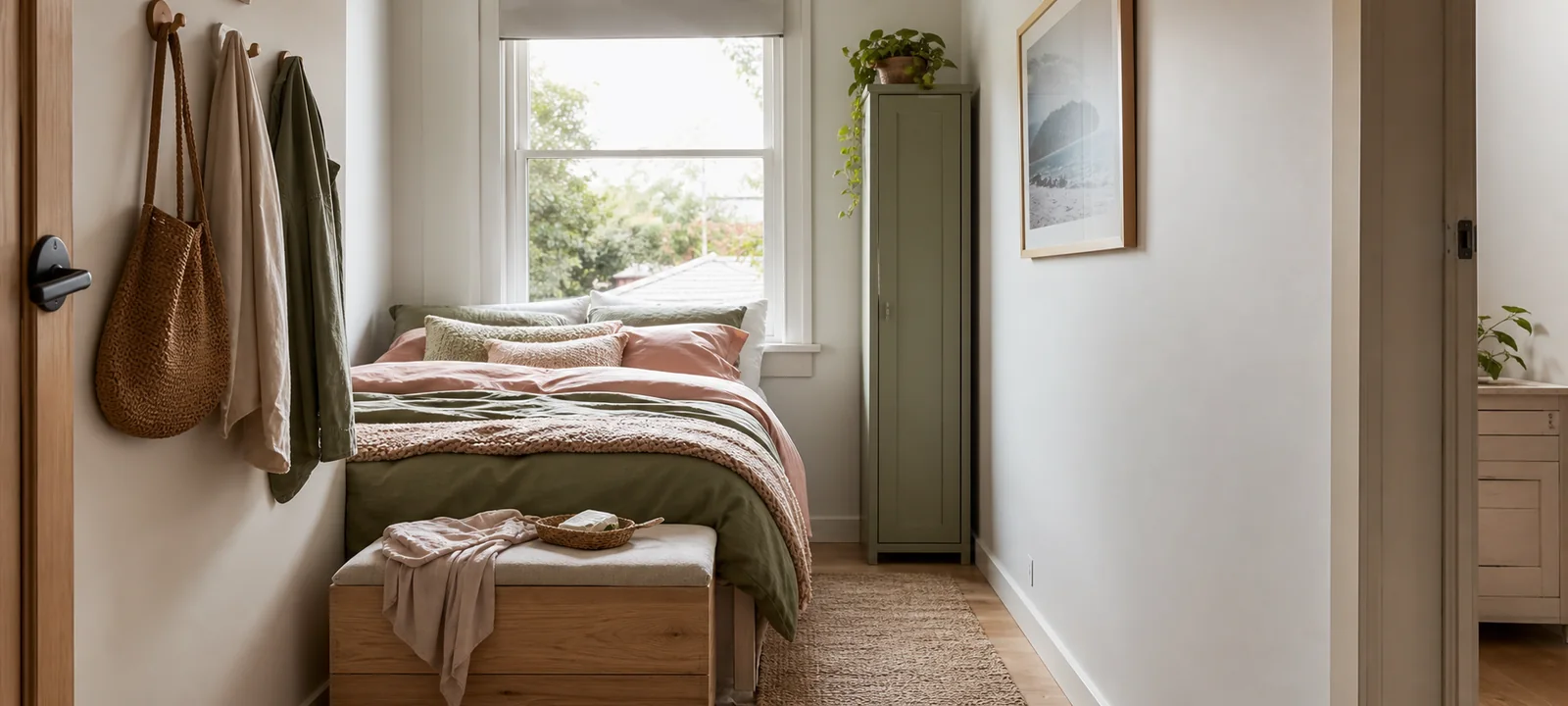
A small bedroom becomes difficult when the route around the bed turns into overflow space. Shoes edge into the walkway, clean clothes stay in a basket and the bedside table collects every small item that lacks a home.
Protect that route first. Move paperwork, bulk linen and unrelated household storage out where possible, then work with the wardrobe, under-bed clearance and wall space that genuinely remain. The useful changes are the ones that shorten the daily reset.
Start with the floor you need every day
Make the bed, open the wardrobe and move through the room as usual. Mark the paths to the door, window and each side of the bed. A narrow drawer unit or shoe rack may fit against the wall on paper but still make the room awkward once drawers open or somebody carries a laundry basket past it.
Storage furniture should come after this test. The floor beside the bed is access, not spare capacity, and keeping it clear often makes a small room feel calmer than adding another unit.
Move household overflow somewhere more honest
Bedrooms often inherit spare towels, documents, luggage, gifts and boxes that have no clear home elsewhere. Sort these before buying bedroom organisers. Keep what supports sleeping, dressing and the morning or evening routine; relocate the rest where practical.
This is not about making the room minimal. It is about reserving the most accessible storage for clothes and belongings used there, instead of forcing daily items around long-term household overflow.
Make the wardrobe easier to return clothes to
A wardrobe fails when every action requires a second action: move a tub before hanging a shirt, lift a stack to reach trousers or unpack shoes to find a bag. Empty enough of it to see the rail, shelves and floor, then group clothes by the way they are put away.
Keep frequently worn clothing in the easiest positions. Use the top shelf for lighter, occasional items that can be retrieved safely and the floor only where shoes or low storage will not interfere with hanging clothes. The wardrobe organisation guide covers sorting before adding shelves, dividers or hanging organisers.
Give off-season clothing a defined limit
Australian seasons vary, and many wardrobes need flexible layers rather than a complete change from summer to winter. Move only the clearly seasonal or occasional pieces out of the prime zone. Use a breathable or closed storage method suited to the fabric and location, and make sure everything is clean and dry first.
Label stored groups by contents rather than a vague “winter” or “spare”. If the container is too heavy to lift comfortably or needs another box moved first, divide the load or choose a more accessible position.
Use under-bed storage for the right things
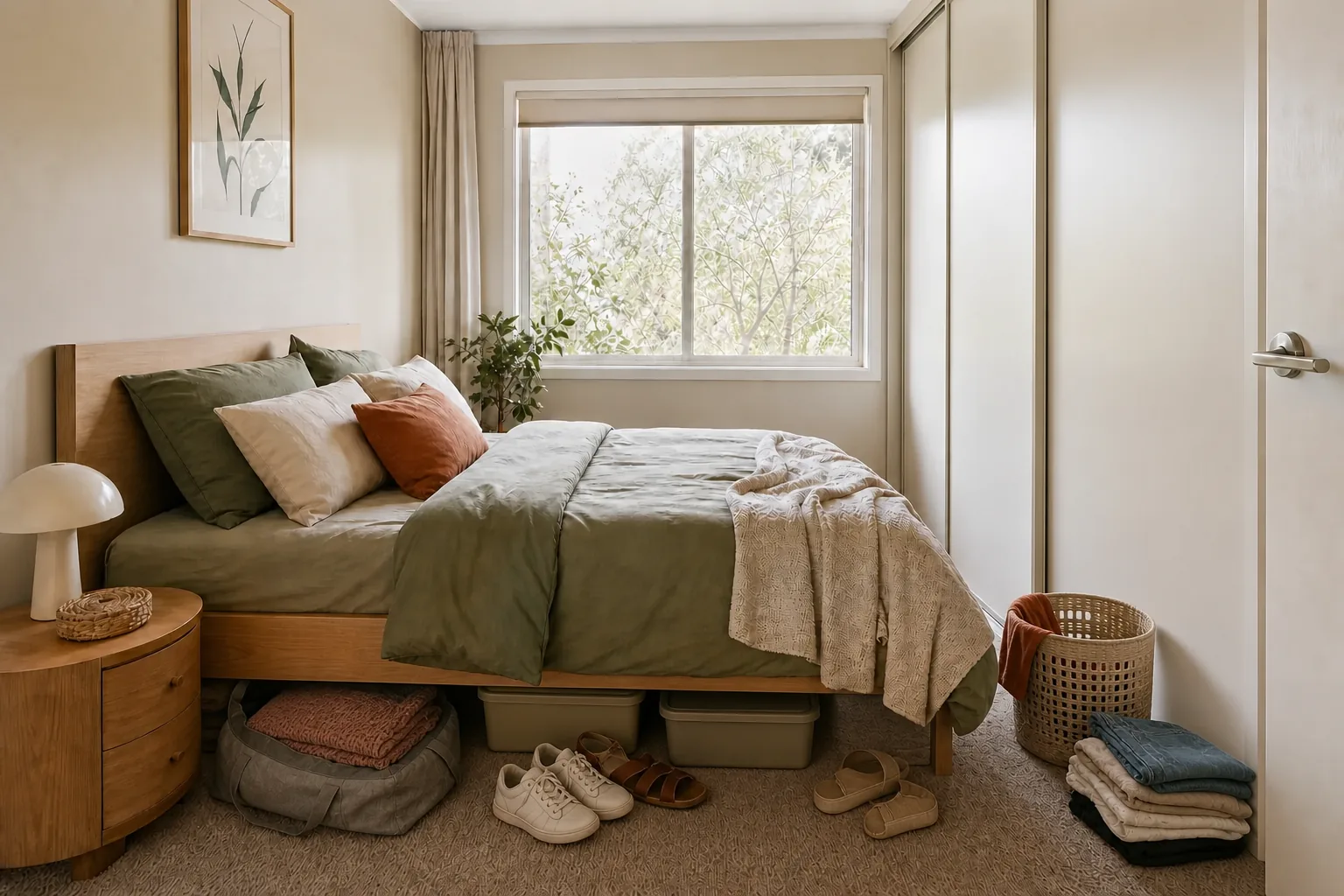
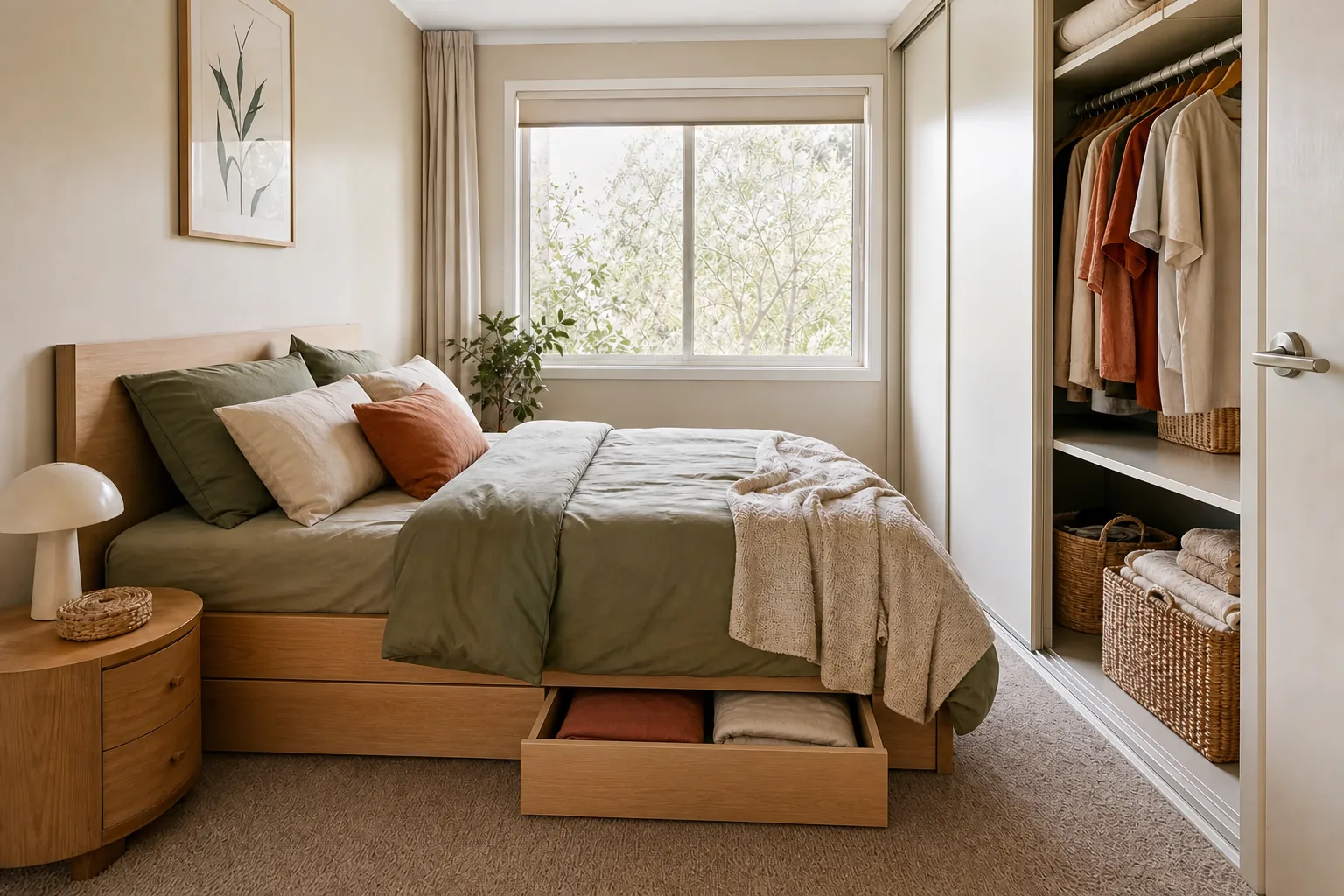
The area beneath the bed can hold spare linen, shoes or occasional clothing, but only when there is real clearance and the containers can be reached. Measure the lowest point under the frame, allow for flooring and handles, and test whether a container can be pulled out without moving the bedside table.
Avoid pushing loose items into a space that is difficult to clean or inspect. The under-bed storage guide covers bed supports, dust, floor surfaces and access before buying containers.
Keep the bedside surface for tonight
A bedside table may need to hold a lamp, water, glasses, a book and a phone. It does not need to become the room's stationery drawer, medicine cabinet and document tray. Remove anything unrelated to the evening or morning routine before deciding that more drawers are required.
Match the table to the bed height and check the route around it with drawers open. The bedside table guide helps plan lamps, charging and clearance without assuming both sides of the bed need identical furniture.
Stop the clothes pile at its source
Clothes usually land on a chair because the alternative is unclear. Give clothes that have been worn but are not dirty items one hook or short section of rail, put dirty clothing into an accessible hamper and return clean clothing promptly. One defined holding place works better than several baskets that all become mixed loads.
Position the hamper where clothes are actually removed, provided it does not narrow the walkway or prevent a door opening. If clean laundry remains in it for days, the issue may be wardrobe capacity or a put-away routine, not a need for another hamper.
Use drawers for categories that stay folded
Dividers can help with socks, underwear and smaller items, but they do not create capacity. Measure the internal drawer dimensions and test the existing categories before buying inserts. Deep drawers may suit thicker folded clothing; shallow drawers can keep small items visible.
A tallboy adds storage vertically, yet its drawers still need space to open and the unit may need securing in accordance with its instructions. Compare its footprint, height and intended load in the bedroom drawers guide.
Store shoes by how often they leave the house
Everyday pairs need an easy return point near the dressing route. Occasional shoes can sit higher, deeper or in labelled boxes, provided they remain accessible. Remove pairs that no longer fit, are uncomfortable or need repair before buying a larger rack.
An open rack keeps shoes visible but can make a small room feel busy. Closed storage calms the view but needs enough ventilation and internal depth for the footwear. Whichever method is used, keep shoes out of the main path around the bed.
Let hooks solve one repeated action
A hook can hold tomorrow's outfit, a robe or one frequently used bag. A row of hooks can also become an exposed wardrobe. Choose the task first, then check the wall, door clearance, fixing requirements and rental conditions before installation.
Avoid hanging heavy items from unsuitable fixings or loading the back of a door until it no longer opens properly. A freestanding option may suit a rental, but it still needs a stable footprint outside the walkway.
Keep spare linen proportionate to the room
Store the working set where changing the bed is easy and move household bulk linen elsewhere if the bedroom wardrobe is tight. Group complete sets together and review pieces that no longer fit the mattress, climate or washing routine.
The bedding and linen guide covers sheets, doonas, blankets and the storage consequences of each choice.
Plan lighting before filling the walls
A shelf or tall cabinet can take the only useful position for a bedside lamp, curtain or power point. Map those needs before claiming vertical space for storage. Keep charging leads out of walkways and use electrical products as instructed rather than hiding cords beneath rugs or bedding.
The bedroom lighting and window coverings guide helps coordinate lamps, privacy, glare and window access with the furniture plan.
Make new storage prove it will free space
- Name the items the storage will hold before measuring the product.
- Check doors, drawers and containers in their fully open position.
- Protect the path around the bed, wardrobe and room door.
- Use the easiest positions for belongings handled every day.
- Remove unrelated overflow before increasing bedroom capacity.
The best small-bedroom storage is rarely the system with the most compartments. It is the one that lets clothes, linen and bedside items return without shuffling something else first. When the reset is short, the room can finish the day feeling like a bedroom rather than a storeroom.
Common Questions
How can I maximise storage in a small bedroom?
Protect the daily path around the bed first, then improve the storage already present. Make wardrobe categories easy to return, limit off-season clothing, use suitable under-bed space for defined overflow and keep bedside storage narrow in purpose. New storage should free usable space rather than simply fill another wall or corner.
What should be stored under the bed?
Use under-bed space for clean, dry items needed occasionally, such as a controlled amount of seasonal clothing, spare linen or less-used shoes. Choose containers that clear the lowest part of the frame and can be removed for cleaning. Daily items become frustrating when they are hidden behind several other boxes.
How do I organise clothes when my wardrobe is too small?
Start with the clothes worn in a normal week and make those easiest to hang, fold and return. Set a firm limit for off-season items, give laundry and worn-again clothes separate homes, and use drawers only for categories that stay folded. Moving unrelated household overflow elsewhere can recover more space than extra organisers.