
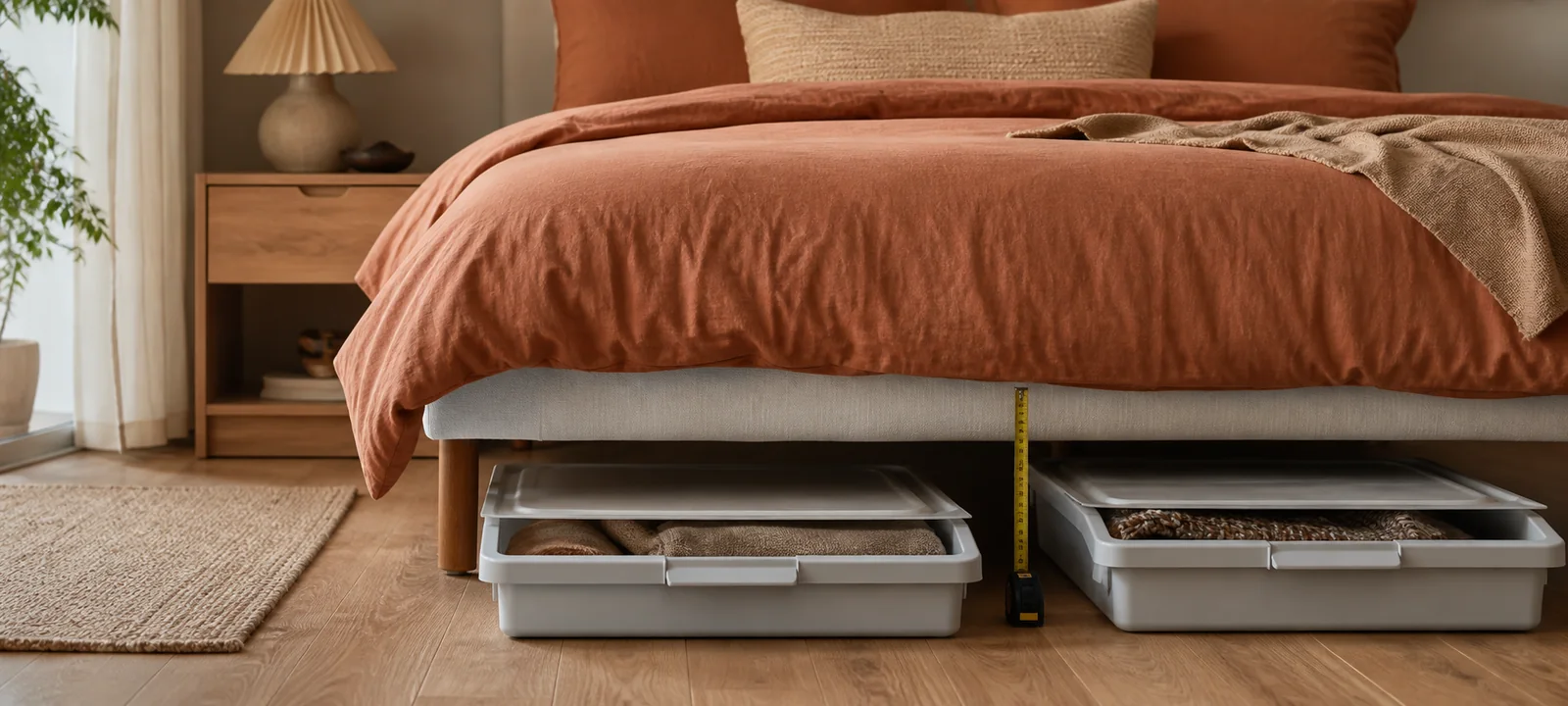
Under-bed storage is only free space until a container has to come out. Carpet adds drag, centre legs interrupt the opening and a bedside table may block the only side with enough room to withdraw a drawer.
Measure the lowest clearance and the complete pull-out path, then reserve the space for a small group of occasional items. Daily belongings are usually too inconvenient here; forgotten possessions simply make cleaning harder.
Decide What Deserves the Hidden Space
Seasonal clothing, spare sheets, guest bedding and occasional shoes can work under a bed because they do not need to be reached every morning. School uniforms, workwear and everyday footwear generally need a more accessible home.
Sort before measuring containers. Loose paperwork, damaged items, dirty shoes and unrelated household overflow should not disappear beneath the mattress. If clothing is the main problem, begin with the wardrobe organisation guide.
Measure the Lowest Point and the Exit Route
Measure from the floor to the lowest rail, slat, support or fabric panel at several points. A thick rug or soft carpet can reduce the working height, and a tight nominal fit leaves no room for a lid, handle or container that flexes when full.
Next measure beside the bed. The container needs enough room to emerge past a wall, bedside table, wardrobe door and any rug edge. One side of the bed may be unusable even when the full cavity underneath looks generous. The bedside table guide can help resolve competing floor space.
Account for the Bed Frame
Centre support legs divide the space and rule out long tubs. Footboards can prevent end access, while a low ensemble base may leave no practical gap at all. Use a cardboard box or taped mock container to test the real path before buying several matching units.
Built-in drawers require side clearance. Gas-lift bases provide a larger cavity but make the entire mattress part of the access routine. Follow the bed maker's instructions, load limits and operating method, and stop using a mechanism that is damaged or unreliable.
Choose the Container for the Floor
Rigid tubs protect their shape and stack neatly when removed, but need reliable clearance. Fabric bags adapt to awkward gaps and can sag or drag when unevenly packed. Wheeled drawers move freely on some hard floors and can catch on carpet, rugs or floor transitions.
Handles matter when a container sits beyond easy reach. A clear lid reveals the contents; an opaque box needs a label facing the accessible side. Vacuum bags can reduce the volume of some textiles, but the compressed package may be heavy and difficult to handle. Follow the textile and bag instructions rather than assuming every item should be compressed.
Pack Clothes, Shoes and Linen Clean and Dry
Seasonal clothes should be laundered and fully dry. Shoes need dirt removed and moisture allowed to escape before storage. Bulky doonas and blankets may suit a soft-sided bag or storage-bed cavity better than a collection of small tubs.
Keep complete linen sets together and label guest bedding clearly. The bedding and linen guide can help decide what to retain. Daily folded clothes are better in a robe or drawer unit; see the drawers and dressers guide before adding furniture.
Leave Access for Dust and Moisture Checks
Dust, lint and hair settle under every bed. Fewer, lighter containers are easier to remove for vacuuming or mopping than a tightly packed grid of heavy boxes. Avoid trapping a damp mat, bag or tub against the floor.
Check stored items periodically, especially in humid weather or rooms with a history of condensation, mould or pests. Containers can protect contents from ordinary dust; they do not fix a building or moisture problem. Persistent mould or pest activity needs appropriate professional advice.
Use Frequency to Decide Position
Put the most occasionally used items furthest in. Anything needed weekly should sit near the accessible edge in a light container, although repeated dragging is a sign it belongs elsewhere. A label should be readable before the box is moved.
Shared and children's rooms need particularly simple divisions. Give each person a clearly labelled zone and avoid containers so heavy that the intended user cannot return them. In a rental, removable tubs and bags are flexible, but the same measurements and floor checks still apply.
Do Not Fill Every Centimetre
More containers create capacity and increase the work needed to clean, remember and retrieve the contents. A storage bed can reduce visible clutter while making the room harder to move or rearrange. Drawers look integrated but may be useless once a larger bed is squeezed near a wall.
Keep some empty space around supports and access points. The aim is to move occasional items out of the daily room, not to turn the bed into a sealed archive.
Low-profile options for suitable clean, dry items
First reduce the category and use easier wardrobe or drawer space for anything needed often. If seasonal linen or clothing still belongs under the bed, compare these fabric cases and low-profile bags by the frame's lowest clearance, full exit route, floor surface and access for dust and moisture checks.
Some links below are affiliate links. If you buy through one, we may earn a commission at no extra cost to you. Learn more.
Fabric under-bed storage cases
Takara Kicho Collapsible Underbed Storage Cases, Set of 3
A three-pack of low fabric cases for light seasonal textiles once the bed clearance and pull-out route are measured.
Research-supported option
View at Amazon AustraliaMay suit: seasonal clothing and spare linen under a dry bed.
May not suit: heavy items, damp rooms or pest-prone storage.
Drawbacks to consider:
- Soft sides offer less crushing and moisture protection than rigid sealed boxes.
- Current dimensions, variant, price, stock and seller details should be rechecked before ordering.
Evidence confidence: moderate. Last reviewed 18 August 2026. Research-based assessment; we have not tested this product firsthand.
Low-profile under-bed bags
Amazon Basics Under-Bed Fabric Storage Bags, 2 Pack
A pair of low zippered fabric bags with clear windows for blankets and clothing beneath beds with at least 15cm clearance.
Research-supported option
View at Amazon AustraliaMay suit: blankets and clothing that benefit from a clear top.
May not suit: books, tools or storage exposed to moisture.
Drawbacks to consider:
- The fabric shell is not rigid and the listed load is intended for light household textiles.
- Current dimensions, variant, price, stock and seller details should be rechecked before ordering.
Evidence confidence: moderate. Last reviewed 18 August 2026. Research-based assessment; we have not tested this product firsthand.
Test the Complete Setup
- Choose the items first and remove anything that should leave the room.
- Measure clearance at several points and allow working room above the container.
- Check support legs, side rails, carpet and the full withdrawal path.
- Match handles, wheels and bases to the flooring and access frequency.
- Keep textiles and shoes clean and fully dry.
- Make every container light enough to remove for cleaning.
- Follow load limits and operating instructions for storage beds and drawers.
A small number of labelled containers is usually enough. If each one can come out without moving furniture and the floor remains easy to clean, the space is working. For wider room planning, browse the Bedroom category and our small bedroom storage guide.
Common Questions
How do I measure for under-bed storage containers?
Measure from the floor to the lowest part of the frame, including centre supports, bolts or slats that reduce clearance. Check the usable width and depth, then measure the route the container must travel to come out. Bedside tables, walls and flooring can make an otherwise fitting box impossible to access.
What items are best kept in under-bed storage?
Choose a limited group of clean, dry items that are needed occasionally rather than every day. Seasonal clothing, spare linen or less-used shoes can work when packed appropriately and labelled. Avoid turning the space into a long-term hiding place for mixed belongings, because forgotten contents are difficult to inspect and reset.
How do I keep under-bed storage from getting dusty or damp?
Use containers suited to the floor and contents, pack textiles only when completely clean and dry, and leave enough access to pull everything out for cleaning and moisture checks. Do not fill every centimetre. A container that is too heavy or tightly wedged will rarely be removed for routine inspection.