
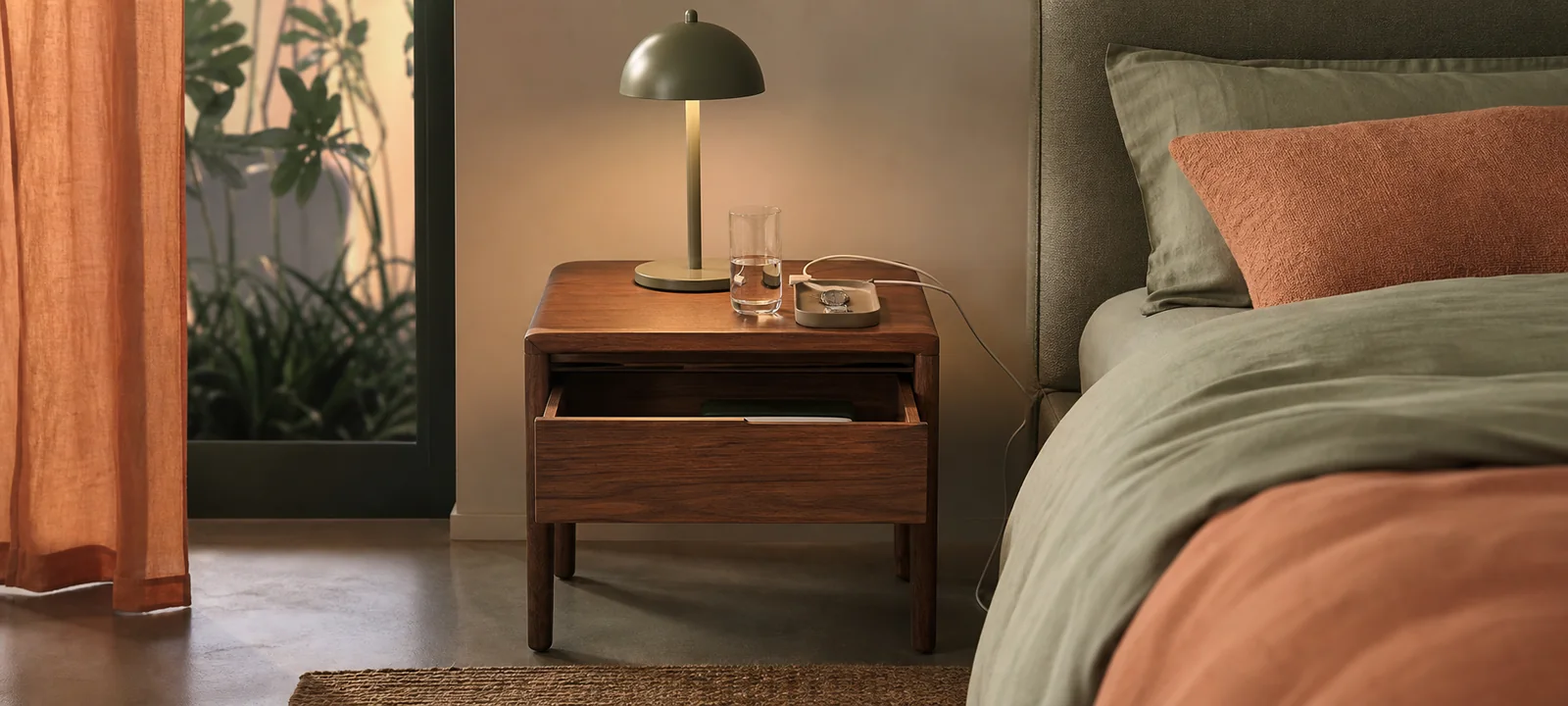
A bedside table can match the bed perfectly and still be wrong at two in the morning. The lamp switch is out of reach, a glass sits above shoulder height or the drawer opens across the only route to the ensuite.
Lie on the bed and list what is genuinely needed after the light goes out. Then measure mattress height, the gap beside the bed and the walkway with bedding, doors and drawers in their normal positions. Choose the smallest setup that supports that routine.
Start With the Night-Time Reach
A lamp, glasses, water and a phone may be the entire list. Another person may need a book, tissues, hearing equipment or medication stored exactly as directed. Items used every night deserve the surface or first drawer; spare cables, receipts and unread books do not.
If clothing or linen is filling the bedside drawers, address that storage problem first. The wardrobe organisation guide and under-bed storage guide can help move occasional belongings to a more suitable zone.
Measure From the Mattress Top
Bed-frame height is less useful than the top of the made mattress. Sit and lie in the usual position, then check how far the hand reaches comfortably. A very low table can make a glass or lamp switch awkward; a high unit can feel imposing and increase the consequences of a spill.
Measure table width as well as the available gap. Leave room to walk, make the bed and reach nearby robe or ensuite doors. Open every proposed drawer or cupboard to its full extent. A unit that fits while closed may make the room unusable while open.
Choose the Amount of Storage Deliberately
A simple side table keeps a compact room visually open but exposes everything on top. One drawer can contain glasses, tissues and charging leads. Several deep drawers reduce visible clutter and often become a catch-all for items that do not belong beside the bed.
Open shelves suit a small rotation of books or devices and need regular clearing. A hinged cupboard requires door-swing room. If the real need is folded clothing, compare a correctly positioned drawer unit rather than asking a bedside table to do two jobs; see the drawers and dressers guide.
Use Wall-Mounted Options With Care
A floating shelf can free the floor in a narrow room, but its depth, height and load need the same attention as freestanding furniture. Confirm the wall construction, hidden services and the fixings specified by the manufacturer. Seek qualified help where the installation or wall is uncertain.
Renters should obtain approval before drilling or changing lighting. A narrow freestanding table may be more flexible, provided it is stable on the actual flooring and does not create a new toppling or trip risk.
Plan Lamps, Charging and Cords Together
Check the power point before choosing the table. The lamp needs a stable base and enough clear space around it; charging leads need a route that does not cross the walkway, catch in a drawer or become crushed behind furniture. Our bedroom lighting and window coverings guide covers lamps and room light in more detail.
Use power boards, chargers and extension leads only as their instructions direct. Do not overload them, cover them with bedding or continue using damaged cords. Keep drinks away from electrical equipment. The licensing boundary for any proposed outlet or wiring change depends on the state or territory where the work occurs.
Built-in USB ports and wireless charging add convenience and another component that may date before the furniture does. Check compatibility and approvals rather than buying the whole table for one charging feature.
Keep the Top Ready for the Night
Reserve the surface for the few items reached for in bed. A small tray can stop glasses, jewellery and a watch from spreading. Use a stable bottle or glass position away from the edge, lamp and devices.
Medication should be kept according to its label and professional advice, including any temperature or child-access requirements. Do not assume an unlocked bedside drawer is secure. Health equipment also needs enough clear space to be used as directed.
Choose a Finish for Real Use
Gloss and glass show fingerprints and water marks. Textured rattan or fabric drawers collect dust. Painted and timber-look finishes can be marked by oils, skincare and drink rings. Check the care instructions and whether the surface can be wiped without damaging it.
Test stability on the bedroom floor. Thick carpet can make narrow legs feel unsteady; hard floors can allow a light table to slide. Any floor protector should stay flat and dry rather than introducing another edge to catch a foot.
Adapt the Setup to the Room
Shared bedrooms do not need matching tables. One person may need drawers and charging while the other needs only a lamp and book. Guest rooms usually need a clear surface, a working light and access to a power point, not drawers filled with household overflow.
Children's rooms benefit from stable furniture, fewer loose items and cords kept out of unsafe reach. Follow product warnings and anchoring instructions for any furniture with a toppling risk. Room layout, age and individual needs matter more than completing a matching suite.
Test the Bedside Setup Before Buying
- List the items genuinely used after lights-out.
- Measure from the made mattress and test reach while lying down.
- Protect the walkway and open nearby doors and drawers fully.
- Check lamp stability, power access and the complete cord route.
- Keep water separate from electrical items.
- Match storage volume to the night-time routine, not bedroom overflow.
- Follow installation, load and toppling warnings.
A bedside table does not need to match the bed or fill the available gap. It needs to be the right height, keep the path clear and hold a short list of night-time items without becoming a second wardrobe. Browse the Bedroom category and the small bedroom storage guide for the wider room.
Common Questions
What height should a bedside table be?
Use the top of the mattress as the practical reference and test what you can reach comfortably while lying or sitting in bed. The exact height can vary with the bed, mattress and user. Also check that the table does not interfere with bedding, drawers, a window or the walkway.
What should I keep on a bedside table?
Keep the top for the few things used after the main light goes out or immediately on waking, such as a lamp, water, glasses or a phone. Give medicines and other sensitive items appropriate storage. Moving daytime clutter elsewhere leaves room for the night-time routine and makes the surface easier to clean.
Do I need drawers in a bedside table?
Drawers help when there is a small, named category that should be close but not visible. They are unnecessary when they will become a general holding zone. Decide what each drawer would contain before buying, and include the open drawer in your walkway measurement so storage does not create a new obstruction.