
A small nursery does not need to hold every baby item you own. It needs enough room for changing, dressing, feeding and sleep, with the supplies for those jobs close by.
In rentals, apartments and shared bedrooms, that may mean keeping bulk supplies somewhere else rather than asking every drawer and wall to do more. Protect the floor area needed for sleep, changing and movement before treating any remaining gap as storage.
Storage options at a glance
Swipe sideways to compare the full table.
| Item | Useful for | What to consider |
|---|---|---|
| Under-cot tubs | Spare linen, clothes in the next size and nursery items used less often. | Clearance height, dust, easy access and whether the tubs slide out without moving furniture. |
| Drawer dividers | Separating singlets, suits, socks, nappies and small accessories. | Drawer depth, materials that can be wiped down and whether the layout can change as clothing sizes change. |
| Door or wall pockets | Light items in rentals or rooms with limited floor space. | Weight limits, secure hanging points, door clearance and keeping cords or straps out of reach. |
| Low open shelves | Books, soft baskets and daily items you want to see quickly. | Stability, anchoring where required, climb risk and whether baskets can be lifted with one hand. |
| Change-area caddy | Keeping nappies, wipes, creams and spare clothes together. | A stable location, easy cleaning and keeping creams, bags and small items safely out of reach. |
| Wardrobe shelf organisers | Making better use of a built-in robe without adding bulky furniture. | Hanging height, ventilation, weight limits and whether the organiser can be removed at the end of a lease. |
Measure the room while everything is open
Record the cot or bassinet footprint, wardrobe and room-door swings, drawers, window coverings, power points and walking paths. Leave the space needed to stand, bend and lift without backing into furniture. A narrow drawer unit is not saving space if its drawers block the only route to the door.
- Mark the sleep space and the clear area around it first.
- Open each door and drawer to its normal working position.
- Check whether a basket can be lifted out while holding it with one hand.
- Keep access to windows, power points and ventilation clear.
- Do not add furniture simply to hold bulk supplies that could live elsewhere.
Give each routine a small working supply
Store items where they are used, but keep the immediate supply small. The rest can sit in a wardrobe, laundry or another cupboard and be brought in during a daily reset.
- Sleep zone: fitted sheets, sleep suits and the sleepwear currently in use.
- Change zone: nappies, wipes, barrier cream if used, spare clothes and a washable cloth.
- Dressing zone: everyday clothing sorted by size and type.
- Feeding zone: burp cloths, a water bottle for the adult and any feeding items used in that room.
- Laundry zone: a hamper or washable bag that is easy to empty often.
- Play and reading zone: a few current toys and books rather than the whole collection.
Clothes need rotation more than elaborate organisers
Baby clothes are small, but several sizes mixed together can fill a drawer quickly. Keep the size being worn in the easiest position, place the next size in one labelled basket and move outgrown pieces out of the daily zone.
Broad drawer categories such as suits, singlets, socks, sleepwear and spares are usually easier to maintain than many narrow sections. Dividers should be quick to move when the clothing mix changes.
Use height without creating an overhead hazard
Higher shelves suit lightweight spares, not heavy baskets or anything needed while holding the baby. Keep frequently used items at a comfortable reaching height and avoid open storage above the cot, bassinet or change area.
- Use upper shelves for light, infrequently used items.
- Keep heavy baskets low.
- Check shelf weight limits and wall fixing instructions before loading anything.
- Keep hanging straps, cords and loose loops away from sleep and change spaces.
- Avoid placing open shelving directly above the cot, bassinet or change area.
The change area needs clear surface, not bulk stock
Keep a daily supply of nappies and wipes close by, with bulk packs elsewhere. A caddy, drawer or small basket can work if it remains stable, can be wiped clean and does not crowd the changing surface. The nappy change station checklist covers placement and reset routines in more detail.
- Have supplies within adult reach before beginning the change.
- Keep creams, bags, cords and small accessories safely out of reach.
- Use washable containers for anything near wipes, creams or leaks.
- Restock the daily supply instead of overfilling the change area.
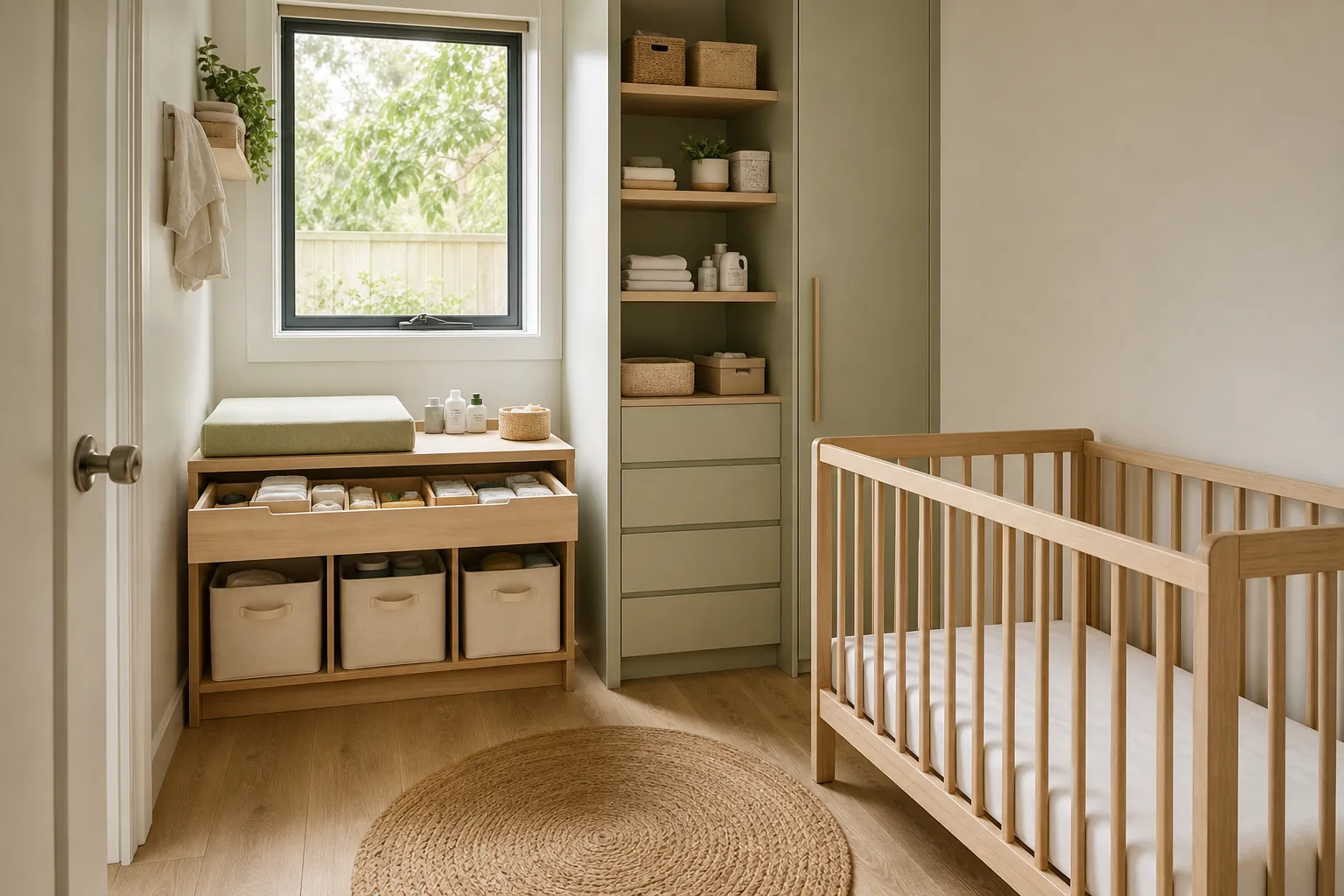
Use under-cot storage for suitable overflow
Tubs under the cot may suit spare sheets, larger clothes and items used less often. Measure the actual clearance and check that the container slides out without moving the cot or catching on legs, castors or the floor.
- Keep items clean, dry and easy to identify with simple labels.
- Avoid overfilling tubs until they become difficult to move.
- Check that stored items do not affect airflow, cleaning or safe access around the cot.
A small toy and book rotation is enough
A small basket of current toys and a few books is easier to use than a crowded shelf. Rotate items and keep heavier books or baskets low.
In a shared bedroom or living space, choose storage adults can put away quickly. Open baskets help with the daily reset; closed tubs suit items that are not currently in rotation.
Plan for the room once the baby is mobile
A setup that works for a newborn needs another review as the baby rolls, crawls, pulls up and climbs. Follow the furniture instructions for assembly, weight limits, anchoring and maintenance, and check second-hand items for missing parts or damage.
- Check that furniture is level and stable on the floor surface.
- Use supplied wall fixing or anchoring hardware where required; renters may need approval.
- Keep cords, straps, bags and small items away from the cot or bassinet.
- Avoid placing heavy items on high shelves above a sleep or change area.
- Check drawers and baskets cannot easily tip, trap fingers or block exits.
- Recheck storage as your baby starts rolling, crawling, pulling up and climbing.
Rentals still need stable storage
Check the lease before drilling or fixing anything to a wall. Drawer dividers, baskets inside existing furniture, wardrobe organisers and low freestanding pieces may reduce permanent changes, but removable does not mean risk-free. Follow load limits, check door clearances and make sure every piece remains stable on the floor.
Give each routine one clear place
If the room already feels tight, begin with three small zones: a change caddy, one clothing drawer and one place for spare linen. Move bulk supplies and larger clothing outside the main nursery zone. After a week of real use, adjust what is hard to reach, what gets messy and what is taking up space without helping.
The best small nursery storage is not the most elaborate setup. It is the setup you can maintain when you are tired, holding a baby and trying to find a clean suit at 2 am.
Common Questions
How do you organise a small nursery?
Map sleep, changing, feeding, dressing and laundry before placing storage. Keep a small working supply beside each routine, rotate clothing by current size and move spare linen, larger clothes and occasional items to less convenient positions. Measure the room with doors, drawers and the sleep space fully in use.
What storage is useful in a rental nursery?
Suitable freestanding storage, drawer dividers, baskets and wardrobe organisers can adapt as the room changes. Check the lease before fixing anything to walls, and do not assume a removable product cannot mark a surface. Furniture must remain stable and be assembled, secured and used according to its instructions.
Should nursery storage be open or closed?
A mix can support different routines. Open baskets may keep a limited daily supply visible to an adult, while drawers or closed tubs can contain spare clothes, linen and occasional items. Choose each position for access and stability, and reconsider the arrangement as the baby becomes mobile and can reach more of the room.