
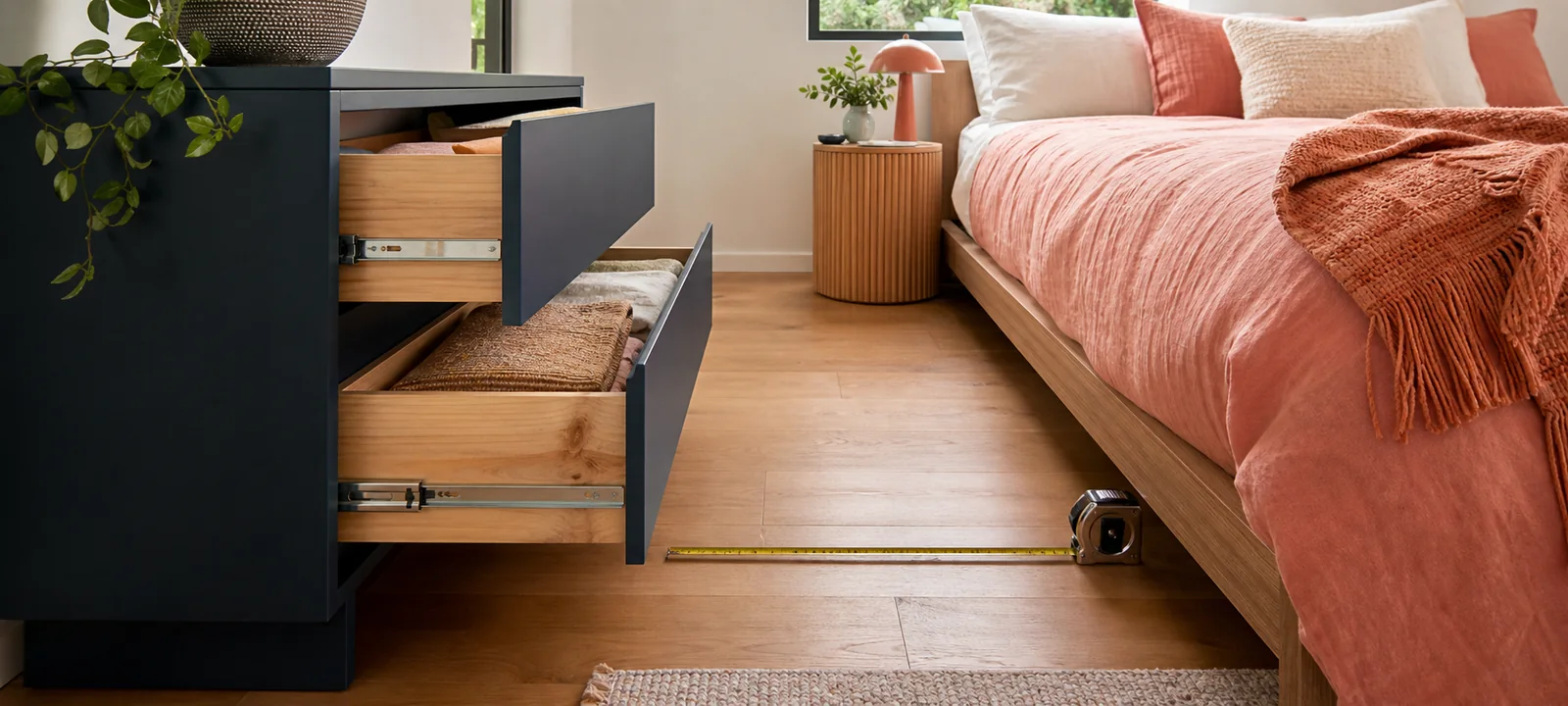
A tallboy is often bought to solve the clean-clothes basket and creates a second problem when its drawers open into the walkway or its top becomes another permanent pile.
Sort the clothes first. Identify what genuinely folds, what hangs and what can leave the room. Then mark the furniture footprint, full drawer extension and the standing space needed to use it. Capacity only helps when the unit fits the room and can be used safely.
Define What the Drawers Will Hold
Underwear, socks, sleepwear, activewear, T-shirts and folded uniforms suit drawers when each category has enough room to return after washing. Paperwork, old electronics, shopping bags and unrelated household overflow do not justify another piece of bedroom furniture.
Decide what should hang, move under the bed or leave the household. The wardrobe organisation guide covers hanging and folding decisions; the under-bed storage guide suits seasonal and occasional items.
Choose Height or Width for a Reason
A tallboy uses less wall width and makes upper drawers harder for some people to reach. A low dresser needs more floor and wall space but can offer wide, accessible drawers. Its generous top can also attract folded laundry, skincare and devices.
Match drawer proportions to the clothes. Shallow drawers keep small items visible; deep drawers suit bulky jumpers and can bury socks. Wide drawers grow heavy when full. Count the categories and test folded items in a box of similar dimensions before choosing the shape.
Measure the Unit With Every Drawer Open
Record wall width and furniture depth, then add the full drawer extension and standing space. Check the bed, wardrobe tracks, bedroom and ensuite doors, balcony access, rugs and the main route through the room. Open nearby furniture while the outline is marked on the floor.
Also note windows, curtain drops, power points, vents and skirting. If the same wall is involved in a lighting or curtain change, see the bedroom lighting and window coverings guide.
Inspect Drawers, Runners and Handles
Pull every drawer out and close it several times. Check whether it remains aligned, stops as intended and can be removed only as described in the instructions. A smooth empty drawer may feel very different once loaded.
Compare the maker's load limits with the intended contents. Protruding handles can catch clothing in a narrow path, while recessed pulls may be harder for some hands. Soft-close runners are a convenience; reliable travel, secure stops and suitable construction matter more.
Take Toppling Risk Seriously
Opening drawers shifts weight forward, and a child can use them as steps. Since 4 May 2025, covered furniture supplied in Australia—including clothing-storage units at least 686 mm high— has been subject to a mandatory information standard for toppling warnings.
Look for the required warnings, anchoring information and stable construction. The ACCC toppling-furniture guide recommends anchoring furniture, keeping heavy items low and not placing items that attract children on top. Use the supplied instructions and anchoring method suitable for the product and wall or floor. A renter should speak with the landlord or agent rather than leaving furniture unsecured because approval is needed.
Plan the Top Surface Before It Arrives
Decide whether the dresser top will hold a small tray, lamp or nothing at all. Heavy objects and televisions do not belong on furniture that is not designed and secured for them. Keep the surface clear enough to open curtains, clean and put clothes away.
If glasses, charging and water are migrating to the dresser, the bedside table guide may solve that routine with less floor space.
Keep Clothing Categories Simple
Give daily workwear, uniforms and activewear the easiest drawers. Seasonal pieces can move to a less convenient zone. Dividers help only after each drawer has a job; too many compartments make the system slower to reset.
Spare linen belongs here only when it serves this bedroom and remains in complete sets. The bedding and linen guide helps decide what to keep and where to store it.
Allow for Flooring, Cleaning and Change
A unit must sit level and stable on the actual floor. Carpet can be thicker near a wall; rugs and uneven transitions can affect stability and drawer movement. Follow the manufacturer's levelling and placement directions rather than packing beneath a leg improvised materials.
Check whether dust can be removed from beneath and whether the unit can remain secured if the room changes. Guest rooms benefit from an empty drawer more than furniture full of household overflow. Shared rooms need assigned categories, not necessarily matching halves.
Check the Whole Unit Before Buying
- Sort the clothes and list the drawer categories.
- Mark the closed footprint, full drawer extension and standing space.
- Check doors, robe tracks, windows, vents and walkways.
- Inspect drawer stops, runners, handles and stated load limits.
- Look for required toppling warnings and plan suitable anchoring.
- Keep heavy contents low and prevent the top becoming overflow.
The strongest choice is not the unit with the most drawers. It is the one that opens fully, stores the folded clothes that remain after sorting and leaves the room safe to move through. Browse the Bedroom category and our small bedroom storage guide for the rest of the room.
Common Questions
What should I measure before buying a bedroom dresser?
Mark the cabinet's full width and depth, then add the space taken by its deepest drawer when fully open. Check that a person can stand in front of it without blocking the bed or doorway. Also measure the delivery route and note skirting boards, power points and uneven flooring.
Is a tallboy or a wide dresser better for a small bedroom?
A tallboy uses less wall width, while a dresser provides a wider top and often shallower access to folded categories. Choose according to the available wall, drawer-opening clearance and what the top surface must do. Height is not a gain if upper drawers become awkward or the unit is unstable.
Do bedroom drawers need to be anchored to the wall?
Treat toppling as a serious part of the purchase, especially around children. Read the manufacturer's anchoring and installation instructions, confirm the wall and fixing method are suitable, and do not assume the unit's weight makes it safe. Avoid using open drawers as steps and keep heavy contents lower where practical.