
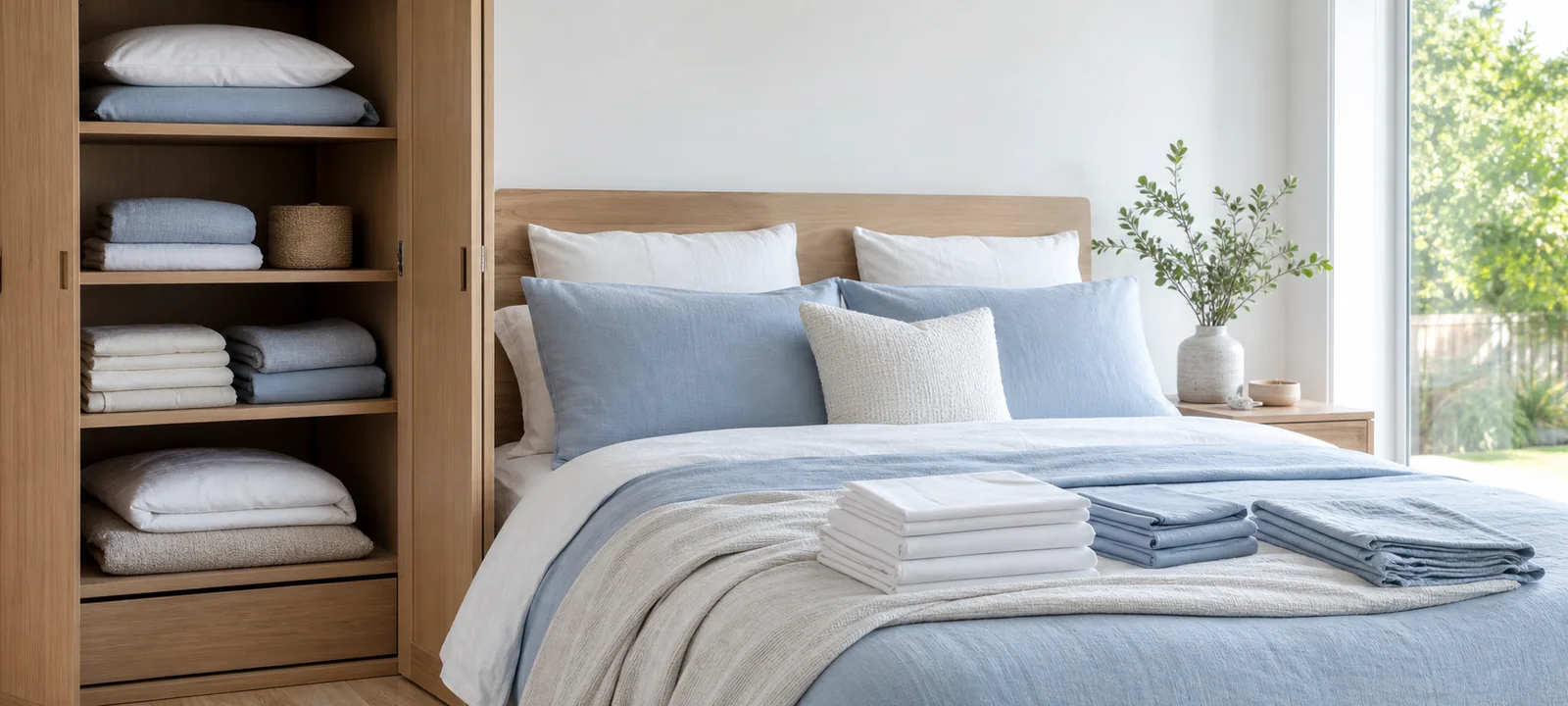
Linen is easy to buy one set at a time and difficult to manage as a collection. Fitted sheets no longer match the mattress depth, pillowcases lose their partners and a bulky doona cover occupies the drying rack for days.
Start with the mattress label and the household washing and drying routine. A useful rotation contains pieces that fit, suit the season and can be laundered before the cupboard fills with spares for every possible occasion.
Confirm the Bed, Not the Label in Your Memory
Check whether the mattress is single, king single, double, queen, king or another size. Guest beds, trundles and older mattresses are easy to misremember, and similar-looking folded sheets are not interchangeable once they reach the bed.
Measure mattress depth as well as length and width. Pillow tops and added toppers can make a fitted sheet too shallow. Compare that measurement with the product's stated pocket depth and allow enough ease for the corners to sit securely.
Build the Smallest Useful Rotation
Many bedrooms work with one set on the bed and one clean spare, but the right number depends on children, pets, shared laundries, shift work, drying time and how often the bed must be changed. It is a practical calculation, not a universal rule.
Buy flat sheets only if the household uses them and match pillowcases to the pillows actually on the bed. Guest linen should fit a real guest bed, not one the household may own someday. Worn, mismatched and unused pieces should leave the active rotation before another set is added.
Check Every Layer for Fit and Care
A mattress protector can simplify cleaning, but it still needs the correct depth and a realistic drying method. Waterproof and water-resistant layers vary in warmth, feel and noise. Read the care label and consider whether the entire item fits the washing machine.
Doonas, quilts and blankets become much bulkier as bed size increases. Check whether the item is washable at home, needs specialist care or exceeds the capacity of the household machine. A cover that is difficult to change or dry will shape the routine long after its colour has been forgotten.
Layer for the Room and Season
Australian bedrooms do not share one climate. A humid Queensland room, an air-conditioned apartment and a cooler southern bedroom need different combinations. Flexible layers often make more sense than one heavy arrangement left on the bed all year.
Keep the pieces people genuinely use. Decorative cushions and throws still need a place every night and add to the washing and handling load. If they migrate permanently to a chair or the floor, they are not helping the bed function.
Choose Materials by Feel and Routine
Cotton, linen, flannelette, microfibre and blends vary by weave, weight, finish and construction. Fibre name and thread count alone do not predict how a sheet will feel, wear or dry in a particular home. Handle samples where possible and read the full care instructions.
Some fabrics crease readily; others hold warmth or dry slowly because of their weight. Personal comfort matters more than broad marketing claims. Seek qualified health advice for persistent skin, allergy, heat or sleep concerns rather than relying on a bedding label.
Make the Laundry Test Before Buying
Compare bulky pieces with the washing machine and the available line, airer or dryer. A large doona cover may fit the machine and overwhelm a compact drying rack. Humid weeks can also turn a nominally quick wash into several days of indoor drying.
Follow care labels, separate pieces where directed and make sure bedding is fully dry before it returns to the bed or cupboard. Rotate complete sets rather than wearing one set continuously while the others remain untouched. The Laundry category has practical guides to drying and household flow.
Store Complete Sets Together
Keep each fitted sheet, flat sheet and matching pillowcases together so the cupboard does not need to be searched during a bed change. A shallow basket can contain one size or room, provided it fits the shelf and can be lifted easily.
Seasonal pieces may move to a labelled wardrobe shelf or under-bed container. They must be clean, dry and accessible before the season changes. The under-bed storage guide covers clearance and cleaning, while the wardrobe organisation guide helps decide whether the robe has genuine spare capacity.
If linen overflow is driving a furniture purchase, first count the complete sets still in use. Then see the drawers and dressers guide for clearance and stability checks.
Adapt the Rotation to the Household
Children's beds may need an extra easy-wash set, while bunks and trundles benefit from pieces that are straightforward to handle in an awkward position. Guest rooms often need one complete set and a practical spare layer rather than a separate linen collection.
In a shared home, label by person, room or bed size. In a rental, bedding that can move between compatible beds may be more useful than highly specific decorative sets. Keep ownership and storage clear enough that a clean set can be found without unfolding everything.
Check Fit, Washing and Storage Together
- Confirm the mattress size and measure its full depth with any topper.
- Count the sheets, pillowcases and layers the household actually uses.
- Check care labels, machine capacity and drying space.
- Plan lighter and warmer layers around the room's real conditions.
- Keep complete sets together and remove mismatched or unused pieces.
- Store every item clean and fully dry.
A smaller rotation is easier to wash, match and return to the cupboard. Choose bedding that fits the bed and the laundry routine, then resist adding a new set unless it replaces something or solves a specific need. For wider room planning, browse the Bedroom category and Bedroom Essentials for a More Comfortable Home.
Common Questions
How many sets of bed linen do I actually need?
Start with the smallest rotation that covers a normal change of sheets and the time needed to wash and dry them. Add a spare only when illness, children, guests or slow winter drying creates a genuine gap. A compact rotation is easier to pair, store and use consistently.
How can I tell whether fitted sheets will fit my mattress?
Confirm the mattress length, width and depth rather than relying on the bed-size label from memory. Include any topper in the depth measurement, then compare all three figures with the sheet maker's stated dimensions. A deep fitted sheet is useful only when its full dimensions match the actual mattress.
What is the easiest way to organise sheets in a linen cupboard?
Keep each usable set together and separate it by bed, size or room. Remove unmatched pieces that no longer serve a bed in the home, and give bulky seasonal layers a defined limit. Complete sets are quicker to find and expose how much linen the household really owns.